Do Nova Scotia Kids Need Their Own Permit?
A child riding an ATV on a Nova Scotia club trail generally needs a valid trail permit for the machine they are riding. The key distinction is that the permit is tied to the machine, not the rider: a parent’s permit on one ATV does not cover a child riding another. Here’s how that works, and what else to check before heading out.
The permit follows the machine, not the child
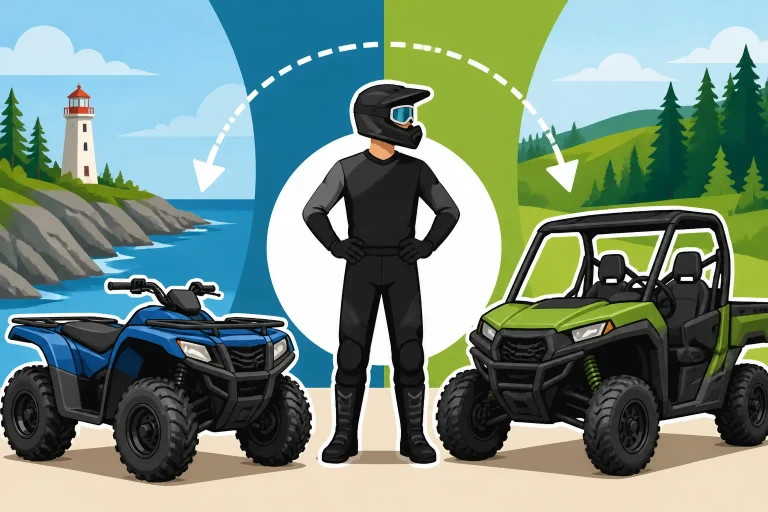
For riding on trails that require an ATVANS trail permit, think in terms of machines rather than family members. If your child rides their own quad, that quad needs its own valid trail permit. A permit on the parent’s ATV does not extend to a second machine, even if both are owned by the same family.
If a child rides as a passenger on an ATV that already has the required permit, the passenger does not need a separate permit for that same machine. The permit covers the machine’s trail access; it is not an individual pass for everyone riding on it. Passenger rules still apply, so check the machine’s seating and the requirements for the trail or route.
| Situation | Separate trail permit for the child? | What to check |
|---|---|---|
| Child rides their own ATV on a permit-required club trail | The child’s ATV needs its own permit | Confirm the permit is valid for that machine and the trail |
| Child rides a parent’s ATV as a passenger | No separate permit for the passenger | Follow passenger and age rules |
| Child takes turns riding a second family ATV | The second ATV needs its own permit | A permit on the first machine does not cover the second |
| Child rides only on private land | A club-trail permit may not be needed for that land | Confirm permission, registration, insurance and any applicable rules |
| Family visits a permitted trail with an out-of-province machine | Do not assume a home-province pass is accepted | Check current visitor and reciprocity requirements |
A useful related explanation is Nova Scotia Permit for a Second Machine. It addresses the common family question: if you already have a permit, can you use it on another ATV? In general, plan on each machine needing its own trail permit when it will be used on trails that require one.
This is separate from provincial registration. A trail permit is for access to participating club trails; registration is a separate legal requirement for operating an off-highway vehicle where registration rules apply. Having one does not automatically satisfy the other. For the distinction, see Do You Need to Register an ATV in Nova Scotia?.
When a child needs a permit, and when they do not
The simple rule is: if the child is operating a machine on a trail that requires a permit, make sure that machine has the appropriate permit. The child does not need to buy an individual permit just because they are under 16, and a child riding as a passenger does not need a separate one for the same ATV.
That distinction matters when a family has more than one machine. If a parent and child each ride an ATV on the same outing, each ATV needs to meet the trail’s permit requirements. If they ride together on one machine designed and approved for a passenger, the permit question applies to that machine, while passenger eligibility and safe seating are separate issues.
A permit may not be needed for every place a family rides. Private land, public roads, Crown land and club trail systems can have different access conditions and rules. A permit for club trails is not permission to ride anywhere, and landowner permission alone may not replace requirements that apply to a particular trail or location. Check the status of the route before setting out rather than relying on a map, an old permit or a neighbour’s recollection.
If you are not sure which permit option fits, compare Nova Scotia Club Permit vs Standalone Permit and How to Buy a Nova Scotia Trail Permit. One option may connect the permit with club membership; another is a permit without that membership. The available choices and current requirements should be confirmed with ATVANS or the relevant club before you purchase.
Also check the permit period. Nova Scotia trail permits generally follow a calendar-year schedule, so a permit bought for one season may not remain valid into the next. The details are covered in Nova Scotia Permit Expiry Date. If a child’s machine is used only for part of the year, do not assume that means no permit is required during the months it is on a permit-required trail.
A trail permit does not replace youth riding rules
A trail permit answers an access question. It does not confirm that a child is old enough to ride, supervised as required, trained where required, or using a suitable machine. Those are separate checks, and they still matter even when the ATV has a current permit.
Nova Scotia has youth-specific operating requirements, including rules for younger riders and supervision. Before a child rides, review Nova Scotia Rules for Riders Under 16 and [Nova Scotia Supervision Requirements]. The child’s age, riding situation and machine all affect what is allowed. Do not treat a permit as a substitute for checking those requirements.
Registration and ownership can create another point of confusion. The person operating a machine may be a child even when an adult is the registered owner, but the registration paperwork must still meet the applicable rules. If the ATV has not been registered, is newly purchased or is being transferred, sort that out separately from the trail permit. The relevant starting points are Nova Scotia Registration at 16 With Permission and Nova Scotia Registration Paperwork Checklist.
For a teen approaching 16, check whether safety training or a safety certificate applies to the planned use. The training rules are distinct from both the trail permit and registration. Nova Scotia Safety Course for a 16-Year-Old explains the training question in more detail. Confirm current requirements before assuming that a child’s age, past experience or family supervision is enough.
Machine fit and passenger capacity deserve the same attention. A permit does not make an ATV appropriate for a particular child, and it does not make a single-rider machine safe for two people. Follow the manufacturer’s seating guidance and youth operating requirements. A child should be able to reach and use the controls properly, and an adult should not take a passenger if the machine is not designed for one.
A practical checklist before a family ride
Before leaving home, check the permit, the machine and the route as separate items. This avoids the common mistake of seeing a permit on one family ATV and assuming every machine in the group is covered.
- List the machines that will be ridden. Include the child’s quad and any other machine that may be used during the outing.
- Match each machine to its permit. Confirm that each ATV going onto a permit-required trail has its own valid trail permit. Do not move the assumption of coverage from one machine to another.
- Check the trail’s access rules. Confirm that the route is open to the type of machine you are using and that a trail permit is required or accepted there.
- Review the child’s riding requirements. Check age, supervision, training and machine suitability independently of the permit.
- Keep required proof available. Follow the current instructions for carrying or displaying permit and registration information. If anything is unclear, ask the club or ATVANS before riding.
- Recheck when the machine or route changes. A second ATV, a different trail system or a new permit period can change what is needed.
If you are buying permits for several family machines, it is worth confirming the total and the exact permit type before completing the purchase. Permit details and procedures can change, and a club can clarify what applies to its own trails. The basic planning principle remains straightforward: each machine must meet the access requirements wherever it is ridden.
For a child who is only a passenger, focus instead on whether the ATV is designed for a passenger and whether the child meets the relevant passenger rules. For a child who operates a separate ATV, check that machine’s permit along with the youth riding rules. Keeping those two situations separate makes the answer much clearer.
Disclaimer
This article is for general informational purposes only and does not constitute professional advice. Laws, prices and regulations vary by location and change over time. Consult a qualified professional for guidance on your specific situation.