Dirt Bikes and Nova Scotia Paperwork
It’s a common scenario across Nova Scotia: you’ve just acquired a shiny new (or new-to-you) dirt bike, picturing yourself tearing through the woods or hitting those challenging trails. But before you even think about twisting that throttle, there’s a crucial step that many riders, especially dirt bike enthusiasts, often overlook or misunderstand: the paperwork. Many folks assume that because it’s "just a dirt bike," it falls outside the stringent rules that apply to ATVs and side-by-sides, leading to frustrating surprises down the line. This guide is here to cut through that confusion and give you the real deal on getting your dirt bike properly squared away in Nova Scotia.
Are Dirt Bikes Considered Off-Highway Vehicles in Nova Scotia?
This is where a lot of the confusion begins for dirt bike riders. You see ATVs and side-by-sides everywhere, clearly marked and registered, and you might think your two-wheeled machine is in a different category. Unfortunately, that's often a costly assumption.
Understanding the OHV Act
In Nova Scotia, the Off-highway Vehicles Act is quite broad, and it doesn't really play favorites based on how many wheels your machine has. An "off-highway vehicle" is defined in a way that very much includes dirt bikes, enduro bikes, and even some types of mini-bikes if they meet certain criteria for engine size and intended use off public roads. Essentially, if it’s a motorized vehicle designed for travel off the main highway, your dirt bike is likely an OHV in the eyes of the law. This means it’s subject to the same registration, insurance, and operating requirements as a quad or a side-by-side.
The purpose of this Act isn't just to make your life difficult; it’s really about safety, environmental protection, and ensuring there’s a funding mechanism to maintain the incredible network of trails we have here in Nova Scotia. Without these regulations, we’d have a much more chaotic and potentially dangerous trail system, and our access to beautiful wilderness areas might be jeopardized. So, while it feels like bureaucracy, it’s all part of keeping our riding culture alive and thriving.
Common Misconceptions About Dirt Bike Registration
I’ve heard it countless times from riders: "But it's a trail bike, not an ATV!" or "It's just for my own property, so I don't need to register it." These are incredibly common, yet unfortunately incorrect, beliefs. The distinction between a "motorcycle" and a "dirt bike" in terms of registration often hinges on whether it's legal for highway use. If your dirt bike isn't plated for the road (and most aren't), then it's an off-highway vehicle when you're riding it anywhere but on a public highway. Even if you only ride it on your vast, private woodlot, the provincial rules around ownership and potential interaction with public lands (like crossing a road to get to another section of your property) usually mean it still needs to be on the books.
This misconception can lead to serious headaches, especially if you encounter an officer on a trail or are involved in an incident. Riding an unregistered dirt bike, even if you’re unaware of the requirement, can result in significant penalties. We’re talking about fines that can quickly make that awesome deal you got on the bike suddenly seem not so great. It's truly not worth the risk. [Nova Scotia Fines for an Unregistered Machine] can be steep, and ignorance of the law is rarely an excuse that holds up.
The Essential Paperwork for Your Nova Scotia Dirt Bike
Alright, so your dirt bike is indeed an Off-Highway Vehicle. What exactly do you need to make sure you’re legal? It boils down to a few key documents that every OHV owner in Nova Scotia must possess.
Certificate of Registration and Vehicle Permit
Just like ATVs and UTVs, your dirt bike needs two main pieces of paper from the province to be legal:
First, there’s the Certificate of Registration. Think of this as the initial proof that your machine has been entered into the provincial system. It’s a one-time fee, and once you have it, it pretty much stays with the machine until it’s sold. This document records the vital information about your dirt bike, like its Vehicle Identification Number (VIN) and engine size, and ties it to you as the owner. [Nova Scotia Certificate of Registration at $39.80] is the fee you'll pay for this initial step.
Second, and perhaps more commonly thought of, is the Vehicle Permit. This is your annual sticker, the proof that your machine is currently legal to operate. This permit needs to be renewed every year. It’s essentially your yearly "license plate" for the trail. When you register a new machine or transfer ownership of a used one, you’ll get both the Certificate of Registration and the initial Vehicle Permit. The [Nova Scotia Vehicle Permit at $13.20] is what you'll pay each year to keep things current.
Both of these documents are issued through Access Nova Scotia. You'll need to visit one of their service centres in person to get these sorted out, especially for the initial registration. They're the gatekeepers for ensuring all the provincial rules are met.
Proof of Ownership and Tax Considerations
Before Access Nova Scotia will issue you any paperwork, you absolutely need to prove that the dirt bike is yours. This usually comes in one of two forms:
- For a brand-new dirt bike: The dealer will provide you with a Manufacturer's Statement of Origin (MSO) or similar new vehicle information statement, along with a bill of sale. They often handle a good chunk of the initial paperwork for you, including collecting the sales tax.
- For a used dirt bike: This is where things can get a bit trickier, but it’s still very manageable. You’ll need a bill of sale from the previous owner. This document is critical; it should clearly state the buyer's and seller's names, the date of sale, the purchase price, and the dirt bike's VIN. Even if you're buying from a friend or family member, a formal bill of sale is crucial. Tools like those found on LawDepot can help you create a proper, legally sound bill of sale that covers all the necessary details. If the previous owner had the machine registered, you'll also need the original Certificate of Registration, signed over to you.
Speaking of purchase prices, let's not forget about the Harmonized Sales Tax (HST). [Nova Scotia HST on an ATV Purchase] applies to dirt bikes too. If you buy from a licensed dealer, they collect the HST at the point of sale. However, if you buy from a private seller, you’ll typically pay the HST on the purchase price directly at Access Nova Scotia when you register the machine. Even if it was a gift, you might still need to declare a fair market value for tax purposes, so be prepared for that conversation.
Mandatory Insurance Requirements
This is another huge one, and it's not optional for recreational dirt biking. In Nova Scotia, liability insurance is mandatory for all off-highway vehicles, including your dirt bike, unless you fall into a very specific and narrow exemption (like a certified racing machine on a closed course, which isn't applicable to most recreational riders).
What does this mean for you? You need to contact an insurance provider and get a policy that covers your dirt bike for off-highway use. This insurance protects you financially if you cause damage to someone else's property or injure another person while operating your machine. The province mandates a minimum liability coverage amount. [Nova Scotia's $500,000 Liability Minimum] is a common figure you’ll hear, but many riders opt for higher coverage for extra peace of mind.
Once you have your insurance, your provider will give you a "pink card" or a similar proof of insurance document. You are legally required to carry this proof with you whenever you're riding your dirt bike. No pink card means you could face fines, even if you are insured. It’s always best to keep a physical copy or a digital image readily accessible on your phone, just in case you’re asked to present it.
How to Register Your Dirt Bike in Nova Scotia
Okay, so you understand why you need the paperwork and what those papers are. Now, let’s get down to the practical steps of actually getting your dirt bike registered. It’s a process, but a straightforward one if you’re prepared.
Step-by-Step Registration Process
The primary place to get your dirt bike registered is at an Access Nova Scotia service centre. These are located across the province and act as the provincial registry for all sorts of permits and licenses. Here’s a typical rundown of how it works:
-
Gather Your Documents: Before you even leave the house, make sure you have everything you need. This will usually include:
- Your personal identification (driver's license, provincial ID card).
- The original bill of sale for your dirt bike. If it’s a new machine, this will be from the dealer. If it’s used, it should be from the private seller, ideally a formal one that you might generate using a service like LawDepot.
- The previous owner's Certificate of Registration (if buying used). Make sure it’s signed over to you!
- Proof of your Nova Scotia address if it's not on your ID.
- Proof of insurance (your pink card or temporary coverage document).
-
Visit Access Nova Scotia: Head to your nearest service centre. It’s often a good idea to check their website or call ahead to confirm their operating hours and any specific requirements, especially if you have an unusual situation. [Registry Counter or Service Centre: Where to Register] provides more guidance on this.
-
Complete the Forms: At the counter, you'll be guided through filling out the necessary registration forms. This is where you provide all the details about yourself and your dirt bike.
-
Pay the Fees: You’ll pay the one-time Certificate of Registration fee and the annual Vehicle Permit fee, along with any applicable HST if you bought the machine privately. Remember, these fees contribute to the overall OHV infrastructure in the province. [What the Off-highway Vehicle Fee Regulations Charge You] explains these charges in more detail.
-
Receive Your Documents: Once everything is processed and paid for, you'll be issued your Certificate of Registration and your Vehicle Permit. You'll likely get a sticker to affix to your dirt bike, signifying its registration for the current year.
Special Cases and Exemptions
While most dirt bikes used for recreation need to be registered and insured, there are a few very limited exceptions that often lead to confusion. For instance, machines used solely for specific agricultural or forestry purposes on private land might be exempt from certain registration requirements. [When Farm Work Exempts a Machine From Registration] or similar forestry exemptions detail these niche situations.
However, these exemptions are extremely specific and typically don't apply if you're riding for pleasure, even if that pleasure happens to be on your own property. The moment you intend to cross a public road, use a public trail, or access any land that isn't strictly your own private, non-commercial farm or woodlot, these exemptions typically fly out the window. Many riders mistakenly believe that if their property is large enough, they're always exempt, but the law is usually much more nuanced. Always clarify with Access Nova Scotia if you think you might qualify for an exemption, but err on the side of caution and assume you need to register.
What to Do If You Don't Have All the Papers
Life happens, and sometimes you buy a used dirt bike where the previous owner didn't have all their ducks in a row. Perhaps they lost the original Certificate of Registration, or maybe you bought it from someone who bought it from someone else, and the paper trail is fuzzy.
If you don't have a formal bill of sale or the previous registration, don't despair immediately. Access Nova Scotia does have provisions for these situations. You might be required to sign a declaration of ownership, affirming that you are indeed the rightful owner and explaining the circumstances of the purchase. This is a serious legal document, so make sure you are truthful and understand what you are signing. [Nova Scotia Registration Without a Bill of Sale] and [Signing a Declaration When the Papers Are Missing] offer specific guidance on how to navigate these trickier scenarios. It might take a little extra time and effort, but it's usually possible to get your machine on the books even with imperfect paperwork.
Keeping Your Dirt Bike Paperwork Current and Compliant
Getting your dirt bike initially registered is a big step, but it's not a one-and-done deal. There are ongoing responsibilities to ensure you remain legal on the trails and roads of Nova Scotia.
Annual Permit Renewal
Remember that Vehicle Permit we talked about? That's the one that expires every year. It’s crucial to renew it annually to keep your dirt bike's registration current. The expiry date is typically printed right on the permit itself, so make a note of it or set a reminder.
Renewing your permit is generally easier than the initial registration. You often have several options:
- Online: Many renewals can be handled through the Access Nova Scotia online portal.
- In Person: You can always visit an Access Nova Scotia service centre to renew.
- By Mail: Some renewals can be processed by mail.
Regardless of how you do it, don't let your permit lapse. Riding with an expired permit is the same as riding unregistered, and it carries the same potential for fines and headaches. Renewing your [Nova Scotia ATV Permit Renewal] promptly ensures you stay on the right side of the law.
Transferring Ownership When Selling or Buying
If you decide to sell your registered dirt bike, or if you purchase a used one, the transfer of ownership needs to be handled correctly and promptly.
As the seller: You need to sign over your Certificate of Registration to the new owner. It’s also highly recommended to provide a formal bill of sale, even if it’s a simple one. This protects both you and the buyer. Make sure you get the buyer’s details and keep a copy of the bill of sale for your records. This ensures that the machine is officially out of your name. [Selling a Registered Machine in Nova Scotia] is a critical step to avoid future liability.
As the buyer: You need to take the signed Certificate of Registration and the bill of sale (which a robust LawDepot document can help create) to Access Nova Scotia to transfer the registration into your name. You'll pay the transfer fee and any applicable HST if it hasn't already been paid. It's your responsibility to complete this transfer quickly. Until it's in your name, the previous owner is technically still the registered owner, which can lead to complications.
Carrying Your Papers While Riding
This is a point often missed, but it's a legal requirement. When you’re out on the trails, you must carry proof of both your dirt bike’s registration and your current liability insurance (your "pink card"). This isn't just a suggestion; it’s the law.
Think of it like driving a car. You wouldn't leave home without your driver's license, vehicle registration, and insurance card, right? The same applies to your dirt bike. An officer on patrol, whether it's an RCMP officer or a provincial conservation officer, can and will ask to see these documents during a stop. Being unable to produce them can lead to a ticket, even if your machine is technically registered and insured. So, find a secure, waterproof spot on your bike or in your riding gear to stash those essential papers. [Carrying Papers on a Coastal Ride] is a must.
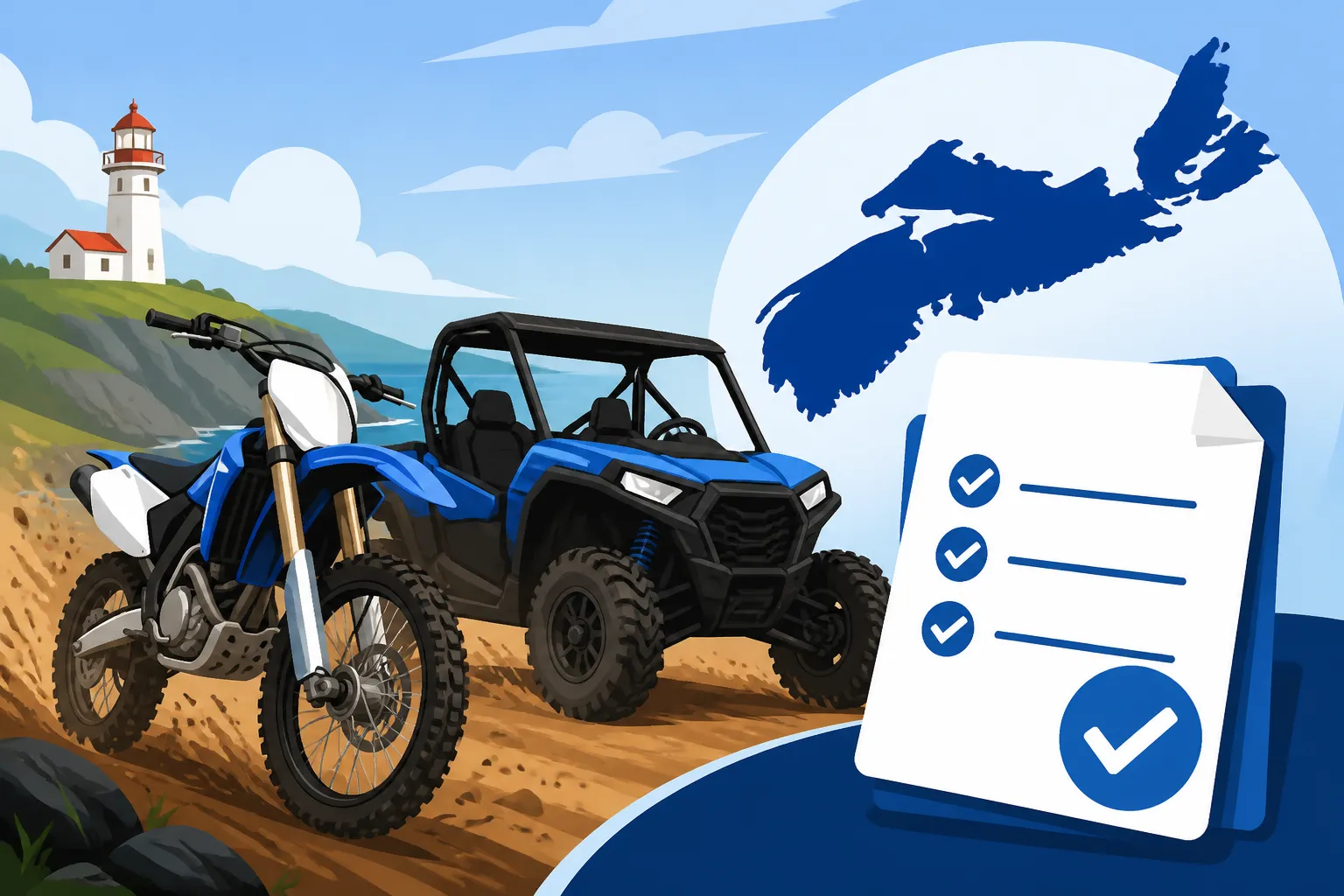
Nova Scotia Dirt Bike Paperwork Checklist
| Document Type | Purpose | Issued By | Frequency | Notes |
|---|---|---|---|---|
| Certificate of Registration | Proof of legal ownership, one-time provincial record | Access Nova Scotia | Once (per owner) | Stays with machine until sold, then transferred. |
| Vehicle Permit | Annual authorization to operate off-highway | Access Nova Scotia | Annually | Must be renewed each year; sticker often affixed to machine. |
| Bill of Sale | Proof of purchase price and transfer of ownership | Private Seller / Dealer (or template like LawDepot) | At point of sale | Crucial for used machines and tax assessment. |
| Proof of Insurance (Pink Card) | Evidence of mandatory liability coverage | Insurance Provider | Annually (with policy) | Must be carried at all times while riding. |
| Personal ID | Confirm identity as registered owner | Provincial Government | Valid (as per expiry) | Driver's license or provincial ID. |
This article is for general informational purposes only and does not constitute professional advice. Laws, prices and regulations vary by location and change over time. Consult a qualified professional for guidance on your specific situation.