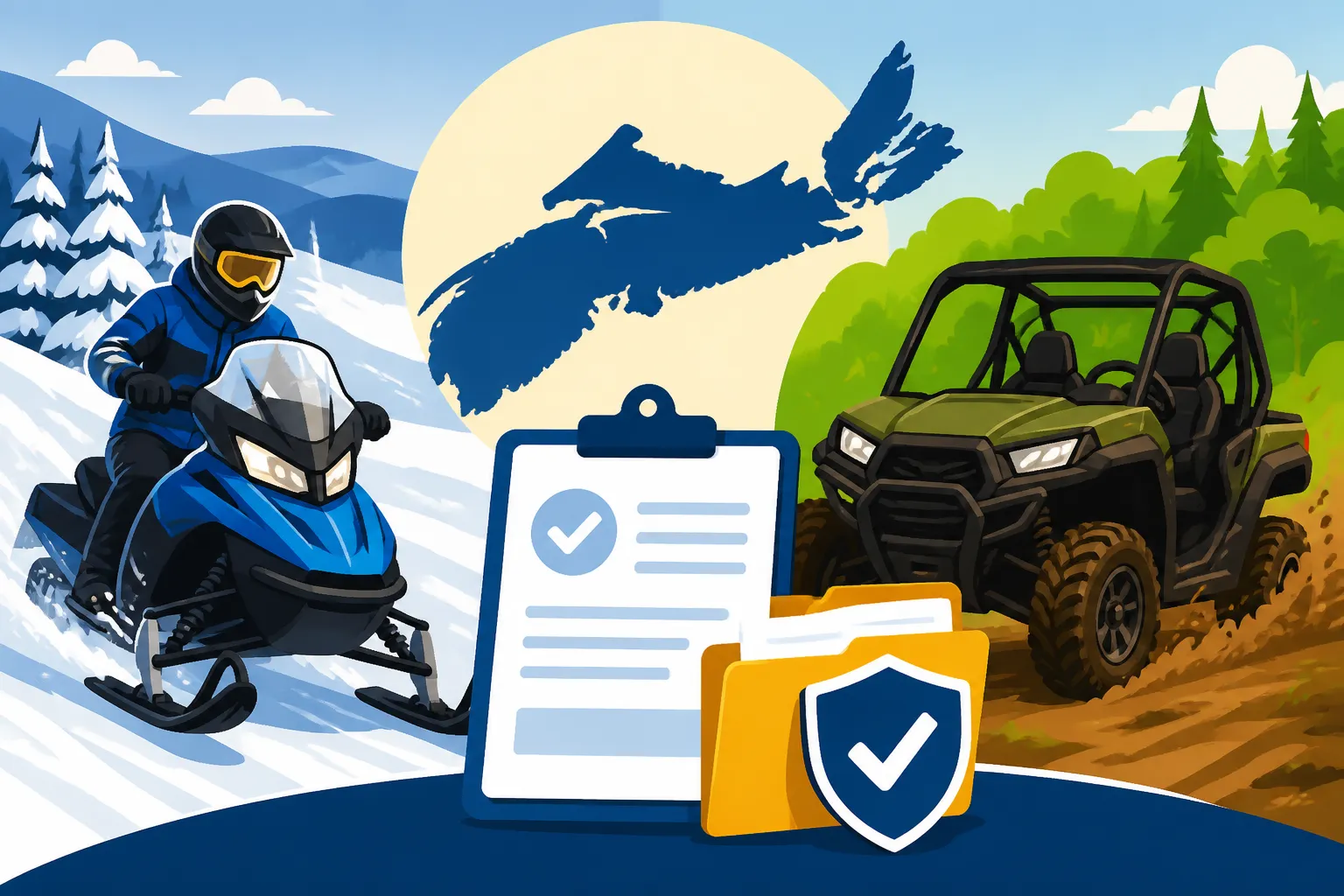
Snowmobiles and Nova Scotia Paperwork
It can be incredibly frustrating to get ready for a fantastic snowmobile season only to realize you're unsure about the exact paperwork required to hit the trails legally in Nova Scotia. The rules for off-highway vehicles (OHVs) can seem complicated, especially when trying to differentiate between what applies to an ATV, a UTV, and your beloved sled. This guide aims to clear up all that confusion, walking you through the ins and outs of registering your snowmobile and understanding the associated permits and fees so you can focus on the joy of gliding through fresh powder.
Deciphering Nova Scotia's Registration Process for Snowmobiles
Before you even think about firing up that engine and heading out for a winter adventure, your snowmobile needs to be properly registered with the province. This isn't just a suggestion; it's a legal requirement that ensures every machine operating in Nova Scotia is identifiable and accountable. It’s a foundational step to being a responsible snowmobiler.
Why Your Snowmobile Needs to Be on the Books
Think of registration as your snowmobile's official identity card. It provides a unique identifier for your machine, which is crucial for law enforcement, especially in cases of theft or accidents. Beyond identification, the registration process helps fund the province's OHV infrastructure. A portion of the fees collected goes towards maintaining and developing trails and supporting the overall OHV network. Skipping this vital step can lead to significant penalties, including hefty fines. Nobody wants to be pulled over and faced with a [Nova Scotia Fines for an Unregistered Machine] when they should be enjoying the snowy landscapes. It simply isn't worth the risk.
This provincial oversight ensures that the trails you enjoy are part of a regulated system, contributing to safety and sustainability for all riders. It means that if an incident occurs, there's a clear paper trail of ownership. The system is designed to create a safer, more organized riding environment for everyone who ventures out on the snow.
Essential Documents for First-Time Snowmobile Registration
When you head to an Access Nova Scotia service centre to register your snowmobile for the first time, you'll need to come prepared with specific documentation. The process is straightforward, but missing even one piece of paper can lead to frustrating delays. For a brand new snowmobile, you'll typically need the New Vehicle Information Statement (NVIS) from the dealer, which is essentially the manufacturer's statement of origin. If you've bought a used snowmobile from a private seller, you'll need a properly filled-out Bill of Sale and the previous owner's Certificate of Registration.
In addition to proof of ownership, you'll need valid personal identification and proof of your Nova Scotia residency. It’s also absolutely critical that the Vehicle Identification Number (VIN) on your paperwork matches the VIN physically stamped on your snowmobile. Any discrepancies here will halt the process. For private sales, using a standardized Bill of Sale template can be incredibly helpful to ensure all necessary information is captured; resources like LawDepot offer templates that can simplify this. Preparing these documents beforehand will save you a lot of time and hassle. For a comprehensive overview, you can refer to a [Nova Scotia Registration Paperwork Checklist].
Here's a quick look at the documents you'll typically need:
| Document Type | New Snowmobile Purchase | Used Snowmobile Private Sale |
|---|---|---|
| Proof of Ownership | New Vehicle Information Statement (NVIS) | Previous Owner's Certificate of Registration |
| Bill of Sale (from dealer) | Bill of Sale (from private seller) | |
| Personal Identification | Valid Driver's License or Photo ID | Valid Driver's License or Photo ID |
| Proof of Residency | Utility bill, bank statement, etc. | Utility bill, bank statement, etc. |
| Machine Identification | Clear and legible VIN | Clear and legible VIN |
Where and How to Register Your Sled
The primary place to get your snowmobile registered in Nova Scotia is at any Access Nova Scotia service centre. These centres are staffed with helpful individuals who can guide you through the forms and ensure all your paperwork is in order. It's usually an in-person process, especially for the initial registration, as they'll need to verify your identity and documents. While some minor transactions might eventually be available online, for the first-time setup, a visit is almost always required.
When you arrive, you'll be asked to fill out specific application forms, declare the purchase price (for tax calculation purposes if it was a private sale), and present all your supporting documents. The staff will review everything, process the fees, and issue your Certificate of Registration and Vehicle Permit. It's a fairly smooth process if you have everything organized. If you're wondering where your nearest service centre is or what hours they operate, looking up [Registry Counter or Service Centre: Where to Register] can help you plan your visit. Take a moment to review the forms before you go; sometimes, having an idea of the questions asked can make the process even quicker.
Understanding the Financial Side of Snowmobile Paperwork
Owning a snowmobile isn't just about the purchase price; there are ongoing costs associated with its legal operation. The registration process itself involves a few different fees, and it’s important to understand what each one covers and how frequently you'll need to pay them.
Breaking Down the Initial and Recurring Fees
When you first register your snowmobile in Nova Scotia, you'll encounter two main provincial fees: a one-time Certificate of Registration fee and an annual Vehicle Permit fee. The Certificate of Registration is essentially the document that proves you own the machine, much like a title for a car, and you only pay for this once as long as you own that specific snowmobile. It stays with the owner for the life of their ownership of that particular machine.
The Vehicle Permit, on the other hand, is an annual fee that keeps your snowmobile legally "on the road" (or, in this case, on authorized trails and designated areas). This permit must be renewed every year. Tied into this annual fee is a contribution to the Nova Scotia OHV Infrastructure Fund, often referred to as a "trail levy." This levy helps support the maintenance and development of the province's OHV trail network, which benefits all riders, including snowmobilers. While we can't share exact figures, understanding the shape of these costs – one-time vs. annual, and the purpose behind them – is key for budgeting. For more details on the general costs involved, checking [Nova Scotia OHV Registration Cost] can provide context, and [One Fee Paid Once, Another Paid Every Year] explains the structure clearly.
Tax Obligations When Acquiring a Snowmobile
Whether you're buying a brand-new snowmobile from a dealer or picking up a used one from a private seller, you'll need to account for Harmonized Sales Tax (HST). For new snowmobiles, the dealer typically collects the HST at the point of sale, and it's included in your purchase price. When you buy a used snowmobile from a private individual, however, you'll pay the HST directly to Access Nova Scotia when you go to register the machine. This is why accurately declaring the purchase price on your Bill of Sale is so important.
The province uses that declared price to calculate the HST due. It’s crucial to have a clear, official-looking Bill of Sale – again, resources like LawDepot can be invaluable for generating professional documents that ensure all parties agree on the details. Under-declaring the purchase price can lead to penalties if discovered, so honesty is always the best policy. Ensure you understand that this tax is separate from the registration fees. The province needs to collect its portion before your permit can be issued. More information on how this tax is handled can be found under [Nova Scotia Tax Collected at Registration].
Renewing Your Snowmobile's Permit Annually
Once your snowmobile is initially registered, you’ll enter the annual renewal cycle for your Vehicle Permit. This is the fee you'll pay every year to keep your machine legal for operation. Typically, you'll receive a renewal notice in the mail or digitally, reminding you when your permit is due. Renewing is generally a simpler process than the initial registration, often available online or by mail, in addition to in-person at Access Nova Scotia.
It's vital not to let your permit lapse. Operating an unregistered or unpermitted snowmobile can lead to those aforementioned fines and legal headaches. Keeping track of the expiry date and renewing promptly ensures continuous legal operation. The renewal fee generally covers the annual Vehicle Permit and the Infrastructure Fund levy, contributing once again to the provincial trail system. The process for renewing a snowmobile permit is very similar to that for an ATV, so consulting [Nova Scotia ATV Permit Renewal] can give you a good idea of what to expect. Mark your calendar so you don't miss that important date!
Navigating Common Snowmobile Ownership Scenarios
Snowmobile ownership isn't always a straightforward "buy new, register once, renew annually" affair. There are specific situations that arise, especially when dealing with used machines or understanding the relationship between registration and trail access.
Registering a Used Snowmobile from a Private Seller
Buying a used snowmobile can be a great way to get into the sport, but it comes with its own set of paperwork considerations. When you purchase a sled from a private seller, the responsibility falls on you, the buyer, to transfer the ownership into your name. This process requires a valid Bill of Sale signed by both you and the seller, detailing the snowmobile's make, model, year, and VIN, along with the purchase price. You’ll also need the previous owner's Certificate of Registration.
The key here is proper documentation. If the previous owner can't provide the original Certificate of Registration, you might have to complete a sworn declaration, which can complicate and delay the process. It's always best practice to insist on seeing these documents before finalizing the sale. You should also take steps to check if there are any outstanding liens on the snowmobile, as these could become your responsibility. Doing your due diligence ensures a smooth transfer. For a detailed guide on this process, see [Nova Scotia Registration After a Private Sale]. Always remember that a robust Bill of Sale, potentially drafted using a service like LawDepot, can protect both buyer and seller.
Snowmobile Trail Permits: A Crucial Separate Step
This is where a lot of confusion often creeps in for new snowmobile owners. Having your snowmobile registered with Access Nova Scotia (getting your Certificate of Registration and Vehicle Permit) makes it legal to own and operate on designated off-highway vehicle areas, but it does not automatically grant you access to organized, groomed snowmobile trails. For that, you need a separate trail permit.
Snowmobile trail permits are typically issued by the provincial snowmobile association, which works with local clubs to maintain thousands of kilometres of groomed trails across Nova Scotia. These permits fund the vital work of trail maintenance, signage, bridge repairs, and grooming equipment that makes your winter riding possible. It's a completely separate permit and fee structure from the provincial registration. Therefore, you'll need both a valid provincial registration (Vehicle Permit) and a valid snowmobile trail permit to legally ride on most organized snowmobile trails. It's important to note that [Nova Scotia Permits Not Valid for Snowmobiles] refers to ATV trail permits; snowmobilers need their own specific permit.
When Your Snowmobile Might Be Exempt from Registration
While most snowmobiles need to be registered, there are specific situations where an exemption might apply. The most common exemption is for machines that are operated exclusively on private property owned by the operator. If your snowmobile never leaves your own land and is never used on public trails, roads, or other Crown land access points, then it might not require registration.
However, even crossing a road briefly or accessing a neighbour's property can negate this exemption. It’s a very specific rule and needs careful consideration. There are also sometimes exemptions for specific commercial uses, such as some agricultural or forestry operations, but these are less common for recreational snowmobiles and usually have strict conditions. If you think your situation might qualify for an exemption, it's always best to contact Access Nova Scotia directly to confirm. Don't assume; verify! Understanding the specifics of [Nova Scotia Own-Property Exemption] is crucial if you plan to only use your machine on your land.
Ensuring You're Legally Ready for the Snow Season
Registration is just one piece of the puzzle. To ensure you're fully prepared and protected for your snowmobile adventures in Nova Scotia, there are a few other critical aspects to consider, from insurance to safety.
Beyond Paperwork: Insurance and Safety Training
Just like with other OHVs, your snowmobile needs to be insured. Nova Scotia law mandates that all off-highway vehicles, including snowmobiles, carry a minimum amount of liability insurance. This insurance protects you financially if you're involved in an accident where you are at fault and cause injury to someone else or damage to their property. While the provincial minimum is a starting point, many riders choose to carry higher limits for greater peace of mind. Your "pink card" or proof of insurance should always be accessible when you're operating your snowmobile. For more on what's required, review [Nova Scotia Insurance Requirements for Riders].
Beyond insurance, safety training is paramount, especially for younger riders. Nova Scotia has specific age requirements and training mandates. While there are some "grandfathered" exemptions for experienced adult riders, new riders, particularly those under a certain age, are generally required to complete an approved OHV safety course. This training provides essential skills and knowledge to operate a snowmobile safely and responsibly, minimizing risks for yourself and others on the trail. If you're 16, for example, there are specific rules and training requirements you'll need to meet, as outlined in [Nova Scotia Safety Training at 16].
Avoiding Common Registration Pitfalls
It's easy to make a small mistake that can lead to big headaches when dealing with paperwork. One common pitfall is providing incorrect or incomplete information on registration forms, especially the VIN. Always double-check this critical number against your machine. Another mistake is assuming that the fees are static; while we don't provide current figures, it's wise to be aware that provincial fees can change over time, so always check with Access Nova Scotia for the most up-to-date costs.
Perhaps the biggest pitfall for snowmobilers is conflating provincial registration with a trail permit. They are distinct requirements. Many new riders mistakenly believe that once their sled is registered with Access Nova Scotia, they're good to go on any trail, only to find themselves stopped by a trail warden and facing a separate fine for not having a valid trail permit. Understanding this distinction from the outset will save you hassle and money. Keeping these points in mind can help you avoid many of the [Registration Mistakes Nova Scotia Riders Make].
Resources for Snowmobile Owners
Even with all the information in the world, sometimes you just need to talk to a person. If you have specific questions about your snowmobile's registration or unique circumstances, your best resource is always Access Nova Scotia. You can visit a service centre in person, or you can call their dedicated OHV line for assistance. They are the official source of truth for all provincial registration matters.
Additionally, don't forget about provincial snowmobile associations and their member clubs. While they handle trail permits, they are also a wealth of knowledge regarding safe riding practices, trail conditions, and local regulations that might impact your riding experience. Building a relationship with your local snowmobile club not only supports the trails but also connects you to a community of experienced riders. If you need immediate assistance with registration questions, remember you can always be proactive and make a [Calling the OHV Line for Help].
Disclaimer
This article is for general informational purposes only and does not constitute professional advice. Laws, prices and regulations vary by location and change over time. Consult a qualified professional for guidance on your specific situation.