Insuring a Machine at the Counter
It's incredibly frustrating to get all your ducks in a row for something as exciting as registering your new (or new-to-you) ATV or UTV, only to hit a snag at the very last minute. Many Nova Scotian riders assume they can simply walk into an Access Nova Scotia centre and sort out their insurance on the spot, only to learn that you absolutely must have your off-highway vehicle (OHV) insurance squared away beforehand. This guide is going to walk you through exactly what Nova Scotia requires for OHV insurance, why it's so important to have it ready before you head to the counter, and what to expect when you get there.
Why Insurance is a Must-Have for Your Nova Scotia OHV
Let's face it, nobody wants another expense, especially when you're already excited about hitting the trails or getting some work done with your machine. But when it comes to off-highway vehicles in Nova Scotia, insurance isn't just a suggestion—it's a legal requirement. Ignoring this step can lead to a world of headaches, from being turned away at the registration counter to facing significant financial and legal repercussions down the road.
It's the Law: Avoiding Penalties
First and foremost, the province mandates that all off-highway vehicles operated in Nova Scotia must be insured. This isn't just a bureaucratic hoop to jump through; it's a critical piece of legislation designed to protect everyone on and near the trails. If you're caught riding an uninsured machine, the penalties can be steep. We're talking about fines that can put a serious dent in your wallet, and nobody wants that. [Nova Scotia Penalties for Riding Uninsured] can be a harsh reality check, quickly outweighing any perceived savings from skipping insurance.
Beyond fines, riding uninsured means your machine cannot be legally registered. You’ll find yourself at an Access Nova Scotia counter, all your other paperwork in order, only to be politely but firmly told that you can't complete the registration process without proof of valid insurance. This means another trip, more time out of your day, and continued frustration. The legal framework is clear: no insurance, no registration, no riding.
Protecting Yourself and Others
While the law provides the mandatory push, the real value of OHV insurance lies in the protection it offers. Accidents happen, even to the most careful and experienced riders. Imagine you're out on a beautiful trail in Cape Breton, enjoying the scenery, and suddenly, an unforeseen obstacle causes you to swerve and hit a private fence, or worse, cause injury to a bystander. Without insurance, the financial burden of repairing that fence, covering medical costs, or defending against a lawsuit falls squarely on your shoulders.
This is where your insurance truly shines. It provides a safety net that covers you in various scenarios. Liability coverage, which is a provincial minimum, means that if you're found at fault for an accident that causes injury to another person or damage to their property, your policy will help cover those costs. Nova Scotia has a minimum liability requirement of [Nova Scotia's $500,000 Liability Minimum], which sounds like a lot, but in today's world, accidents can quickly rack up costs beyond that. Beyond liability, many policies also offer protection for your own machine against damage, theft, or fire, giving you peace of mind whether your quad is parked in your garage or navigating a challenging trail in the Annapolis Valley.
Understanding Nova Scotia's Minimum Insurance Requirements
Navigating insurance can feel a bit like wading through legal jargon, but understanding the core requirements in Nova Scotia for your ATV or UTV isn't as complicated as it might seem. The provincial government has clear guidelines to ensure everyone operating an OHV has a basic level of financial protection.
What Nova Scotia Requires: Beyond Basic Liability
At its heart, Nova Scotia's OHV insurance requirements focus on third-party liability coverage. This is the cornerstone of any vehicle insurance policy, ensuring that if you accidentally cause harm to another person or damage their property while operating your OHV, your insurance can step in to cover those costs up to a specified limit. As we mentioned, this minimum is substantial, designed to handle serious incidents.
However, a standard OHV insurance policy in Nova Scotia typically includes more than just liability. You'll often find [Nova Scotia Accident Benefits Coverage] included, which provides funds for medical expenses and lost wages if you or your passengers are injured in an OHV accident, regardless of who was at fault. Additionally, [Nova Scotia Uninsured Motorist Coverage] is a vital component, protecting you if you're involved in an accident with an uninsured rider who is at fault. These layers of protection ensure a more comprehensive safety net for you and your riding companions. When you secure your policy, your insurer will provide you with a "pink card," which is your official proof of insurance. [Nova Scotia Pink Card Rules] dictate that you must carry this proof whenever you're operating your machine.
When Insurance Isn't Required (and Why It's Still a Good Idea)
While insurance is generally mandatory for OHVs in Nova Scotia, there are a few specific exemptions. For instance, if you operate your OHV exclusively on your own private property and never venture onto public trails or roads, you might be exempt from the provincial insurance requirement. [Nova Scotia Insurance on Your Own Land] details this specific scenario. Similarly, machines used strictly for organized racing events on a closed course might fall under a [Nova Scotia Racing Machine Insurance Exemption].
However, even if you technically qualify for an exemption, it's wise to consider the inherent risks. Riding on private land doesn't eliminate the chance of an accident causing injury to yourself, a family member, or damage to your property. Imagine a scenario where a friend is visiting and, with your permission, takes your quad for a spin on your land and has an accident. If they get hurt, or accidentally damage something costly, having insurance, even if not legally required, could prevent a very uncomfortable and expensive situation. Always weigh the potential costs of an accident against the premiums, and often, the peace of mind that comes with coverage is well worth it, regardless of exemptions.
The Reality of Getting Insurance While Registering
This is where a lot of riders hit a stumbling block. Many people assume they can handle all their OHV paperwork, including insurance, in one fell swoop at their local Access Nova Scotia centre. This simply isn't how it works. Understanding this crucial distinction before you go can save you a world of frustration and a wasted trip.
Pre-Arranging Your Coverage is Key
Let's be absolutely clear: you cannot purchase OHV insurance at an Access Nova Scotia counter. Their staff are there to process registrations, issue permits, and handle provincial matters, not to sell insurance policies. Your insurance coverage must be secured before you even set foot in the centre to register your machine. This means you need to contact an insurance broker or a direct insurer who offers OHV policies in Nova Scotia.
The process usually involves getting a quote, providing details about your machine (make, model, VIN, year), your riding history, and where the machine will be stored. Once you're happy with a quote, you'll finalize the policy and pay the premium. After this, your insurer will provide you with proof of insurance – typically the aforementioned "pink card" or a temporary confirmation slip via email that you can print out. This proof is what you will present at Access Nova Scotia.
It's also worth noting that while LawDepot is an excellent resource for various legal documents, such as drafting a robust bill of sale for a private purchase or creating other essential legal agreements, it is not an insurance provider. For your actual OHV insurance policy, you'll need to go through a licensed insurance broker or company. They are the experts in getting you the right coverage for your machine. Think of it as preparing your legal foundation with tools like LawDepot, then building the walls with a specialist insurance provider.
What Happens at the Access Nova Scotia Counter
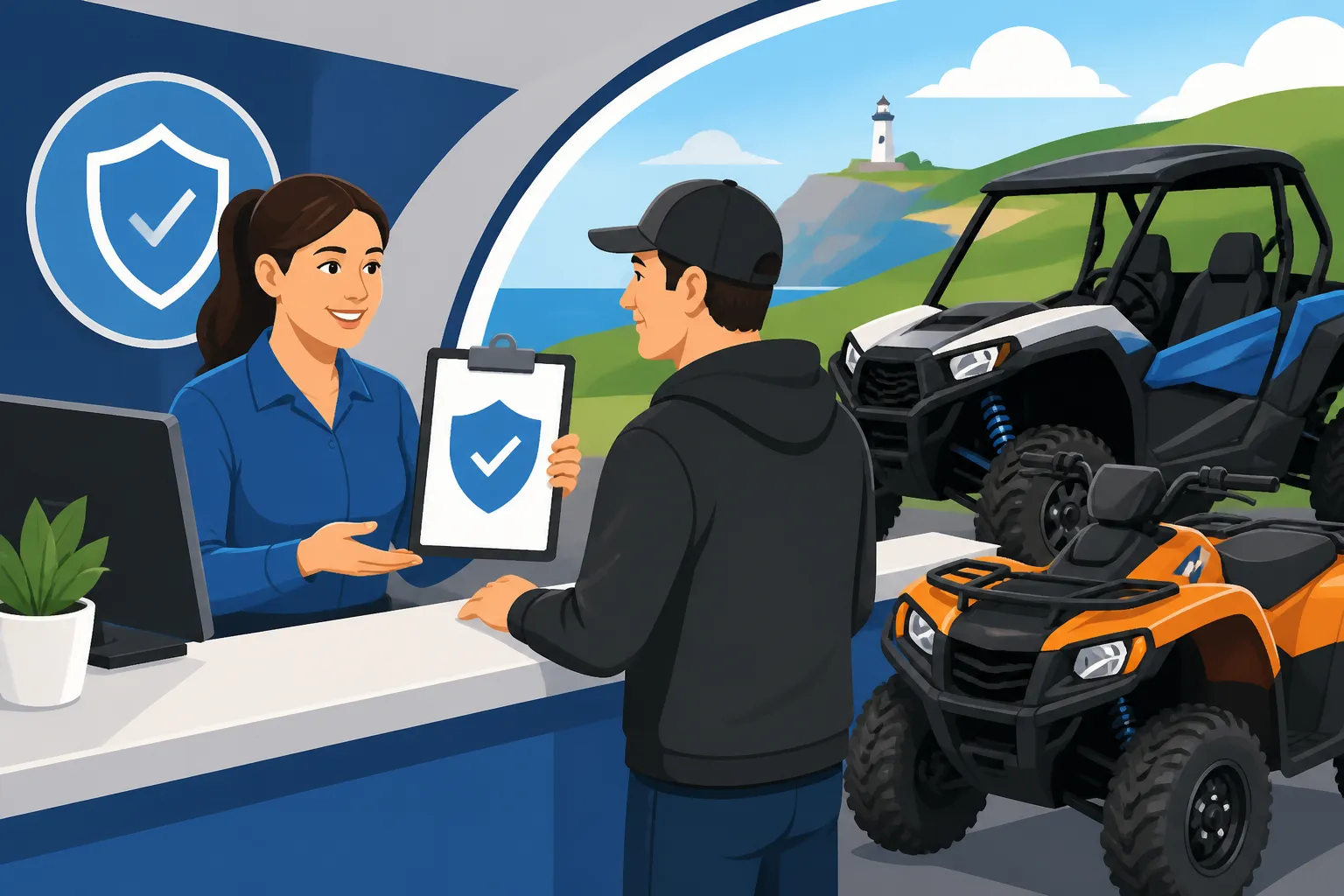
When you arrive at Access Nova Scotia to register your ATV or UTV, the process for verifying insurance is straightforward but firm. The clerk will ask to see your proof of insurance, which should be your physical pink card or a clear printout of a temporary slip. They will check the policy number, the effective dates of coverage, and ensure it matches the machine you are attempting to register.
If you don't have valid proof of insurance with you, or if the policy has lapsed, the clerk simply cannot proceed with your registration. They will inform you of the requirement and send you away to obtain the necessary coverage. This can be incredibly frustrating, especially if you've already spent time gathering all your other documents like your bill of sale, identification, and previous registration papers. Avoiding this wasted trip means being diligent about securing your insurance policy in advance. Always double-check your policy dates and ensure your pink card is in your wallet or with your registration documents before you head out the door. This little bit of foresight makes all the difference in a smooth registration experience.
What to Bring to the Counter for Insurance and Registration
So, you've got your new machine, and you're ready to get it legally registered and insured so you can start exploring Nova Scotia's incredible trails. The key to a smooth visit to Access Nova Scotia is preparation. Walking in with everything you need not only saves you time but also eliminates that frustrating feeling of forgetting something crucial.
Your Proof of Insurance (Pink Card)
As we've stressed, this is non-negotiable. Your "pink card" is the physical evidence that you have a valid OHV insurance policy in Nova Scotia. It typically includes your name, the machine's details (make, model, VIN), your policy number, and the effective dates of your coverage. If you've just secured a new policy, your insurer might email you a temporary proof of insurance document. Print this out and bring it with you. Do not rely on showing it on your phone, as some centres may require a physical copy for their records. The clerk needs to verify all the details clearly, and a crisp printout makes their job, and your experience, much easier. Remember, [Nova Scotia Insurance Requirements for Riders] are serious, and your pink card is your ticket to compliance.
The Full Registration Paperwork Checklist
While insurance is a specific requirement, it's part of a larger picture when registering your OHV. You'll need several other documents to complete the process. Think of it as putting together a complete puzzle; every piece is essential. Here’s a general rundown of what you should gather:
- Proof of Ownership: This is usually a Bill of Sale if you bought the machine from a private seller. If you purchased it from a dealer, they would provide the necessary ownership documents. For an inherited machine, you'd need the estate documents.
- Previous Registration (if applicable): If the machine was previously registered in Nova Scotia, having the previous owner's Certificate of Registration and Vehicle Permit is very helpful.
- Personal Identification: A valid government-issued ID (like a driver's license) is a must.
- Proof of Address: Sometimes required, especially if your ID doesn't reflect your current Nova Scotia address.
- Your Money! There will be registration fees, which might include an initial certificate fee and an annual permit fee. [Nova Scotia OHV Registration Cost] involves several components, and you'll need to be ready to pay them.
For a detailed list, check out the [Nova Scotia Registration Paperwork Checklist]. It's always a good idea to ensure all documents, especially bills of sale, have the machine's Vehicle Identification Number (VIN) clearly stated. Taking a photo of the VIN at the time of purchase, and making sure it matches the paperwork, is a smart move. [Checking a Serial Number Before the Money Moves] can save you from potential headaches down the line.
Here’s a handy table to help you keep track of what to bring:
| Document Category | Specific Items | Purpose at Counter |
|---|---|---|
| Proof of Insurance | Nova Scotia Pink Card or temporary printed proof | Mandatory verification of liability and accident benefits coverage |
| Proof of Ownership | Bill of Sale (private sale) / Dealer paperwork / Estate documents | Establishes your legal right to register the OHV |
| Identification | Valid Government-Issued ID (Driver's License, Passport, etc.) | Confirms your identity |
| Previous Registration | Previous owner's Certificate of Registration and Vehicle Permit (if applicable) | Helps transfer ownership efficiently, confirms machine history |
| Payment Method | Debit card, Credit card, or Cash | To pay registration fees, certificate fee, and annual permit fee |
| VIN Verification | Ensure VIN is on all ownership documents | Confirms the machine's identity, prevents fraud |
| Proof of Address | Utility bill, lease agreement (if ID address differs) | May be requested to confirm residency in Nova Scotia |
By having all these documents meticulously organized before you leave home, you're setting yourself up for a hassle-free experience at Access Nova Scotia. This attention to detail means you’ll soon be legally riding your ATV or UTV across the beautiful landscapes of Nova Scotia. You'll be ready to [How to Register an ATV in Nova Scotia] and finally hit those trails!
Disclaimer
This article is for general informational purposes only and does not constitute professional advice. Laws, prices and regulations vary by location and change over time. Consult a qualified professional for guidance on your specific situation.