Best Nova Scotia ATV Trails for Beginners
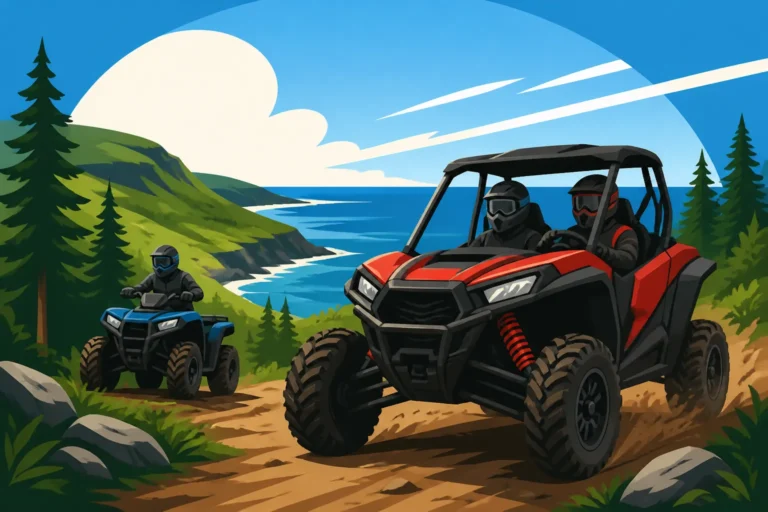
A first ATV ride in Nova Scotia can feel harder to plan than to ride: a trail may look wide and easy on a map, yet access rules, surface conditions, and nearby road connections can change what’s appropriate for your machine. This guide points beginners toward gentler route types and well-known corridors, and shows how to check access and prepare before setting out.
What makes a Nova Scotia ATV trail beginner-friendly
Look for predictable surfaces and easy turnarounds
A beginner-friendly trail is usually less about a famous destination and more about how manageable the route feels once you’re on it. Wide, relatively level corridors with good sightlines give you more room to choose a line, slow down, and let other trail users pass. That can be a welcome change from narrow, rutted sections where a small steering mistake feels much bigger.
Former rail corridors can be appealing for a first ride because their grades are often gentler than steep, technical trails. That doesn’t mean every section is smooth or open to ATVs. You may still encounter gravel, mud, standing water, loose stone, washouts, gates, or sections where motorized use is not allowed. Start with a short out-and-back rather than committing to a long point-to-point trip. If the trail becomes rougher than expected, you can turn around without worrying about reaching a distant exit.
Before choosing a route, check its difficulty information and think honestly about your comfort level. A route described as easy can still be tiring if it’s wet, windy, or crowded. [Nova Scotia Trail Difficulty Ratings] can help you understand what to look for, but treat the rating as one part of your decision, not a guarantee about the surface on the day you ride.
Choose a route that matches your machine and experience
A large side-by-side may feel stable on a broad trail, but its width can make tight turns, barriers, and narrow bridges more challenging. A small ATV may fit more easily but still struggle with deep mud or loose climbs. Check whether the route is suitable for your vehicle, and don’t assume that because a corridor is physically wide enough, your machine is permitted there.
If you’re new to riding, choose a short section with clear access points and an easy return. Riding with an experienced companion can help you feel more confident, especially if you’re still learning how your machine brakes on gravel or handles uneven ground. Give yourself time to practise starts, stops, and slow turns in a safe, permitted area before heading onto an unfamiliar trail.
Nova Scotia trail areas worth considering for a first ride
The corridors below are useful starting points for researching a beginner outing, not blanket recommendations that every section is open to ATVs. Access can vary by segment, landowner, municipality, and trail operator. Confirm current motorized access and local conditions before you unload your machine.
| Trail area | Why it may suit a beginner | Check before you go |
|---|---|---|
| Celtic Shores Coastal Trail | A long rail-trail corridor offers the possibility of choosing a shorter section rather than tackling a technical loop. | Confirm which sections allow your type of machine, where you can park, and whether any closures or reroutes are in place. |
| Harvest Moon Trailway | A rail-trail setting can be a good candidate for an easy-paced outing where the permitted route is suitable. | Check access by segment and be prepared to share the corridor with other users. |
| Pugwash Salt Express Trail | A named corridor to investigate when planning a ride in the Northumberland Shore area. | Verify motorized use, surface conditions, and practical entry and exit points. |
| A local ATV club trail | Local knowledge can help you find a route suited to your ability and current conditions. | Ask about difficulty, closures, parking, and any permit requirements. |
Celtic Shores Coastal Trail
The [Celtic Shores Coastal Trail in Nova Scotia] is a well-known Cape Breton corridor that many riders may want to investigate when planning a trip. Its length can make it tempting to picture a full-day ride, but beginners are often better off selecting a short section and treating it as a trial outing. The best starting point is the part that is confirmed open to your machine and has a straightforward way back to your vehicle.
A coastal setting can bring changing weather, exposed stretches, and damp or soft surfaces. Don’t let a scenic name—or a smooth-looking map line—convince you that every stretch will be easy. Check access and current conditions, then decide on a turnaround point before you leave. If the surface becomes uncomfortable, turning back is a sensible riding decision, not a failure.
Harvest Moon Trailway and Pugwash Salt Express Trail
The [Nova Scotia's Harvest Moon Trailway] and [Nova Scotia's Pugwash Salt Express Trail] are other corridors worth researching if you’re looking for a route that may include gentler rail-trail terrain. A rail bed can still have rough patches, and motorized access may not apply along its full length. Confirm the exact segment and your machine’s eligibility rather than relying on the trail name alone.
Both areas also call for considerate shared-trail habits. Slow down near walkers, cyclists, homes, road crossings, and trailheads. Keep to the marked route, watch for signs, and don’t pass unless there is ample room and it is safe to do so. A quiet, unhurried first ride helps you build confidence while making the corridor more pleasant for everyone.
How to confirm access and plan a safe route
Check that your chosen section allows your machine
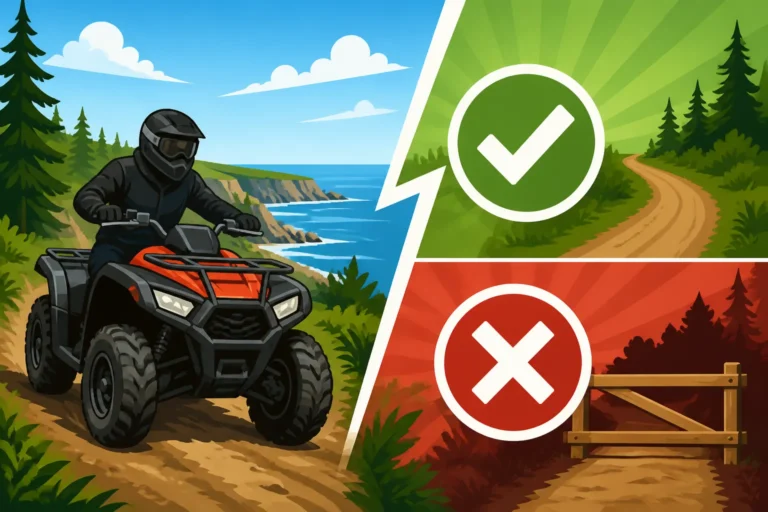
One of the most frustrating planning surprises is arriving at a trailhead and finding that the route is closed to motorized use, or that the access rules don’t match your machine. A trail being visible on a map does not mean ATVs or UTVs are allowed on it. The permitted use may change between sections, and some corridors are shared with walkers, cyclists, or other users.
Start with local club or trail-operator information, posted signs, and any official access guidance available for the area. [Checking Whether a Segment Allows Machines] is an important step before you plan mileage or invite a group. If you’re unsure, ask the organization responsible for the trail instead of treating a map line or an online comment as permission.
Mapping tools such as onX Offroad can help you plan and keep track of a route, but a digital map should not be your proof of legal access. Check what the map actually shows, compare it with local information, and follow signs on the ground. Use [Nova Scotia Trail Maps Worth Downloading] as another planning reference, and confirm that the map is current enough for the route you intend to ride.
Check permits, conditions, and practical details
Before riding, make sure you understand the requirements that apply to your machine and destination. Registration, insurance, and trail-permit rules are separate issues, and one does not automatically replace another. If you are unsure which permit applies, read [Nova Scotia's Club Membership Trail Permit] and confirm the requirements for the specific trail or club area.
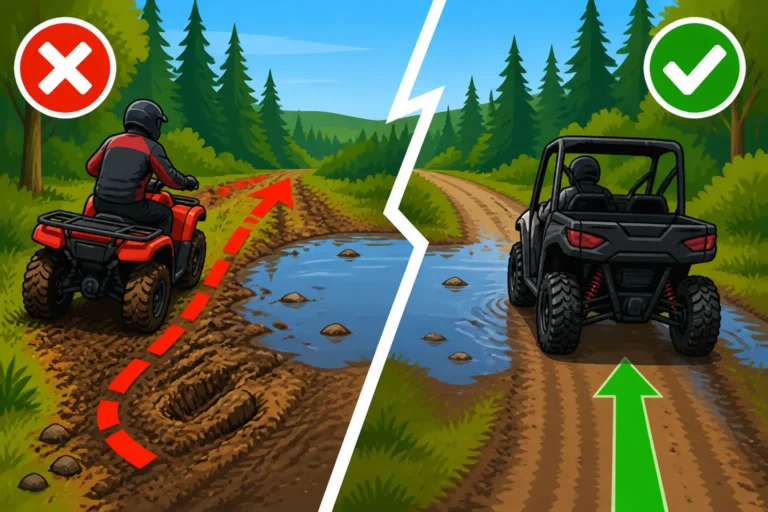
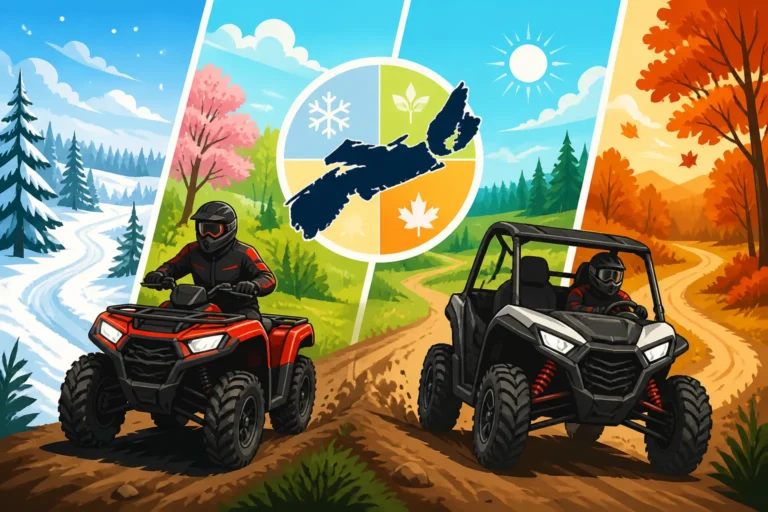
Check for closures, construction, washouts, seasonal restrictions, and weather-related changes shortly before leaving. [Nova Scotia Trail Conditions and Closures] is a useful topic to review when building your checklist. A route that was manageable in dry weather can feel very different after rain or during spring thaw, when soft ground and muddy sections can become difficult—and riding around a wet patch may widen trail damage.
Plan the basics too: where you will park, how much fuel you need, where you will turn around, and how you will contact your riding partner if the group gets separated. Save the route for offline use if your phone’s coverage may be unreliable. onX Offroad may be useful as a route-planning aid, but carry a backup plan and don’t depend on a single app or phone battery for navigation.
A simple first-ride plan for beginners
Keep your first outing short and flexible
For a first trip, choose a permitted section with an easy return and plan to ride for less time than you think you can manage. New riders often underestimate how much concentration it takes to watch the trail, control speed, and respond to surface changes. Fatigue can arrive before the machine runs low on fuel, especially if you’re tense or unfamiliar with the controls.
Before moving, check that everyone understands the route, meeting points, and turnaround plan. Agree that anyone can call for a stop without pressure to keep going. If one rider is uncomfortable with a muddy rut or steep patch, the group should pause and find a safe alternative rather than making that person feel they have to push through.
Pack water, weather-appropriate layers, basic first aid supplies, and the equipment required for your machine and riding area. A small tool kit and a charged phone are useful, but they do not replace preparation. Tell someone who is not riding where you expect to go and when you plan to return.
Ride at a pace that leaves room to react
On an unfamiliar trail, ride slowly enough that you can stop within the distance you can see clearly. Leave space between machines so dust, stones, or sudden braking do not create a chain reaction. If you meet other trail users, slow down early and pass only when it is safe and permitted. [Nova Scotia Trail Etiquette Locals Expect] is worth reviewing before you join a busy corridor or ride with a group.
For a UTV, remember that extra width can make a narrow trail or barrier harder to navigate. For an ATV, stand only when appropriate and keep your weight balanced over uneven ground. Avoid attempting obstacles simply because another rider makes them look easy. Choosing a different route or turning back is often the smartest way to end a first ride feeling ready for the next one.
A good beginner ride doesn’t need a big mileage total. It needs a legal route, comfortable conditions, and enough time to learn how your machine behaves. Research one or two possible sections, check access with the responsible local organization, and keep the plan flexible. As your confidence grows, you can gradually try longer routes and more varied terrain.
Disclaimer
This article is for general informational purposes only and does not constitute professional advice. Laws, prices and regulations vary by location and change over time. Consult a qualified professional for guidance on your specific situation.