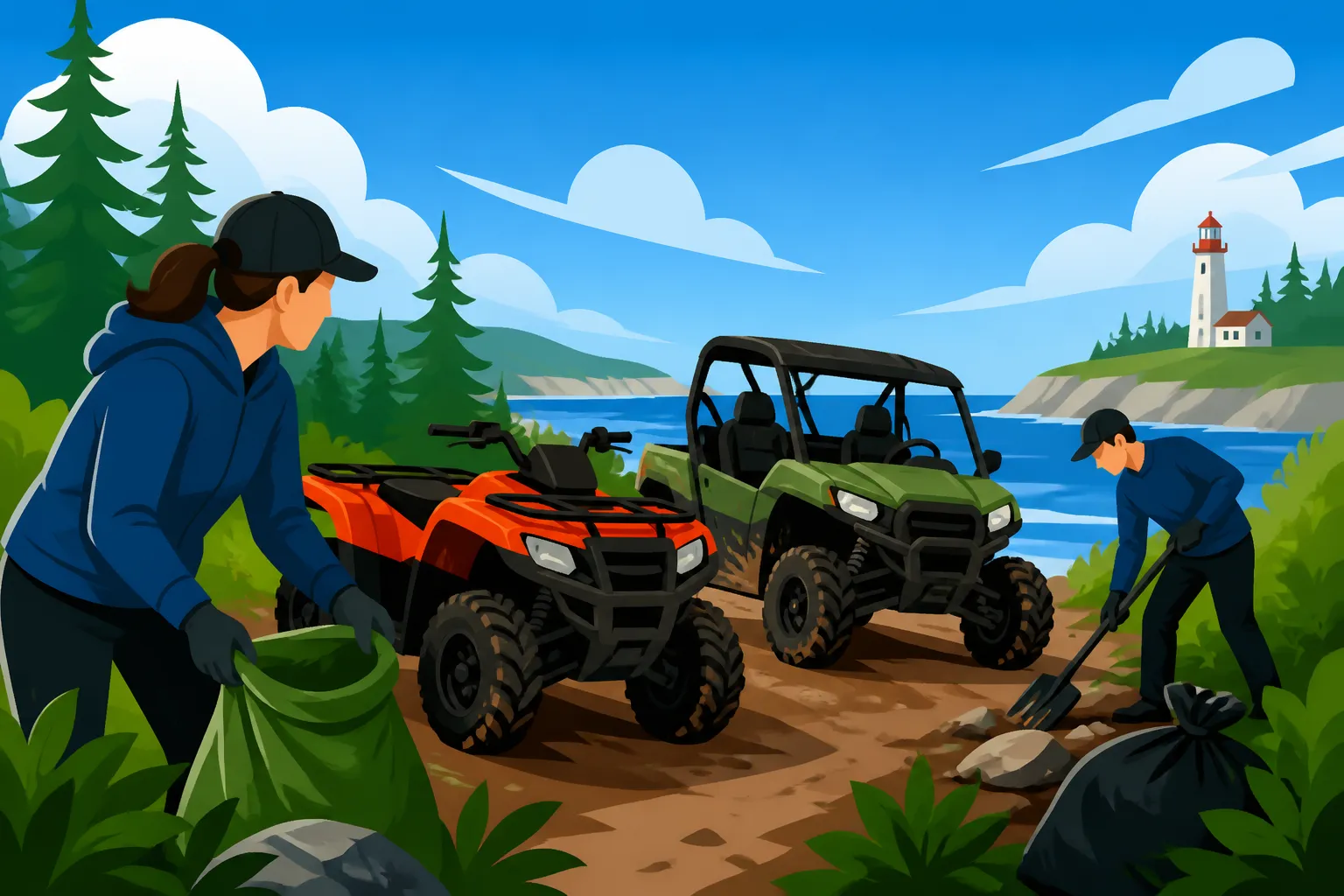
Nova Scotia Club Volunteer Days
A volunteer day can turn a rough, overgrown Nova Scotia trail into a safer and more enjoyable ride, but it helps to know what you’re signing up for before you arrive. This guide explains how to find a local club workday, what tasks may involve, what to bring, and how to help without damaging trails or putting yourself at risk.
What Happens on a Nova Scotia ATV Club Volunteer Day
The work depends on the trail and the season
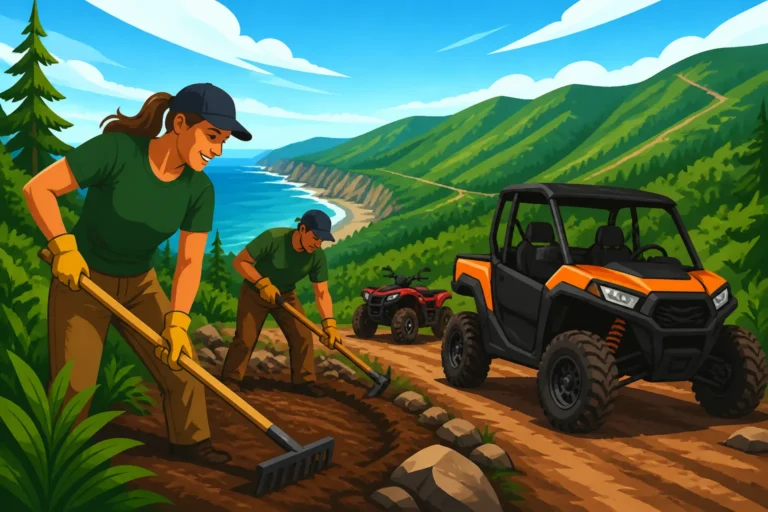
A club volunteer day is usually practical, hands-on work to keep a trail open, safe, and usable. The task might be clearing branches, trimming brush, picking up litter, checking signs, or repairing a section affected by erosion or a washout. A corridor on an old rail line may need different attention from a narrow route through a wooded area, so the work can vary from one outing to the next.
Spring and early summer can bring debris from winter storms, while heavy rain can expose drainage problems or damage trail surfaces. Later in the season, a club may focus on brushing back vegetation or checking signs at junctions. Conditions and priorities change, so ask the organizer what the day is expected to involve rather than assuming every event is a general cleanup. For broader context on upkeep, see [Nova Scotia Club Trail Maintenance](Nova Scotia Club Trail Maintenance).
A workday may also involve more than the trail itself. Volunteers might meet at a trailhead or another agreed location, divide into smaller groups, and travel to a work area. Some people may walk in, while others may use an ATV or side-by-side to carry tools or supplies. Follow the club’s instructions about where to park, how to access the site, and which machines are permitted for the work.
Volunteer work is organized around local needs
Local clubs know their corridors, land-access arrangements, and recurring maintenance issues. That local knowledge matters in Nova Scotia, where trails may pass through different kinds of land and may be affected by weather, seasonal conditions, or a landowner’s access requirements. A task that looks simple from the trail can involve coordination, permissions, or safety considerations that aren’t obvious to a first-time volunteer.
If you’re new, it’s completely reasonable to ask what the day involves and whether you need experience. Many tasks can be shared among people with different abilities. You might help with a litter pickup, carry light supplies, or assist with checking a section of trail rather than operating equipment. Don’t take on a task you aren’t comfortable doing; the organizer can usually explain the options.
To connect with people who know the nearby corridors, start with [Finding a Member Club Near You in Nova Scotia](Finding a Member Club Near You in Nova Scotia). Ask whether the club has a public contact method or upcoming volunteer opportunity, and check the details directly with the organizer. Don’t assume a workday is happening just because a trail appears on a map or has been open in the past.
How to Find and Join a Workday
Start with a club that maintains the area
Choose a club connected to the trail or region you want to support. A club working near your home may be the easiest place to begin, but you can also ask about work in an area you ride regularly. If you’re unsure which group is responsible for a particular corridor, a local club or the provincial ATV association may be able to point you in the right direction.
When you reach out, be specific and friendly. You could say that you’re new to volunteering, name the general area you’re interested in, and ask whether there is a suitable upcoming task. Mention whether you plan to bring a machine, if the organizer asks participants to provide that information. A clear question helps the club give you useful instructions instead of making you guess about the meeting place or equipment.
Before leaving home, confirm the date, meeting point, expected finish time, and any changes related to weather or trail conditions. Ask whether tools will be provided, whether you should bring work gloves, and whether the group expects volunteers to ride to the site. A message such as “Should I bring my own loppers, or will tools be supplied?” is more useful than arriving with equipment the club didn’t ask for.
Confirm access and trail conditions
A workday is not an invitation to explore every nearby route. Use the access route and work area specified by the organizer, and follow any restrictions or closures. If the planned section has changed after a storm, during spring thaw, or because of an access issue, the club may redirect the group. Check [Nova Scotia Trail Conditions and Closures](Nova Scotia Trail Conditions and Closures) when planning, but confirm the workday details with the club as well.
Maps can help you understand the general area and plan your travel to a meeting point. Some riders use onX Offroad to review routes and prepare for a trip, but a mapping app should not be treated as proof that a particular trail is open, authorized, or suitable for volunteer work. Confirm the location and access details with the club, especially if the route crosses private land or connects with other trail systems.
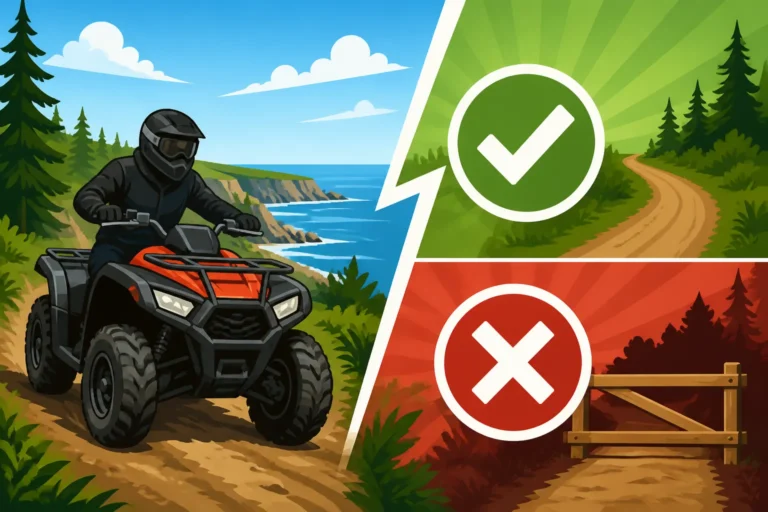
That extra check can prevent an awkward and potentially damaging mistake. A line shown on a map may not reflect a current reroute, temporary closure, or landowner request. If you reach a gate, sign, or marked boundary that doesn’t match what you were told, stop and contact the organizer rather than improvising a way around it.
| Before the volunteer day | What to confirm |
|---|---|
| Meeting details | Date, time, exact meeting point, and who to contact if plans change |
| Work area | Which trail section the group will visit and how volunteers should reach it |
| Access | Whether an ATV or side-by-side is needed or allowed for the task |
| Equipment | Which tools are supplied and what personal gear to bring |
| Conditions | Whether weather, a closure, or trail damage has changed the plan |
| Safety | Any required protective equipment, briefing, or task restrictions |
Preparing for Safe and Useful Trail Work
Bring practical gear and dress for the conditions
Wear sturdy footwear, clothing that can handle brush and mud, and gloves appropriate to the task. Pack drinking water, a snack, and weather protection; a damp coastal morning can feel very different from a warm afternoon. A small first-aid kit and any personal medications you may need are sensible additions, especially when the group will be working away from a road or settlement.
Ask before bringing power tools, chainsaws, or other specialized equipment. These tools can create serious risks if the operator is untrained or if the work area isn’t controlled. A volunteer day should have clear direction about who is allowed to operate equipment and how the work zone is managed. If no one has assigned you a tool-based task, don’t start cutting, digging, or moving trail structures on your own.
It’s also helpful to arrive with a flexible attitude. The advertised task may change because the group finds a blocked culvert, a damaged sign, or a condition that requires a different response. You might be asked to do less physically demanding work than you expected, or to stop work in one spot while a leader checks the situation. That isn’t wasted time; it’s part of doing the job responsibly.
Follow the briefing and stay within your role
At the start of the day, listen for the plan, boundaries, communication method, and emergency arrangements. Ask where the group will gather if it becomes separated and who is leading each task. If you’re operating a machine, make sure you understand the route and how the group plans to travel. Keep speeds conservative around people, tools, and trail users, and don’t assume everyone can hear or see you.
Stay within the task you’ve been given. If you notice a hazard outside the work area, report it to the leader instead of moving tools or making repairs without approval. This is especially important on trails that cross private woodlots. Respect the marked corridor and land-access rules; [Staying on the Marked Corridor Through Private Woodlots](Staying on the Marked Corridor Through Private Woodlots) and [Leaving Woodlot Gates Exactly as You Found Them](Leaving Woodlot Gates Exactly as You Found Them) are useful reminders for anyone working or riding in these areas.
Signs are another area where good intentions can lead to confusion. Don’t relocate, remove, or add a sign unless the club has assigned that task and confirmed its placement. Clear, consistent markers help riders understand where they can go and where they must stop. For more on reading trail markers, see [Nova Scotia Trail Signage Explained](Nova Scotia Trail Signage Explained).
Caring for Trails Beyond the Workday
Keep trail users, landowners, and neighbours in mind
Maintenance is only one part of keeping a trail network in good shape. The way riders use a corridor after the workday affects whether it remains welcoming and accessible. Stay on the marked route, ride at a considerate speed, and give other trail users room. When you encounter walkers, cyclists, or a work crew, slow down and follow the group’s direction rather than assuming they will move out of your way.
Noise, dust, and riding outside a marked corridor can also affect nearby residents and landowners. A shortcut around a wet patch may seem harmless, but repeated detours can widen a trail and damage vegetation. If a section is soft or blocked, follow the posted direction and let the club know what you found. [Nova Scotia Trail Etiquette Locals Expect](Nova Scotia Trail Etiquette Locals Expect) offers more guidance on sharing routes respectfully.
If you spot damage during a regular ride, record enough detail to help the club locate it: the nearby trail name or junction, the type of problem, and a clear description of what you observed. Share the information through the club’s preferred contact method. You don’t need to repair a fallen sign or clear a washout yourself. In fact, unapproved work can create safety and access problems. See [Reporting Trail Damage to a Nova Scotia Club](Reporting Trail Damage to a Nova Scotia Club) for a sensible way to pass along what you notice.
Make your first volunteer day manageable
You don’t have to commit to every event or become an expert before helping. A single morning spent picking up litter or carrying supplies can be a useful start. If you enjoy the work, ask the club how to hear about future days and what training or equipment would help you take on more responsibility. If the task isn’t a good fit, you can still support the trail community by reporting damage and following access rules when you ride.
After the workday, take a moment to tell the organizer what went well and whether anything was unclear. That feedback can help make the next event easier for new volunteers. If you used a machine, check it for mud, branches, or debris before heading home, and avoid carrying soil or plant material from one area to another. Good trail stewardship includes looking after the equipment and landscape as well as the corridor.
A volunteer day is also a chance to learn how local trails are maintained. You may come away with a better understanding of why one section is closed, why a sign is placed where it is, or why a club asks riders to stay on a specific route. That knowledge makes future rides safer and helps preserve access for the people who use and care for Nova Scotia’s trails.
Disclaimer
This article is for general informational purposes only and does not constitute professional advice. Laws, prices and regulations vary by location and change over time. Consult a qualified professional for guidance on your specific situation.