The One Permit Not Tied to the Calendar
The One Permit Not Tied to the Calendar
Planning a short ATV or UTV visit in Nova Scotia can make a full-season trail permit seem like more than you need. The visitor permit works differently: its validity is tied to a set period rather than the calendar year. Here’s how to understand that difference, plan your dates, and avoid mistaking a trail permit for registration or insurance.
What the thirty-day permit is for
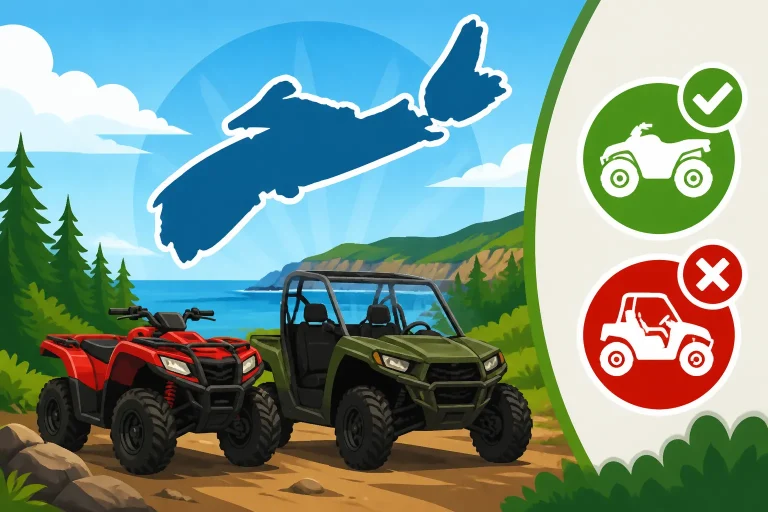
Nova Scotia’s ATV trail permit system includes an option intended for visitors who want to ride for a limited stay. Unlike the standard permit associated with a calendar year, the visitor option is time-limited. The key planning point is that its validity is based on the permit’s stated period, not simply on whether you are riding in the first or last part of a calendar year.
That distinction can make the visitor permit more practical for a short trip. A rider visiting for a few weeks may not need a permit intended for a full riding season. But the name “thirty-day permit” is not a reason to assume every detail: check the current terms, eligibility, start date and proof requirements before purchasing. The permit itself, or the provider’s current instructions, should be your reference for the exact dates it covers.
The option is described in more detail in Nova Scotia’s Thirty-Day Visitor Permit. The important thing is to treat it as a separate permit type, not as an extension of a regular annual permit or a general pass to ride anywhere in the province.
A trail permit relates to access on participating ATV trails. It does not, by itself, establish that you have met every legal requirement for your machine or your ride. Registration, insurance, safety training, permission to use a particular route and compliance with trail closures are separate matters. A permit can be valid while a particular trail or road remains off-limits to your machine.
This is why the permit’s term is only one part of trip planning. Before you set out, make sure you know:
- The exact start and end dates shown for your permit.
- Which machine the permit applies to and how it must be identified.
- What proof you need to carry or keep available.
- Whether your intended route is open to your type of machine.
- What separate registration, insurance or safety requirements apply to you.
For a short visit, the visitor permit’s usefulness comes from matching the coverage period to your trip. It does not remove the need to check the rest of the rules.
How it differs from a calendar-year permit
The ordinary ATVANS trail permit is associated with a calendar year. That means its period is not automatically tailored to the day an individual rider arrives. A permit bought later in the year does not necessarily provide a fresh twelve months of riding. For a visitor arriving for a brief trip, the remaining calendar-year period may be a poor fit.
The visitor permit is different because its validity is tied to a defined short-term period. Before buying, confirm how the period begins and ends. Do not assume the clock starts on the day you first ride if the permit provider’s terms say otherwise, and do not assume that a partial month counts as a different duration. Read the confirmation or ask the provider to clarify any unclear start-date wording.
| Permit consideration | Calendar-year permit | Thirty-day visitor permit |
|---|---|---|
| How the period is framed | Tied to a calendar year | Tied to a stated short-term validity period |
| Best fit | Riders planning recurring or extended riding during the year | Eligible visitors planning a short stay |
| Date to verify | The applicable calendar-year validity | The exact start and end dates |
| Main planning risk | Buying late and assuming the permit runs for a full year | Assuming the validity begins or ends differently than it does |
| Other legal requirements | Still apply | Still apply |
The standard permit’s calendar basis is explained in Nova Scotia Permits Run a Calendar Year. If you are comparing the two options, also check Nova Scotia Trail Permit Cost for current permit information rather than relying on an old price or an informal summary. Permit terms and costs can change, and any quoted figure should be confirmed with the provider before you budget.
The difference is especially relevant when a trip crosses a year-end. A rider might arrive late in one calendar year and leave early in the next. The calendar-year permit and the visitor permit do not necessarily cover that situation in the same way. Work out the dates first, then compare the options that are currently available to you.
A simple way to compare them is to write down the dates you expect to ride and ask:
- Does the calendar-year permit cover all of those dates?
- If not, is a visitor permit available for the full period?
- Does the visitor permit’s validity start on the date I need?
- Is my machine eligible for that permit type?
- Does the permit cover the trails I plan to use, or are other permissions needed?
The lowest-cost-looking choice is not always the best fit if the dates do not line up with your trip. Equally, a short-term permit may not be the right option if you expect to return repeatedly or ride beyond its validity period. A second visit can change the comparison, so account for all planned riding rather than only the first weekend.
You can compare the standard club and standalone options in Nova Scotia Club Permit vs Standalone Permit. These options relate to how a permit is obtained and what may come with it; they are not a substitute for checking whether a visitor permit suits your dates and eligibility.
Who should consider it and what to confirm
The visitor permit is designed around temporary riding, but “visitor” can raise practical questions. Someone travelling from another province is an obvious potential user; someone who lives in Nova Scotia but plans to ride only briefly may not automatically qualify for the same option. Do not assume the term describes anyone who wants a short permit. Confirm eligibility before paying.
This matters because permit products can have conditions beyond duration. Those may relate to the rider’s status, the machine, how the permit is issued, or where it is valid. The current provider’s explanation is the best place to resolve those details. The overview at Nova Scotia Permit for a Visitor can help frame the questions, but always verify the terms that apply to your particular trip.
Before buying, confirm the following:
- Eligibility: Is the permit available to you as a resident or non-resident?
- Validity: What exact dates does it cover, and when does that period begin?
- Machine details: Does the permit need to be associated with a specific ATV or UTV?
- Proof: What confirmation, document or other evidence must you carry?
- Display instructions: Is there a decal or other item to attach, or is the permit documented differently?
- Trail scope: Which trails are covered, and are there local restrictions or closures?
- Renewal or extension: If your stay changes, can the permit be extended, or would another permit be needed?
These questions are worth settling before you leave home. If you buy online, save the confirmation where you can access it without relying on a strong mobile signal. If you buy through another channel, keep the receipt and any instructions together with your machine’s other documents. Follow the provider’s directions for displaying or presenting proof; do not assume the visitor permit uses the same format as a standard permit.
A permit’s end date deserves particular attention. A travel delay, a change in accommodation or an extra riding day can push a trip past the period you purchased. Check the expiry details as soon as the permit is issued, not on the last day of your planned stay. Nova Scotia Permit Expiry Date covers why that date matters.
If the trip is likely to run longer than expected, contact the permit provider before the existing permit expires. Ask whether another permit is required, whether the current one can be extended, and how to avoid a gap in valid trail access. Do not assume that a pending application, a purchase receipt or a permit from another jurisdiction automatically covers the extra days.
Visitors from neighbouring provinces should also check current reciprocity rules rather than relying on old advice from a previous season. Arrangements can change, and a permit accepted in the past may not meet current requirements. For background, see [Nova Scotia Visitors From New Brunswick] or [Nova Scotia Visitors From PEI], as relevant, and verify the present rule before travelling.
If your trip includes a machine registered outside Nova Scotia, check the registration and visitor requirements separately. A trail permit does not necessarily replace the machine’s home-jurisdiction documents, nor does it guarantee that every other provincial requirement has been met. Bring the documents that apply to your machine and make sure they are current for the dates you will ride.
What the permit does not replace
The easiest mistake is treating a trail permit as a universal riding licence. It is not. It addresses trail access under the applicable permit system; it does not automatically register a machine, provide insurance, certify a rider, grant permission to cross private land, or make a closed trail open.
Registration and ownership documents
Registration is a separate requirement from a trail permit. The rules that apply can depend on where the machine is registered, who owns it and how it will be used. If you are uncertain about the difference, Nova Scotia Registration and the Trail Permit explains why the two should not be treated as interchangeable.
Bring the documents that apply to your machine, and check that ownership information is consistent. If the machine is borrowed or rented, confirm that you have the owner’s permission and the documentation required for the arrangement. A permit in one person’s name should not be assumed to authorize a different machine or rider unless the terms say so.
Insurance
A trail permit is not an insurance policy. Confirm that the machine has the insurance required for the riding you plan to do, and carry proof if required. The details can depend on how and where the machine is used, so a visitor should not assume that a policy from another province automatically meets every Nova Scotia requirement.
See Nova Scotia Insurance Requirements for Riders for the broader issue. If you are bringing a machine from elsewhere, ask your insurer whether the policy covers the intended use and location. A quick check before travelling is better than discovering a coverage problem at the trailhead.
Rider training and age rules
The permit does not exempt a rider from applicable age, supervision or safety-certificate rules. These requirements can vary with the rider’s age and circumstances. If a young person will ride, confirm the rules for that rider rather than relying on the permit holder’s age or experience. Nova Scotia Safety Certificates Are Mandatory is a useful starting point for understanding training requirements.
A visitor should also confirm that the rider is permitted to operate the particular machine and has the required equipment. Do not treat a visitor permit as proof that the rider has satisfied safety rules.
Route access and closures
A valid permit does not mean every trail is open. Trails can be closed because of damage, maintenance, seasonal conditions or landowner decisions. Some routes may have restrictions based on machine type or local access arrangements. Check current trail information close to the day you ride, and follow signs and temporary closures on the ground.
The distinction matters on connected routes. A trail network may include land with different owners and management arrangements. A segment that appears on a map may be closed, rerouted or unavailable to your machine. Check Nova Scotia Trail Conditions and Closures before setting out, and do not ride around a barrier or closure sign.
The permit also does not grant permission to ride on private property outside an authorized trail corridor. Stay on the marked route, respect gates and signs, and get permission where it is required. If a route is unclear, stop and check rather than assuming that the trail continues across a property or road.
How to plan and use the permit
A little preparation makes the visitor permit easier to use and reduces the chance of an avoidable interruption. The most reliable approach is to settle the dates, eligibility and documents before the machine is unloaded.
- Set your riding dates. Include the first day you may ride and the last day you might need access. Build in some room for travel delays if possible.
- Check the current permit options. Compare the visitor permit with the calendar-year options and confirm which you are eligible to buy.
- Confirm the validity period. Read the exact start and end dates and ask about any wording you do not understand.
- Check the machine and rider requirements. Confirm that your machine’s registration, insurance and other documents are suitable for the trip.
- Buy through the appropriate channel. Follow the provider’s current purchase instructions at How to Buy a Nova Scotia Trail Permit.
- Keep proof accessible. Save the permit confirmation and carry any documents the provider or law requires.
- Check the route before each ride. Review closures and local trail information, then obey signs and reroutes.
- Recheck the expiry date if plans change. Arrange any additional coverage before riding beyond the permit period.
Try not to leave the purchase until you are already at a remote trailhead. Mobile service may be unreliable, and you may need time to resolve a question about eligibility, payment or machine details. Buying ahead also gives you a chance to correct an error before the trip begins.
If you are travelling with more than one machine, check whether each machine needs its own permit. Do not assume that one permit covers an entire group, a household or a trailer full of machines. The same applies when two people take turns riding: verify whether the permit is attached to the machine, the rider or another identifying detail.
Keep a clear record of any information you receive from the permit provider. If the confirmation includes an expiry date or instructions about how to show proof, save it offline as well as in email. A screenshot can be useful where reception is limited, but it should not replace any original document or item the rules require you to carry.
For a multi-day trip, plan around both the permit dates and the trail network. If the permit expires during the visit, do not count on being able to buy another immediately at a trailhead. If your stay is close to the validity limit, decide in advance what you will do if your dates change. That might mean adjusting the riding plan, arranging another permit if available, or postponing a ride until coverage is confirmed.
When asking a provider or club a question, be specific. Give your planned riding dates, say whether you live in Nova Scotia or are visiting, identify the machine type and explain where you hope to ride. “Is a thirty-day permit enough?” may not provide enough detail to resolve questions about eligibility, registration or route access. A precise question is more likely to get a useful answer.
Finally, treat the permit as one part of a larger trip checklist. Before departure, check the machine, carry the required safety equipment and make sure everyone in the group understands the route and local rules. Keep your ride within the permit’s validity period and the marked trail network. That is the practical advantage of a short-term option: it can fit a temporary visit, as long as the dates and the rest of the requirements are handled correctly.
Frequently Asked Questions
Does the thirty-day visitor permit run from January to December?
No. Its defining difference is that it is tied to a short-term validity period rather than the calendar-year basis used for the standard permit. Check the exact dates printed or provided with your permit.
Does the visitor permit replace machine registration?
No. A trail permit and vehicle registration are separate. Confirm the registration and ownership documents required for your machine and circumstances.
Can a Nova Scotia resident buy the visitor permit?
Do not assume so. Eligibility depends on the current permit terms. Confirm with the permit provider before purchasing.
Does a valid permit let me ride every trail in Nova Scotia?
No. The permit does not override trail closures, landowner restrictions or route-specific rules. Check the current status of the trails you plan to use.
What if my visit lasts longer than the permit?
Check the expiry date and contact the provider before it passes. Confirm whether an extension or another permit is available, and do not ride beyond the valid period without the required coverage.
Disclaimer
This article is for general informational purposes only and does not constitute professional advice. Laws, prices and regulations vary by location and change over time. Consult a qualified professional for guidance on your specific situation.