Nova Scotia Permit for a Visitor
Visiting Nova Scotia with an ATV or side-by-side raises a practical question: does your home province’s trail permit work here, or do you need to buy another one? The answer depends partly on where you live and what permit you already hold. The key is to separate trail access from registration and insurance, then confirm each requirement before you ride.
What a Visitor Permit Covers
A trail permit is permission to use participating ATV trails under the applicable trail system’s rules. It is not the same as vehicle registration, insurance, or permission to ride on every road, beach, woods road, or private property in Nova Scotia.
For visitors who need a Nova Scotia trail pass, the visitor option is generally described as a thirty-day permit. Check the current terms before travelling, including who qualifies, how the validity period is counted, where the permit allows you to ride, and whether the pass is issued as a letter rather than a sticker. Details are covered in Nova Scotia’s Thirty-Day Visitor Permit and Nova Scotia Visitor Permits Without a Sticker.
A trail permit does not make an otherwise unlawful ride legal. You still need to follow trail signs, respect closures and landowner restrictions, and meet the applicable rules for your machine and riding situation. A permit also does not replace vehicle documents or insurance. For the distinction between trail access and those separate obligations, see Nova Scotia Requires Registration and Insurance.
| What you’re checking | What it is for | What to do before riding |
|---|---|---|
| Trail permit | Access to trails covered by the permit system | Confirm whether your existing permit is accepted or a Nova Scotia pass is needed |
| Registration or ownership documents | Identifies the machine and its registered owner under the applicable rules | Carry current documents and check what applies to a visiting machine |
| Insurance | Provides coverage required for the machine and use | Confirm that the policy is current and applies in Nova Scotia |
| Trail and route permissions | Determines where you may ride | Check trail status, signs, local restrictions, and land access |
The simplest way to avoid confusion is to treat each row as its own check. A valid trail permit does not prove that registration and insurance are in order. Likewise, current registration does not automatically provide access to ATV trails.
Who Needs to Buy a Nova Scotia Trail Permit
Nova Scotia’s visitor rules depend on reciprocity: whether the province recognizes a trail permit from the rider’s home jurisdiction. The reference topics indicate that reciprocity with New Brunswick and PEI has ended, while Ontario permits are recognized. Because cross-border arrangements can change, check the current rule for your home province before relying on a permit issued elsewhere.
| Visitor’s situation | Practical step |
|---|---|
| You have a permit from New Brunswick | Do not assume it is accepted in Nova Scotia; check the current rule and arrange a Nova Scotia permit if required |
| You have a permit from PEI | Confirm the current requirement before crossing; do not rely on an older reciprocity arrangement |
| You have an Ontario permit | Check that your permit meets Nova Scotia’s current recognition conditions |
| You have no trail permit | Ask whether the visitor pass or another permit option fits your trip |
| You are staying longer than the visitor permit allows | Check the available permit choices before the short-term pass expires |
More detail about the relevant cross-border situations is available in Nova Scotia Riders Visiting New Brunswick, Nova Scotia Riders Visiting PEI, and Nova Scotia Visitors From Ontario. Those topics are useful if you’re planning a trip around a home-province permit rather than starting from scratch.
A visitor permit is for people travelling to ride, not a workaround for every local rider or every machine. If you live in Nova Scotia, have moved there, or are bringing a machine for ongoing use, ask which permit and registration rules apply to your circumstances. A short-term visitor pass may not be the right choice just because it is convenient.
The same caution applies when more than one person is riding or more than one machine is coming on the trip. Confirm whether each machine needs its own permit and whether each rider has to meet separate requirements. Do not assume one pass covers a whole group or fleet. The rules for a second machine and different permit options are discussed in Nova Scotia Permit for a Second Machine and Nova Scotia Club Permit vs Standalone Permit.
How to Arrange the Permit Before Your Trip
It is usually easier to resolve permit questions before you reach a trailhead. Check the current information from the permit provider and, if anything is unclear, ask directly whether your home permit is recognized and what documents you need. For a general purchase walkthrough, see How to Buy a Nova Scotia Trail Permit.
Use this process:
- Identify your home jurisdiction. The permit rules may differ depending on where your machine or existing trail pass is from.
- Check reciprocity. Confirm the current status rather than relying on an old permit, a previous trip, or advice from someone who rode under earlier rules.
- Choose the correct permit type. If your home permit is not accepted, ask whether the visitor pass covers your dates and planned riding.
- Confirm the validity period. Check the start and end dates, how the period is counted, and what happens if your trip lasts longer than expected.
- Ask how proof is issued. A permit may not look like the sticker or card you use at home. Find out what proof to carry and whether it is sent electronically or provided another way.
- Check your machine documents and insurance. Bring current paperwork and confirm with your insurer that coverage applies while riding in Nova Scotia.
- Check the trails and routes you plan to use. A permit does not guarantee that a particular trail is open or that every connecting route permits ATVs.
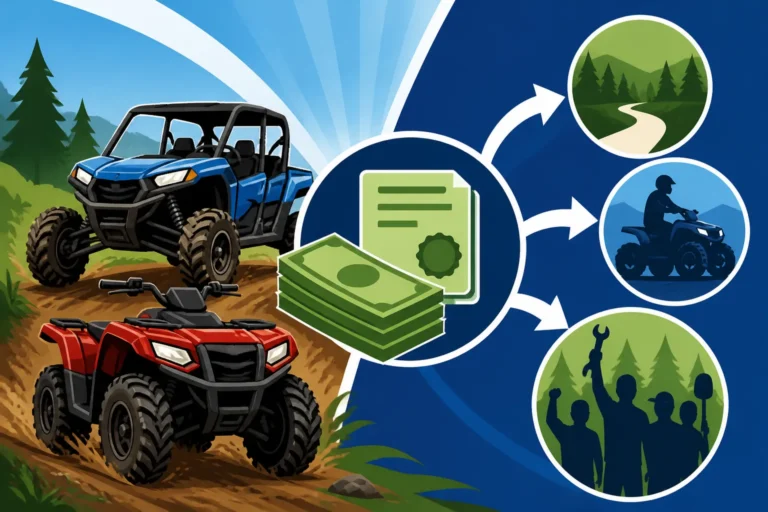
Costs and purchasing arrangements can change, so check the permit provider for current figures and instructions. The permit’s value is not only about the dates it covers; it also depends on where the pass is valid and what proof you need to show. For cost and expiry questions, refer to Nova Scotia Trail Permit Cost and Nova Scotia Permit Expiry Date.
Keep the permit confirmation accessible while travelling. If the proof is electronic, save it somewhere you can open without relying on a mobile connection. If it is a physical document, keep it protected and easy to find. Do not assume that a receipt alone will satisfy a trail check unless the provider says it is acceptable.
What to Carry and Check on the Trail
Before unloading, check that your machine’s paperwork, insurance, and trail permit are all in order. Make sure the documents relate to the machine you are riding, especially if you brought more than one ATV or side-by-side. If anything is missing or the information does not match, resolve it before entering the trail system.
It also helps to keep a simple trip folder or digital record with:
- Proof of the applicable trail permit and its validity dates
- Current registration or other ownership documents required for the machine
- Proof of insurance, including the policy information needed if you have a question
- The permit provider’s contact details and any purchase confirmation
- Notes on the planned trailheads, closures, and access restrictions
A permit does not authorize riding on private land without permission, entering a closed trail, or taking an unmarked shortcut around a barrier. Check local signage and current trail information before setting out; conditions can change after weather, maintenance, or land-access decisions. Nova Scotia Trail Conditions and Closures can help you plan around those changes.
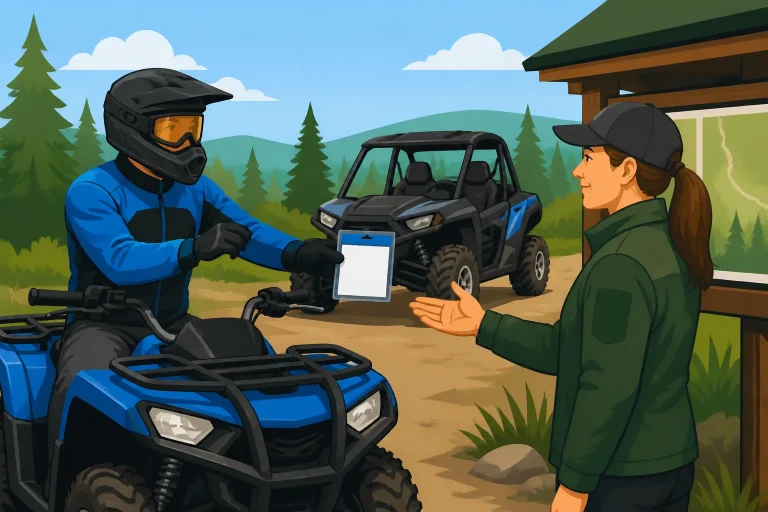
If an officer, trail representative, or other authorized person asks to see your documents, being able to locate them quickly makes the interaction simpler. Carrying proof does not guarantee access to a trail if another rule or closure applies, but it helps demonstrate that you have checked the basic requirements.
For a short visit, the most reliable plan is to confirm reciprocity, arrange the right pass, and keep registration and insurance separate in your checklist. If your situation is unusual—such as a long stay, a recently moved machine, a permit from a jurisdiction with changing arrangements, or a group bringing several machines—ask the relevant provider before leaving home. That small check can prevent a wasted trip to a trailhead.
Disclaimer
This article is for general informational purposes only and does not constitute professional advice. Laws, prices and regulations vary by location and change over time. Consult a qualified professional for guidance on your specific situation.