Nova Scotia Visitors From New Brunswick
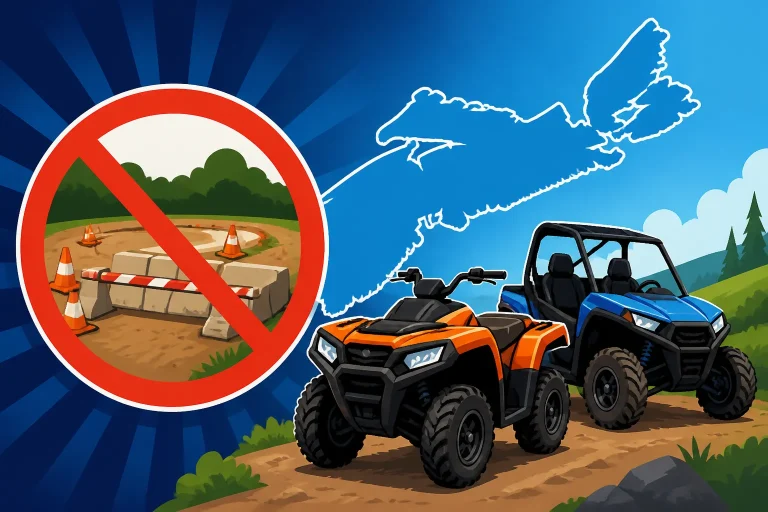
A New Brunswick trail permit may feel like it should cover a quick ride across the border, but it no longer replaces the permit required for Nova Scotia club trails. Before loading your ATV or UTV, sort out which permit applies, what paperwork to carry and how trail access differs from registration and insurance.
What New Brunswick visitors need to know about reciprocity
Nova Scotia and New Brunswick no longer have a trail-permit reciprocity arrangement. That means a New Brunswick permit should not be treated as permission to ride Nova Scotia’s club trail network. Visitors need to arrange the appropriate Nova Scotia permit for the machine and length of their stay. The background is explained in Nova Scotia Ended Reciprocity With New Brunswick.
This is a trail-access issue, not a blanket statement that a New Brunswick machine cannot cross the border. A permit, registration and insurance serve different purposes:
| Document or requirement | What it generally addresses | What it does not replace |
|---|---|---|
| Nova Scotia trail permit | Access to participating club trails | Vehicle registration, insurance or permission for private land |
| Machine registration or permit | The machine’s registration status | Trail access or insurance |
| Insurance proof | Required coverage for riding where applicable | Trail permit, registration or landowner permission |
| Landowner or route permission | Access to a specific property or route | Any permit or legal operating requirement |
A trail permit is not a provincial registration document, and buying one does not automatically make every route open to you. A trail may be closed, may not be part of the club network, or may cross land where separate permission is needed. Likewise, an out-of-province registration document should not be assumed to provide trail access.
For a short visit, Nova Scotia has a visitor permit intended for temporary riding. The Nova Scotia’s Thirty-Day Visitor Permit page is a useful starting point, but check the current terms before buying: confirm which machine it covers, when the validity period begins and what proof you will receive. The details matter if you are coming for a weekend, a longer holiday or several separate trips.
Do not rely on an old online page, an informal comment or a permit bought in New Brunswick to settle the question. If a club or trail operator gives you different information, ask which specific trail and permit type they mean. The practical rule is simple: arrange Nova Scotia trail access before riding a Nova Scotia club trail.
Choose the right Nova Scotia permit for your trip
The best permit depends mainly on how long you will ride and whether you expect to return. Nova Scotia offers a visitor option as well as other permit arrangements. Compare the current options before paying; a permit that suits a brief trip may not be the best fit for repeated visits.
| Your plans | What to check |
|---|---|
| A short, one-off visit | Whether the visitor permit covers your dates and machine |
| Several visits during the riding season | Whether another permit option better fits repeated use |
| Riding with a Nova Scotia club | What the club’s membership and trail permit include |
| A route that uses roads or private land | Whether separate road-use rules or landowner permission apply |
A visitor permit is not the same thing as a club membership. If you want to ride regularly, ask a local club what membership includes and whether it suits your plans. If you only need access for a short stay, compare the visitor option with other current choices. Nova Scotia Club Permit vs Standalone Permit can help explain the difference between those arrangements.
Before purchasing, read the permit description rather than relying on the name alone. Check whether the permit is tied to a particular machine, whether you need to provide machine details and how the permit must be shown or carried. If you are bringing more than one ATV or UTV, do not assume that one permit covers the whole group. Check the requirements for each machine. Nova Scotia Permit for a Visitor and Nova Scotia Permit for a Second Machine address those situations.
It is also worth confirming that the permit will be valid for the dates you intend to ride. A trip planned around a particular trail or event can be disrupted if you have misunderstood the permit’s start or end date. Buy through the appropriate provider and keep the confirmation or permit information accessible. If the provider issues instructions for displaying or carrying it, follow those instructions.
If you are crossing the border for a ride soon after purchasing, give yourself time to sort out any missing information. Buying a Pass Before You Cross covers the value of arranging access ahead of departure. That is especially useful when your group is travelling with several machines or has a fixed booking.
Check machine documents, insurance and route access separately
A Nova Scotia trail permit is only one part of trip preparation. Bring the machine’s registration documents and proof of insurance, and make sure the documents identify the machine you are actually riding. If you recently bought the ATV or UTV, do not leave the paperwork problem until you reach the trailhead. A permit cannot resolve an ownership or registration issue.
Insurance deserves its own check. Confirm with your insurer that the policy applies to the machine and the type of riding you plan to do in Nova Scotia. Ask what liability coverage applies, whether the policy has geographic or use restrictions, and how to carry proof of insurance. A policy that covers one kind of use may not cover every situation, and a trail permit is not insurance. For context, see Nova Scotia Insurance That Does Not Cover Crashes.
If your machine is financed, rented or registered to someone else, check that you have the documents and authorization needed for the trip. If the registration is in another person’s name, a bill of sale or a verbal explanation may not answer every question an officer or trail operator has. Keep paperwork together so you can show it without searching through luggage.
Route access needs a separate check as well. A permit for a club trail does not grant a general right to ride across private property, and it does not mean that every road, woods road, beach or trail is open to ATVs. Follow posted signs and club markings, and get permission where it is required. If your route uses a road trail, check the applicable operating rules instead of assuming club-trail permission covers it.
Before departure, confirm the condition and status of the route you plan to use. Weather, maintenance, damage or land-access changes can affect a trail after you have made your travel plans. Nova Scotia Trail Conditions and Closures offers guidance on checking for interruptions. A route that appears on an older map may not be open for the type of machine or riding you have in mind.
For border-trip planning, the checklist below keeps the separate requirements from getting mixed together:
- Confirm that each machine has appropriate registration documents.
- Confirm with your insurer that the planned use is covered and carry the required proof.
- Buy a Nova Scotia trail permit that suits the machine and length of your visit.
- Check current route access, closures and any local restrictions.
- Get permission for private property where needed.
- Carry your documents and follow instructions for showing or displaying the permit.
If you are unsure whether your particular circumstances are covered, contact the permit provider, the relevant club or the appropriate provincial service before riding. The answer can depend on the machine, the route and the kind of riding involved.
Make the border trip smoother
The easiest way to avoid confusion is to settle the permit question before you leave New Brunswick. Do not wait until the group reaches a trail entrance, when a missing permit can hold up everyone’s plans. Review the visitor permit terms, keep proof of purchase available and make sure each rider knows which machines are covered.
If the trip includes more than one riding area, check access for each area rather than assuming a permit grants access everywhere. Club networks, municipal routes and private trails may have different conditions. Ask a local club about the route you intend to ride, especially if you are planning a long-distance trip or connecting trails in different communities.
It can also help to agree on a route and meeting point before riding. Group members should know what to do if someone needs to turn back, loses contact or has a mechanical problem. On unfamiliar trails, stay on marked routes, respect gates and signs, and avoid creating a new path around a closure or wet section. These habits protect access for visiting riders as well as local ones.
For detailed visitor-specific requirements, consult Nova Scotia Rules for a Visiting New Brunswick Rider. Use it alongside current permit information, not as a substitute for checking the terms that apply to your trip. A phone call or message to the relevant club can help resolve a question about a particular trail, but confirm legal requirements through the responsible official source.
In short, a New Brunswick permit does not serve as a substitute for the Nova Scotia trail permit required on participating club trails. Arrange the right Nova Scotia permit, carry your machine and insurance documents, and verify route access before setting out. That small amount of preparation can prevent a border-crossing ride from becoming a paperwork problem at the trailhead.
Disclaimer
This article is for general informational purposes only and does not constitute professional advice. Laws, prices and regulations vary by location and change over time. Consult a qualified professional for guidance on your specific situation.