Nova Scotia Visitors From PEI
A PEI trail permit may not be enough for a ride in Nova Scotia. The two provinces’ trail-permit reciprocity has ended, so visitors need to check the Nova Scotia permit requirement before unloading their ATV or UTV. This article explains what to arrange, which documents to carry, and why a trail permit is only one part of riding legally.
What PEI visitors need to know about trail permits
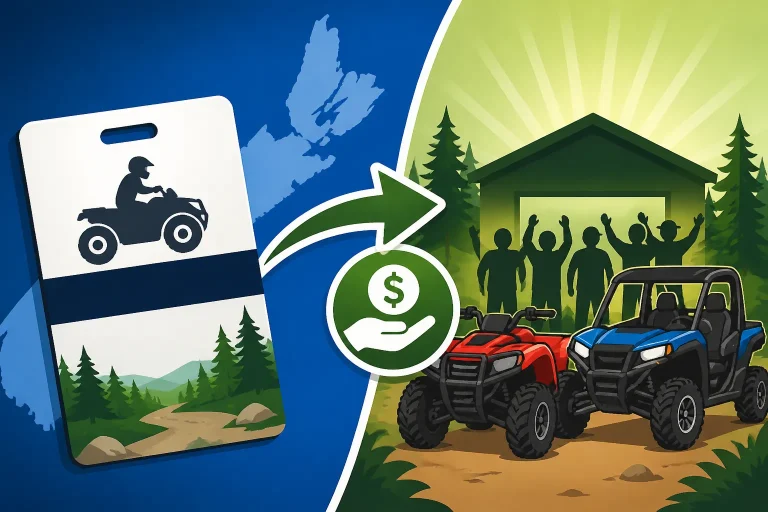
A trail permit is permission to use participating trails, not a substitute for vehicle registration or insurance. The key change for PEI visitors is that they should not assume an Island permit will be accepted on Nova Scotia club trails. The reciprocity arrangement has ended, and visitors generally need a Nova Scotia permit for the trails they plan to ride.
For a short visit, the option to check is Nova Scotia’s visitor permit. It is intended for people visiting the province rather than for a local rider trying to avoid a regular permit. Confirm the permit’s current validity period, eligibility rules, purchase process and any restrictions before travelling. The details are covered in Nova Scotia’s Thirty-Day Visitor Permit.
| What you have | What it generally covers | What it does not replace |
|---|---|---|
| PEI trail permit | Access under PEI’s own trail system and rules | The Nova Scotia permit required on participating Nova Scotia trails |
| Nova Scotia visitor permit | Trail access in Nova Scotia under its current terms | Vehicle registration, insurance or permission to use a particular route |
| PEI vehicle registration | Evidence that the machine is registered in PEI | A Nova Scotia trail permit |
| Insurance proof | Evidence of the coverage your policy provides | Trail permission or registration |
| Landowner or route permission | Access where the relevant owner or authority allows it | A permit, registration or insurance requirement |
The distinction matters because people often use “permit” to mean several different documents. A provincial vehicle permit or registration document identifies the machine for road-use or ownership purposes. A trail permit is an access pass for a trail network. Insurance is separate again. Having one does not automatically satisfy the others.
If the trip is just a few days, compare the visitor option with the regular permit choices rather than buying the first pass you find. Some permits are linked to club membership, while others are available without joining a club. Their access arrangements may differ, so check Nova Scotia Club Permit vs Standalone Permit and Do Permit-Only Riders Get the Same Trail Access? before deciding.
Visitors who ride in both provinces should also check the rules in each direction. A Nova Scotia permit should not be assumed to provide access on PEI, just as a PEI permit should not be assumed to work in Nova Scotia. Nova Scotia Riders Visiting PEI explains the reverse trip.
Prepare the machine and paperwork before you leave
A trail permit is only one item to sort out. Before the trip, confirm that the ATV or UTV is properly registered for its circumstances in PEI and that the registration documents will be available while travelling. Carry the documents required for your machine, along with current insurance proof. If the machine is borrowed, rented, financed or registered to someone else, check whether you need additional authorization or paperwork.
Nova Scotia has its own registration and insurance rules, but that does not mean a visitor should automatically re-register a machine for a short stay. The right answer can depend on factors such as where the machine is registered, how long it will be in Nova Scotia, and whether the owner is moving there rather than visiting. For the provincial requirements, see Nova Scotia Requires Registration and Insurance. If the stay is becoming a move or an extended stay, get advice on the change in status instead of relying on visitor assumptions.
Insurance needs a closer look than simply checking that a policy exists. Ask the insurer whether the ATV or UTV is covered while being operated in Nova Scotia, on the types of trails you intend to use, and by the person who will be riding it. A policy may have exclusions or conditions that matter off-road. Carry the proof of insurance the insurer provides, and make sure the named insured and machine details match the actual trip.
A quick pre-trip check can prevent an expensive turn-around:
- Confirm that the machine’s PEI registration is current and gather the registration documents.
- Contact the insurer to confirm coverage for riding in Nova Scotia and ask what proof to carry.
- Obtain the appropriate Nova Scotia trail permit before using trails that require one.
- Check that the rider meets applicable age, training and supervision requirements.
- Plan to ride only routes that are currently open and authorized for ATVs or UTVs.
- Keep permit, registration and insurance documents accessible during the ride.
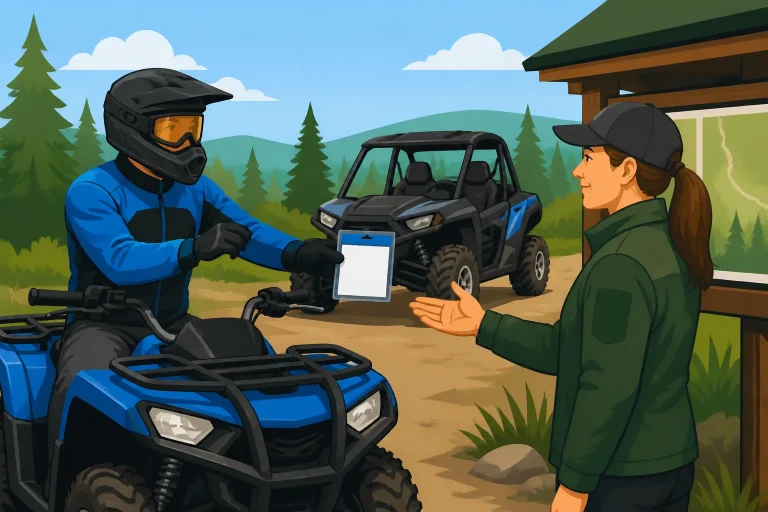
Do not rely on a photo of an old permit or a screenshot of a purchase confirmation as proof that a current permit is valid. Check what the permit issuer requires riders to carry or display. The purchasing steps are outlined in How to Buy a Nova Scotia Trail Permit, and current permit costs are discussed in Nova Scotia Trail Permit Cost. For current figures and terms, confirm with the permit provider before paying.
If you are unsure whether the machine’s PEI registration or insurance satisfies a particular Nova Scotia requirement, ask the relevant authority or insurer before the trip. A trail association can answer questions about its trail-access rules, but it may not be able to determine whether your registration or insurance meets provincial requirements.
Plan where you can ride, not just what permit to buy
A Nova Scotia permit does not open every road, trail, woodlot or piece of Crown land. Trail access depends on the route, the landowner or managing authority, local restrictions, and whether the segment is open at the time of your visit. Some corridors are shared with other users, and conditions can change after storms, washouts, maintenance work or seasonal closures.
Start with the trail network you actually intend to use. Check whether each segment permits your type of machine, whether a club or permit is required, and whether there are temporary closures or reroutes. A route shown on an old map or mentioned in a riding group may no longer be available. Before departure, check Nova Scotia Trail Conditions and Closures and contact the relevant club if the status is unclear.
It is also important to distinguish club trails from road trails. A trail permit does not by itself authorize riding on a public road. Road-trail access is governed by separate rules and depends on the route being designated for that use. Riders may need to meet additional requirements for the operator, machine, equipment and insurance. Read Nova Scotia Road Trail Rules Explained before planning a route that includes roads.
A practical route plan should include:
- The trailhead where you will enter and leave the network.
- A current trail map and a way to check for closures.
- Fuel and rest stops that fit the machine’s range.
- A backup route in case a section is closed.
- A way to contact your riding group if someone gets separated.
- A plan for travelling to and from the trailhead without riding on unauthorized roads.
Do not treat a trail permit as permission to cross private land. Stay on marked corridors, obey gates and signs, and respect a closure even when the route looks passable. If a trail crosses a private woodlot, access depends on the arrangements in place for that corridor. A detour around a closed or wet section can damage land and create new access problems for everyone.
Visitors should also plan for the difference between a club trail and a municipality’s road-trail route. The rules and operating conditions can vary. If your trip depends on riding from a trail network into a town or along a road connection, verify the exact route and local requirements first. Do not assume that a road beside a trail is open to off-highway vehicles.
Common mistakes PEI riders can avoid
The most common mistake is arriving with only a PEI trail permit and expecting it to work in Nova Scotia. Because reciprocity has ended, check the Nova Scotia permit requirement before setting off. If a pass is needed, arranging it in advance is easier than discovering the gap at a trailhead.
Another mistake is treating the visitor permit as an all-purpose document. It does not register the machine, insure it, grant access to private land or authorize road riding. Keep the different requirements separate in your planning. The permit is one part of the trip, not a replacement for everything else.
Riders can also assume that the same rules apply to every type of machine. An ATV and a side-by-side may be subject to different practical limits on a particular trail, bridge or route. Check the rules for the actual machine you are bringing, and do not rely only on another rider’s experience with a different vehicle.
Finally, avoid leaving permit checks until the morning of the ride. Confirm the current terms with the permit provider, check trail status close to departure, and keep the relevant documents together. If an answer depends on the type of machine, the length of stay or where you intend to ride, ask the organization responsible for that requirement rather than guessing.
A simple decision path
- Coming for a short visit: Check whether Nova Scotia’s visitor permit fits your trip and follow its current terms.
- Planning to ride club trails: Confirm the permit rules for the specific trail network and machine.
- Planning a road-trail connection: Check the separate road-trail rules and confirm that the route is authorized.
- Staying for an extended period or moving: Ask whether your registration obligations change; do not assume visitor rules apply indefinitely.
- Unsure about insurance: Contact your insurer and get confirmation for the machine, rider and intended use.
A little preparation makes the border crossing the easy part. Confirm the Nova Scotia trail permit, carry the machine’s registration and insurance proof, and check that every planned route is open and legal for your vehicle.
Disclaimer
This article is for general informational purposes only and does not constitute professional advice. Laws, prices and regulations vary by location and change over time. Consult a qualified professional for guidance on your specific situation.