Nova Scotia Ended Reciprocity With New Brunswick
A New Brunswick trail permit may no longer be enough for a ride in Nova Scotia. That is easy to miss when you are planning a weekend across the border, especially because registration, insurance and trail access are separate requirements. This guide explains what the change means, what to check before you leave, and how to avoid arriving at a trailhead without the right documents.
The short answer for New Brunswick riders
Do not assume that a New Brunswick trail permit gives you access to Nova Scotia club trails. The reciprocity arrangement between the provinces has ended, so a rider planning to use Nova Scotia’s organized trail network should check the current permit rules and arrange the required Nova Scotia permit before riding.
The important word is trail. A trail permit is not the same as provincial vehicle registration, insurance or permission to ride on every road, woods road or piece of land. Losing reciprocity affects the trail-permit side of a trip; it does not replace the other rules you must meet.
If you are travelling from New Brunswick to ride in Nova Scotia, plan to confirm four separate things:
- Trail access: Is the route open to your type of off-highway vehicle, and do you have the permit required by the trail operator or association?
- Registration: Is the machine properly registered where it is required to be, and can you show the documents?
- Insurance: Does the machine have the insurance required for the riding you plan to do?
- Operating rules: Do you meet the applicable requirements for the machine, rider, passengers, equipment and location?
For a general overview of the Nova Scotia permit system, see Nova Scotia’s Club Membership Trail Permit — but a link on this site should appear only as its exact title in brackets, so here is the correct internal link format: Nova Scotia’s Club Membership Trail Permit. If you want to compare a club option with a permit-only option, Nova Scotia Club Permit vs Standalone Permit is also useful.
The practical takeaway is straightforward: buy or arrange the Nova Scotia permit that applies to your ride, and verify the exact trail access rules before setting out. Do not rely on an old permit, an old reciprocity note, a sticker from another province or a friend’s recollection of how it worked a few seasons ago.
The change matters most to riders who used to treat a New Brunswick permit as their cross-border trail pass. It also matters to Nova Scotia riders heading the other way: a Nova Scotia permit should not be treated as automatic permission to use New Brunswick trails. Check the rules on both sides of the border, even if your trip is only for a day.
What reciprocity did, and what ending it changes
Reciprocity is an agreement between trail-permit systems. In practical terms, participating organizations may agree to recognize one another’s permits for specified trail access. It can make a border ride simpler because a visiting rider may not need to buy a second permit for the destination province.
That is a narrower arrangement than it can sound. Reciprocity does not mean that two provinces have identical laws, that every trail is open to visitors, or that one province’s registration and insurance documents satisfy every requirement in the other. It concerns the permit arrangement described by the organizations involved, and its scope depends on the terms in effect.
With the New Brunswick arrangement ended, the safe planning assumption is that a New Brunswick trail permit does not, by itself, provide the Nova Scotia trail access that riders previously associated with reciprocity. A New Brunswick rider should look at the current Nova Scotia permit options and obtain the appropriate one if required for the intended trails.
What it does not change
The end of reciprocity does not automatically change the rules for registering an off-highway vehicle, insuring it, riding on a road trail or entering private land. Those are separate questions.
A visitor still needs to establish that the machine can be legally operated in the places they intend to ride. A trail permit cannot cure missing registration, and registration does not automatically buy access to a club-maintained trail. Insurance is another distinct requirement. If you are planning to use a road trail, review the road-trail rules separately; the general guide Nova Scotia Road Trail Rules Explained can help you identify the issues to check.
Likewise, a trail permit should not be mistaken for permission to ride anywhere in the province. Land access may depend on the landowner, the trail operator, a club agreement, a closure notice or a local restriction. A map line alone is not always proof that a route is open to your machine on the day you arrive.
Why old advice can mislead
Cross-border arrangements are easy to remember as a simple rule: “My permit works over there.” That shorthand may have been useful while an agreement was active, but it can become unreliable when the agreement changes.
You may encounter old forum posts, saved trip plans, club handouts or web pages that still describe the former arrangement. A page can remain online long after its information has stopped reflecting current practice. Before relying on anything that mentions reciprocity, check whether it gives a current effective period, identifies the issuing organization and explains which trails or permits are covered.
When information conflicts, ask the organization responsible for the permit you plan to use and the local club or trail operator responsible for the route. For more help sorting through the permit system, Nova Scotia Permit Questions Clubs Hear covers common points that riders should settle before a trip.
Know which permission you need
The cleanest way to avoid confusion is to treat riding permission as a set of separate layers. You may need more than one, and each answers a different question.
| Requirement | What it answers | What to confirm before a cross-border ride |
|---|---|---|
| Trail permit | May you use the trail system covered by that permit? | Whether a Nova Scotia permit is required, which permit type fits your visit, and where it is valid |
| Registration | Is the machine registered as required for its use and location? | Whether your registration is valid for the machine and whether you must carry proof |
| Insurance | Is the machine insured for the kind of riding planned? | Whether your policy applies outside your home province and on the intended routes |
| Land or trail permission | Is this specific route open to your machine? | Current closures, local access conditions, landowner permission and vehicle-type limits |
| Operating requirements | May this rider operate this machine in this place? | Applicable age, training, licence, helmet, passenger and equipment rules |
Trail permit
A trail permit is tied to access rules established for a trail network or its participating organizations. When the previous agreement was in place, it could provide a form of recognition across the border. Now that the agreement has ended, New Brunswick riders should not assume their home permit covers Nova Scotia club trails.
Nova Scotia riders commonly encounter a club-membership permit and a permit-only option. The right choice depends on how you want to use the trail system and whether you want to join a local club. The distinction is more than a label: the options can differ in membership connection, how funds are directed and what benefits accompany the purchase. Check the current descriptions before choosing. Do Permit-Only Riders Get the Same Trail Access? explains why a permit-only option should not be assumed to be identical to club membership in every respect.
A permit may also have a particular validity period and proof format. Do not assume that it lasts for a rolling year from the day you buy it, or that a physical sticker is the only acceptable proof. Check the current instructions for when it expires, how it is issued and how you are expected to display or carry it. The guide Nova Scotia Permits Run a Calendar Year can help explain the calendar-year arrangement.
Registration
Registration is a legal record for the machine; it is not a trail pass. A visiting rider should confirm that the machine’s registration is valid and that the paperwork can be produced if requested.
If you are new to the province or your machine was registered elsewhere, do not assume the cross-border permit question is the only one to resolve. Your situation may depend on whether you are visiting temporarily, moving to Nova Scotia, buying a machine locally or registering a machine for the first time. Nova Scotia Registration for a Visiting Rider is a useful starting point for a temporary visit, while Nova Scotia Registration for a New Resident addresses a move.
Insurance
A trail permit does not provide the insurance required for the machine. Check your policy directly with your insurer or broker. Ask whether it applies while riding in Nova Scotia, whether the route types you intend to use are covered, and whether the policy has restrictions that could matter for your trip.
Carry the proof your insurer provides. Riders who plan to use Nova Scotia road trails should pay particular attention to the applicable insurance requirements, because road-trail rules are not interchangeable with club-trail access rules. The guide Nova Scotia Insurance Requirements for Riders gives more background on insurance, and Carrying a Pink Card on the Trail explains the practical question of carrying proof.
Land and route permission
Even with an appropriate permit, a particular route may be closed, restricted or unavailable to your machine. Routes can cross different types of land and may depend on local agreements. A trail that appears on a map may have a temporary closure, a reroute or a restriction that is not obvious from the map alone.
Before travelling, check the local club or trail operator’s current notices. Use the permit organization’s map or contact details as a starting point, not as a substitute for checking recent conditions. The guide Nova Scotia Trail Conditions and Closures covers the kinds of changes that can affect a planned route.
Planning a Nova Scotia ride from New Brunswick
A little preparation before crossing the border can prevent an expensive and frustrating day. Start with your actual route and purpose rather than buying a permit based only on the province name.
1. Decide where you want to ride
Write down the trailheads, communities and route sections you expect to use. Identify which segments are club trails and whether any part of the plan uses a road trail, public road, private woods road or other land access.
This matters because a single outing can involve more than one access system. A club trail permit may be relevant for one section, while the rules for a road trail, a private connection or a municipal route may be different. If you plan to connect a club trail to a road-trail segment, verify both parts instead of assuming one permission covers the whole trip.
For routes that involve road trails, Can You Ride an ATV on the Road in Nova Scotia? is a good place to start. The answer can depend on where the route is and whether that road has been opened for the applicable use; it is not a blanket province-wide permission.
2. Check the current Nova Scotia permit options
Once you know the routes, check the current permit information from the organization responsible for the Nova Scotia trail network. Confirm that the option you choose is meant for your visit and machine, whether you need to join a club, and how you will receive proof.
Do this before the trip, not at the trailhead. A trailhead may not have staff, reliable mobile service or a convenient way to correct a permit problem. If your visit is short, ask whether a visitor option is available and what conditions apply. The relevant guide is Nova Scotia’s Thirty-Day Visitor Permit. Do not assume that a short visit automatically qualifies for a particular permit; verify the current eligibility and use terms.
If you are bringing more than one machine, ask whether each needs its own permit. A rider’s pass should not be assumed to cover every vehicle in a trailer or group. [Nova Scotia Permit for a Second Machine] addresses that common planning question.
3. Confirm your machine and paperwork
Before departure, check that the machine’s identifying details on its paperwork are legible and consistent. Pack the registration information, insurance proof and permit confirmation. Keep copies in a place where they will not be soaked, torn or lost.
A waterproof document pouch can be useful, whether you buy one locally or order from Amazon. The important feature is not the brand; it is keeping the papers readable and accessible. A clear sleeve tucked into a sealed storage compartment is better than a document left loose in a pocket that may get wet.
If the machine is borrowed, rented or owned by someone else in your riding group, make sure the operator has the documents and permission needed for that machine. Do not assume the owner can provide paperwork later if it is requested during a ride.
4. Check the route’s current status
Trail status can change because of maintenance, weather, landowner decisions or safety concerns. A route can be open on an older map and closed now. Before you leave, check current club notices and closures, then check again shortly before riding if the trip is planned in unsettled conditions.
Pay close attention to reroutes and temporary access arrangements. If a route is closed, do not ride around a barrier or cut a new line through the woods. A detour may cross land where you do not have permission, damage the trail or create a problem for future access.
If the route passes through private woodlots, respect the access terms and gates. Nova Scotia Private Woodlot Permission explains why land access should not be treated as automatic. Staying on the marked route and respecting closures helps preserve access for local riders as well as visitors.
5. Plan for proof, not just purchase
Buying a permit is only one part of being ready. Make sure you know how the permit is evidenced: a letter, receipt, digital record, decal or another format. Follow the issuer’s current instructions. If the documentation is digital, download or save it in a way that remains available without a reliable signal.
You can use a small waterproof case for the permit and registration papers. Amazon is one place riders may look for document pouches or compact storage, but choose a container that fits the machine and does not interfere with safe operation. Keep a second copy of key details on your phone if useful, while retaining any original documents the rules require.
Do not place paperwork where it can be lost during a rollover, exposed to heat or water, or accessed only after removing cargo. The goal is simple: if an officer, club representative or trail operator asks for proof, you can find it without unpacking the whole machine.
If you ride from Nova Scotia into New Brunswick
The end of the arrangement is a two-way planning issue. Nova Scotia riders should not assume that a Nova Scotia permit automatically provides access to New Brunswick trails. A cross-border trip requires checking the destination’s current permit rules just as carefully as a New Brunswick rider would for Nova Scotia.
Look up the requirements from the New Brunswick organization responsible for the trails you plan to use. Confirm whether you need a separate permit, whether your machine and proof meet the destination’s rules, and whether there are local closures or route restrictions. Do not infer the rules from the old reciprocity arrangement.
A useful cross-border plan has two columns:
| Before leaving Nova Scotia | Before riding in New Brunswick |
|---|---|
| Check your machine’s registration and insurance | Check the destination’s permit requirements |
| Confirm your Nova Scotia permit for Nova Scotia routes | Confirm whether a separate New Brunswick permit is needed |
| Verify the local trail and road-trail rules | Verify local access, closures and operating requirements |
| Carry the documents required for the Nova Scotia portion | Carry the documents required for the New Brunswick portion |
| Check your route and fuel plan | Check route status and local trail contacts |
If you ride both provinces regularly, it can help to keep a separate note for each jurisdiction. Record which permit is required, where to buy it, how it is issued, how long it is valid and what proof to carry. Review that note before each season. A previous year’s permit or screenshot can help you remember what to investigate, but it should not be treated as proof that the same terms still apply.
For riders crossing between provinces often, Nova Scotia and PEI Reciprocity Ended in 2026 offers a related example of why agreements should be checked separately rather than assumed to work across all neighbouring provinces. Reciprocity with one destination never establishes reciprocity with another.
Common situations and what to do
The right next step depends on why you are travelling and what kind of riding you plan to do. These are common scenarios.
| Your situation | Practical next step |
|---|---|
| You live in New Brunswick and are visiting Nova Scotia for a weekend | Check Nova Scotia’s current visitor and trail-permit options; do not rely on the New Brunswick permit alone |
| You live in Nova Scotia and are riding a New Brunswick trail | Check New Brunswick’s own current permit and access rules before travelling |
| You are moving across the border | Treat the move separately from a temporary visit; check registration, address and permit obligations |
| You are towing a machine for a group ride | Confirm each machine’s permit and documents, and check that the event or route is open to visitors |
| You are riding a mix of club trails and road trails | Check trail access and road-trail requirements as separate rule sets |
| You are using a borrowed or rented machine | Get the owner’s permission and confirm registration, insurance and permit coverage for that machine |
| You have an older permit or a saved screenshot | Verify its validity and the current rules with the issuing organization before relying on it |
Temporary visitors
A temporary visit is usually simpler than a move, but “I’m only here for the weekend” does not automatically remove permit, registration or insurance requirements. Ask about visitor permits and confirm the route’s conditions. If you are unsure whether your machine’s existing registration is acceptable for your visit, ask the relevant registration authority before travelling rather than treating a trail permit as the answer.
New residents
If you have moved from New Brunswick to Nova Scotia, do not handle the situation as a visiting rider indefinitely. Residency can affect registration and other paperwork. Review the requirements for a new resident and make a plan to update the documents that need to change. Nova Scotia Registration for a New Resident can help separate the registration issue from the trail-permit question.
Group rides and organized events
An event organizer may have requirements beyond the ordinary permit rules. Ask whether the ride is limited to members, whether guests can participate, whether the event organizer has arranged access and whether each rider must obtain an individual permit. Do not assume that the lead rider’s membership or event invitation covers every machine in the group.
If the event crosses a road trail or uses a municipal connection, confirm that the route is authorized and that your machine and operator meet the relevant requirements. A planned GPS line is not the same thing as permission to use every segment on it.
Machines that are not standard ATVs
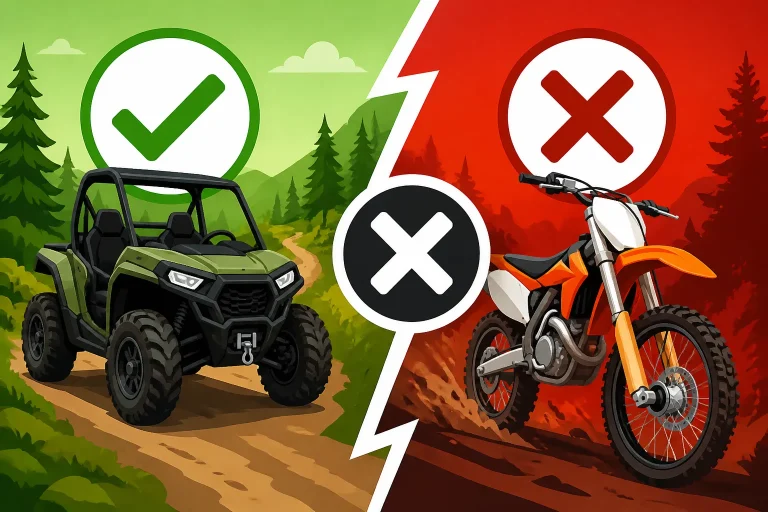
The permit question can depend on the machine and the network. A side-by-side, dirt bike or other off-highway vehicle may not be treated exactly like a conventional ATV for every permit or trail rule. Check the applicable definitions and the trail operator’s limits before you pay for a permit or haul the machine across the border.
For a UTV-specific Nova Scotia overview, see Registering a Side-by-Side in Nova Scotia. Registration does not settle every question about trail access, but it is a useful starting point for understanding the machine’s paperwork.
Avoid these cross-border mistakes
Most permit problems are preventable. They tend to come from treating one document or one old rule as if it answered every question.
Treating a trail permit as registration
A trail permit is not a vehicle registration document. Keep both requirements in view. If you are uncertain about the registration position for your machine or visit, review the relevant registration rules and contact the appropriate office.
Treating registration as trail access
The reverse mistake is just as common. A registered machine is not automatically authorized to use a club trail. You still need to meet the trail system’s permit and access conditions.
Assuming insurance travels without restrictions
A policy may apply outside your home province, but riders should confirm this rather than guess. Ask your insurer about the specific machine, destination and type of riding. Also verify whether proof must be carried in a particular form.
Relying on a former reciprocity rule
Old information may be accurate about the past and wrong for a planned ride today. Check the current information directly with the permit issuer or trail organization. If a page simply says “reciprocity applies” without clarifying its current status, do not treat that as enough.
Assuming a permit opens every trail
Permits do not erase trail closures, local restrictions, private-property boundaries or vehicle-specific limitations. Confirm the route, not just the permit.
Buying one permit for a whole group
A permit may be linked to a rider, machine, membership or other defined terms. Ask how it works for multiple machines and passengers. Do not assume a single purchase covers everyone travelling together.
Leaving proof at home
A permit confirmation on an email account is not helpful if you cannot access it at the trailhead. Save the confirmation offline or carry it in the format required by the issuer. Keep your registration and insurance proof accessible too.
A compact waterproof organizer can make this easier. Some riders use an inexpensive pouch from a local outdoor shop; others look on Amazon for a weather-resistant document sleeve. Whichever option you choose, make sure it stays secure and does not obstruct controls or create a snag hazard.
A pre-ride checklist for visitors
Before you load the machine, work through this list:
- Choose the exact route. Identify trailheads, intended segments and any road-trail connections.
- Check current trail status. Look for closures, reroutes, seasonal restrictions and machine-specific access limits.
- Confirm the Nova Scotia permit requirement. Because reciprocity with New Brunswick has ended, do not count on a New Brunswick permit alone for Nova Scotia club trails.
- Choose the permit that fits the visit. Check the current options, eligibility, validity period and proof format.
- Check registration. Make sure the machine’s documents are valid for your circumstances and destination.
- Check insurance. Ask your insurer whether your policy covers the machine and planned riding in Nova Scotia.
- Confirm operator requirements. Review applicable rules for age, training, licence, helmet, passengers and equipment.
- Pack documents. Carry permit proof, registration and insurance information in a dry, accessible place.
- Check the machine. Inspect lights, tires, brakes, controls and required safety equipment before departure.
- Tell someone your plan. Share your route and expected return time, especially if riding in a remote area.
- Recheck before the ride. A last-minute closure or weather change can make an otherwise good plan unsafe or unauthorized.
You do not need to turn a weekend ride into a paperwork project. You do need to separate the questions and confirm the pieces that apply. When the route, permit, registration, insurance and operating rules all line up, the border itself becomes a much smaller part of the trip.
If you have one unresolved question, contact the organization that controls that part of the decision. The permit issuer can clarify permit terms; a local club can confirm trail status; your insurer can explain coverage; and the appropriate registration authority can address registration. Asking before you tow saves time and avoids trying to sort out a mismatch at the trailhead.
Disclaimer
This article is for general informational purposes only and does not constitute professional advice. Laws, prices and regulations vary by location and change over time. Consult a qualified professional for guidance on your specific situation.