Nova Scotia and PEI Reciprocity Ended in 2026
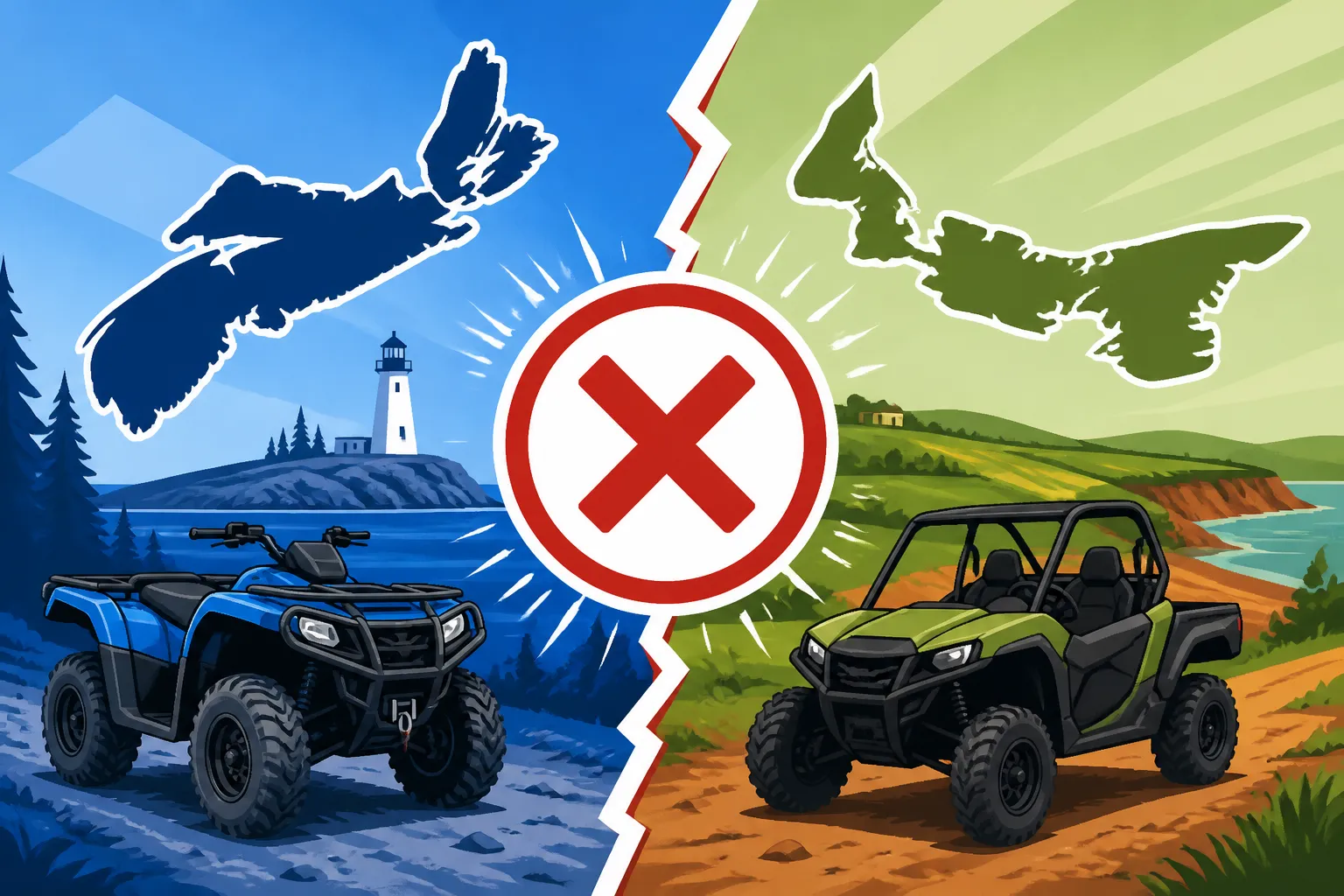
A Nova Scotia trail permit used to be enough for some riders crossing to Prince Edward Island, and the reverse was also true. That reciprocity has ended. The practical question is now which permit you need for the trails you plan to ride, and what else you must bring. This guide separates trail access from registration, insurance and local riding rules.
What ended and what it means for riders
The reciprocity arrangement between Nova Scotia and Prince Edward Island ended in 2026. In practical terms, riders should no longer assume that a trail permit issued in one province will provide access to the other province’s participating club trails. A rider planning to use those trails should arrange the permit required by the province where the riding will take place.
That change is about trail access. It does not mean a Nova Scotia machine’s registration becomes invalid when it crosses to PEI, or that a PEI machine cannot be brought into Nova Scotia. It also does not replace either province’s requirements for insurance, safety training, age, equipment or lawful riding locations.
Here is the simplest way to think about it:
| Your plan | Trail access to arrange | Other checks to make |
|---|---|---|
| Nova Scotia rider using participating trails in PEI | A PEI trail permit or pass accepted for those trails | Machine registration, insurance, rider qualifications and PEI trail rules |
| PEI rider using participating trails in Nova Scotia | A Nova Scotia trail permit accepted for the trails you plan to use | Registration, insurance, training and Nova Scotia trail rules |
| Visitor riding only on private property with permission | Trail permit requirements may not apply in the same way as on a club trail | Confirm landowner permission, local rules, insurance and any registration requirements |
| Rider using a municipal road trail or public corridor | Do not assume a trail permit alone authorizes road use | Check road-trail access, vehicle requirements and local restrictions |
| Rider passing through a province without riding its trails | A trail permit may not be needed simply because the machine is transported through | Secure the machine for transport and confirm the rules for any planned riding stops |
The table is a planning guide, not permission to ride anywhere. Each province has different arrangements for its trail network, and a pass may be limited to certain corridors, seasons or types of machine. Before setting off, confirm that the specific route is open to your vehicle and that the permit you are buying covers it.
It helps to keep three questions separate:
- Is the machine registered or otherwise permitted for operation under the applicable provincial rules?
- Does the rider have the required insurance, training and equipment?
- Does the rider have permission to use the particular trail, road or property?
A “yes” to one question does not answer the other two. A trail permit is not a substitute for registration, while registration is not a trail-access pass. Likewise, having both documents does not make a closed trail, private woodlot or restricted road open to riding.
If you were used to crossing the Confederation Bridge with only your home-province trail permit, change your planning routine. Look up the destination province’s permit options before you leave, not after arriving at a trailhead. The dedicated guides Nova Scotia Riders Visiting PEI and Nova Scotia Visitors From PEI can help you narrow down the relevant visitor considerations.
Trail permits are not registration documents
One of the most common sources of confusion is the word “permit.” Riders use it casually for several different documents, but the documents serve different purposes.
A trail permit is connected to access on a trail network. In Nova Scotia, ATV trail permits are associated with organized trails and the provincial ATV community. The details can depend on the type of permit and the trail operator. Learn more about Nova Scotia Trail Permits From ATVANS and the options in Nova Scotia Club Permit vs Standalone Permit.
A registration certificate or vehicle permit is a separate government record for the machine. It relates to the machine’s registered ownership and permitted status, not automatically to access on a private or club-maintained trail. If you are unsure whether your machine needs registration in Nova Scotia, start with Do You Need to Register an ATV in Nova Scotia?.
Insurance is another separate obligation. A trail pass does not itself prove that a machine has the insurance required for the ride. Check the policy and carry proof in the form required for your situation. A rider comparing requirements can read Nova Scotia Insurance Requirements for Riders.
A useful comparison:
| Document or permission | What it is generally for | What it does not establish by itself |
|---|---|---|
| Trail permit or pass | Access to eligible trails under the issuing organization’s rules | Registration, insurance, landowner permission or the right to use every route |
| Registration documents | Identifying and registering a machine under provincial requirements | Permission to use a club trail or private property |
| Insurance proof | Showing relevant coverage for the machine or ride | Trail access or compliance with riding rules |
| Safety certificate or training record | Showing that a rider meets applicable training requirements | Permission to use a trail or proof of machine ownership |
| Landowner or trail permission | Permission to use a particular property or corridor | Compliance with registration, insurance or public-road rules |
When planning a cross-province trip, check each category separately. A Nova Scotia rider should not treat an ATVANS membership card, a trail-permit letter, a registration document and an insurance pink card as interchangeable. A PEI rider should make the same distinction with the documents issued for that province.
For Nova Scotia trail access, the general buying process is explained in How to Buy a Nova Scotia Trail Permit. If you are visiting and will ride for a limited period, check whether Nova Scotia’s Thirty-Day Visitor Permit fits your trip. Do not assume that a short-term option is available on identical terms in PEI; ask the relevant provincial trail organization about its current visitor choices.
Keep the documents together, but keep their purposes straight
For a cross-border ride, keep the machine’s registration papers, insurance proof and trail-pass information together in a waterproof place. A small document pouch can help prevent damp paper or a lost membership letter from turning into a needless interruption. Amazon is one place people may look for a waterproof pouch, but a marine or outdoor shop can also help you choose one that seals reliably and fits the documents.
A pouch is only a storage solution. It does not replace any document, make an expired permit valid or prove that a trail is open. If you use digital records, download or save them before leaving home. Cell service can be unreliable in rural areas, and a screenshot or offline file may be easier to retrieve than an email that needs a connection.
If you are a Nova Scotia rider going to PEI
A Nova Scotia rider planning to use PEI’s organized ATV trails should arrange the PEI trail pass required for those trails. The old reciprocity arrangement should not be treated as a current shortcut. Do not assume that displaying your Nova Scotia trail permit or club membership will satisfy PEI’s access requirements.
Start with the exact route you want to ride. Identify the trail organization responsible for it, check the current access rules, and ask which pass applies to a non-resident. If your trip covers more than one area, verify that the pass is accepted on each section. A provincial pass or association permit may not cover every road, private corridor, municipal trail or special-use route.
Before buying a PEI pass
Check the following before paying:
- Who issues it? Use the current PEI trail or association information for the route you intend to ride.
- Who can buy it? Confirm whether non-residents can purchase the pass and whether there are visitor-specific options.
- Which machine does it cover? Ask whether each ATV or side-by-side needs a separate permit and whether machine categories are treated differently.
- Where is it valid? Confirm the named trail network or participating corridors rather than relying on a general description.
- When is it valid? Check start and end dates, seasonal closures and any rule about the permit year.
- How is it shown? It may be a card, letter, decal, digital record or another form. Follow the issuer’s instructions for carrying or displaying it.
- What else is required? Check insurance, registration, safety training, helmet and passenger rules, and any local operating restrictions.
- Can you get help during the trip? Save contact details and permit instructions before travelling.
If you are buying a pass close to your departure, allow time for the issuer’s processing and delivery method. A pass that is valid once issued may not be usable while you are waiting for a required physical item. Ask whether a confirmation email or receipt is enough for access, and keep the answer in writing if possible.
Do not rely only on a seller’s listing, a social-media post or another rider’s memory of the old rules. A friend may have ridden under reciprocity before it ended, or may be describing a route with different access arrangements. Verify with the body responsible for the trail you will use.
Registration and travel are separate from the PEI trail pass
A PEI trail permit does not register your machine in Nova Scotia, and your Nova Scotia registration does not buy access to PEI club trails. Before leaving, make sure the ownership and registration documents for your machine are in order and that the insurance policy applies to the trip.
If you bought the machine recently, inherited it, or are carrying a machine with incomplete paperwork, resolve that before the trip rather than assuming the trail permit will be enough. Guides such as Nova Scotia Registration After a Private Sale and Nova Scotia Registration Without a Bill of Sale address common paperwork situations.
If you are transporting the ATV or UTV on a trailer, remember that transporting a machine is different from riding it. Secure the machine properly, and check any separate requirements for the trailer and tow vehicle. Once you unload, the destination province’s operating and access rules apply.
A cross-border trip can also involve routes that are not part of the ATV trail network. A pass for eligible trails should not be treated as general permission to ride on public roads, shoulders, beaches, dunes or private property. Check local access signs and route information, and stop if the corridor is closed or unclear.
If a PEI rider is coming to Nova Scotia
A PEI rider planning to use Nova Scotia’s participating ATV trails should arrange the Nova Scotia trail permit required for those trails. Since reciprocity ended, a PEI pass should not be assumed to provide access to Nova Scotia’s club network. A visitor should confirm the appropriate Nova Scotia option before riding.
The relevant Nova Scotia permit may depend on the length and purpose of the visit. A visitor who is only coming for a short riding trip can investigate the visitor option described in Nova Scotia’s Thirty-Day Visitor Permit. Someone who expects to ride regularly may want to compare that with a club-based or other permit arrangement. The choice is about access and eligibility, so check current details directly with the issuing organization.
A PEI visitor should ask whether the permit is tied to a specific machine, a person, a membership period or a calendar period. It is easy to misunderstand a permit that is described as “annual”: the permit year may not run from the date of purchase. Check the current terms and the end date. The guide Nova Scotia Permits Run a Calendar Year explains why the calendar period matters for some Nova Scotia permits.
Build a Nova Scotia ride plan around eligible trails
Before travelling, identify the intended trailheads and the network between them. Do not plan only by distance on a map. A route can pass through sections with different landowners, operating rules or access status. Some parts may be open to ATVs and side-by-sides, while nearby roads or trails may have different restrictions.
For each section, check:
- Whether it is open to motorized off-highway vehicles.
- Whether the permit you have is valid there.
- Whether there are current closures, washouts, construction or seasonal restrictions.
- Whether the route crosses private land and requires a specific trail corridor.
- Whether a road connection is a designated road trail or simply a public road.
- Whether local rules limit hours, speed, direction of travel or vehicle type.
- Whether fuel, parking and safe unloading are available at the planned trailhead.
A valid trail permit cannot override a landowner’s closure or a club’s decision to suspend access. Trails can be closed temporarily because of weather damage, logging, maintenance or unsafe conditions. Check conditions again shortly before departure, even if you made a plan weeks earlier.
A PEI visitor should also review the actual Nova Scotia rules that apply to the planned type of riding. Road-trail rules, where applicable, are different from off-road club-trail rules. For example, a trail permit does not authorize an ATV to use any road the rider chooses. If road-trail riding is part of your trip, review Nova Scotia Road Trail Rules Explained and verify the road or municipality is open to the type of machine you are bringing.
Get the machine and rider ready
Before crossing into Nova Scotia, check the machine’s registration status, insurance documents, lights, tires and basic safety equipment. Carry the required documents in a secure place and make sure the person operating the machine understands the local rules. If more than one rider is travelling, check the requirements for every operator rather than assuming a lead rider’s documents cover the group.
Riders under the applicable age thresholds may face different training, supervision and equipment rules. A visiting family should check those requirements before booking a trip, especially if a young person will operate a machine rather than ride as a passenger. A permit does not waive youth-safety requirements.
For a longer trip, keep an emergency contact, route plan and expected return time with someone who is not riding. Remote sections may have patchy phone service. Download any trail information in advance and carry a basic repair and first-aid kit suitable for the ride. Amazon may offer compact dry bags or waterproof map cases, but check the size and closure before relying on one for essential papers or a phone.
How to plan a two-province ride without surprises
The cleanest approach is to plan the trip province by province. Write down where you will ride, who manages each trail section, which permit is required there, and which documents must be carried. This takes less time than sorting out a permit problem at the trailhead.
Use this sequence:
- Choose the riding areas. Make a list of the trails and communities you want to visit in Nova Scotia and PEI. Separate club trails from municipal road trails, private-property riding and transport-only stops.
- Identify the trail operator. Find the organization responsible for each trail section. If the route is unclear, ask before buying a pass.
- Confirm access rules. Ask whether the trail is open to your machine type, whether visitors are eligible and whether any closures or seasonal restrictions apply.
- Buy the permit for the province where you will ride. Do not assume a permit from the other province is accepted now that reciprocity has ended.
- Check the permit’s dates and proof requirements. Confirm when it becomes valid, when it expires and whether you must carry or display a particular item.
- Check machine documents separately. Confirm registration and ownership paperwork are in order, and that the insurance covers the planned use and trip.
- Review rider rules. Check licensing or training, age, supervision, passenger, helmet and equipment requirements for the location.
- Save the information offline. Keep permit confirmation, maps, club contacts and emergency details available without depending on mobile service.
- Recheck conditions just before riding. Trail access and closures can change after you buy a permit.
- Carry the documents and respect signs. Follow posted restrictions, gates and reroutes. If access is uncertain, stop and ask rather than ride through.
Keep an access record for each machine
If your group brings several machines, make a small checklist for each one. Record the machine identifier, the person responsible for it, the registration document, insurance proof and trail permit status. This is especially useful when one person handles the booking but different riders operate different machines.
Do not assume that a single purchase covers every machine in the trailer. Ask the permit issuer whether the credential is issued per machine, per rider or under another arrangement. If a machine is replaced during the trip or a friend joins at the last minute, check whether the existing permit can be transferred or whether a separate one is needed.
For a multi-day ride, save copies of confirmations in a shared folder or on each rider’s phone, but also decide who carries the original physical documents. A group can lose time if everyone assumes someone else has the permit letter. Keep a backup copy separate from the main set.
Amazon is one possible source for a small waterproof organizer, but the practical test is whether it protects paper from rain and mud while still being easy to open when an officer or trail representative asks to see it. Avoid putting every original document in a single bag that could be lost with the machine.
Treat crossing the provincial boundary as a fresh rules check
The provincial boundary is not just a change in trail map. It can mean a different pass, different trail operator, different registration treatment, different rider requirements and different rules for public roads. Make the handoff explicit: use the PEI access arrangement for riding in PEI and the Nova Scotia arrangement for riding in Nova Scotia.
If you will ride only in one province, you generally need to focus on that province’s access rules rather than buying a pass for both. If the itinerary includes both, budget for each province’s required permit and verify the exact trail coverage. Buying two passes may be unnecessary for a route that stays within one province, but it may be necessary for a trip that uses eligible trails on both sides of the crossing. The related guide Buying Two Permits for Two Provinces is useful when comparing a cross-border itinerary.
Common mistakes and practical answers
Assuming a home-province pass travels with you
This is the central mistake the end of reciprocity creates. A rider may still own a valid home-province pass, but its validity at home does not prove that it grants access elsewhere. Check the destination province’s current rules and get the destination pass when required.
Confusing a trail pass with vehicle registration
The documents answer different questions. A trail permit concerns access to eligible trails. Registration concerns the machine and its legal status under the applicable provincial system. A rider may need both, and neither automatically replaces insurance or permission to ride on private land.
Treating every trail-like line on a map as an ATV trail
A line on a general map may represent a footpath, rail corridor, private road, snowmobile route or a trail with access conditions that do not include ATVs. Use information from the trail operator or municipality, and follow signs on the ground. If the route is not clearly open to your machine, do not infer permission from its appearance.
Buying a pass without checking the machine category
ATVs and side-by-sides may be handled differently by a permit program or on a particular corridor. Before buying, identify the machine accurately and ask whether the permit applies to that class. If you are taking a UTV, start with the relevant Nova Scotia guidance, including Nova Scotia Rules for a Side-by-Side Driver, and confirm PEI requirements with the local issuer.
Planning from old information
A previous season’s permit, a past reciprocity arrangement or an old trip report may no longer match current terms. This is particularly important for visitors who ride infrequently. Look for the current instructions from the permit issuer and trail operator, and ask directly if the information is ambiguous.
Treating a receipt as proof when the issuer requires something else
A payment receipt may show that you paid, but it may not be the access credential the trail operator expects. Ask what you must carry or display. If a physical pass is required, allow enough time to receive it. If a digital permit is accepted, save it in a form you can open offline.
Forgetting that the route can cross private land
A trail network may use permission-based corridors over private property. The permit does not give a rider the right to leave the marked route, bypass a gate or ride around a closure. Stay on the signed corridor, respect property and leave gates as directed. If a reroute is unclear, turn back or contact the club rather than creating a new track.
Assuming the permit covers road use
A trail permit is not a general road licence. Use a public road only where the applicable rules allow it, and check whether the route is officially designated for off-highway vehicles. A machine may need specific equipment and the operator may need to meet additional requirements. See Can You Ride an ATV on the Road in Nova Scotia? for the distinction between road-trail access and ordinary road use.
Leaving the permit check until the trailhead
A trailhead may have no staff, poor cell service or no convenient way to buy the correct pass. Sort out access before travelling, save the confirmation and keep a record of the contact you used to verify the rules. This matters even more when a group is travelling a long distance or has booked lodging around a planned route.
Ignoring trail closures because the permit is valid
A permit does not guarantee that every corridor will be open on every day. Storm damage, maintenance, landowner decisions and seasonal conditions can change access. Check again shortly before departure and respect gates and closure notices. Riding around a blocked section can damage the trail and jeopardize future access.
A short pre-ride checklist
Before setting off, confirm:
- You have the trail permit issued for the province where you will ride.
- The permit covers the intended machine and trail network.
- The permit is valid on the planned riding dates.
- Registration documents and insurance proof are available for each machine.
- Riders meet local age, training, supervision and equipment requirements.
- Every planned corridor is open and permits the type of machine you are bringing.
- You have offline maps, contact details and a plan for poor cell coverage.
- Your group knows how to respect closures, signs, gates and private property.
The main adjustment is simple: plan for separate trail permits when riding organized trails in both Nova Scotia and PEI. Then handle registration, insurance and local riding permissions as their own checks. That approach avoids relying on an old reciprocity assumption and makes it easier to spot a missing document before the trip starts.
Disclaimer
This article is for general informational purposes only and does not constitute professional advice. Laws, prices and regulations vary by location and change over time. Consult a qualified professional for guidance on your specific situation.