Can You Ride an ATV on the Road in Nova Scotia?
It's a question I hear all the time from fellow riders across our beautiful province: "Can I actually take my ATV or UTV on the road in Nova Scotia?" For years, the answer was a pretty firm "no," leaving many of us frustrated and trying to find creative (and often illegal) ways to connect trails or access amenities. But things have changed, and this guide is here to unravel the complexities of Nova Scotia's Off-highway Vehicles Act and the exciting, albeit regulated, world of "road trails."
The Evolution of ATV and UTV Access in Nova Scotia
For the longest time, the idea of legally riding your off-highway vehicle (OHV) on a public road in Nova Scotia felt like a distant dream. Our machines were meant for the woods, the gravel pits, the designated trails – never the pavement. This created a huge disconnect for riders. Imagine having a fantastic trail system that suddenly dead-ended at a paved road, forcing you to turn back or risk a hefty fine by riding illegally, even if just for a few hundred feet to get to the next section. It was a common pain point, especially for those of us living in communities where trails were fragmented by provincial highways or municipal roads.
Thankfully, the provincial government, recognizing the growing popularity of OHV tourism and the need for better connectivity, started looking at solutions. What began as a pilot project in a handful of communities has blossomed into a much broader network, making it possible for us to enjoy our machines more freely and safely, provided we understand and follow the rules. This shift has been a game-changer, opening up new routes and adventures that were previously impossible without hauling your machine on a trailer every few kilometers. It means you can potentially ride from your cottage to a local diner, or connect two beloved trail systems without having to load up your truck.
What Are "Road Trails" in Nova Scotia?
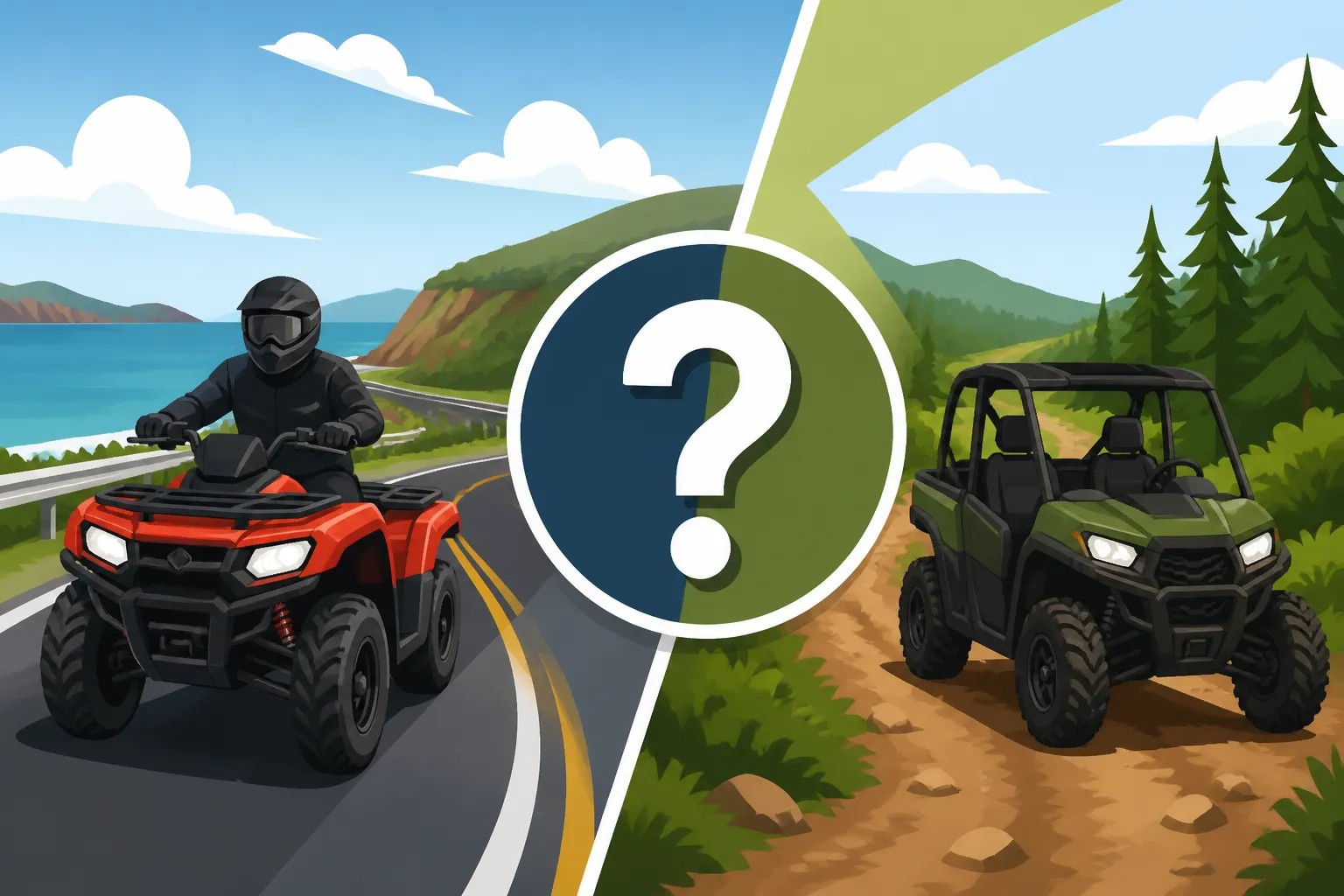
When we talk about "riding on the road" in Nova Scotia, we're not talking about cruising down a major highway or through downtown Halifax like a car. The specific term you need to know is "road trail." These are designated sections of public roads—typically municipal or secondary provincial roads, often with lower traffic volumes—that have been explicitly opened for OHV use. They serve as connectors, allowing riders to bridge gaps between off-highway trail networks, access services like gas stations or restaurants, or simply travel through communities where an off-highway trail isn't feasible.
These aren't just any roads; they are very specifically identified and signed. Think of them as dedicated pathways that happen to share space with conventional vehicle traffic. The intent is to provide seamless travel for OHVs, enhancing the overall riding experience by reducing the need for trailering between segments. It’s a pragmatic solution to a long-standing problem, acknowledging that our machines are part of the recreational and economic fabric of many Nova Scotian communities. You’ll find these road trails clearly marked, so there’s no guesswork involved, which is a huge relief after years of uncertainty.
The History and Evolution of Nova Scotia's Road Trails
The journey to legal road access for OHVs in Nova Scotia wasn't an overnight phenomenon. It really gained momentum with a pilot project initiated in 2018. The province recognized the economic benefits that OHV tourism could bring, especially to rural communities. Imagine a group of riders spending money on gas, food, and lodging in small towns they wouldn't otherwise visit. The pilot aimed to test the waters, identifying specific communities and road sections where OHV use could be safely integrated with existing traffic. You can learn more about this by reading [Nova Scotia's Road Trails Act Explained].
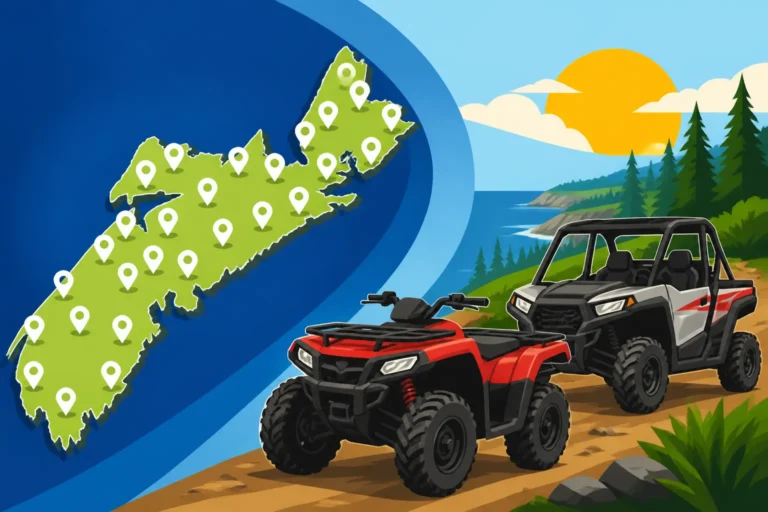
Initially, these were small, contained trials in seven communities like Mooseland, Nictaux, and Pugwash. The feedback was overwhelmingly positive, demonstrating that with proper signage, clear regulations, and rider education, OHVs and regular traffic could coexist. This success paved the way for the official proclamation of the Off-highway Vehicles Act in September 2023, which formalized the "road trail" concept. Since then, the network has been steadily expanding, with plans for 2025 and 2026 to add even more kilometers of connecting road trails, linking up disparate sections of the province's vast [Nova Scotia ATV Trails: The ATVANS Network]. This gradual, measured approach has allowed the province to learn and adapt, ensuring that the expansion is sustainable and safe for everyone involved. It's truly exciting to see this network grow year after year!
Rules and Regulations for Riding on Nova Scotia Road Trails
Okay, so you can ride on certain roads – fantastic! But before you load up your cooler and head out, it's absolutely crucial to understand that "road trails" come with a very specific set of rules. This isn't like riding on a private woodlot; you're sharing the road with cars, trucks, and often pedestrians, so safety and compliance are paramount. Ignoring these regulations isn't just risking a fine; it's putting yourself and others in danger. Nova Scotia is serious about this, and officers are out there ensuring everyone is following the letter of the law. You'll want to be familiar with everything from your personal gear to your machine's setup.
Mandatory Equipment and Machine Requirements
Your ATV or UTV needs to be properly equipped to be ridden on a road trail. This isn't just about personal preference or comfort; these are legal requirements designed for safety and visibility.
- Lights: This is a big one, especially if you plan to ride anywhere near dusk or dawn. Your machine must have a working headlight that projects a white light at least 90 metres (300 feet) and a working tail light that projects a red light at least 60 metres (200 feet). No flickering, no dim lights, no "I'll just get by." If your stock lights aren't cutting it, consider upgrading. Companies like SuperATV offer fantastic aftermarket lighting kits, from powerful LED light bars to brighter replacement headlights, ensuring you're seen clearly by other road users. Don't forget your brake lights, too, which must illuminate when you apply the brakes.
- Muffler/Exhaust: This is often overlooked but can lead to a ticket. Your machine must be equipped with a muffler that is in good working order and prevents excessive or unusual noise. Modifying your exhaust to make your machine louder is a definite no-no on road trails. The goal is to minimize noise pollution, especially when you're passing through residential areas. Keep it stock or an equivalent aftermarket part that meets sound regulations.
- Mirrors: While not explicitly detailed for all OHVs on road trails, side-by-sides often come with mirrors, and they are highly recommended for ATVs too. Being able to see traffic behind you is a fundamental safety practice when sharing a road. If your ATV doesn't have them, adding a set is a cheap and easy upgrade.
- Brakes: Your machine's brakes must be in good working order and capable of stopping the vehicle safely. Regular maintenance is key here.
- Tires: Your tires should be in good condition, without excessive wear. While specific tread patterns aren't usually legislated, extremely aggressive mud tires might be frowned upon if they're tearing up the pavement, though this is more a matter of courtesy than law for most road trails.
Remember, these requirements are about making your machine visible and reducing its impact on the community. It’s about being a responsible rider and sharing the space respectfully.
Rider Requirements: License, Age, Helmet, Insurance, and Registration
Before you even think about putting a wheel on a road trail, you need to ensure you, as the rider, meet all the necessary qualifications. This covers everything from your personal eligibility to the paperwork for your machine.
- Driver's License: This is a non-negotiable requirement. To operate an OHV on a road trail, you must possess a valid driver's license (minimum Class 5 or equivalent). A learner's permit won't cut it. This ensures that anyone operating a vehicle on a public road has demonstrated a basic understanding of road rules and safety. So, [Do You Need a Licence for an ATV in Nova Scotia?] for road trails? Absolutely.
- Age Requirements: The minimum age to operate an OHV on a road trail is 16, and this is tied directly to the driver's license requirement. For anyone under 16, even if they have a safety certificate and are permitted on off-highway trails, road trails are off-limits.
- Helmet Law: Just like on any off-highway trail, a helmet is mandatory on road trails. [Nova Scotia Helmet Law for Riders] requires you to wear a CSA, DOT, Snell, or BSI approved helmet that is securely fastened. No half-helmets, no bicycle helmets – it must be designed for motorized vehicles. Eye protection (goggles or a visor) is also highly recommended, and for riders under 16, it's mandatory, along with long sleeves, gloves, and boots.
- Insurance: Your machine must be insured with valid third-party liability insurance, with a minimum coverage of $500,000. This is the same requirement for all OHVs registered in Nova Scotia, but it's especially critical when operating on public roads where the risk of interaction with other vehicles is higher. You must carry proof of insurance (your "pink card") with you.
- Registration: Every OHV operating on a road trail must be registered with the Nova Scotia Registry of Motor Vehicles. This involves paying a one-time certificate fee and an annual vehicle permit fee, which also contributes to the province's OHV Infrastructure Fund. You'll need to carry your proof of registration with you whenever you ride. For more details on the process, check out [Nova Scotia Requires Registration and Insurance].
Failing to meet any of these requirements can lead to significant fines and potentially having your machine impounded. It's not worth the risk.
Operating Rules: Speed Limit, Single File, Passing, and Yielding
Operating an OHV on a road trail is not the same as driving a car. There are specific rules of the road that apply solely to OHV users to ensure safety and minimize disruption.
- Speed Limit: The absolute maximum speed limit for an OHV on a road trail is 25 km/h. Yes, you read that right – 25 km/h. Even if the posted speed limit for cars is 50 km/h or higher, you cannot exceed 25 km/h. This is a critical rule to remember and a common point of contention for riders. The rationale is to minimize speed differential with other traffic and to reduce the risk of severe accidents. Always keep an eye on your speedometer. You can read more about it in [Nova Scotia's 25 km/h Road Trail Limit].
- Single File Riding: When riding on a road trail, you must ride in single file. No side-by-side riding, even if the road is wide enough. This helps reduce your footprint on the road and allows other vehicles more space to pass safely.
- No Passing: You are not permitted to pass other vehicles on a road trail. If you come up behind a slower vehicle, you must maintain a safe following distance and wait until you are back on a dedicated off-highway trail or a section where passing is explicitly allowed.
- Yielding to Traffic: OHVs on road trails must yield the right-of-way to all other vehicles. This means cars, trucks, motorcycles, bicycles – they all have priority. Be prepared to pull over safely to allow faster traffic to pass. This isn't about pride; it's about being a responsible, safe road user.
- Road Position: You should operate as far to the right of the travelled portion of the road as is safe and practicable. This keeps you out of the main flow of traffic and allows for better visibility and passing room for other vehicles.
- Intersections and Crossing Highways: Navigating intersections and crossing provincial highways comes with its own set of rules. When crossing a paved provincial highway, you must stop, yield to all traffic, and proceed directly across the road at a right angle. You cannot ride along the shoulder of a provincial highway. For detailed rules on this, check out [Nova Scotia Rules for Crossing a Highway].
- Operating Hours: Road trails generally have restrictions on night riding. OHVs are typically allowed on road trails from half an hour before sunrise until half an hour after sunset. Check specific signage, but generally, late-night cruising on designated road sections is prohibited.
Adhering to these operating rules is critical not just for your safety, but for the continued success and expansion of the road trail network. Every incident that occurs due to non-compliance jeopardizes the privilege for all riders.
Prohibited Areas and Activities
While Nova Scotia has opened up some roads for OHV use, there are still many places where you absolutely cannot ride your ATV or UTV, and certain activities are strictly forbidden. Ignorance of these restrictions is not an excuse, and penalties can be severe.
- Controlled Access Highways: Major highways like the 100-series roads (e.g., Highway 101, 102, 103) are strictly off-limits to OHVs. These are high-speed, controlled-access roads designed for conventional vehicles only. You will not find any designated "road trail" sections on these types of highways, and riding on them is illegal and extremely dangerous.
- Beaches and Dunes: This is a huge one for our coastal province. With few exceptions, riding ATVs or UTVs on beaches, sand dunes, or sensitive coastal ecosystems is prohibited. These areas are ecologically fragile, and OHV traffic can cause irreversible damage to plant life, animal habitats, and geological formations. There are heavy fines for violations, and wardens regularly patrol these areas. You’ll also find specific regulations about [Nova Scotia Rules for Riding a Beach] and [Nova Scotia Rules for Riding Dunes].
- Watercourses: Riding directly in or through rivers, streams, lakes, or wetlands is generally prohibited. While you might occasionally cross a small brook on a designated trail, intentionally riding through water bodies is illegal due to the environmental damage it causes, including erosion, siltation, and disturbance to aquatic life.
- Private Property Without Permission: Just like off-highway, riding on private land without the express permission of the landowner is trespassing. This applies equally when you are trying to connect two trail sections by cutting through someone's field or yard. Always seek permission, or stick to marked trails and designated road trails.
- Impaired Operation: This should go without saying, but operating an OHV while under the influence of alcohol or drugs is illegal and carries the same severe penalties as impaired driving in a car, including license suspension, hefty fines, and potential jail time. [Nova Scotia Impaired Riding Penalties] are no joke. Your OHV is considered a motor vehicle when on any public land, including road trails.
- Excessive Noise: Beyond the muffler requirements, intentionally creating excessive noise (e.g., revving your engine unnecessarily) in residential areas or near populated spots is considered an offence and can lead to tickets and community complaints. Be mindful of your impact on those living near road trails.
Always check local signage and respect the rules. The continued privilege of road trail access depends on all riders acting responsibly and adhering to these prohibitions.
Finding and Using Nova Scotia Road Trails
So, you're compliant, your machine is ready, and you're eager to explore these new connections. But how do you actually find these road trails, and what's the best way to integrate them into your riding plans? It's not always as simple as just "getting on the road." Strategic planning and a good understanding of the local network will make your ride smoother and more enjoyable.
How to Identify a Road Trail
Identifying a legitimate road trail is crucial to avoid accidentally straying onto an illegal section of road. Nova Scotia has made an effort to clearly mark these designated routes.
- Signage is Key: The most important indicator will be the signage. Look for specific road trail signs, often a rectangular sign with an ATV or UTV symbol, indicating that off-highway vehicles are permitted. These signs will typically be placed at the entry and exit points of a road trail segment. Don't assume a road is a road trail just because you see other riders on it – always look for the official sign.
- Provincial Government Resources: The Nova Scotia government maintains online resources that list and map the designated road trails. While I can't give you a direct link, searching the provincial government's website for "Nova Scotia road trails" should lead you to the official pages, which often include interactive maps or lists. These are the most authoritative sources for where you can and cannot legally ride. Many of these resources may even fall under [Nova Scotia Road Trail Site Lists].
- ATVANS Resources: The ATV Association of Nova Scotia (ATVANS) is heavily involved in the development and maintenance of trail networks, and they often publish maps or provide information on road trail connections. Being a member of ATVANS or a local club is a great way to stay informed, and they might even have apps or GPS files you can download to help you navigate. They are an invaluable resource for knowing what's open and what's not.
- Local Knowledge: Sometimes, the best way to confirm a road trail, especially in smaller communities, is to ask locals or members of the local ATV club. They often have the most up-to-date information on new additions or temporary closures. However, always cross-reference this with official signage or maps.
Never assume. Always verify that a section of road is officially designated as a road trail before you ride on it.
Planning Your Route with Road Trail Access
Integrating road trails into your ride planning can unlock new possibilities, but it requires a bit of forethought. You can't just randomly decide to hop on the pavement; you need a strategic approach.
- Connecting Trail Networks: The primary purpose of many road trails is to link existing off-highway trail systems. If you're looking to do a long-distance ride that spans multiple communities or passes through areas without contiguous off-highway trails, these road trails are your golden ticket. For example, perhaps you want to ride from the Annapolis Valley towards the South Shore; road trails might connect segments of old rail lines that are now ATV trails.
- Accessing Services: One of the biggest advantages is being able to ride your machine directly to a gas station, a small-town diner, or a convenience store. Plan your fuel stops and lunch breaks accordingly, using road trails to minimize detours and the need for trailering. Just remember the 25 km/h speed limit means these road sections will take a bit longer to traverse than you might be used to in a car.
- Mapping Your Journey: Use a good mapping application or a dedicated GPS device that allows you to see both off-highway trails and public roads. Mark the official road trail segments on your map. Apps like Ride Command or Gaia GPS can be incredibly useful, especially if you can overlay KML files of official road trails. This allows you to visualize your entire route, including the slower, more regulated road trail sections. Some riders even use accessories from SuperATV, like their windshields which can often mount GPS devices, keeping your navigation handy and protected.
- Pre-Ride Check: Before heading out on a ride that includes road trails, do a thorough check of your machine. Are all your lights working? Brakes? Is your registration and insurance paperwork easily accessible? Is your helmet up to standard? These are all things that a Nova Scotia officer might check during a routine stop, especially if you're on a public road. Consider what [Nova Scotia Equipment Checks by Officers] might entail.
Careful planning ensures you maximize the enjoyment of these new access points while remaining safe and compliant.
Etiquette and Safety on Shared Roadways
Riding an OHV on a shared roadway requires a different mindset than blasting down a forest trail. You are now part of the general traffic, and courtesy and defensive riding are paramount.
- Be Predictable: Use hand signals or turn signals (if your UTV has them) when turning. Maintain a consistent speed (remember: 25 km/h maximum). Avoid sudden maneuvers. Other drivers may not be accustomed to seeing OHVs on these roads, so make your intentions clear.
- Visibility: While your lights are mandatory, consider wearing brightly colored gear. Reflective strips on your helmet or jacket, especially in overcast weather or near dawn/dusk, can significantly increase your visibility. You want to be seen from a distance.
- Respect Other Road Users: This includes not only cars but also cyclists, pedestrians, and even horse-drawn buggies in some rural areas. Slow down, give them a wide berth, and be prepared to stop. Minimize dust and noise, especially when passing homes. Remember, the acceptance of road trails by local communities hinges largely on OHV riders being respectful and considerate.
- Group Riding: If you're riding in a group, emphasize single-file formation on road trails. Keep a safe distance between machines, especially at 25 km/h, to allow other vehicles to pass your entire group easily. You want to avoid creating a long, unbroken line of OHVs that frustrates other drivers.
- Pull Over Safely: If traffic is building up behind you, find a safe spot (a wide shoulder, a side road entrance) and pull over to let them pass. A quick wave of apology or thanks can go a long way in fostering good relations between OHV riders and the general public.
- Hazard Awareness: Road trails, being public roads, can have potholes, gravel patches, unexpected turns, and even wildlife. Stay vigilant. A smooth paved section can quickly turn into a loose gravel patch, so adjust your speed and riding style accordingly.
| Feature / Rule | On a Dedicated Off-Highway Trail | On a Designated Road Trail |
|---|---|---|
| Registration | Required | Required |
| Insurance | Required | Required |
| Driver's License | Not always required (depends on age/training) | Mandatory (min. Class 5) |
| Helmet | Required | Required |
| Minimum Age | 6 years (with supervision/training) | 16 years (with valid license) |
| Speed Limit | Varies by trail/conditions | 25 km/h Maximum |
| Riding Formation | Often side-by-side permitted | Single File Only |
| Yielding | To pedestrians, other OHVs | To All Other Traffic |
| Lights | Recommended, mandatory at night | Mandatory (head/tail/brake) |
| Passing | Permitted (when safe) | Not Permitted |
| Proof of Papers | Carry registration/insurance | Carry registration/insurance/license |
By practicing good etiquette and prioritizing safety, you'll not only protect yourself and others but also help solidify the positive image of OHV riding in Nova Scotia.
Penalties for Non-Compliance
It's easy to get caught up in the excitement of riding, but ignoring the rules of Nova Scotia's road trails can have serious financial and legal consequences. The province's enforcement officers are well-versed in the Off-highway Vehicles Act, and they don't hesitate to issue tickets or take further action for violations. These aren't just minor infractions; they're taken seriously because they compromise public safety.
If you are caught riding an unregistered machine on a road trail, for instance, you could face significant fines. The minimum fine for operating an unregistered OHV is $250, but it can go much higher. Similarly, operating an uninsured machine is a serious offense that carries steep penalties, as does riding without the proper driver's license or an approved helmet. Officers also conduct [Nova Scotia Equipment Checks by Officers] and will issue tickets for things like non-compliant exhausts or insufficient lighting.
Beyond the immediate fines, repeat offenses or serious violations (like impaired operation) can lead to your license being suspended, your machine being impounded, and even court appearances with additional costs and surcharges. It’s simply not worth the risk. Always ensure you are fully compliant with all registration, insurance, licensing, and equipment requirements before you venture onto any designated road trail. Know the rules, respect the rules, and enjoy the incredible access these road trails provide.
Disclaimer
This article is for general informational purposes only and does not constitute professional advice. Laws, prices and regulations vary by location and change over time. Consult a qualified professional for guidance on your specific situation.