Nova Scotia Helmet Standards Accepted
Riding an ATV or UTV in Nova Scotia offers an incredible sense of freedom, whether you're exploring rugged coastal trails or cruising a designated road trail. But amidst the excitement, one question often weighs heavily on riders: "What kind of helmet do I really need to wear?" It's not just about comfort or personal preference; Nova Scotia has specific laws about head protection, and navigating the acronyms like DOT, Snell, and CSA can feel like learning a whole new language. This guide is here to cut through the confusion, explaining exactly what standards are accepted in Nova Scotia and how to choose a helmet that keeps you safe and legal, so you can focus on the ride.
Understanding Nova Scotia's OHV Helmet Laws
The thrill of off-highway vehicle (OHV) riding in Nova Scotia is undeniable, but it comes with a serious responsibility: personal safety. The provincial government, recognizing the inherent risks involved, has put clear regulations in place to protect riders. One of the most fundamental of these is the mandatory use of helmets. This isn't just a suggestion; it's a critical legal requirement designed to prevent severe head injuries, which are tragically common in ATV and UTV accidents.
The Mandate for Head Protection
Nova Scotia's Off-highway Vehicles Act is very clear: anyone operating or riding as a passenger on an off-highway vehicle must wear a helmet. This isn't a rule that applies only in certain areas or during specific activities; it's universal across the province whenever your wheels are turning. The intent behind this mandate is straightforward: to reduce the likelihood of traumatic brain injuries (TBIs) in the event of a fall, collision, or rollover. Even a seemingly minor tumble can have devastating consequences if your head isn't properly protected. The ground, rocks, trees, or even other parts of your machine can become unforgiving impact points. This law serves as a crucial line of defense for every rider, from the seasoned veteran navigating challenging terrain to the weekend warrior enjoying a leisurely cruise. It underlines the province's commitment to ensuring that while riders can enjoy the diverse landscapes, they do so with a foundational level of safety.
Who Must Wear a Helmet?
The helmet law in Nova Scotia applies broadly to almost everyone involved in an OHV excursion. This includes the operator of the ATV or UTV, regardless of their age or experience level. If you're steering the machine, you need a helmet. Equally important, any passenger riding on that off-highway vehicle must also be wearing an approved helmet. This rule is especially critical when considering [Nova Scotia Passengers Must Be 9 or Older], as younger riders are often more vulnerable in an accident. The only exceptions tend to be very specific, limited circumstances, such as machines being used on private property solely by the owner or those involved in certain agricultural or forestry operations, but even then, safety dictates wearing one. For all intents and purposes, if you’re riding an OHV anywhere that’s not your own private land for non-work purposes, assume a helmet is mandatory. There's no age cutoff where the rule suddenly becomes optional; it's a blanket requirement for all riders. This universal application helps to foster a culture of safety across the riding community.
Penalties for Non-Compliance
Ignoring Nova Scotia's helmet law carries more than just personal risk; it also comes with legal consequences. If an enforcement officer, such as an RCMP officer or a provincial park ranger, observes you or your passenger riding an OHV without an approved helmet, you could face significant fines. These penalties aren't minor inconveniences; they're designed to be a deterrent and reflect the seriousness with which the province views this safety regulation. A ticket for riding without a helmet can put a real damper on your day out and a noticeable dent in your wallet. Beyond the initial fine, there might be additional court costs or administrative fees, further increasing the financial burden. The province's intent is clear: uphold the safety standards, or face the repercussions. This serves as a stark reminder that while the freedom of the trail is enticing, it must always be balanced with adherence to the rules that keep everyone safer. Riders often lament these fines, but they truly are a push to safeguard lives. [Nova Scotia Ticket Costs for Riders] can be substantial, making helmet compliance a smart financial decision, quite apart from the safety aspect.
Accepted Helmet Standards in Nova Scotia
Okay, so we know we have to wear a helmet. But not just any helmet will do. Nova Scotia, like many jurisdictions, doesn't just say "wear a helmet"; it specifies that the helmet must meet certain safety standards. This is where those alphabet soup certifications come into play, and understanding them is crucial for both legality and genuine protection.
The Role of Certification Marks (DOT, Snell, CSA, BSI)
When you look at a helmet, often on the back or inside, you'll see stickers or embossed labels indicating compliance with various safety standards. These aren't just decorative; they are the assurance that the helmet has undergone rigorous testing and meets specific criteria for impact absorption, penetration resistance, and retention system strength.
- DOT (Department of Transportation): This is a widely recognized standard in the United States and is generally accepted across North America. A DOT-certified helmet means it meets the minimum performance requirements of the Federal Motor Vehicle Safety Standard (FMVSS) 218. It's a self-certification process by manufacturers, meaning they test and affirm compliance, but the DOT can conduct random tests to verify.
- Snell (Snell Memorial Foundation): Snell is a non-profit organization that performs more stringent and comprehensive testing than DOT. Snell certification is often considered the gold standard for racing and high-performance applications. They conduct batch testing, meaning they buy helmets off the shelf and test them, providing an independent verification of safety. Many riders opt for Snell certification if they want an extra layer of protection, especially for aggressive riding.
- CSA (Canadian Standards Association): For Canadian riders, CSA certification is highly relevant. The CSA standard for motorcycle and OHV helmets (CAN/CSA-D230) is a robust national standard. If you see a CSA mark, you can be confident that the helmet meets Canadian safety requirements. It's often a preferred mark for those who want to ensure their gear is specifically tailored to Canadian regulations.
- BSI (British Standards Institution): While less common in North America, BSI standards (like BS 6658:1985) are recognized internationally, particularly in the UK and Europe. If you're importing a helmet or using one from another country, checking for BSI or similar international standards (like ECE 22.05/22.06) is important.
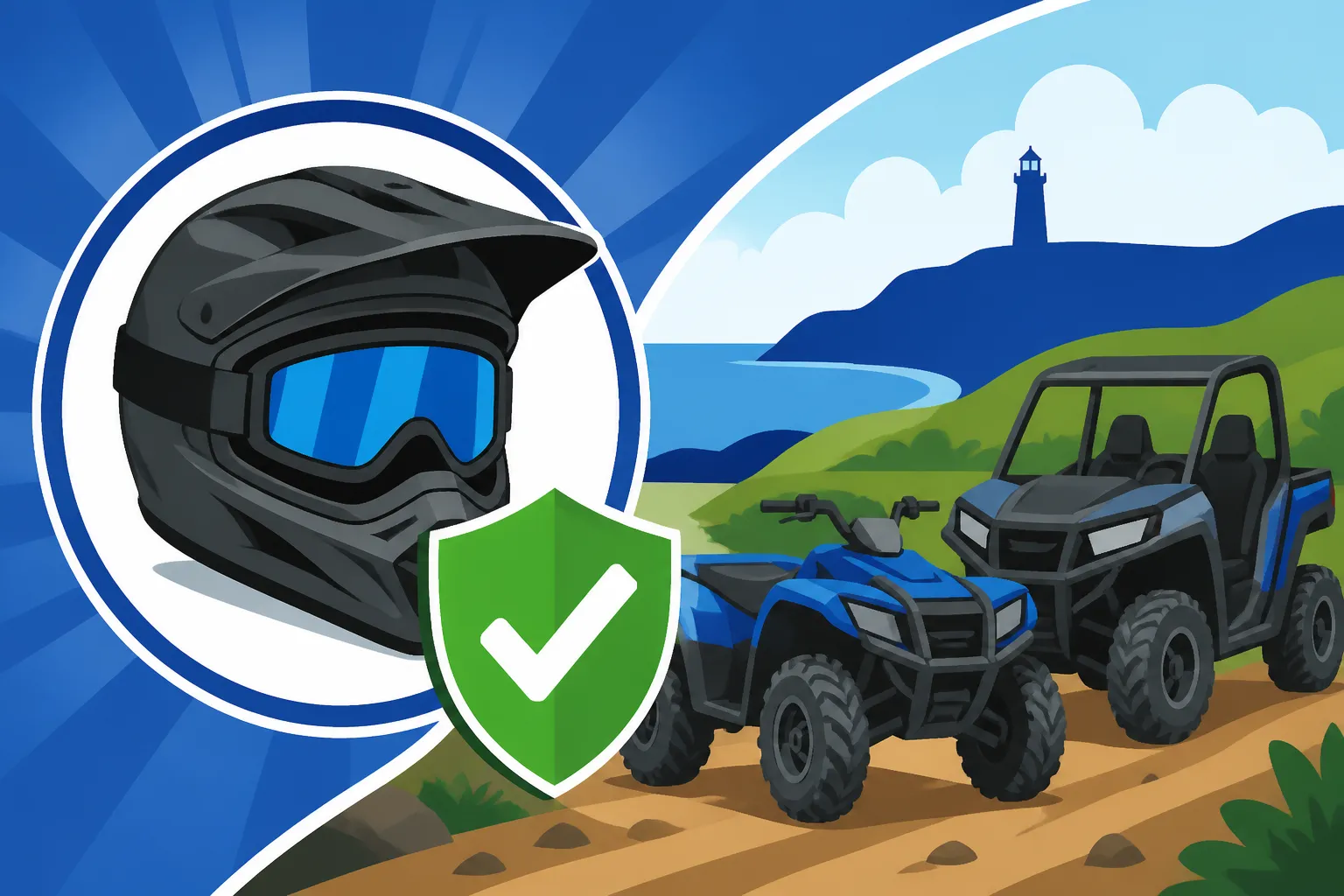
For Nova Scotia, any of these recognized standards — DOT, Snell, CSA, or BSI — are generally accepted as meeting the legal requirement for head protection on an OHV. The key is that the helmet must have one of these marks clearly displayed. An uncertified helmet, no matter how sturdy it feels, will not pass muster with enforcement.
International vs. Canadian Standards
While Canadian standards like CSA are specific to our country's regulatory framework, Nova Scotia wisely allows for recognized international standards to ensure riders aren't unduly restricted, especially given the global market for helmets. This means that a helmet manufactured to meet the U.S. DOT standard, or even the European ECE 22.05/22.06 standard (which is also highly respected), will likely be accepted. The crucial point is that the standard must be identifiable and recognized as a legitimate safety certification.
The benefit of accepting multiple standards is that it provides riders with a broader range of choices in terms of style, fit, and features. However, it also places the onus on the buyer to ensure the helmet they choose genuinely carries one of these marks. Counterfeit helmets exist, and they offer little to no protection, so purchasing from reputable dealers is always advisable. Don't be tempted by unbranded or suspiciously cheap helmets that lack proper certification; your head protection is not an area to compromise. [Nova Scotia Helmet Standards Accepted] explicitly lists these, simplifying your shopping experience.
What to Look For When Buying a Helmet
Beyond the certification mark, there are several practical considerations when purchasing a helmet for ATV/UTV riding in Nova Scotia.
- Fit: This is paramount. A helmet that's too loose will move around and offer inadequate protection, potentially even coming off in a crash. One that's too tight will be uncomfortable and distracting. The helmet should fit snugly all around your head, without painful pressure points, and should not move when you shake your head. The cheek pads should press against your cheeks, and you should feel slight pressure on your forehead.
- Type: Off-road specific helmets (often called MX helmets) are generally preferred for ATV/UTV riding. They feature an extended chin bar for face protection, a sun peak to block glare and roost, and offer excellent ventilation – vital for strenuous riding. Many come without a face shield, relying on separate goggles, which is usually preferred for dust and vision clarity off-road. For UTVs, some riders opt for full-face street helmets if they spend more time on road trails or want integrated shields, but ensure it allows for adequate airflow in warmer conditions.
- Visibility: Choose a helmet color that stands out, especially if you anticipate riding near roads or in areas with other traffic. Bright colors like neon yellow, orange, or green significantly enhance your visibility to others, which is a key safety feature.
- Ventilation: Riding can be physically demanding, and a well-ventilated helmet will keep you cooler and more comfortable, reducing fatigue. Look for helmets with multiple intake and exhaust vents.
- Weight: Lighter helmets can reduce neck fatigue on longer rides. However, don't sacrifice safety for a marginal weight saving; ensure it still meets accepted standards.
- Condition (for used helmets): If considering a used helmet, be extremely cautious. Helmets are designed for one impact. Even if it looks fine externally, internal damage from a previous crash might compromise its protective capabilities. It's almost always recommended to buy a new helmet.
Choosing the right helmet is an investment in your safety and enjoyment on the trails. Taking the time to try on several options and ensuring a proper fit, along with verified certification, will give you peace of mind during every ride.
Specific Helmet Requirements for Different Riders and Situations
It's not a one-size-fits-all world when it comes to helmet use. While the general rule is "wear a helmet," Nova Scotia's regulations, and good safety practices, offer specific nuances depending on who is riding and where. Understanding these distinctions is key to ensuring everyone, especially our younger riders and passengers, is adequately protected and compliant with the law.
Youth Riders and Specialized Gear
When it comes to our youngest riders, Nova Scotia has specific provisions in place that go beyond just wearing any helmet. For riders under the age of 16, the requirements often become more prescriptive, focusing on ensuring the helmet fits correctly and that additional protective gear is worn. It's not enough for a child to wear an adult helmet that's "close enough"; the helmet must be appropriately sized for their head. This means investing in youth-specific helmets that are designed to fit smaller head circumferences and often come with lighter shells to reduce strain on developing neck muscles.
Furthermore, Nova Scotia's regulations, often detailed under [Nova Scotia Gear Rules for Riders Under 16], emphasize that youth riders should wear not just a helmet, but also eye protection, long-sleeved shirts, long pants, gloves, and sturdy boots that cover the ankles. This comprehensive approach recognizes that children are more vulnerable to various injuries, not just head trauma, due to their developing coordination and judgment. As parents or guardians, it's our responsibility to not only ensure the helmet is certified and fits perfectly but also that they are dressed in the full complement of protective gear. A child riding without appropriate gear is not only at higher risk but could also lead to penalties for the supervising adult.
Passengers on an OHV
The rules for passengers on off-highway vehicles in Nova Scotia mirror those for operators: a helmet is mandatory. This is a critical point because sometimes people mistakenly believe that only the driver needs to wear head protection. However, passengers are just as susceptible to head injuries in an accident, if not more so, as they have less control over the vehicle's dynamics. The helmet worn by a passenger must also meet one of the accepted safety standards (DOT, Snell, CSA, or BSI) and must fit them properly.
This is especially important for younger passengers. While [Nova Scotia Passengers Must Be 9 or Older] sets an age minimum for carrying passengers, it doesn't diminish the need for a perfectly fitting, certified helmet for that child. You wouldn't put a child in a car without a seatbelt, and the same logic applies to helmets on an ATV or UTV. Ensure the helmet is snug, doesn't obstruct their vision, and feels comfortable, so they're not tempted to remove it mid-ride. The safety of everyone on the machine, regardless of their role, is paramount.
Helmets on Nova Scotia's Road Trails
Nova Scotia has been expanding its network of designated road trails, allowing OHVs to travel on certain public roads under specific conditions. This is a fantastic development for connecting trails and accessing services, but it comes with its own set of rules, and helmet use is absolutely non-negotiable here. When you're riding an OHV on a road trail, you're interacting with different types of traffic and potentially higher speeds (though limited to [Nova Scotia's 25 km/h Road Trail Limit]).
The [Nova Scotia Helmet Law for Riders] applies unequivocally to road trails. In fact, due to the increased interaction with other vehicles and the public nature of these routes, adherence to helmet laws might be even more strictly enforced. There's no distinction between an off-road trail and a road trail when it comes to the requirement for a certified, properly fitting helmet. Some riders who typically wear open-face helmets off-road might consider a full-face helmet with an integrated visor for road trail riding, simply for added protection from wind, insects, and road debris, and to maintain clear vision against glare. Whatever your choice, ensure it carries the proper certification and is in good repair. Riding on these shared corridors means being extra diligent about safety and visibility.
Beyond the Helmet: Other Essential Riding Gear
While a properly certified and fitted helmet is the cornerstone of OHV safety in Nova Scotia, it's just one piece of the puzzle. A complete safety strategy involves head-to-toe protection. Thinking only about your helmet is like building a house with a solid roof but no walls. To truly mitigate the risks associated with riding ATVs and UTVs, we need to consider all the gear that works in conjunction with your helmet to create a protective shell around your body.
Eye Protection and Face Shields
Even with a helmet, your eyes are vulnerable. Dust, dirt, flying rocks, branches, insects, and even rain can impair your vision in an instant, leading to dangerous situations. This is why proper eye protection is absolutely essential. If your helmet doesn't have a built-in face shield (common with off-road specific helmets), you must wear goggles.
Goggles designed for off-road use are ideal. They offer a wide field of vision, are typically well-ventilated to prevent fogging, and often have tear-offs or roll-offs for maintaining clear vision in muddy conditions. Ensure your goggles fit snugly with your helmet and seal completely around your eyes to keep out debris. For UTV riders, a full-face helmet with an integrated visor offers convenience, but a separate pair of goggles worn over a helmet with an open eye port can offer superior dust protection and better airflow in some conditions. Clear lenses are essential for low light or night riding, while tinted or mirrored lenses are great for bright, sunny days. This seemingly small piece of gear can make a massive difference in preventing accidents caused by sudden vision obstruction.
Protective Clothing and Footwear
Your skin, limbs, and joints also need protection. The scrapes, bruises, and even broken bones from a fall can be significantly minimized by wearing appropriate clothing. This means dressing in layers of durable materials that can withstand abrasion.
- Long-sleeved shirts and long pants: These are non-negotiable. They protect against scrapes, cuts, sunburn, and even insect bites. Specialized riding jerseys and pants offer padding, ventilation, and durable construction far beyond what street clothes provide.
- Gloves: A good pair of riding gloves protects your hands from blisters, cuts, and scrapes. They also improve your grip on the handlebars, which is crucial for control, especially over rough terrain or in wet conditions. Look for gloves with reinforced palms and knuckle protection.
- Boots: Sturdy, over-the-ankle boots are vital. They protect your feet and ankles from impacts, crushing injuries, and hyperextension. Hiking boots might suffice for casual riding, but dedicated ATV/motorcycle boots offer superior protection, often with reinforced shins and ankle support. Never ride in sneakers or open-toed shoes; they offer virtually no protection against the heavy machinery and rugged environment.
- Body Armour/Pads: For more aggressive riding, or simply for an added layer of security, consider chest protectors, back protectors, knee pads, and elbow pads. These can absorb significant impact energy and prevent serious injuries to vital areas. While not legally mandated for adults, they are a wise investment, particularly when navigating challenging Nova Scotia terrain.
Importance of Machine-Specific Gear
Beyond what you wear, the accessories on your machine can also contribute significantly to overall safety and complement your personal protective equipment. For instance, a robust windshield can deflect debris, branches, and mud away from you and your passengers, preserving your vision and preventing minor injuries. Hard-top roofs or roll cages, especially prevalent on UTVs, provide crucial overhead protection against rollovers or falling objects, working hand-in-hand with your helmet.
When considering such upgrades, looking at reputable brands known for their durability and design can be beneficial. For example, a company like SuperATV offers a wide range of accessories, from heavy-duty bumpers and skid plates that protect the machine itself, to essential safety enhancements like windshields, mirrors, and hard tops. These additions not only safeguard your investment but, more importantly, create a safer riding environment for you and your crew. While your helmet is there for direct head impact, a solid roof or reinforced cage from a brand like SuperATV can prevent a direct impact from ever happening, reducing the forces your body might otherwise experience. This comprehensive approach to safety, combining personal gear with well-chosen machine accessories, is the best way to enjoy Nova Scotia's trails with confidence.
Maintaining Your Helmet and Staying Safe
A helmet is a piece of safety equipment, and like any other critical tool, it requires care and attention to ensure it performs when you need it most. Simply owning a certified helmet isn't enough; you need to maintain it, inspect it regularly, and know when it's time to replace it. Overlooking these aspects can subtly degrade its protective capabilities, leaving you vulnerable without even realizing it.
Inspecting for Damage and Wear
Before every ride, or at least regularly, take a few moments to give your helmet a thorough inspection. This quick check can reveal issues that might compromise its integrity.
- Shell Inspection: Look for any cracks, dents, or signs of impact on the outer shell. Even hairline cracks can indicate structural weakness. If the helmet has sustained any significant impact, even if you weren't wearing it, assume its protective capacity is compromised.
- Liner Check: Gently push on the helmet's interior. The EPS (Expanded Polystyrene) liner, which is the thickest part of the helmet's padding, is designed to crush and absorb impact. If you notice any compression, cracks, or deterioration in the liner, the helmet's ability to absorb future impacts is reduced.
- Strap and Buckle: Examine the chin strap for fraying, cuts, or tears. Test the buckle mechanism to ensure it latches securely and releases smoothly. A compromised strap or buckle means the helmet won't stay on your head during an incident.
- Face Shield/Goggles: Check for deep scratches or cracks that could impair vision. Replace if clarity is significantly compromised. Dirt and dust are common on the trails, and while a good wipe down with a soft cloth is usually enough, constant abuse will eventually wear down your vision.
Remember, helmets are designed to protect through deformation. Even if a helmet looks fine after an accident, its internal structure might be compromised. When in doubt, err on the side of caution.
When to Replace Your Helmet
Knowing when to replace your helmet is just as important as knowing how to inspect it. Helmets don't last forever, even if they've never been in a crash. The materials degrade over time due to exposure to UV light, sweat, oils, and general wear and tear.
- After an Impact: This is the most crucial rule. If your helmet has sustained any impact, no matter how minor it seems, it must be replaced. Helmets are designed for a single significant impact. The EPS liner crushes to absorb energy, and once it's done its job, it cannot regain its original protective capacity. Even dropping it from a significant height onto a hard surface can cause internal, unseen damage.
- Age: Most helmet manufacturers and safety organizations recommend replacing a helmet every five years from the date of manufacture, or three years from the date of first use, whichever comes first. The manufacturing date is usually found on a sticker inside the helmet. Over time, glues, resins, and other materials in the helmet degrade, compromising its ability to protect.
- Visible Damage: As mentioned in the inspection section, any visible cracks, deep dents, frayed straps, or significant deterioration of the liner are immediate reasons for replacement.
- Poor Fit: If your helmet no longer fits snugly due to wear and tear of the internal padding, or if your head size has changed, it's time for a new one. A loose helmet is a dangerous helmet.
It might feel wasteful to replace a helmet that "looks fine," but prioritizing your brain's protection is an investment well worth making. Consider it a non-negotiable part of your regular gear budget.
Proper Fit and Comfort
Ultimately, even the most highly certified helmet offers little protection if it doesn't fit properly or is so uncomfortable that you're tempted to take it off. A helmet that's too loose will shift around, obstructing your vision and potentially coming off in a crash. One that's too tight can cause headaches and discomfort, distracting you from the trail.
- Snug, Not Tight: The helmet should fit snugly all around your head, with no painful pressure points. The cheek pads should press against your cheeks, and your forehead should feel firm, even pressure.
- No Movement: With the chin strap fastened, try to move the helmet from side to side and up and down. If it shifts significantly on your head, it's too big.
- Vision Check: Ensure the helmet doesn't obstruct your peripheral vision.
- Comfort: While "snug" is key, it shouldn't be painful. Spend a few minutes wearing the helmet in the store. If you feel uncomfortable hot spots, it's not the right fit or shape for your head. Different brands cater to different head shapes (round oval, intermediate oval, long oval).
Investing in a helmet with a proper fit not only maximizes its protective capabilities but also enhances your overall riding experience. A comfortable helmet is one you'll happily wear for hours on end, ensuring you remain protected and focused on the stunning Nova Scotian landscapes. And remember, accessories like a helmet communication system, which might be available through distributors like SuperATV, can further enhance safety by allowing clear communication with riding partners without distracting hand signals, making the ride even more enjoyable and secure.
Disclaimer
This article is for general informational purposes only and does not constitute professional advice. Laws, prices and regulations vary by location and change over time. Consult a qualified professional for guidance on your specific situation.