What a Tail Light Has to Do After Dark
Riding your ATV or UTV in Nova Scotia after the sun dips below the horizon can be an exhilarating experience, but it also introduces a unique set of challenges and, critically, legal obligations. Many riders get caught off guard by the specific requirements for their machine's lighting, particularly the tail light, often assuming "if it's on, it's good." This assumption can lead to serious safety hazards for you and others, not to mention a hefty fine if you're stopped by an officer. This comprehensive guide will illuminate exactly what your tail light needs to do after dark in Nova Scotia, ensuring you’re safe, seen, and compliant with the law.
The Essential Role of Your Tail Light After Dark in Nova Scotia
When you're out on a trail, whether it's a designated [Nova Scotia Road Trails: Where You Can Ride] or simply a path that skirts along public areas, your machine transforms from a recreational vehicle into a legally regulated mode of transport once night falls or visibility drops. The tail light isn't just a courtesy; it's a critical safety device designed to prevent catastrophic accidents. Without it, or with one that doesn't meet the provincial standards, you're essentially invisible, turning a fun outing into a dangerous gamble.
Why Visibility Isn't Just Good Practice, It's Law
Imagine you're driving your truck down a dark, winding rural road in Nova Scotia. Suddenly, a vehicle ahead of you, with a dim or non-existent tail light, appears out of nowhere. Your heart races, and you slam on the brakes. That heart-stopping moment is precisely what Nova Scotia's off-highway vehicle (OHV) regulations aim to prevent. Your ATV or UTV's tail light serves as its primary indicator of presence and position to anyone approaching from behind. It tells other riders, motorists, and even pedestrians that you are there, moving, and in which direction. This isn't just about being a good neighbour on the trail; it's a fundamental requirement enshrined in law.
The Off-highway Vehicles Act in Nova Scotia, particularly concerning [Nova Scotia Night Riding Equipment Rules], is clear that proper lighting is mandatory during periods of reduced light. This includes not just after sunset and before sunrise, but also in conditions like heavy fog, torrential rain, or even thick dust kicked up by other machines. An officer conducting [Nova Scotia Equipment Checks by Officers] will prioritize visibility equipment, and a non-compliant tail light is often one of the first things they'll spot. It’s an easy ticket for them, and an avoidable headache for you.
The Specifics: How Far Your Tail Light Must Be Seen
The most critical legal specification for your tail light in Nova Scotia is its visibility distance. The law states unequivocally that your tail light must be visible from a distance of at least 200 feet (approximately 60 meters) to the rear of your machine. This figure isn't arbitrary; it’s calculated to give following operators or drivers enough time to react, slow down, or manoeuvre safely to avoid a collision. To put 200 feet into perspective, think of it as roughly the length of two large semi-trailer trucks parked end-to-end, or a little more than half a football field. It's a significant distance, and a dim or obscured light simply won't cut it.
Achieving this 200-foot visibility isn't always as simple as making sure your light bulb is working. Environmental factors play a huge role. Heavy fog rolling in off the Atlantic coast, the spray from a muddy puddle, or even the exhaust fumes from your own machine or a buddy’s ATV can dramatically reduce the effective range of your tail light. That’s why the regulation sets a clear minimum under ideal conditions, implying that you should strive for even better visibility when conditions are less than perfect. This also means you need to be proactive about cleaning your tail light lens and ensuring its brightness isn't compromised by dirt or damage. The requirement is not just that it can be seen, but that it will be seen at that distance, even by someone who isn't actively looking for you. For more depth, check out [Why Your Tail Light Must Show at 200 Feet].
Beyond the Basics: Ensuring Your Tail Light is Compliant
Knowing the legal distance is one thing, but making sure your tail light actually meets and exceeds that standard in real-world riding conditions is another. Many riders inadvertently compromise their tail light's effectiveness through neglect, improper modifications, or simply not understanding what a truly "working" light entails. It's about more than just the bulb; it's the entire system working in harmony to keep you safe and visible.
What Constitutes a "Working" Tail Light
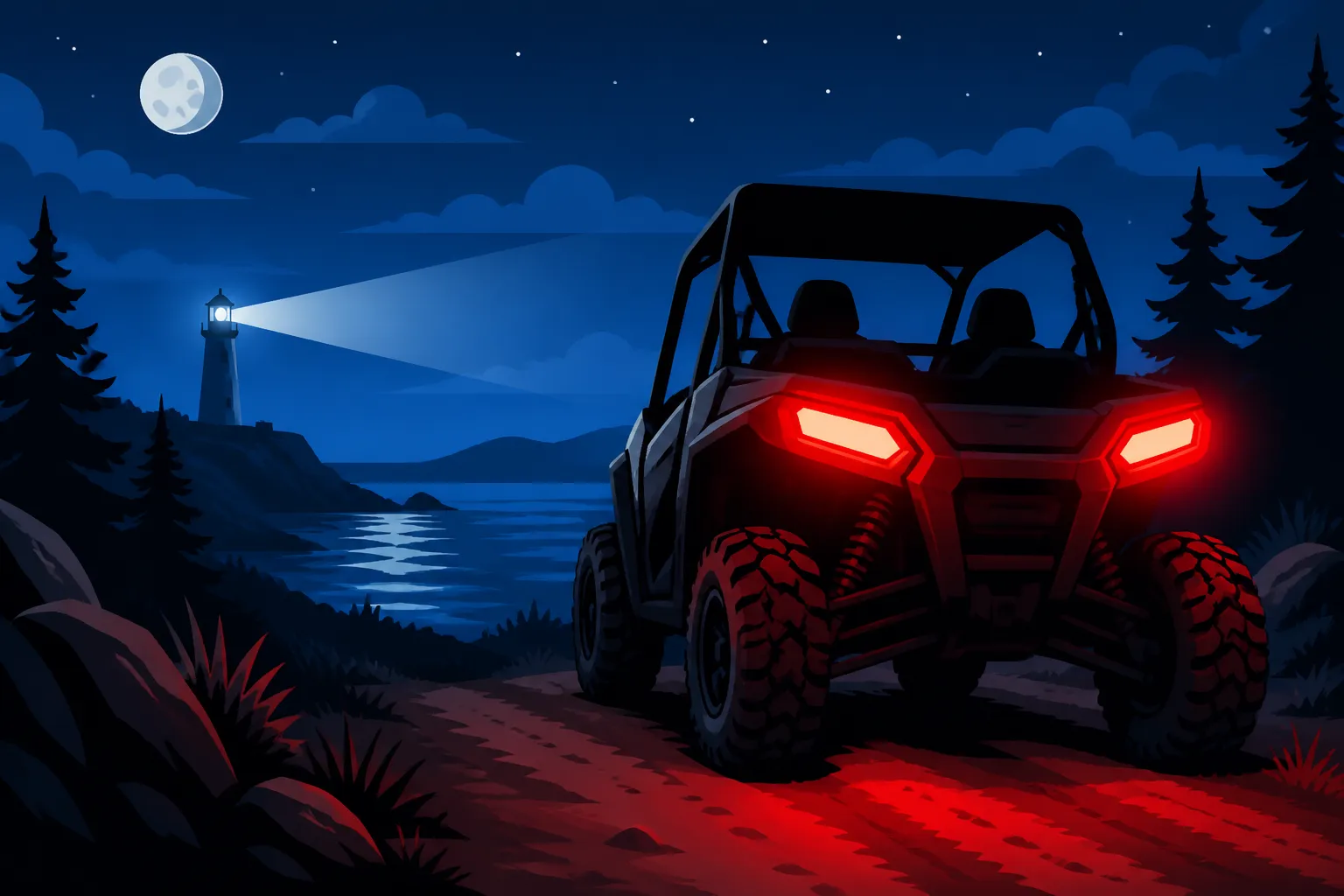
A "working" tail light isn't just about illumination; it's about proper illumination. Firstly, the colour is non-negotiable: it must emit a red light. Amber or white lights to the rear are not acceptable for primary tail light function and can lead to confusion and fines. Secondly, brightness matters. While the law doesn't specify lumens, it implicitly demands a brightness level capable of cutting through various ambient conditions to achieve the 200-foot visibility. An old, faded incandescent bulb might technically be "on," but it might not be bright enough. Many riders are upgrading to LED tail lights, often from brands like SuperATV, which offer superior brightness, durability, and a longer lifespan compared to traditional incandescent bulbs, giving you an edge in meeting these visibility standards.
Beyond the bulb itself, the physical condition and mounting of the tail light assembly are crucial. The lens should be clean, free from cracks, and not faded or discoloured by sun exposure. A dirty or damaged lens can severely diminish light output, making your otherwise compliant light effectively useless. Furthermore, the light must be securely mounted, ideally at a height and position that maximizes its visibility without being easily obscured by cargo, a passenger, or trail debris. It should be aimed directly to the rear, not angled upwards or downwards. If your machine also has brake lights, they should be noticeably brighter than the running tail light when the brakes are applied, clearly indicating deceleration or a stop. This differentiation is vital, especially when riding in a group or when sharing a segment of a [Nova Scotia Road Trails: Where You Can Ride] with other traffic.
Maintenance and Pre-Ride Checks for Night Riding
Consistent maintenance is key to ensuring your tail light remains compliant and effective. Before every night ride, and periodically even during the day, you should make it a routine to inspect your entire lighting system. Start by giving the tail light lens a good wipe down. Mud, dust, and grime can accumulate rapidly on an OHV, turning a bright light into a dim glow in a matter of hours. A simple damp cloth can make a world of difference.
Next, physically check that the light is functioning. Turn on your machine's lights and walk around to the back. Is it bright? Is it consistently illuminated? If you have brake lights, activate them (e.g., by squeezing the lever or pressing the pedal) and confirm they brighten as expected. Don't forget to inspect the wiring. Off-highway environments are notoriously harsh on electrical components. Vibrations can loosen connections, branches can snag and fray wires, and water can ingress into unprotected areas. Ensure all wiring leading to your tail light is secure, insulated, and free from visible damage. If you spot any issues, address them immediately. Carrying a small toolkit with spare bulbs (if applicable), electrical tape, and zip ties can be a lifesaver on a longer trip. Proactive checks align with general [Nova Scotia Lighting Requirements] and can prevent unexpected breakdowns or legal issues on the trail.
Legal Repercussions and Safety Best Practices
Ignoring the requirements for your tail light in Nova Scotia isn't just a minor oversight; it's a legal infraction that can come with real consequences, not to mention significantly increasing your risk of an accident. Understanding the penalties and embracing best practices for visibility goes a long way in ensuring your safety and compliance on every ride.
Penalties for Non-Compliance in Nova Scotia
Let's not sugarcoat it: riding with a non-compliant or non-functioning tail light after dark in Nova Scotia can get you into trouble. While there isn't a specific "tail light fine" amount detailed as a separate item, an officer can issue a ticket for an equipment violation, which falls under the broader Off-highway Vehicles Act. These fines can range significantly. For example, similar equipment-related infractions can often carry a minimum fine, and ignoring crucial safety equipment like a tail light could certainly lead to a ticket. It's not uncommon for equipment violations to start around the same level as a [Nova Scotia Minimum Fine of $250] for other infractions.
Beyond the immediate financial penalty, an officer might deem your machine unsafe for continued operation, especially if the tail light issue is severe or combined with other deficiencies. This could mean you're told to stop riding until the problem is fixed, leaving you stranded. This is particularly frustrating if you're deep on a trail or far from home. During a stop, officers will also check for other compliance items, such as proper registration and insurance. Always be prepared to provide [Carrying Papers on a Coastal Ride] when requested, as an officer conducting [Nova Scotia Equipment Checks by Officers] will likely check these as well. The inconvenience and cost of a fine are minor compared to the potential for a serious accident caused by your machine not being seen.
Enhancing Your Rear Visibility Beyond the Minimum
While meeting the 200-foot visibility requirement is the legal minimum, true safety-conscious riders often go above and beyond. Enhancing your rear visibility provides an additional layer of protection, particularly when riding in challenging conditions or on shared trails. One popular method is to install auxiliary rear lighting. This could include additional LED light bars, often in red or amber, mounted higher on the machine or on a rear rack. These supplementary lights are not a substitute for your primary tail light, but they greatly increase your overall footprint of light, making you more noticeable from a distance and from various angles. Aftermarket parts providers like SuperATV offer a range of robust and bright auxiliary lighting solutions designed to withstand the rigours of off-road use, making them a smart investment for frequent night riders.
Beyond lights, integrating reflective materials into your gear and machine is a simple yet effective strategy. Apply reflective tape to the rear of your ATV or UTV, especially on visible surfaces like fenders, storage boxes, or the back of your helmet. Wearing reflective clothing, such as a vest or jacket with high-visibility strips, is also highly recommended for night riding, particularly if you're using [Nova Scotia Road Trails: Where You Can Ride] where you might encounter vehicle traffic. Remember, the goal is to be seen as early and as clearly as possible, giving everyone ample time to react. When conditions are challenging, like navigating [Nova Scotia Coastal Fog and Riding] after dark, every bit of extra visibility counts.
Here’s a quick overview of common tail light issues and how to tackle them:
| Issue | Description | Impact | Solution |
|---|---|---|---|
| Dim/Flickering Light | Light is on but very weak, or intermittently cuts out. | Fails 200-foot visibility, makes machine appear further away, inconsistent warning to others. | Check wiring for loose connections/corrosion. Replace bulb/LED assembly. Upgrade to brighter LEDs. |
| Cracked/Dirty Lens | Physical damage or heavy accumulation of mud/dust on the lens. | Significantly reduces light output, distorts beam, can appear as a non-working light from afar. | Clean lens thoroughly before each ride. Replace cracked lenses immediately. Consider a lens protector. |
| Improper Colour | Light emits white or amber instead of red to the rear. | Confuses other operators/drivers, can be mistaken for front-facing lights, illegal. | Ensure correct red bulb/LED is installed. Replace any non-red rear lights. |
| Loose/Damaged Wiring | Wires are exposed, frayed, or connections are unsecure. | Intermittent power, short circuits, complete light failure. | Inspect all wiring runs, secure with zip ties, repair/replace damaged sections, use waterproof connectors. |
| Incorrect Mounting/Aim | Light is obscured by cargo, angled incorrectly, or too low. | Visibility severely reduced, light beam not directed properly for maximum effect. | Remount light in an unobstructed, clearly visible position. Ensure it faces directly rearward. |
Remember, safety on the trails, especially after dark, is a shared responsibility. By taking the time to understand and properly equip your ATV or UTV with a compliant and highly visible tail light, you're not only protecting yourself but also contributing to the safety of everyone else enjoying Nova Scotia's beautiful off-highway terrain.
Disclaimer
This article is for general informational purposes only and does not constitute professional advice. Laws, prices and regulations vary by location and change over time. Consult a qualified professional for guidance on your specific situation.