Nova Scotia Supervision Requirements
Nova Scotia’s youth riding rules are easy to misread: having an adult nearby does not automatically make every ride legal. The key questions are the rider’s age, whether the supervisor meets the requirements, how many young riders are in the group, and where the machine will be operated. Here’s how to plan supervision without overlooking separate age, training, or location rules.
Who Needs Supervision in Nova Scotia
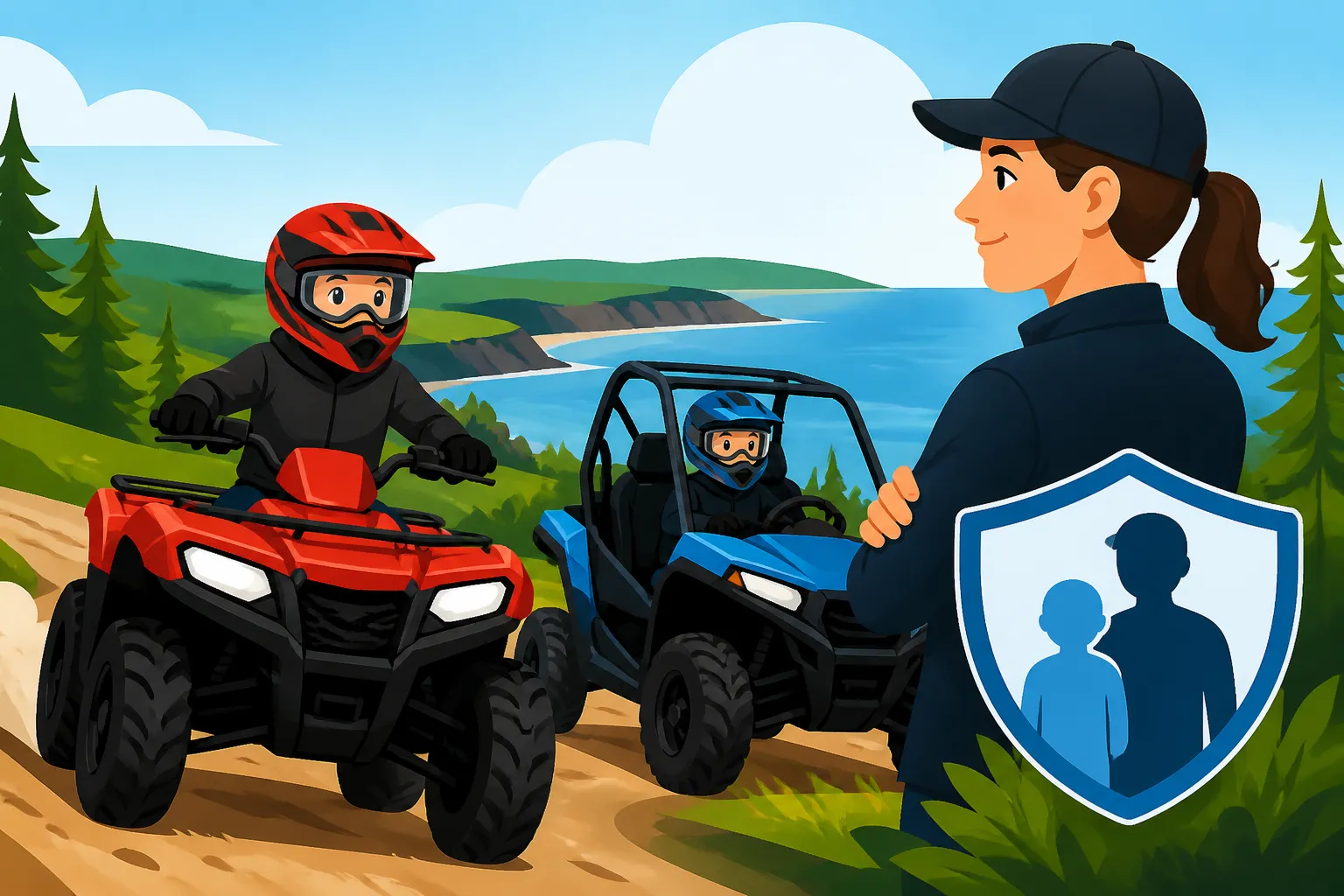
Riders aged 6 to 15 must ride under supervision. The supervisor must be at least 19 years old, meet the applicable safety-training requirement, and keep the young rider in sight. These conditions are not just recommendations for safer riding; they form part of the rules families need to consider before setting out.
A parent or guardian is not automatically qualified just because they are responsible for the child. Check that the adult meets the age and training requirements. A younger adult, a responsible friend, or an adult who cannot keep the rider in view may not meet the supervision standard. For the basic age rules, see Nova Scotia Rules for Riders Under 16 and Nova Scotia Minimum Riding Age of 6.
| Rider’s age | Supervision point to check |
|---|---|
| Under 6 | Do not assume supervision makes riding permitted; the minimum riding age is a separate rule. |
| 6 to 13 | Supervision is required, and a separate closed-course restriction may also apply. |
| 14 to 15 | Supervision by a qualified adult is required; confirm any other applicable riding restrictions. |
| 16 and older | The under-16 supervision rule no longer applies, but safety training and other operating rules may. |
A supervisor should be able to monitor what the young rider is doing, not merely be somewhere on the same trail. “In sight” is a practical test: if terrain, trees, bends, dust, or distance block a clear view, the adult may no longer be supervising effectively. Riders can still be close enough to communicate and make quick decisions while travelling, but a group should not stretch out until the child is out of view.
These requirements apply to the person supervising, not just the young rider. Review Nova Scotia Supervision Requirements and Why a Supervisor Must Be Nineteen and Trained when confirming who can take responsibility for a group.
Keep supervision active
A supervisor’s job is more than staying nearby. They need to be able to notice a loss of control, a mechanical problem, a risky decision, or a change in trail conditions and respond. That means planning a route and pace the youngest rider can manage, staying where the child can be seen, and stopping when visibility or communication breaks down.
This matters on narrow or winding trails. A parent riding ahead around a bend may not be able to see a child who has slowed down or stopped behind them. A safer arrangement is to keep the young rider close enough to remain visible and to position another responsible adult at the back if the group’s size makes that necessary. The adult at the back does not replace the qualified supervisor’s responsibility; the group still needs to meet the supervision requirements.
Age, Training, and Closed-Course Rules
Supervision is only one part of the rules for younger riders. It does not change the minimum riding age, replace required training, or override restrictions on where a particular age group may operate an off-highway vehicle.
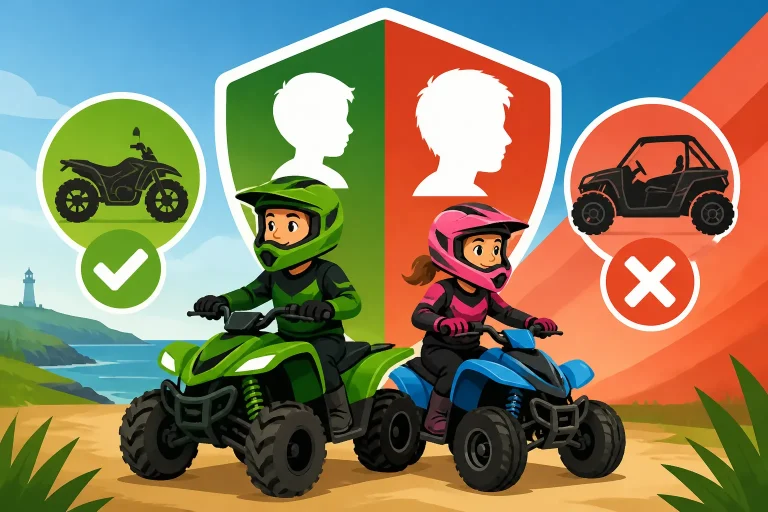
Riders younger than 16 should be assessed against the rules for their specific age, machine, and riding location. In particular, rules for riders aged 6 to 13 may include a closed-course restriction. An ordinary trail does not become a closed course simply because a parent rides alongside. Before taking a child in this age range out, check the current provincial requirements and whether the proposed riding area qualifies. See Nova Scotia Closed Course Requirements and Nova Scotia Has No Accredited Closed Courses.
The training rules also need separate attention. A supervisor’s training status and the young rider’s own training obligations are related, but they are not interchangeable. An adult who holds a safety certificate does not automatically satisfy a training requirement that applies to the person operating the machine. Rules may differ by age and may include an exemption for some experienced riders, so verify the rider’s own status rather than assuming supervision covers it. Nova Scotia Safety Training at 16 explains the training threshold and related considerations.
| Situation | What supervision does not change |
|---|---|
| The rider is below the minimum legal age | An adult cannot make the ride permissible by accompanying the child. |
| A separate age-based location restriction applies | A supervisor cannot make a restricted trail or area suitable for that rider. |
| The operator has a training requirement | The supervisor’s certificate does not automatically count as the operator’s training. |
| The machine does not suit the rider | Adult oversight does not make an oversized or difficult machine appropriate. |
Machine fit deserves particular care. A young rider should be able to reach the controls, operate them consistently, and manage the machine’s weight and power. A machine that is too large can make it harder to brake, steer, or recover from a mistake, even on an easy route. Consider the rider’s size and ability, not just their age or confidence. For more on matching a machine to a young rider, see Nova Scotia Youth Machine Size Rules.
Don’t confuse supervision with permission to ride anywhere
A qualified adult beside a child does not create permission to ride on every road, trail, private property, or other riding area. Land access, trail rules, registration, insurance, and permits may be separate requirements. Confirm them for the route and machine before leaving. If a child is riding on a club trail, for example, check that the corridor is open to that machine and that the required trail access is in place.
Likewise, an exemption that applies to a particular land use or machine does not necessarily remove youth supervision rules. Treat each question separately: who may operate the machine, who must supervise, where it may be ridden, and what documents or access permissions are needed.
How to Plan a Supervised Ride
A little planning makes the supervision rule easier to follow in the real world. Start with the youngest rider, then build the route and group around that rider’s ability. A route that is manageable for experienced adults may be tiring or intimidating for a child, especially if it includes long stretches, rough ground, water crossings, or limited places to stop.
- Confirm each rider’s age and requirements. Check the minimum age, supervision rule, training status, and any age-based restriction on where the rider may operate. Do not rely on the child’s prior experience as a substitute for checking the rules.
- Choose a qualified supervisor. Confirm the adult is at least 19 and meets the applicable safety-training requirement. If the group has multiple young riders, decide in advance who will keep each rider in sight.
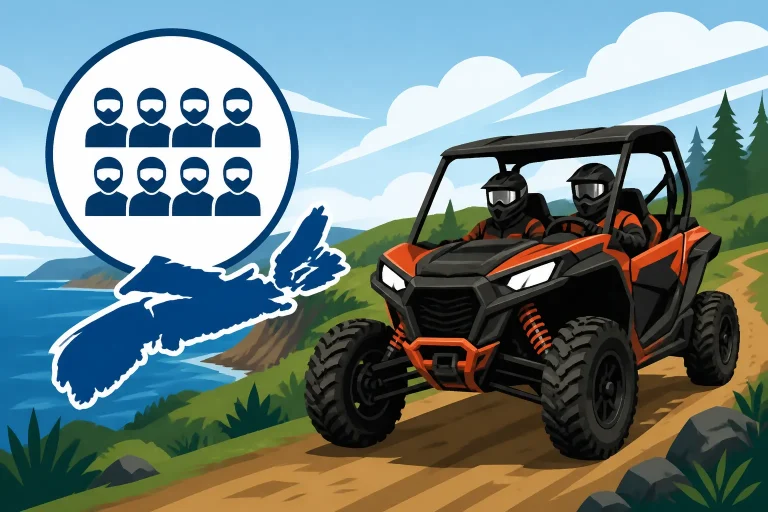
- Check the group size. A supervisor may not supervise more than eight riders under 14 at once. Count the riders who fall under that limit before adding guests or splitting the group. See Nova Scotia Supervisors Limited to Eight Riders.
- Choose a suitable machine and route. Make sure the machine is a manageable fit and the route is allowed for the rider’s age and vehicle type. Check current trail access and conditions.
- Agree on a simple group plan. Set the pace, stopping points, and what to do if someone becomes separated. Explain that the young rider should stop somewhere safe rather than continue alone if they lose sight of the supervisor.
- Recheck conditions as you ride. If dust, darkness, weather, terrain, or a mechanical problem makes it difficult to keep the rider in sight, stop and adjust the plan.
The limit of eight applies to riders under 14 supervised at one time. It is not a target group size, and it does not remove the requirement to keep each rider in sight. A group can be below the maximum and still be too spread out for effective supervision. On a narrow trail, a smaller group may be easier to manage; on a longer ride, additional adults can help with practical oversight, but the legal supervisor must still meet the required criteria.
Practical examples
A parent and one child on a familiar trail: First check the child’s age and whether the trail is permitted for that age group. The parent must meet the supervisor requirements and keep the child in sight throughout the ride. Familiarity with the route does not remove other rules.
A family ride with several children: Identify which riders are under 14 and keep the number assigned to any one supervisor within the limit. Avoid having adults spread across the group in a way that leaves a child without a qualified supervisor who can see them. If the group cannot stay together, divide it into manageable groups with qualified adults.
A child riding ahead: If the child rounds a turn and disappears from view, the adult is no longer maintaining visual supervision at that moment. The group should slow down, close the gap, or change formation so the supervisor can keep the rider in sight. Do not treat a radio or phone as a substitute for the required visual oversight.
A child riding on private land: Permission from the landowner and the fact that the land is private do not automatically settle the age, supervision, training, or machine-use questions. Check each requirement independently before riding.
Common Mistakes and What to Check Before You Go
The most common mistake is treating “an adult is present” as the whole rule. The adult’s age and training matter, and they must be able to keep the rider in sight. A second mistake is assuming that supervision overrides the rider’s age or makes a restricted riding area acceptable. It does not.
Families also sometimes confuse a child’s ability to operate a machine with legal eligibility. A confident young rider may still be subject to supervision, training, or location limits. Conversely, an adult may be experienced but still need to meet the applicable qualification to act as supervisor. Check the rule rather than relying on confidence or informal practice.
Before the ride, confirm:
- The rider meets the minimum age requirement.
- The rider’s age does not trigger a separate restriction on where they can ride.
- The supervisor is at least 19 and meets the applicable safety-training requirement.
- The supervisor can keep the young rider in sight.
- No supervisor is responsible for more than eight riders under 14 at once.
- The machine fits the rider’s size and ability.
- The route, land access, and trail permissions are appropriate.
- Any registration, insurance, or permit requirements are handled separately.
If any point is uncertain, check the current provincial rules before riding. Age and supervision requirements are only one part of lawful and safe operation; trail access, machine equipment, and other operating rules may also apply. A short check beforehand is easier than discovering at the trailhead that an adult’s presence does not resolve the issue.
Disclaimer
This article is for general informational purposes only and does not constitute professional advice. Laws, prices and regulations vary by location and change over time. Consult a qualified professional for guidance on your specific situation.