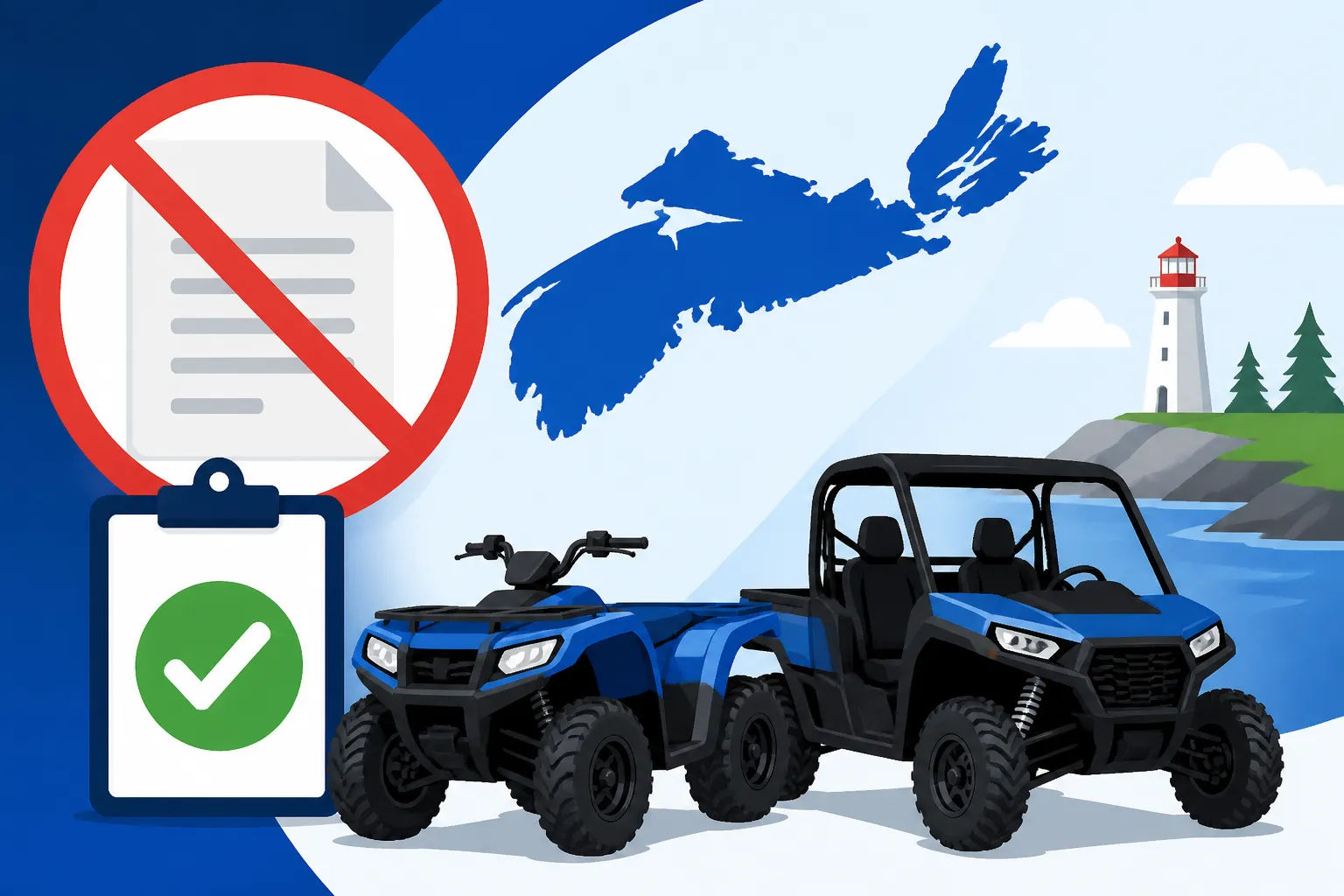
Nova Scotia Registration Without a Bill of Sale
It’s an all too common scenario: you’ve found the perfect used ATV or UTV, maybe from a friend of a friend, or perhaps it’s been sitting in the back forty for years, passed down through the family. You’re ready to get it registered and hit the trails, but then it dawns on you – there’s no formal bill of sale. This can feel like a massive roadblock when dealing with Nova Scotia’s registration process, but don't despair; this guide will walk you through how to navigate the waters of registering your off-highway vehicle when that crucial piece of paper is missing.
Why a Missing Bill of Sale is Such a Headache
Let's be real, tracking down paperwork from a casual transaction years ago, or for a machine that was simply given to you, can feel like finding a needle in a haystack. The registry needs proof, and when it comes to vehicles, that usually means a clear chain of ownership. When that chain has a missing link, it creates legitimate frustration for many riders in Nova Scotia.
The Importance of a Bill of Sale in Nova Scotia
A bill of sale isn't just a formality; it's a legal document that formally transfers ownership from one party to another. For the Registry of Motor Vehicles and Access Nova Scotia, it serves several vital purposes. Primarily, it proves that you are the rightful owner of the ATV or UTV you're trying to register. Without it, there's no official record connecting you to the machine, making it difficult for them to process your request.
Beyond proving ownership, the bill of sale also establishes the purchase price, which is critical for calculating the Harmonized Sales Tax (HST) that's due on most private sales. Nova Scotia's rules require this tax to be paid before your new registration can be issued. Without a declared purchase price, the registry has no basis for this calculation. This is why when you approach the counter without one, you'll often face questions about how you acquired the machine and its value. You can learn more about [Nova Scotia Tax on a Private ATV Sale] if you're curious about the specifics. Plus, it forms the bedrock for procedures like [Nova Scotia Registration After a Private Sale].
Common Scenarios for Missing Paperwork
Life happens, and a formal bill of sale isn't always part of every transaction or transfer. You might find yourself in this situation for a variety of reasons, each presenting its own unique challenge:
- Gifted Machines: Perhaps a relative or close friend simply gave you their old quad, with no money exchanged and no formal paperwork ever created. It was a handshake deal, a gesture of generosity, and now you’re left trying to prove it.
- Inherited Machines: When a family member passes away, their assets, including ATVs and UTVs, are often distributed without a formal "sale" document. You might have inherited the machine as part of an estate, and while you know it's yours, proving it to the registry can be tricky. Understanding [Nova Scotia Registration for an Inherited Machine] can be helpful in these cases.
- Lost Documents: You might have had a bill of sale at one point, but it's simply vanished. Maybe it was misplaced during a move, accidentally thrown out, or damaged. Whatever the reason, it's now gone, and you can't produce it.
- Informal Sales Years Ago: Sometimes, an ATV changed hands many years ago, and the original sale was very informal. Perhaps it was a cash deal between neighbours with no written record, or the seller moved away and can no longer be reached.
- Older Machines: Very old machines might pre-date stricter record-keeping, or the original paperwork might be long gone with previous owners. These can be particularly challenging, often falling under the category of [Nova Scotia Machines With No Paperwork].
These situations highlight why a generic "bill of sale" isn't always readily available, and why Nova Scotia has a process to accommodate these real-world complexities.
The Path Forward: Declaration of Ownership
When you don't have a traditional bill of sale, Nova Scotia's registry generally requires a Statutory Declaration of Ownership. This is your formal way of telling the government, under oath, how you came to possess the machine. It's not ideal, but it's a viable path when you’re stuck without traditional proof.
What is a Statutory Declaration?
A Statutory Declaration is a formal, written statement of facts that you swear or affirm to be true before a notary public or commissioner of oaths. In essence, you are legally declaring how you came to own the off-highway vehicle, filling in the gaps where a bill of sale would normally be. It carries legal weight, meaning that making false statements can have serious consequences.
This declaration needs to be thorough and precise. It should clearly identify the ATV or UTV by its Vehicle Identification Number (VIN) – or serial number for older models – make, model, and year. You’ll need to describe in detail how and when you acquired the machine. This includes:
- The circumstances of the transfer: Was it a gift, an inheritance, or a private sale where a bill of sale was never created or has since been lost?
- The date of acquisition: Provide as accurate a date as possible.
- The full names and contact information of any previous owners: Even if they can't provide a bill of sale, knowing who they are can help establish a paper trail if the registry needs to verify.
- The purchase price (if applicable): If you did pay for it, state the amount. If it was a gift or inheritance, explicitly state that no money was exchanged. This is crucial for tax assessment.
- A clear statement that you are the lawful owner: This is the core of the declaration.
For many, drafting a legal document like this can be intimidating. Luckily, there are resources available. Websites like LawDepot offer templates for statutory declarations that can be adapted for vehicle ownership. While these templates are a great starting point, always ensure the final document accurately reflects your specific situation and meets Nova Scotia's requirements for declarations of ownership. Remember, clarity and honesty are paramount in this document.
Preparing Your Declaration for Access Nova Scotia
Once you've drafted your Statutory Declaration, you can't just hand it over. It needs to be properly witnessed and sworn. This means taking your prepared document to a notary public or commissioner of oaths. These individuals have the legal authority to administer oaths and affirmations, thereby validating your declaration. They will typically charge a fee for their services, so factor that into your budget.
Before you go, make sure you have all your ducks in a row. Gather any other supporting documents that might help your case. This could include old insurance papers that list the machine, even if they're expired, or any previous registration documents that might have the machine's VIN or your name on them. Take clear photographs of the machine itself, especially the VIN plate. Any shred of documentation or physical evidence you have will strengthen your application. The more information you can provide, the smoother the process tends to be. Access Nova Scotia also has a general [Nova Scotia Registration Paperwork Checklist] that can help ensure you have other necessary items.
Remember, the goal is to convince the registry that you are indeed the rightful owner and that the circumstances surrounding the lack of a bill of sale are legitimate. A well-prepared, clear, and legally sworn declaration, backed by any additional evidence, is your best bet.
What to Expect When Submitting Your Declaration
Submitting a Statutory Declaration instead of a straightforward bill of sale can sometimes lead to a slightly longer processing time or more questions from the Access Nova Scotia staff. They are there to ensure compliance with the law and to prevent fraud, so they have a right to be thorough. When you visit a [Registry Counter or Service Centre: Where to Register], be prepared for a detailed conversation.
The registry staff will review your declaration carefully. They might ask clarifying questions about the details you've provided, especially regarding how you acquired the machine and the stated value (if applicable). It's crucial to answer honestly and calmly. Any inconsistencies or vague answers could raise red flags and delay your registration further. Be patient and polite, understanding that they are just doing their job to verify ownership.
In some cases, if the staff have concerns, they might ask for additional supporting evidence or suggest steps you can take to strengthen your claim. For instance, if you listed a previous owner, they might suggest trying to get a signed statement from that individual, even if it's not a full bill of sale. Honesty and transparency in your declaration are your strongest allies here. If the machine was truly a gift, state that unequivocally. If you paid cash and simply never got a receipt, explain that. The more straightforward your story, the easier it will be for them to process your request.
Proving Ownership When All Else Fails (or to strengthen your case)
Sometimes, even a statutory declaration might feel a bit weak on its own, especially if the history of the machine is very murky. In these situations, bolstering your claim with additional, unconventional forms of proof can make a significant difference. The goal is to paint a complete picture of your legitimate ownership for the registry.
Alternative Proof of Ownership
Beyond the formal declaration, there are other types of evidence you can present to Access Nova Scotia to help establish your ownership:
- Previous Registration Documents: Even if they are expired or in someone else's name, these documents can establish a chain of custody. If you inherited a machine, an old registration card in your family member's name can link the machine to your family, which then supports your inheritance claim.
- Insurance Records: If the machine was previously insured, even by you or a family member, the insurance 'pink card' or policy documents can serve as proof that the vehicle was recognized as belonging to someone by a financial institution. This type of record can be surprisingly persuasive.
- Photos and Testimonies: This might sound informal, but a series of dated photos of you or your family with the ATV over several years can demonstrate long-term possession and use. Along with this, statutory declarations or letters from friends, family, or neighbours who can attest to your ownership and how you acquired the machine can be valuable. They can affirm, for example, that they witnessed your uncle give you the quad five years ago.
- Bank Statements or Payment Records: If you paid for the machine in an informal sale but didn't get a bill of sale, a bank statement showing a withdrawal of the exact purchase amount around the time of the sale, or an e-transfer record to the seller, could serve as circumstantial evidence of payment.
- Maintenance Records: Receipts for repairs or maintenance performed on the machine, especially if they date back a few years and are in your name or the name of a previous owner you are connected to, can also show a history of possession and care.
Combining several of these alternative proofs with your Statutory Declaration creates a more robust case for Nova Scotia Registration Without a Bill of Sale. The more pieces of the puzzle you can bring, the clearer the picture becomes for the registry staff.
What About Machines with No VIN or Serial Number?
While less common with modern machines, older ATVs and UTVs might genuinely be missing a clear Vehicle Identification Number (VIN) or serial number, either due to wear and tear, previous modifications, or simply because they were produced before such standards were widespread. This situation adds another layer of complexity to registration.
If your machine truly lacks an identifiable VIN or serial number, you'll need to apply for a Special Identification Number (ID Number) through Access Nova Scotia. This is a process where the registry assigns a unique identifier to your machine. You'll typically need to bring the machine in for an inspection by a registry agent or designated inspector to verify its make, model, and confirm the absence of a VIN. They might also need to ensure it's not a stolen vehicle. Once assigned, this special ID number will then be used for all future registration and identification purposes. There is usually a nominal fee associated with this service, such as the [Nova Scotia Special ID Numbers at $2.30]. This process is specifically designed to handle cases like [Nova Scotia Registration When the VIN Is Gone] and ensures that even machines with obscure histories can eventually be legally recognized.
Important Considerations and Pitfalls
Navigating registration without a bill of sale can be tricky, and it’s important to understand not just the process, but also the potential risks and financial implications. A little foresight can save you a lot of headaches down the line.
The Risk of Buying Without a Bill of Sale
While we're discussing how to register a machine after you've acquired it without a bill of sale, it's crucial to underscore the inherent risks of buying an ATV or UTV this way. As a general rule, if you have the option, always insist on a formal bill of sale before you hand over any money.
Buying without a clear transfer of ownership documentation puts you at significant risk. The biggest concern is unknowingly purchasing a stolen machine. If the ATV or UTV turns out to be stolen, you could lose both the machine and your money, and potentially face legal complications, even if you acted in good faith. The original owner could claim it back, leaving you empty-handed. This is why it's always recommended to perform due diligence before any purchase. A key step is to [Checking a Serial Number Before the Money Moves] to ensure it hasn't been reported stolen. You should also ideally conduct a Personal Property Registry (PPR) or lien check to see if there are any outstanding debts against the machine. A bill of sale acts as a legal receipt and a critical piece of evidence should any dispute arise later. Knowing about [Nova Scotia Registration and Lien Records] is also crucial.
While a Statutory Declaration can help you register a machine you already own, it doesn't absolve you of the risks associated with an unsecured purchase. Future buyers might also be wary if you can't produce an original bill of sale when you eventually decide to sell.
Tax Implications and Valuations
One of the primary reasons Access Nova Scotia requires a bill of sale for registration transfers is to ensure the appropriate Harmonized Sales Tax (HST) is collected. When you don't have a bill of sale, it doesn't mean you automatically get out of paying tax. Far from it.
When you present your Statutory Declaration without a stated purchase price, or if the stated price seems unusually low for the type of machine, the registry has the authority to assess the value of the ATV or UTV. They will use their own valuation guides or databases to determine a fair market value for the machine. Tax will then be calculated based on their assessed value, not necessarily what you paid or what you believe it's worth. This can sometimes lead to a higher tax bill than you might have anticipated if you purchased it at a bargain price.
For example, if you inherited a machine, you would declare no purchase price. However, you'd still likely pay HST on the fair market value as determined by the registry, as if it were a sale. This is an important detail many people overlook. Understanding [Nova Scotia Tax Collected at Registration] is vital. As you know, [Harmonized Tax at 14 Percent] applies in Nova Scotia. So, be prepared for a potential tax assessment when registering your machine without a traditional bill of sale. It's a non-negotiable part of the process for most transfers of ownership.
| Document Type | Purpose | Required Information (Key) | Where to Get It | Legal Weight |
|---|---|---|---|---|
| Bill of Sale | Formal proof of ownership transfer for a fee | Buyer/Seller info, VIN, purchase price, date | Private seller, dealership | High, direct proof of transaction |
| Statutory Declaration | Sworn statement of how ownership was acquired | Your info, VIN, acquisition method, date | Drafted by you, sworn by Notary/Commissioner | High, if truthful and properly executed |
This article is for general informational purposes only and does not constitute professional advice. Laws, prices and regulations vary by location and change over time. Consult a qualified professional for guidance on your specific situation.