When Forestry Work Exempts a Machine From Registration
Many Nova Scotia ATV and UTV owners find themselves scratching their heads when it comes to registration, especially if their machine isn't just for weekend fun. If you use your off-highway vehicle primarily for forestry work, you might be eligible for a registration exemption that could save you time and hassle. This guide will walk you through the specifics of this exemption, helping you understand if your machine qualifies and what you need to know to stay on the right side of the rules.
Understanding the Forestry Exemption for OHVs in Nova Scotia
It's a common misconception that every single off-highway vehicle (OHV) in Nova Scotia needs to be registered with Access Nova Scotia, no matter what its purpose. While registration is indeed mandatory for most recreational use, there are specific exemptions built into the Off-highway Vehicles Act to accommodate machines used for particular types of work. One of the most significant of these is the forestry work exemption.
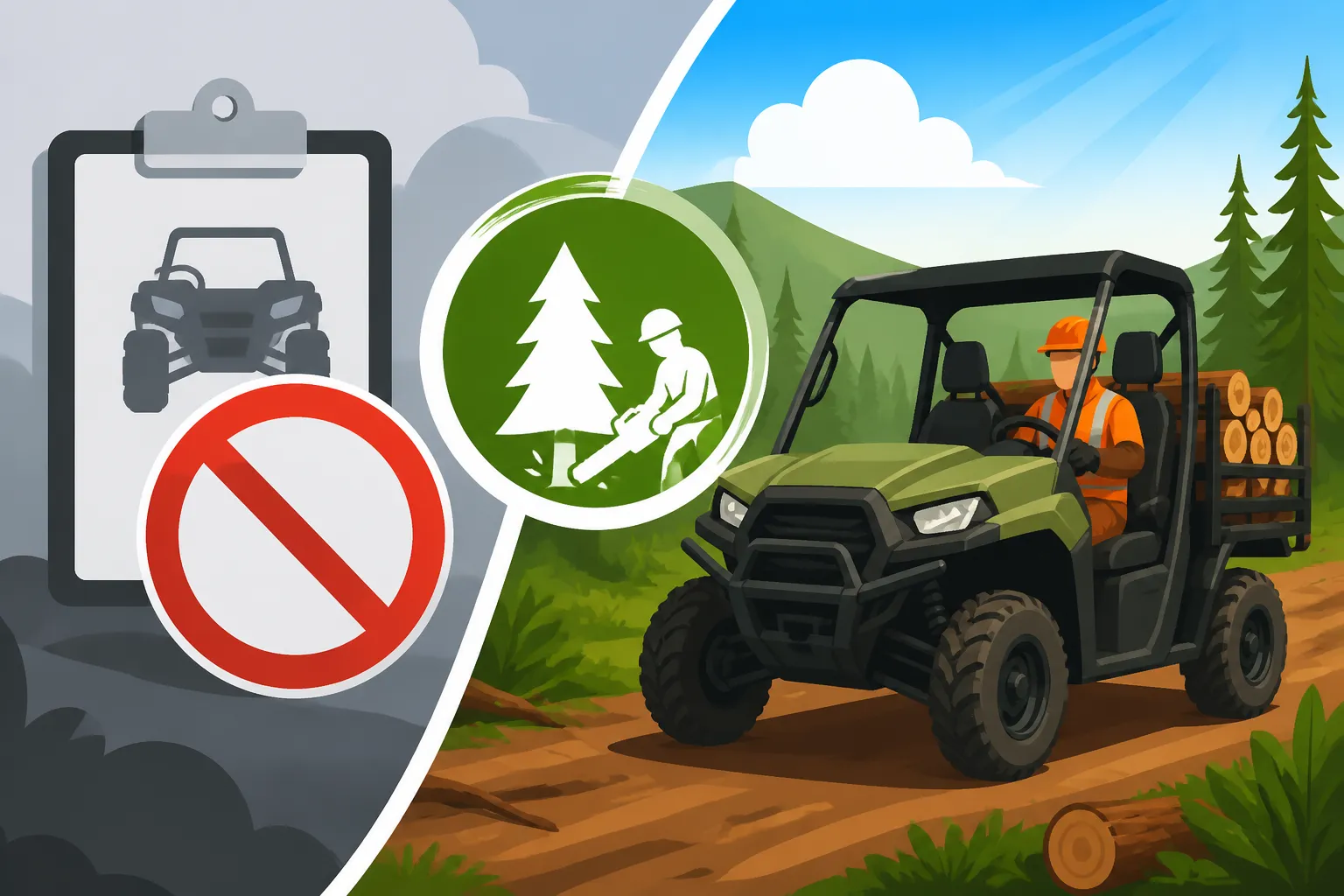
This exemption is in place to ease the burden on those who rely on their ATVs and UTVs as essential tools for their livelihood within the forestry sector. Think of it: hauling gear, checking tree health, marking boundaries, or even light clearing might require an OHV to access remote areas. Without this exemption, every single quad or side-by-side used on a woodlot, no matter how remote, would need to go through the full registration process, which includes paying various fees like the [Nova Scotia Certificate of Registration at $39.80] and the annual vehicle permit. The government recognizes that these machines are more akin to specialized farm equipment in this context, rather than solely recreational vehicles. The intent is to support the province's vital forestry industry by making it practical for operators to use the necessary equipment without excessive administrative overhead. This doesn't mean a free pass, but rather a targeted relief for legitimate business operations.
The Purpose Behind the Exemption
The core purpose of this exemption is to distinguish between recreational riders enjoying Nova Scotia's vast network of trails and individuals or businesses using OHVs as indispensable tools for forestry. The government isn't looking to penalize someone for using a quad to check on sap lines or transport tools to a remote part of their woodlot. Instead, it aims to reduce red tape for a sector critical to the provincial economy. If you're using your ATV to conduct surveys on a woodlot, move seedlings, or monitor tree growth, your machine is performing a job, not just providing leisure. This principle is similar to the [Nova Scotia Own-Property Exemption], which also recognizes that certain uses on private land don't require public registration.
This distinction is crucial because the funds collected from general OHV registration fees often go towards initiatives like the [Nova Scotia's OHV Infrastructure Fund], which primarily benefits recreational trails. While forestry operations might benefit from good access roads, their direct contribution to recreational trail networks through registration fees might not always align with their primary use case. The exemption acknowledges this difference, allowing forestry professionals to focus on their work.
What the Exemption Specifically Covers
When we talk about "forestry work," we're generally referring to activities directly related to the cultivation, harvesting, and management of forests and timber. This can include a wide range of tasks:
- Woodlot Management: Inspecting trees, planning harvests, assessing pest damage, or monitoring forest health.
- Harvesting Support: Transporting small equipment, tools, or supplies to loggers in the field, or hauling out smaller logs and brush.
- Silviculture: Planting seedlings, clearing brush around young trees, or performing pre-commercial thinning.
- Forest Protection: Accessing remote areas for fire prevention, detection, or suppression efforts.
- Boundary Maintenance: Clearing and marking property lines within forested areas.
It’s important to understand that the exemption doesn't cover personal leisure riding even if it occurs on a woodlot. The use must be exclusively for forestry work. This is where many people get confused, thinking that because their woodlot is technically private property and they do some forestry, they're automatically exempt for any riding there. That's not the case. The nature of the activity, not just the location, determines eligibility.
Who Qualifies for This Exemption in Nova Scotia?
The forestry work exemption isn't a blanket pass for anyone who owns a piece of land with trees. It's specifically tailored for machines that are genuinely and exclusively integrated into forestry operations. This means the primary, if not sole, function of the OHV must be directly tied to timber production, forest management, or other related agricultural activities within a woodlot context.
Typically, this exemption applies to:
- Professional Loggers and Foresters: Individuals or companies actively engaged in timber harvesting, silviculture, and forest management.
- Woodlot Owners: Those who actively manage their private woodlands for timber production, pulpwood, or other forest products. This isn't just someone with a few trees in their backyard, but someone with an actual woodlot operation.
- Forestry Contractors: Businesses providing services like planting, thinning, or surveying for larger forestry companies or private woodlot owners.
- Christmas Tree Growers: While sometimes seen as a specific type of agriculture, the management of Christmas tree lots often involves similar vehicle use to general forestry.
The key thread here is the purpose and exclusivity of use. If your neighbour is a logger and you lend him your quad for a day, that specific use might fall under the exemption while he's using it, but your overall ownership of the machine would still require it to be registered if you also use it for recreational purposes. Similarly, if you're a woodlot owner, but you occasionally use your quad to ride trails on the weekend, then the exemption wouldn't apply to your machine. [Does Every Machine You Own Pay the Levy?] is a question many ask, and the answer, in this context, depends entirely on its dedicated use.
Specific Scenarios and Business Operations
Let's look at a few hypothetical scenarios to clarify who might qualify:
-
Scenario 1: The Dedicated Woodlot Worker. Sarah owns a large woodlot in Guysborough County and manages it herself. She uses her side-by-side every week to carry tools, transport seedlings for replanting, and haul small loads of firewood for personal use (which is part of woodlot management). Her side-by-side never leaves her property, nor is it ever used for recreational rides. In this case, her machine would likely qualify for the forestry exemption. She should have documentation proving her woodlot ownership and the nature of her work. She might even prepare a statutory declaration using a service like LawDepot to affirm her machine's exclusive use.
-
Scenario 2: The Forestry Contractor. John operates a small contracting business that specializes in pre-commercial thinning for larger forestry companies. He owns two ATVs that his employees use exclusively to access remote thinning sites, carry saws, and transport small equipment. These ATVs are stored at his business premises and only deployed for work tasks. They are not used for personal recreation by him or his employees. John's ATVs would certainly qualify for the exemption, as they are integral tools for his forestry business. He would need business registration and contracts to demonstrate the forestry-specific nature of his operations.
-
Scenario 3: The Hobby Farmer with Trees. Mary has a small farm with a few acres of wooded land that she occasionally harvests for firewood for her home. She has a quad she uses to pull a small trailer to collect the wood. However, she also takes the quad out on nearby club trails with her family on weekends. In Mary's case, her quad would not qualify for the forestry exemption because its use is not exclusive to forestry work. The recreational use negates the exemption, and she would need to follow standard registration procedures, including paying [Nova Scotia OHV Registration Cost].
Understanding these distinctions is vital. It's not about having trees on your property; it's about the dedicated, exclusive use of the machine for forestry operations as its primary function.
Ownership and Responsibilities
While the exemption focuses on the use of the machine, ownership still plays a role, particularly when it comes to proving eligibility. The person claiming the exemption, whether an individual or a business, should be the registered owner of the property where the forestry work occurs or have a legitimate business contract for forestry services. When purchasing a machine for this purpose, it's essential to ensure all [Nova Scotia Used Machine Paperwork] is in order, or if it's new, that [Nova Scotia Dealer Paperwork at Delivery] clearly reflects the purchase for commercial use.
Should questions arise, officials might ask for proof of your forestry operations. This could include deeds, business registration documents, forestry management plans, or contracts for services. Keeping a clear record of your machine's primary activities can also be beneficial. For example, maintaining a logbook of usage might seem excessive, but it can be valuable evidence if your exemption is ever challenged.
What "Used Exclusively" Really Means for Forestry
The phrase "used exclusively" is the linchpin of the forestry work exemption, and it's where many misunderstandings arise. It means what it says: the off-highway vehicle must be used solely for activities directly related to forestry. There’s no wiggle room for occasional recreational rides, even if those rides are primarily to check on something related to the woodlot but then extend into a pleasure cruise.
This isn't about intent to use it for forestry; it's about actual, consistent use. If an enforcement officer sees your machine on a public trail, or being used for general hauling around town, it immediately disqualifies it from this exemption. The machine must primarily live and operate within the confines of your legitimate forestry operation.
Distinguishing Forestry from Recreational Use
Let's draw a clear line.
-
Forestry Use Examples (Exempt):
- Hauling chainsaws, fuel, or planting tools to a specific section of a woodlot for felling or planting.
- Transporting felled timber, brush, or cordwood within the woodlot to a processing area or roadside landing.
- Conducting surveys, marking trees, or assessing forest health on your designated woodlot.
- Accessing remote areas of a managed forest for fire watch or pest control.
- Creating or maintaining access roads within the woodlot specifically for forestry operations.
- A forestry consultant using a UTV to visit various client woodlots for assessment purposes, with the vehicle never being used for anything else.
-
Recreational Use Examples (Requires Registration):
- Riding trails, even if those trails happen to pass through forested areas.
- Using the ATV to drive to a fishing spot or hunting camp for leisure (even if the camp is in the woods).
- Joyriding on private land or across fields, even if that land contains trees.
- Transporting materials to a cottage for personal renovation, unless the cottage is part of a forestry business camp.
- Taking the machine out for a spin just to "clear its carburetor" on a Sunday afternoon.
- Using the machine for general errands or transport off the specific forestry operation area.
The moment your machine crosses the line into non-forestry related use, even once, it loses its exemption status and is subject to full registration requirements. This is why it's so important to be honest with yourself about how your machine is truly being used.
The Pitfalls of Combined Use
One of the biggest traps for OHV owners seeking this exemption is the temptation for combined use. Many think, "Well, I mostly use it for my woodlot, so a quick ride to the store won't hurt." Or, "I take it out on the trails only a couple of times a year." Unfortunately, the wording "used exclusively" doesn't allow for this kind of occasional deviation.
If you have an OHV that you use for forestry and any other purpose, even infrequently, you are legally required to register it. There's no pro-rating or percentage breakdown. It's an all-or-nothing proposition. The penalties for riding an unregistered machine can be significant, starting with a [Nova Scotia Minimum Fine of $250] and potentially going up to [A Maximum Fine of $2,000]. It's simply not worth the risk.
If you foresee even occasional recreational use, it's far safer and more compliant to go through the standard registration process. You can still use your registered machine for forestry work, but you'll have the peace of mind knowing you're fully compliant with provincial regulations. This also impacts other aspects like [Nova Scotia Tax Collected at Registration] – if it's not exempt, you'll pay HST on the purchase price.
Paperwork and Proof: How to Ensure You're Covered
Okay, so you're confident your OHV is used exclusively for forestry work in Nova Scotia. That's great! But how do you prove it if you're ever questioned? Unlike a standard vehicle permit which is explicitly issued, an exemption often relies on documentation you already possess or can easily create. The burden of proof typically falls on the owner to demonstrate that their machine meets the criteria.
This often involves having the right records on hand and being able to articulate the nature of your operations. While there isn't a specific "forestry exemption certificate" issued by Access Nova Scotia, you'll need to be prepared to show why your machine doesn't require registration.
Essential Documentation and Declarations
Here's what you should consider having ready to support your claim for the forestry exemption:
-
Proof of Property Ownership or Business Operation:
- Property Deed: If you own the woodlot, a copy of your property deed clearly showing your ownership of the forested land.
- Business Registration: For forestry contractors or businesses, documentation proving your legal business registration in Nova Scotia and the nature of your operations (e.g., articles of incorporation, business licenses, tax filings).
- Contracts/Work Orders: If you're a contractor, copies of current or recent contracts or work orders demonstrating you are actively engaged in forestry services for a client.
-
Affidavit or Statutory Declaration:
- This can be a powerful tool. A sworn statement, or statutory declaration, affirming that your OHV is used exclusively for forestry work and detailing the specific nature of that work. You can find templates for such declarations online, or use a service like LawDepot to help you draft a professional and legally sound document. This declaration would typically be signed in front of a Commissioner of Oaths or a Notary Public. This formal statement shows your clear understanding and commitment to the "exclusive use" requirement.
-
Proof of Purchase:
- Keep your [Nova Scotia Registration Without a Bill of Sale] might be tricky. A clear bill of sale or purchase agreement for your ATV or UTV is essential. This document should ideally state the purpose of the purchase (e.g., "for commercial forestry operations") if purchased new or from a dealer. If you bought it used, a well-drafted bill of sale, perhaps created using LawDepot, can serve as valuable proof of ownership and intent.
-
Operational Logs/Records (Optional but Recommended):
- While not legally required, maintaining a simple logbook of when and how your machine is used for forestry tasks can be incredibly helpful. This could include dates, hours of operation, and a brief description of the task performed. This offers tangible evidence of exclusive use over time.
Having a [Nova Scotia Registration Paperwork Checklist] for your exemption documents can help ensure you don't miss anything important. Remember, the goal is to clearly and convincingly demonstrate that your OHV's role is solely within the forestry sector.
What to Do If Questioned
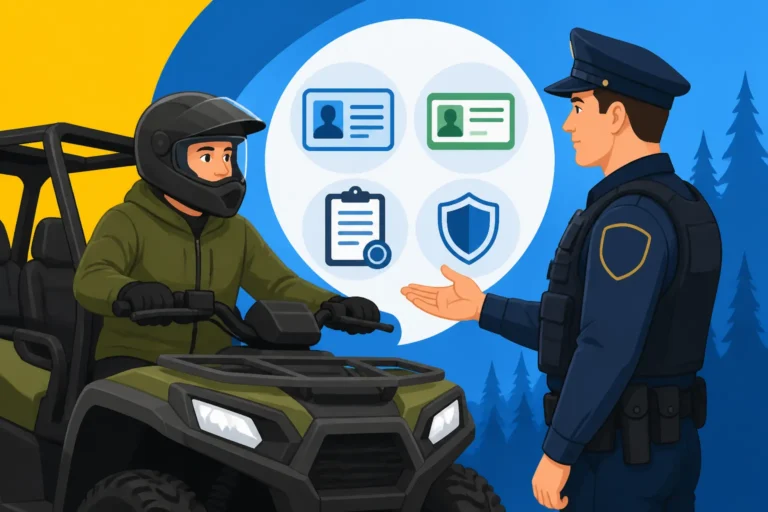
If you're ever stopped by an enforcement officer while operating your OHV for forestry purposes, the best approach is to be polite, cooperative, and prepared.
- Identify Yourself: Provide your driver's license (if applicable) and any personal identification requested.
- Explain Your Use: Clearly and calmly explain that your machine is exempt from registration under the forestry work provision of the Off-highway Vehicles Act because it is used exclusively for legitimate forestry operations.
- Present Your Documentation: Have your relevant documents (deed, business registration, statutory declaration, bill of sale, etc.) readily accessible. Showing a well-prepared document, perhaps one created with the help of LawDepot, can go a long way in establishing credibility.
- Stay On-Topic: Avoid discussing any recreational use you might have for other machines, or past recreational uses of this machine. Stick strictly to the current, exclusive forestry use.
An officer might still issue a ticket if they believe the exemption doesn't apply. In such cases, you would present your documentation and explanation in court. It's crucial that your actual use aligns perfectly with the "exclusive forestry use" clause, as any deviation could lead to fines. Being truthful and well-prepared is your best defense.
Disclaimer
This article is for general informational purposes only and does not constitute professional advice. Laws, prices and regulations vary by location and change over time. Consult a qualified professional for guidance on your specific situation.