Registering an ATV at Access Nova Scotia
Navigating the world of off-highway vehicles (OHVs) in Nova Scotia can feel like a tangled web, especially when it comes to getting your machine properly registered. You've just bought that shiny new (or new-to-you) ATV or side-by-side, you're itching to hit the trails, but then you're faced with the headache of paperwork, fees, and rules that aren't always crystal clear. This comprehensive guide is here to untangle that process for you, walking you through every step of registering your ATV or UTV at Access Nova Scotia so you can ride with confidence and peace of mind.
Understanding the "Why" Behind Nova Scotia OHV Registration
It’s easy to feel like registration is just another hoop to jump through, another fee to pay. Believe me, I get it. We all want to spend less time filling out forms and more time out on the open trails, feeling the wind in our hair (or helmets!). But there’s a crucial "why" behind Nova Scotia’s OHV registration requirements, and understanding it can actually make the process feel a little less daunting. It's not just about compliance; it's about safety, responsibility, and contributing to the very trails we all love to ride.
More Than Just a Permit: The Legal Imperative
First and foremost, registering your ATV or UTV in Nova Scotia isn't optional; it's a legal requirement under the Off-highway Vehicles Act. This isn't just a suggestion; it’s the law, plain and simple. Imagine pulling up to a trailhead, ready for a fantastic day, only to be stopped by an officer who asks for your papers. If your machine isn't registered, that exciting day could quickly turn into a costly one.
The province mandates registration for all off-highway vehicles that operate off private property. This means if you plan to venture onto any public lands, managed trails, or even cross a public road, your machine needs to be on the books. This includes ATVs, UTVs (side-by-sides), and even dirt bikes and snowmobiles. The goal is to ensure accountability and to have a clear record of who owns which machine operating within the province. Without this system, it would be nearly impossible to manage the growing popularity of OHV use or to hold individuals responsible for any incidents that might occur. The consequences of not registering can be pretty steep, ranging from significant fines to other legal troubles that no one wants to deal with. It's truly not worth the risk, especially when the process, though requiring a bit of legwork, is entirely manageable. The peace of mind alone is worth the effort, knowing that you’re riding legally and responsibly. In fact, you can face some hefty penalties if you're caught riding an unregistered machine. For more details on what those penalties entail, you might want to look into [Nova Scotia Fines for an Unregistered Machine].
Funding Our Trails: The Infrastructure Connection
Beyond the legal necessity, your registration fees play a vital role in supporting the very infrastructure that makes our riding experiences so enjoyable. That’s right, a portion of what you pay goes directly into the Nova Scotia Off-highway Vehicle Infrastructure Fund. Think about all those well-maintained trails, the bridges over brooks, the clear signage, and the efforts to connect more communities – much of that is supported by these funds.
When you hand over your registration fees at Access Nova Scotia, you're not just paying for a piece of paper; you're investing in the future of OHV riding in the province. These funds are crucial for the development, maintenance, and expansion of the trail network that we all cherish. Without this collective contribution, the quality and accessibility of our trails would undoubtedly suffer. It’s a direct link: your registration helps ensure there are great places to ride for years to come. It’s a bit like paying membership dues to a club, but in this case, the "club" is the entire provincial trail system. Understanding this can help shift the perspective from a mandatory fee to a meaningful contribution towards a shared passion. So, while you might grumble a little at the counter, remember that your money is helping to pave the way for future adventures. For a deeper dive into how your fees contribute, check out [Nova Scotia's OHV Infrastructure Fund].
Deciphering the Fees: What You'll Pay at the Counter
When you walk into an Access Nova Scotia centre, one of the first things on your mind will likely be, "How much is this actually going to cost me?" It's a fair question, and one that often causes a bit of confusion because there isn't just one single fee. Nova Scotia's OHV registration costs are broken down into a few distinct components, some of which you pay once, and others that become an annual ritual. Understanding these different pieces beforehand will help you budget and avoid any surprises when you're standing at the counter.
The Two Key Components: Certificate and Permit
At the heart of Nova Scotia's OHV registration are two main documents, each with its own associated fee: the Certificate of Registration and the Vehicle Permit. These two sound similar, but they serve different purposes and have different cost structures. The Certificate of Registration is essentially your proof of ownership. This document formally identifies you as the legal owner of that specific off-highway vehicle. Think of it like a deed for your machine. This is a one-time fee, paid when you first register the machine in your name. Once you have it, it's yours until you sell the machine.
Then there's the Vehicle Permit. This is what allows your OHV to legally operate on designated trails and public lands. This is the fee that you'll pay annually to keep your machine legal on the trails. It's essentially your "license plate" for the year, confirming that your machine is authorized for use. So, in your first year of ownership, you’ll pay both the Certificate of Registration fee and the Vehicle Permit fee. In subsequent years, assuming you still own the machine, you’ll only need to renew the Vehicle Permit. It's a common point of confusion, but once you grasp that one is about ownership and the other about permission to operate, it makes a lot more sense. These two documents together form the backbone of Nova Scotia’s OHV regulation, ensuring both proper ownership records and ongoing funding for trail maintenance and development. For a full breakdown of these two documents and their role, read [Nova Scotia's Certificate and Vehicle Permit]. It's really helpful to distinguish between the initial cost of ownership and the ongoing cost of operating.
Annual Renewals and Other Potential Costs
After that initial registration, the annual Vehicle Permit renewal becomes your most consistent cost. This permit typically needs to be renewed each year to keep your machine in good standing for trail riding. Missing a renewal can mean riding an unregistered machine, which, as we discussed, can lead to fines and other headaches. So, it's a date you'll want to mark on your calendar! Many riders set up reminders or try to get it done early in the season to avoid any lapses.
Beyond the annual renewal, there are a few other potential costs you might encounter over the lifespan of your OHV. If you purchase a used machine, you'll pay a transfer of ownership fee, which covers the administrative cost of putting the previous owner's Certificate of Registration into your name. Should your permit ever get lost or damaged, you can apply for a duplicate permit, which also carries a small fee. In rare cases, if your machine's Vehicle Identification Number (VIN) is missing or illegible, you might need a special ID number assigned, another service with a minor charge. These fees, while not always part of the initial registration, are important to be aware of as part of the overall cost of ownership. They are generally quite reasonable but add up, so it's good to keep them in mind for your budgeting. For details on how much it costs to keep your permit current, check out [Nova Scotia Permit Renewal at $13.20]. You can also find information about other administrative fees such as [Nova Scotia Transfer of Ownership at $13.20]. All these figures combine into a neat annual sum that riders can expect, which is often referred to as [Nova Scotia's Combined $53.20 Annual Figure].
The Taxman Cometh: HST at Registration
Here’s a detail that often catches people off guard, especially when buying a used machine from a private seller: Harmonized Sales Tax (HST) is collected at the time of registration if it hasn't already been paid. This means that when you register your ATV or UTV at Access Nova Scotia, you'll be required to pay 14% HST on the purchase price of the machine, unless you bought it from a licensed dealer who already collected the tax.
This is a crucial point because many private sales are conducted with the assumption that the sale price is the final cost. However, the province requires the tax to be paid, and the registration process is where they ensure it happens. You’ll typically be asked to declare the purchase price, and the HST will be calculated based on that figure. If you're buying a used machine, it's a good idea to factor this 14% into your overall budget, as it can be a significant addition to the initial cost. It’s also wise to have a clear bill of sale (more on that later) detailing the purchase price, as this will be the figure used for tax calculation. Don't forget, this tax applies whether you buy from a neighbor or inherit a machine, unless specific exemptions apply. It's simply part of the cost of putting an OHV on the books in Nova Scotia. For more information on this tax, you can refer to [Nova Scotia HST on an ATV Purchase], and specifically what that percentage is at [Nova Scotia's 14 Percent HST Since 2025].
Your Paperwork Checklist: Don't Show Up Empty-Handed
One of the biggest frustrations when dealing with government services is showing up unprepared, only to be told you're missing a crucial document and have to come back another day. We’ve all been there! To save you that hassle, it's absolutely essential to arrive at Access Nova Scotia with a complete paperwork checklist for your OHV registration. Being organized beforehand will make the process infinitely smoother and get you out on the trails much faster.
Proving Ownership: Bill of Sale and Previous Registration
The cornerstone of your registration application is proving you are the rightful owner of the ATV or UTV. For this, you’ll primarily need a solid bill of sale. This document is your proof of purchase and needs to clearly state the seller's name and contact information, your name and contact information, the date of sale, the purchase price, and most importantly, a detailed description of the machine including its make, model, year, and Vehicle Identification Number (VIN). The VIN is especially critical as it uniquely identifies your machine, much like a fingerprint.
If you’re purchasing a used machine, it's also highly advisable to have the previous owner's Certificate of Registration (the document proving their ownership) in hand. This helps to establish a clear chain of ownership and ensures there are no outstanding issues with the machine. What if you don't have a formal bill of sale, perhaps for an older machine, or one that was gifted? Nova Scotia does have provisions for situations where traditional paperwork is scarce. In such cases, you might be required to sign a declaration stating the circumstances of acquisition and affirming your ownership. This is often an option when original documents are lost or an older machine has changed hands multiple times without formal transfers. However, it's always best to have as much documentation as possible. A professionally drafted bill of sale can prevent a lot of headaches down the road. Companies like LawDepot offer templates for bills of sale that cover all the necessary legal points, which can be invaluable for both buyer and seller in a private transaction, making sure all the required details for registration are present. Having an accurate bill of sale is crucial, especially when it comes to reporting your purchase price for tax purposes. You can learn more about the specific requirements for used machines by reviewing [Nova Scotia Used Machine Paperwork] before your visit.
Personal Identification and Proof of Address
Just as you need to prove ownership of the machine, Access Nova Scotia needs to verify your identity and residency. When you go to register, make sure you bring valid government-issued identification. This typically includes things like your driver's license, which usually serves a dual purpose of proving who you are and where you live. Your driver’s license should reflect your current Nova Scotia residential address.
If your driver's license address isn't current, or if you don't have a Nova Scotia driver's license, you’ll need to provide alternative proof of your residential address. This could be a utility bill (power, water, internet), a bank statement, or another official document mailed to your current Nova Scotia address. The key here is that the document must clearly show your name and the address. They're not looking for your mailing address if it's a P.O. Box; they need your physical residential address. This is important for their records, ensuring that the machine is registered to a legitimate resident within the province and for any future correspondence regarding your registration or renewals. Having these documents ready at hand will prevent any delays in processing your application. It’s always better to over-prepare than to be sent home for a missing piece of paper. For detailed requirements on what identification is acceptable, you can refer to [Nova Scotia Registration and Proof of Address].
Specific Scenarios: New, Used, and Special Cases
Not every registration is a straightforward dealer purchase, and Access Nova Scotia understands that. There are various pathways to OHV ownership, and each might require slightly different documentation.
New Machines from a Dealer: When you buy a brand new ATV or UTV from a licensed dealer in Nova Scotia, they often handle much of the initial registration paperwork for you. They’ll usually submit the necessary forms and collect the fees and HST on your behalf, so you receive your Certificate of Registration and Vehicle Permit directly or by mail. It’s a convenient service, but always confirm with your dealer exactly what they’re taking care of and what you might still need to do. Many dealers offer this as part of their service package, making it a truly seamless experience. They understand the intricacies of [Nova Scotia Dealers Registering New Machines].
Private Sales: This is where the bill of sale becomes paramount, as outlined above. When buying from a private individual, you’ll be responsible for bringing all the paperwork to Access Nova Scotia yourself. This includes the bill of sale, your ID, proof of address, and ideally, the previous owner's Certificate of Registration. If you don't have a previous registration, or if the bill of sale isn't pristine, you may need to complete a declaration of ownership. The smooth transfer process after a [Nova Scotia Registration After a Private Sale] is heavily dependent on accurate paperwork.
Inherited Machines: If you've inherited an ATV or UTV, the process involves additional documentation to prove your legal entitlement to the machine. You'll typically need a copy of the will, letters of probate, or other legal documents that confirm you are the executor or beneficiary of the estate. These documents establish your right to ownership, allowing Access Nova Scotia to transfer the registration into your name. It’s a solemn process, and having the right paperwork respects the legalities involved. For specific requirements, see [Nova Scotia Registration for an Inherited Machine].
Machines with Missing VINs: In some rare cases, particularly with very old machines, the Vehicle Identification Number (VIN) might be missing, unreadable, or was never clearly stamped. This can complicate registration significantly, as the VIN is essential for identification. In such instances, Access Nova Scotia might require an inspection to verify the machine's identity and may issue a special ID number. This process can be more involved and may require extra time and potentially an additional fee. It's always best to try and locate or verify the VIN before you begin the registration process. If you face this issue, investigating [Nova Scotia Registration When the VIN Is Gone] might be beneficial. For any of these situations, clear and comprehensive paperwork, sometimes utilizing a template from a service like LawDepot for a bill of sale or affidavit, can be incredibly helpful in streamlining the process at Access Nova Scotia.
The Step-by-Step Process at Access Nova Scotia
Alright, you've got your documents in order, you understand the fees, and you're mentally prepared. Now, let's talk about the actual process of getting your ATV or UTV registered at an Access Nova Scotia centre. While it might seem intimidating, breaking it down into manageable steps can make it feel much more straightforward. From what to do before you even leave your house to what happens after you walk out with your new papers, we'll cover it all.
Before You Go: Pre-Registry Preparations
Before you even step foot into an Access Nova Scotia office, a little preparation can go a long way in ensuring a smooth visit. First, double-check that you have all the necessary documents we discussed: your bill of sale, previous registration (if applicable), personal ID, and proof of address. Seriously, lay them out and tick them off a list. Nothing is more frustrating than waiting in line only to discover you left something crucial at home.
Next, it’s a good idea to check the operating hours of your local Access Nova Scotia centre. Hours can vary, and knowing when they open and close, or if they have specific OHV registration hours, can save you a wasted trip. Some centres might be busier at certain times of the day or week, so planning your visit during off-peak hours could mean less waiting. Finally, if you have any lingering questions or unique circumstances that aren’t explicitly covered in your documents, consider calling the Off-Highway Vehicle line beforehand. Their staff are usually very helpful and can provide specific guidance, saving you from potential confusion at the counter. A quick phone call could clarify a tricky point and ensure you bring everything you need for your particular situation. Getting a little guidance beforehand is definitely worth it. You can typically find the number on the Access Nova Scotia website, or you can check out [Calling the OHV Line for Help] for more details.
At the Counter: Navigating the Process
Once you’re at Access Nova Scotia, the process typically involves a few key stages. You’ll usually take a number and wait for your turn. When called, you'll present your gathered documents to the client service representative. They will review everything, ensuring all necessary information is present and correct. This is where your thorough preparation pays off; if everything is in order, the process moves along quickly.
The representative will guide you through completing any required forms, such as the application for registration or the declaration of value for tax purposes. Be prepared to answer questions about your machine's make, model, year, VIN, and purchase price. Honesty and accuracy are key here. Once the forms are completed and verified, they will calculate the total fees due – including the Certificate of Registration fee, the Vehicle Permit fee, and any applicable HST. You'll then proceed to payment. Access Nova Scotia typically accepts various payment methods, including debit cards, credit cards, and sometimes cash. Always check their accepted payment methods beforehand, but generally, major cards are widely accepted. Once payment is processed, they will issue your temporary or official documents. For specific information on acceptable forms of payment, consult [Nova Scotia Registration Payment Methods]. This entire counter interaction is designed to be efficient, but it relies heavily on your preparedness and accuracy.
What Happens Next: Receiving Your Papers
After successfully completing the registration process and paying all fees, you’ll walk out with your immediate proof of registration. Typically, you will receive a temporary Vehicle Permit on the spot, along with a receipt for your transaction. The official Certificate of Registration and the permanent Vehicle Permit might be mailed to you later, or in some cases, you might receive them immediately, depending on the centre and their processing procedures. Always confirm with the representative how and when you can expect to receive your official documents.
The Certificate of Registration is a key document that you should keep in a safe place, as it's your permanent proof of ownership. The Vehicle Permit, which needs to be renewed annually, should be carried with you when operating your OHV. While some provinces issue physical stickers, Nova Scotia generally provides a paper permit. Make sure you understand where you need to keep this document when riding your machine, as it's what officers will ask to see if you're stopped. The processing time can vary slightly depending on the volume of applications and the specific centre, but generally, you should receive your official documents within a reasonable timeframe. If you’re curious about the typical waiting period, [Nova Scotia Registration Processing Time] can offer some guidance. Once you have these papers in hand, you’re officially ready to hit the trails, knowing you’re fully compliant with Nova Scotia’s OHV laws!
Special Circumstances and Exemptions
While the general registration process applies to most ATV and UTV owners, Nova Scotia’s regulations also account for various special circumstances and exemptions. These can range from age requirements for owners to specific uses of machines that might alter their registration obligations. Understanding these nuances is crucial, as they can directly impact who can register a machine, how it’s used, and even if it needs to be registered at all. It’s not a one-size-fits-all world, and recognizing where your situation fits can save you time and confusion.
Age Requirements: For Youth and Supervisors
When it comes to owning and registering an OHV in Nova Scotia, age is a significant factor. The province has specific rules to ensure that machines are registered to responsible individuals. Generally, an individual must be at least 19 years old to register an off-highway vehicle in their own name. This ensures that the registered owner is an adult who can legally be held accountable for the machine's use and any associated liabilities. It's a key requirement designed to promote responsible ownership from the outset. For comprehensive details on this, you can refer to [Nova Scotia Requires Owners to Be 19].
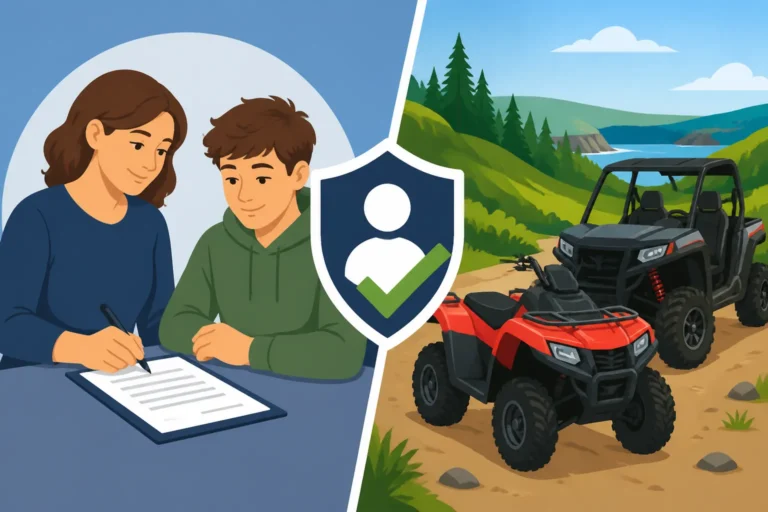
However, the regulations do make allowances for younger riders. For instance, a 16-year-old can own and register an ATV or UTV, but it comes with a critical caveat: they must have written consent from a parent or legal guardian. This consent acts as a crucial safeguard, acknowledging that while a 16-year-old might be capable of operating a machine, an adult needs to take responsibility for its ownership. This provision allows youth to participate in the OHV community under adult supervision and accountability, preparing them for full adult ownership down the line. It's a balanced approach that promotes youth engagement while maintaining essential oversight. Understanding [Nova Scotia Registration at 16 With Permission] is vital for families looking to get their teenagers into the sport. These age rules are in place not to hinder enjoyment, but to ensure safety and legal responsibility, which is paramount in the OHV world.
Work-Related and Property Exemptions
Not every off-highway vehicle operating in Nova Scotia needs to be registered. The province recognizes that some machines are used for specific purposes or on particular types of land that fall outside the general public use requiring registration. These exemptions are important to understand, as they can directly impact whether you need to visit Access Nova Scotia for your machine.
One significant category of exemptions applies to machines used for work-related purposes, particularly in the agricultural and forestry sectors. For example, ATVs or UTVs used exclusively by farmers for farming operations on their own land, or by forestry workers for legitimate forestry operations, are often exempt from registration. This is because these machines are considered tools of the trade, operating within a specific, controlled environment rather than for general recreational use on public trails. Similarly, machines used by golf course operators on golf courses, or by individuals on Reserve Land, also typically qualify for exemptions. These are highly specific use cases, and the key is "exclusively for work" or "exclusively on specified property."
Furthermore, if you own an off-highway vehicle and only operate it on your own private property, it is generally exempt from the registration requirement. The moment that machine leaves your property and enters public lands, designated trails, or crosses a public road, the registration requirement kicks in. It’s crucial to understand that these exemptions are conditional and apply only as long as the machine remains within the specified parameters. Misinterpreting an exemption can lead to serious legal issues if you’re caught riding off-property without proper registration. Always double-check the exact wording of the regulations to ensure your situation truly qualifies. If you use your machine for farming, understanding [Nova Scotia Farmer and Forestry Exemptions] is paramount. Similarly, if your riding is confined to your private land, you'll want to review [Nova Scotia Own-Property Exemption] carefully.
New Residents and Visiting Riders
Moving to a new province can be a whirlwind of administrative tasks, and if you’re bringing an ATV or UTV with you, registering it in Nova Scotia is one of them. For new residents, the process is quite similar to registering a privately purchased used machine. You’ll need to provide proof of ownership from your previous province or state (like a title or registration), a bill of sale (if you recently bought it), your Nova Scotia ID, and proof of your new Nova Scotia address. The key is establishing your residency and proving legal ownership of the machine as it enters the provincial system. There’s usually a grace period after moving before you’re required to register, but it's best to address it sooner rather than later to avoid any issues. For a smooth transition, understanding [Nova Scotia Registration for a New Resident] will be beneficial.
For visiting riders, the rules are slightly different. If you're just here for a short visit and plan to ride Nova Scotia trails, you don't necessarily need to fully register your out-of-province machine in Nova Scotia. Instead, the province offers temporary permits for visitors. These permits allow you to legally operate your OHV on designated Nova Scotia trails for a specified period (e.g., 30 days), provided your machine is properly registered and insured in your home jurisdiction. This is a fantastic option for tourists who want to experience Nova Scotia’s incredible trail network without the hassle of full registration. However, reciprocity agreements with other provinces can change, so it's always wise to check the current regulations before your trip. For more details on what visitors need, see [Nova Scotia Registration for a Visiting Rider]. Always ensure you have your home province's registration and insurance documents with you. These provisions ensure that both new residents and temporary visitors can enjoy Nova Scotia's OHV opportunities responsibly and legally.
Maintaining Your Registration: Renewals and Changes
Getting your ATV or UTV registered for the first time is a significant step, but it’s not a one-and-done deal. Just like with a car, there are ongoing responsibilities to ensure your machine remains legally compliant. This involves annual renewals, updating your information when circumstances change, and properly transferring ownership when you decide to sell. Staying on top of these administrative tasks is crucial for uninterrupted riding and avoiding potential penalties. It's all part of being a responsible OHV owner in Nova Scotia.
Annual Permit Renewal: Don't Forget!
Once you've completed your initial registration, the most consistent administrative task you'll face is the annual renewal of your Vehicle Permit. Unlike the Certificate of Registration, which is a one-time fee tied to ownership, the Vehicle Permit must be renewed every year. This annual fee ensures that your machine continues to be authorized for use on public lands and designated trails.
It's easy to let this slip your mind amidst other responsibilities, but forgetting to renew can lead to your machine being considered unregistered, even if you still hold the Certificate of Registration. This means if you're caught riding with an expired permit, you could still face fines. Many riders find it helpful to set a reminder on their phone or calendar, perhaps coinciding with the start of the riding season or another annual event. Access Nova Scotia typically sends out renewal notices, but ultimately, it’s the owner's responsibility to ensure their permit is current. The renewal process is usually straightforward: you can often renew online, by mail, or in person at an Access Nova Scotia centre. Keeping that permit current is your ticket to worry-free riding all season long. To ensure you're always up-to-date, learn more about [Nova Scotia ATV Permit Renewal].
Updating Your Information: Address Changes and Duplicates
Life happens, and sometimes your personal information or circumstances change. If you move, it’s your responsibility to update your address with Access Nova Scotia to ensure your registration records are accurate. This is important for a couple of reasons: firstly, it ensures you receive any official correspondence, such as renewal notices or important updates regarding OHV regulations. Secondly, accurate records are part of maintaining legal compliance. Changing your address is typically a simple process that can often be done online, by mail, or in person at any Access Nova Scotia centre. You’ll usually need to provide identification and proof of your new address. You can read up on the specifics of [Nova Scotia Registration Address Change].
Another scenario you might encounter is needing a duplicate permit. Accidents happen, and sometimes your Vehicle Permit can get lost, stolen, or damaged. If this occurs, don't fret. You can apply for a duplicate permit through Access Nova Scotia. There’s usually a small fee associated with this service, but it’s a necessary step to ensure you always have your valid permit on hand when riding. Just like updating your address, obtaining a duplicate is a relatively simple administrative task that keeps your records in order and prevents issues out on the trail. For details on how to handle a lost permit, consult [Nova Scotia Permit Replacement If Lost]. Staying proactive about these updates ensures your registration remains valid and accessible when you need it.
Selling Your Machine: The Transfer of Ownership
When the time comes to sell your ATV or UTV, properly transferring the ownership is just as important as registering it in the first place. This protects both you, the seller, and the new buyer. When you sell your machine, you’ll need to complete a bill of sale, detailing the transaction, the machine’s information, and the identities of both buyer and seller. This document is crucial for the new owner to register the machine in their name. From your perspective, ensuring the ownership is formally transferred out of your name is critical. If the machine remains registered to you, you could potentially be held liable for any incidents involving the OHV after you’ve sold it. This is why a smooth and documented transfer is so important.
The buyer will then take the bill of sale (and ideally your signed-over Certificate of Registration) to Access Nova Scotia to complete the transfer of ownership. At this point, they will pay the transfer fee and any applicable HST on the purchase price. As a seller, it's wise to keep a copy of the bill of sale for your records and even consider accompanying the buyer to Access Nova Scotia to ensure the transfer is completed promptly. A clear and robust Bill of Sale, perhaps created using a service like LawDepot, provides undeniable proof of the transaction and helps both parties meet their legal obligations. It truly is an essential step that finalizes your responsibilities as the previous owner and ushers in the new owner's journey. For a comprehensive guide on this process, delve into [Selling a Registered Machine in Nova Scotia].
Beyond Registration: Insurance and Other Essentials
While getting your ATV or UTV registered at Access Nova Scotia is a fundamental step, it's just one piece of the puzzle for responsible and legal OHV ownership in the province. There are other critical elements, particularly insurance, safety training, and understanding trail permits, that work in conjunction with your registration to ensure you're fully compliant and protected. Thinking beyond just the papers from Access Nova Scotia will make you a truly prepared rider.
The Mandate for Insurance: Staying Legal on the Trail
Beyond registration, having valid insurance is another non-negotiable requirement for operating an off-highway vehicle in Nova Scotia. This isn't just about protecting your investment; it's about protecting yourself and others. The province mandates that all OHVs operating off private property must carry a minimum amount of liability insurance. This liability coverage is crucial because it protects you financially if you're deemed at fault for an accident that causes injury to another person or damage to someone else's property. Imagine an unfortunate incident on a trail where you accidentally collide with another rider or damage private property; without liability insurance, you could face significant out-of-pocket expenses.
Currently, Nova Scotia requires a minimum of $500,000 in third-party liability coverage. This substantial amount reflects the potential costs associated with serious accidents. When you get your insurance, you'll receive a "pink card" or proof of insurance. It is absolutely essential to carry this proof with you whenever you're operating your OHV. An enforcement officer can ask to see it, and failing to produce it can result in fines, even if you are insured. So, once you've secured your insurance, make sure that pink card is always readily accessible, perhaps in a waterproof pouch on your machine or in your riding gear. For further details on the specifics of this requirement, you can refer to [Nova Scotia Insurance Requirements for Riders]. Understanding [Nova Scotia's $500,000 Liability Minimum] and carrying your [Nova Scotia Pink Card Rules] are basic elements of legal riding in our beautiful province.
Safety Certificates and Training
Safety is paramount in off-highway vehicle riding, and Nova Scotia takes this seriously, especially for younger or newer riders. The province mandates that certain individuals must hold a valid OHV safety certificate to legally operate an ATV or UTV. This requirement is in place to ensure riders have a foundational understanding of safe operating practices, risk management, and environmental responsibility before hitting the trails. These certificates are typically obtained by completing an approved safety course, often offered by organizations like the Canada Safety Council.
While there are specific age requirements for who must hold a certificate, there's also a "grandfather clause" that applies to experienced riders who owned and operated machines before certain dates. For example, individuals who owned and registered an OHV before September 2007, or who could prove they owned a machine before April 2006, might be exempt from the mandatory training requirement. However, even if you're exempt, taking a refresher course or seeking out training is always a good idea. Safety standards and best practices evolve, and continuous learning can only enhance your riding experience. For those who are required to have it, obtaining the safety certificate is a key step towards responsible and legal riding, promoting safer trails for everyone. It's truly an investment in your well-being and the safety of others you share the trails with. If you're wondering if this applies to you, checking out [Nova Scotia Safety Certificates Are Mandatory] or reviewing [Nova Scotia's Pre-2006 Grandfather Rule] can provide clarity.
Trail Permits: Accessing the Network
Finally, it’s important to distinguish between your provincial OHV registration (handled by Access Nova Scotia) and a trail permit (typically managed by the provincial ATV association). While your registration makes your machine legal to own and operate in Nova Scotia, a trail permit is what grants you access to the vast network of managed, club-maintained trails across the province.
The vast majority of designated OHV trails in Nova Scotia are maintained by volunteer clubs under the umbrella of ATVANS (All-Terrain Vehicle Association of Nova Scotia). To ride on these maintained trails, you generally need to purchase an ATVANS trail permit. This permit is essentially a user fee that directly supports the clubs’ efforts in grooming, repairing, and signing trails. Without these permits, the clubs wouldn't have the resources to keep the trails in top condition. So, while your Access Nova Scotia registration is for legal compliance, an ATVANS trail permit is for practical access to most of the fun! It's an important distinction that sometimes confuses new riders. You can read up more on [Nova Scotia Trail Permits From ATVANS] for further clarification. Many riders choose to become members of a local ATVANS club, which often includes the trail permit as part of their membership, offering additional benefits and a sense of community. So, when planning your rides, always consider both your provincial registration and your trail permit to ensure you have full, legal access to where you want to go. The extensive network of trails maintained by ATVANS is a testament to what these permits help fund, as highlighted in [Nova Scotia ATV Trails: The ATVANS Network].
Here's a quick summary of typical costs associated with OHV registration in Nova Scotia. Please remember that these are illustrative figures; you should always check the Access Nova Scotia website or contact them directly for the most current and accurate pricing.
| Fee Type | Description | Frequency |
|---|---|---|
| Certificate of Registration | Proof of ownership for the OHV. | One-time |
| Vehicle Permit | Allows the OHV to operate on public lands and designated trails. | Annual |
| Transfer of Ownership | Paid when a used OHV is transferred to a new owner. | Per transfer |
| Duplicate Permit | For replacement of a lost, stolen, or damaged Vehicle Permit. | Per request |
| Special ID Number | Issued if the machine's VIN is missing or illegible. | One-time |
| HST (Harmonized Sales Tax) | Applied to the purchase price of the OHV (if not collected by dealer). | One-time |
| OHV Infrastructure Fund Levy | Included in the annual Vehicle Permit fee to support trail maintenance. | Annual |
Note: Specific fee amounts, tax rates, and regulatory details are subject to change. Always verify current figures with Access Nova Scotia or the official provincial government website.
Disclaimer
This article is for general informational purposes only and does not constitute professional advice. Laws, prices and regulations vary by location and change over time. Consult a qualified professional for guidance on your specific situation.