Nova Scotia Own-Property Exemption
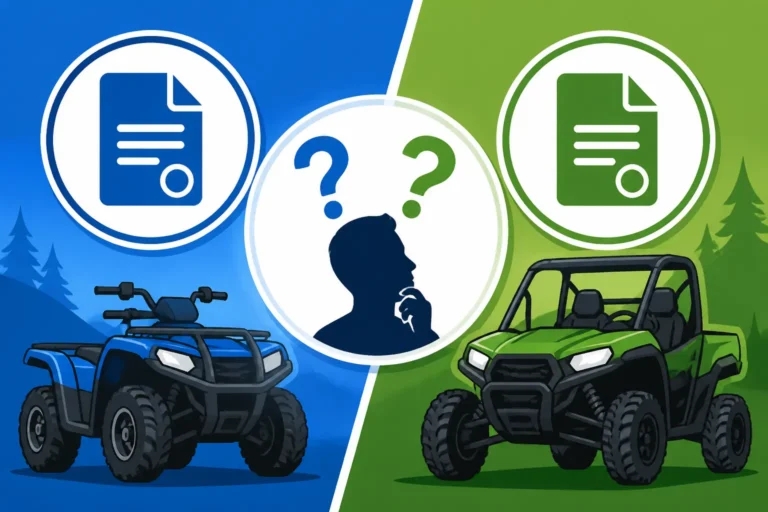
One of the most frequent head-scratchers for off-highway vehicle (OHV) owners in Nova Scotia is whether you actually need to register your ATV or UTV if you never plan to take it off your own property. It feels like a common-sense question, and the answer can seem elusive, leading to confusion and worry about potential fines. This guide is here to untangle the specifics of Nova Scotia’s own-property exemption, helping you understand when it applies, when it doesn't, and what other considerations you absolutely need to keep in mind.
Understanding Nova Scotia's Own-Property Exemption for OHVs
The idea of riding an ATV or UTV solely on your own land is a dream for many Nova Scotians. You’ve got the acreage, the trails, the peace and quiet – why should the government care if you're just enjoying your own backyard? Thankfully, the province does offer an exemption for this exact scenario, but like many things wrapped in legal language, it's not as simple as it first appears. It's about understanding the specific wording and intent behind the regulation to avoid any unwelcome surprises.
What the Law Actually Says About Your Own Land
At its heart, Nova Scotia's Off-highway Vehicles Act states that an OHV does not require registration or a permit if it is operated exclusively on land owned or leased by the operator. That word "exclusively" is doing a lot of heavy lifting here. It means "only, solely, without any other involvement." This isn't just a suggestion; it's a strict boundary. If your machine, even for one minute, touches land that isn't yours or leased by you, then the exemption typically flies out the window.
Think about it this way: if your machine lives its entire life within the defined boundaries of your deeded or leased property, then you're likely in the clear. This could be your expansive backyard, a remote family cottage property in rural Guysborough, or a sizable woodlot you lease for personal use in Annapolis Valley. The intent is clear: to not burden private landowners who are genuinely keeping their riding activities contained to their own dominion. The frustration often comes when life isn't quite so contained.
The Definition of "Off-highway Vehicle" and Its Relevance
Before diving deeper into the exemption, it’s important to clarify what Nova Scotia considers an "off-highway vehicle" (OHV). This isn't just a fancy term for an ATV; it encompasses a range of machines designed for off-road use. We're talking about all-terrain vehicles (ATVs), utility terrain vehicles (UTVs), dirt bikes, and even snowmobiles. Essentially, if it's got an engine, goes off-pavement, and isn't typically registered for highway use, it falls under this umbrella.
This definition matters because the own-property exemption applies specifically to these OHVs. It's not for your car, truck, or even a golf cart used on a golf course (though golf courses have their own specific exemptions). So, whether you're tooling around on a small youth quad, a powerful side-by-side like a Polaris RZR, or a workhorse utility ATV on your Nova Scotia property, the same rules around the own-property exemption apply. For more on the specifics, check out articles like [Registering a Side-by-Side in Nova Scotia] or [Dirt Bikes and Nova Scotia Paperwork].
Common Scenarios Where the Exemption Applies (and Doesn't)
Understanding the "exclusively on your own land" rule is one thing, but applying it to real-life situations can be a bit more nuanced. Life in Nova Scotia often means sharing roads, crossing small stretches of public land, or just venturing out a little further than you initially planned. Let's look at some common scenarios to highlight where the exemption holds firm, and where it quickly unravels.
Riding Your Own Woodlot or Farm
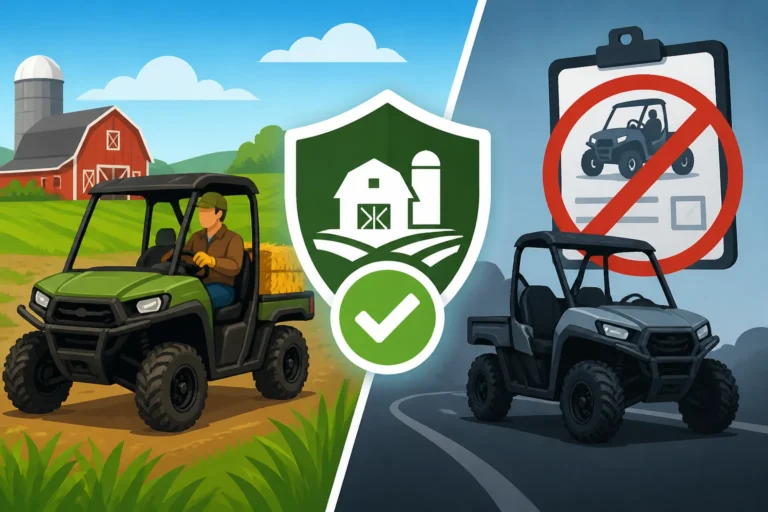
For many Nova Scotians, an ATV or UTV isn't just for recreation; it's a vital tool for managing property. If you own a woodlot in Cumberland County and use your quad solely for hauling firewood, checking fence lines, or accessing remote parts of your timberland, the own-property exemption is probably a good fit for you. Similarly, farmers across the province, whether in the Annapolis Valley or on Cape Breton, often rely on their machines for daily tasks. If that farm quad never leaves your fields or barns, it doesn't require registration.
However, the line gets blurry quickly. What if your farm has fields on both sides of a municipal road, and you need to cross that road to get from one section to another? Even that brief transit on public property typically means your machine is no longer "exclusively" on your own land, and registration would be required. This is a common point of confusion and frustration, as it seems unfair for such a practical need. For more detailed insights into these specific uses, you might want to read [When Farm Work Exempts a Machine From Registration] or [When Forestry Work Exempts a Machine From Registration]. The exemption is truly for machines that live and die within your property boundaries, never venturing beyond.
Recreational Riding on Large Private Parcels
Imagine you're lucky enough to own a sprawling parcel of land near Lake Ainslie or along the South Shore – perhaps 50, 100, or even more acres. You've carved out some fantastic private trails, maybe even put up a small camp, and your OHV is your primary mode of exploring your own domain. In this ideal scenario, where your machine never leaves your property, the own-property exemption provides a genuine and welcome relief from registration requirements. You can ride your Nova Scotia property to your heart's content without needing that annual permit.
The peace of mind that comes with knowing you're fully compliant simply by staying on your land is a huge benefit. However, a common temptation arises: what if your neighbour, who also owns a large parcel, invites you over for a ride? Or what if you want to pop down to the general store just a kilometre away for a cold drink? As soon as your tires leave your property line and touch any public right-of-way, or even private land that isn't yours or leased by you, the exemption no longer applies. This means that casual hop across a road, or even just driving a short distance down a shared laneway, could put you in violation. It truly is an "all or nothing" kind of rule when it comes to [Riding Your Own Land Without a Registration].
Crossing Public Property or Accessing Shared Trails
This is where most Nova Scotian OHV owners, even those with large properties, eventually find themselves in a bind regarding the own-property exemption. The moment your wheels touch anything considered public land or a public right-of-way – even briefly – your machine is no longer considered to be operated "exclusively" on your own property. This includes:
- Crossing a public road: Even if it's just to get to another part of your own land, or to a neighbour's property, that transit requires registration and adherence to road trail rules.
- Riding on a ditch or shoulder: These are typically part of the public right-of-way, not your private land.
- Using a shared access road or private lane: Unless you own or lease that specific segment of the lane, it's not your exclusive property.
- Accessing official OHV trails: These trails, maintained by groups like ATVANS, often cross private and Crown land with agreements, but they are not your exclusive property. To ride them, you need a registered and insured machine, plus a trail permit.
The consequences of this can be significant. An officer spotting you making a quick crossing on an unregistered machine could result in a fine, even if you thought you were being careful. The province has been working to expand legal access for OHVs through its [Nova Scotia Road Trails Act Explained], which creates designated road trails in various communities. While these offer more places to ride, they simultaneously underline the requirement for registered and insured machines on any public access points. So, while the thought of riding to a nearby gas station on your machine is tempting, if you haven't registered it, you could be asking for trouble.
Insurance and Liability Considerations for Unregistered Machines
Even if you meticulously keep your ATV or UTV confined to your own property, and thus qualify for the own-property registration exemption, there's another crucial layer of protection you absolutely cannot overlook: insurance. It's a common misconception that if a machine isn't registered, it doesn't need insurance. In reality, the potential for accidents and the resulting financial and legal fallout remain very real, no matter where you ride.
Why Insurance is Still Crucial, Even on Private Land
Imagine this scenario: you're enjoying a ride on your private trails in Pictou County, perhaps showing a friend how to handle a new machine, and an accident occurs. Your friend, a guest on your property, is injured. Without proper insurance, you could be held personally liable for their medical bills, lost wages, and pain and suffering. This isn't a minor risk; it's a potentially life-altering financial burden that could easily exceed hundreds of thousands of dollars. Nova Scotia law requires [Nova Scotia's $500,000 Liability Minimum] for registered OHVs, and while an unregistered machine doesn't legally need it, the practical need for robust liability coverage doesn't disappear just because you're on private land.
Even if it's just you and your family on the property, accidents can happen. A rollover, an unexpected mechanical failure, or hitting an unseen obstacle could lead to serious injury. While your health insurance covers your medical care, it won't cover potential damages to property or the legal costs if someone else blames you. The truth is, the absence of a registration requirement doesn't erase the risks inherent in operating powerful machinery. Taking the time to understand your options, even for a machine kept on your own land, is a smart move. This is exactly why you'd want to look into [Nova Scotia Insurance Requirements for Riders] and talk to an insurance broker.
Understanding Your Homeowner's Policy
A common pitfall for owners of unregistered OHVs is assuming that their existing homeowner's insurance policy will cover any incidents that occur on their property. This is a dangerous assumption, and one that could lead to devastating financial consequences. Many standard homeowner's policies have specific exclusions for recreational vehicles, especially those that are motorized and not designed primarily for property maintenance. While a lawn tractor might be covered, an ATV or UTV very often is not, or coverage may be extremely limited.
It's absolutely essential to call your insurance provider and discuss your specific situation. Don't assume anything. Explain that you own an ATV or UTV, that you operate it exclusively on your own property, and ask what, if any, liability coverage you have under your current policy. They might offer an endorsement or a separate policy specifically for your OHV, even if it's not registered. Without this explicit confirmation and coverage, if someone is injured on your property while operating or being near your machine, you could be personally on the hook for massive legal bills and damages. For more on this, check out [Nova Scotia Insurance on Your Own Land]. Taking the proactive step to get clarity now can save you immense stress and cost down the line.
Legal Agreements and Waivers for Visitors
If you frequently have friends, family, or even hired hands operating your unregistered OHV on your private land, considering additional legal protections is a wise move. While insurance is your primary financial safeguard, liability waivers and formal agreements can serve as a secondary layer, helping to clarify risks and manage expectations. No waiver is 100% foolproof in preventing a lawsuit, but it can certainly strengthen your defense and deter claims.
Resources like LawDepot offer templates for liability waivers and release forms that you can customize for your specific needs. These documents typically outline the inherent risks of ATV/UTV operation, confirm that the rider understands and accepts these risks, and agrees to release you from liability for injuries or damages incurred while on your property. Having guests sign such a document before they ride your machine can provide a measure of peace of mind. It demonstrates that you've taken reasonable steps to inform them of the dangers, and that they have acknowledged their responsibility. It's about being realistic: even on your own land, accidents happen, and having clear, written agreements can be invaluable.
The Trade-offs: Why Registering Might Still Be a Good Idea
So, you've decided your OHV genuinely qualifies for the own-property exemption. Fantastic! But before you fully commit to keeping it unregistered, it's worth taking a moment to consider the benefits that come with full registration. While avoiding a fee might seem appealing, the flexibility, protection, and community benefits of a registered machine in Nova Scotia often outweigh the cost, especially for those who eventually might want to explore beyond their property lines.
Flexibility and Peace of Mind
The biggest trade-off of the own-property exemption is the complete lack of flexibility. Any deviation from your private land immediately puts you at risk of fines. Imagine you're on a multi-day ride with friends, and your machine, which is unregistered, suffers a breakdown. You can't even legally push it down the road a short distance to a service station or a nearby neighbour's house for help. You're effectively trapped. Registering your OHV, on the other hand, unlocks a world of possibilities and eliminates constant worry.
With a registered machine, you gain the freedom to access Nova Scotia's extensive network of OHV trails, maintained by dedicated clubs under the [Nova Scotia ATV Trails: The ATVANS Network]. You can participate in organized rides, explore new parts of the province, or simply cross that small stretch of road to visit a friend without a second thought. This flexibility provides immense peace of mind, knowing that if an opportunity arises to venture off your land, you're legally equipped to do so. The minor cost of registration often pales in comparison to the value of this newfound freedom. Of course, riding an unregistered machine on public land can result in [Nova Scotia Fines for an Unregistered Machine] which are certainly much higher than the registration fees.
Theft Protection and Identification
While you might think an OHV kept only on your private property is less likely to be stolen, the reality is that theft is a significant concern for all powersports owners. A machine tucked away in a remote shed on your rural property can be an attractive target for opportunistic thieves. In the unfortunate event that your unregistered ATV or UTV is stolen, having it officially registered with the province significantly improves your chances of recovery and makes the legal process much smoother.
When your machine is registered, its Vehicle Identification Number (VIN) is recorded in a provincial database, linking it directly to you as the owner. This official documentation can be critical for law enforcement trying to track down stolen machines, or for proving ownership if it's recovered. Without registration, proving ownership can become a more complicated affair, especially if you lack clear, dated purchase paperwork. While registration doesn't prevent theft, it provides an official record that aids in identifying and recovering your valuable asset, offering a layer of protection that an unregistered machine simply doesn't have.
Contributing to the OHV Community
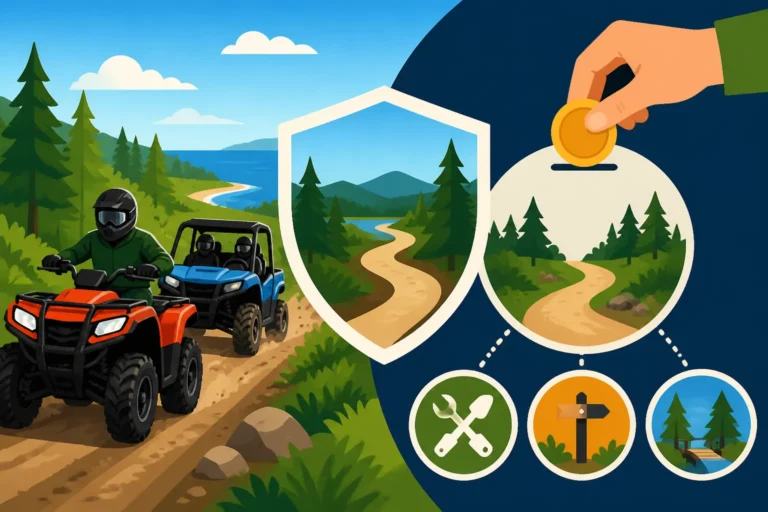
When you register your off-highway vehicle in Nova Scotia, a portion of the fees you pay goes directly into the Nova Scotia Off-Highway Vehicle Infrastructure Fund. This isn't just a government tax; it's a direct investment back into the very trails and infrastructure that OHV enthusiasts use across the province. This fund supports things like trail maintenance, bridge repairs, signage, and the development of new riding opportunities, benefiting everyone who enjoys the sport. You can learn more about this by looking at [Nova Scotia's OHV Infrastructure Fund] and [Why the Registry Collects a Trail Levy].
By registering your machine, you're actively contributing to the sustainability and growth of OHV riding in Nova Scotia. You're helping to ensure that the province's impressive network of trails, boasting around [Nova Scotia's 8,000 Kilometres of Trail], remains accessible, safe, and enjoyable for current and future generations of riders. It's a way of giving back to the community that provides so much enjoyment, and it connects you to the broader network of clubs and volunteers who work tirelessly to maintain these valuable resources. Choosing to keep your machine unregistered means you miss out on this direct contribution to the shared riding landscape.
Navigating Registration When You Decide To
Even if you've been operating your OHV under the own-property exemption, circumstances can change. Maybe you've moved, or you've decided to join a local ATVANS club and explore the wider trail network. Whatever the reason, transitioning from an unregistered status to a fully registered one in Nova Scotia is a straightforward process, provided you have the right documentation and know where to go.
The Papers You'll Need
The key to a smooth registration process at Access Nova Scotia is having all your ducks in a row when it comes to paperwork. While the exact requirements can vary slightly depending on whether your machine is new, used, or inherited, there are some core documents you'll almost always need. The most important piece of documentation is proof of ownership. This typically means an original bill of sale, especially for a used machine. If you're dealing with a private sale, a clear, comprehensive bill of sale is crucial.
For robust documentation that stands up to scrutiny, especially for private sales, consider using a template from a reputable source like LawDepot. A well-drafted bill of sale from LawDepot will include critical details like the buyer and seller's information, the machine's make, model, year, and most importantly, its Vehicle Identification Number (VIN), and the purchase price. This document is not just about proving ownership; it's also essential for calculating the Harmonized Sales Tax (HST) you'll pay at the registry, if it wasn't paid at a dealership. For a complete overview, be sure to consult [Nova Scotia Registration Paperwork Checklist] and [Nova Scotia Used Machine Paperwork]. Having everything organized beforehand will save you time and potential headaches at the counter.
Where to Go and What to Expect
Once you have your paperwork in order, the next step is to head to your nearest Access Nova Scotia service centre. These centres are dotted throughout the province, from Yarmouth to Sydney, and are the official points for OHV registration. You'll need to bring your proof of ownership, personal identification, and be prepared to pay the applicable fees. The registration process for an OHV in Nova Scotia involves two main components:
- The Certificate of Registration: This is a one-time fee and essentially registers the machine itself with the province, assigning it a unique ID number and linking it to you as the owner.
- The Vehicle Permit: This is an annual fee, similar to a car's registration, that allows you to legally operate the machine off-highway (and on designated road trails).
You'll typically receive a vehicle permit number, which is what you'll need to carry with you when riding. It's important to understand the distinction between these two fees. The certificate is paid once, but the permit must be renewed annually. This annual renewal includes the contribution to the OHV Infrastructure Fund. To get a clearer picture of the costs involved, you can refer to [Nova Scotia OHV Registration Cost] and [Nova Scotia's Combined $53.20 Annual Figure]. The staff at Access Nova Scotia are generally very helpful and can guide you through the process, but having your documents ready will make it quicker for everyone.
Special Considerations for Farm/Forestry Machines
While the own-property exemption is often utilized by farmers and forestry workers, it's worth reiterating the strictness of the "exclusively" clause. If you operate a quad for legitimate farm work on your land in Colchester County, for example, but occasionally need to transport it for repairs, or use it to access a distant field that requires a short public road crossing, then registration becomes a necessity. The exemption is truly for machines that never, ever leave their private confines.
The moment a farm quad is used to tow a trailer down a public road, even for a short distance to access another part of the farm, it must be registered and insured. The same applies to forestry machines. If your UTV is hauling equipment on your private woodlot near Antigonish, it might be exempt. But if that UTV needs to transport tools to a different woodlot that requires even a brief stint on a provincial highway or a municipal road, then it falls outside the exemption. The key takeaway is that the exemption is quite narrow and truly applies only to those machines that are permanently contained to your deeded or leased property, leaving no room for even minor detours onto public land.
Here's a quick comparison to help summarize the key differences between registered and unregistered (own-property exemption) OHV status in Nova Scotia:
| Feature | Unregistered (Own-Property Exemption) | Registered |
|---|---|---|
| Legal Riding Area | Exclusively on land owned or leased by the operator. | On owner's land, designated public OHV trails, and approved road trails. |
| Insurance Necessity | Not legally required for registration, but highly recommended for liability. | Legally required ($500,000 liability minimum). |
| Theft Protection | No official provincial record; harder to track/recover. | VIN recorded in provincial database; aids in identification and recovery. |
| Community Contribution | No direct contribution via fees to the provincial OHV Infrastructure Fund. | Registration fees contribute to trail maintenance and development. |
| Flexibility | Very limited; cannot legally leave private property for any reason. | High; can legally ride on approved trails and road sections. |
| Potential Fines | Possible if machine is ever operated off private land without registration. | Avoided when adhering to all OHV regulations (registration, insurance, permit). |
Disclaimer
This article is for general informational purposes only and does not constitute professional advice. Laws, prices and regulations vary by location and change over time. Consult a qualified professional for guidance on your specific situation.