Nova Scotia Farmer and Forestry Exemptions
It’s a common scenario across Nova Scotia: you’ve got an ATV or UTV that’s less about recreational thrills and more about getting the job done on the farm or deep in the woodlot. The thought of adding another registration fee and more paperwork to your already busy schedule can be a real headache. This guide is here to untangle the confusion surrounding Nova Scotia's Off-highway Vehicle (OHV) regulations, specifically focusing on the exemptions available for those who use their machines primarily for farming or forestry operations. We’ll dive deep into what these exemptions mean for you, what qualifies, and what pitfalls to avoid so you can keep working without unexpected fines.
Understanding Nova Scotia's OHV Registration Basics
Before we dig into the exemptions, let's just quickly touch on why registration for off-highway vehicles exists in the first place, and what it generally entails. It’s important to grasp the baseline rules before understanding how you might be an exception. For most Nova Scotia riders, getting their machine registered is a mandatory step before hitting any trails or designated riding areas.
Why OHV Registration is Generally Required
For the vast majority of ATV and UTV owners in Nova Scotia, registering their machine is a crucial part of responsible ownership. Think of it like registering your car – it's how the province keeps track of who owns what, and it contributes to a fund that supports the very trails many of us love to ride. This process ensures accountability and helps maintain the extensive network of trails that make Nova Scotia such a fantastic place for off-roading. Without a registration system, it would be much harder to manage trail development, address safety concerns, and ensure that riders are contributing to the infrastructure they use. It’s a collective effort to keep our trails open and well-maintained for everyone's enjoyment.
The Cost of Standard Registration
When you head to an Access Nova Scotia centre to register your machine, you’ll typically encounter two main fees. One is a one-time certificate fee, which essentially establishes your ownership record with the province. The other is an annual vehicle permit fee, which is what you’ll pay each year to keep your registration current. This annual fee also includes a contribution to the Off-highway Vehicle Infrastructure Fund, which is dedicated to improving and maintaining OHV trails across the province. You can learn more about the specific figures involved by checking out [Nova Scotia OHV Registration Cost] and [Nova Scotia's Combined $53.20 Annual Figure] for the breakdown of these charges. Remember, these fees are designed to support the OHV community as a whole.
Penalties for Unregistered Machines
Let's be blunt: riding an unregistered machine when you're supposed to have one can land you in hot water. Ignoring the registration requirements isn't just a minor oversight; it carries real consequences. If you're stopped by an officer and your machine should have been registered but isn't, you could be facing a significant financial penalty. The fines can start quite high, and nobody wants that kind of unexpected expense or hassle. It's far better to be informed and compliant than to risk a ticket that could easily overshadow the cost of registration itself. For a clear picture of the potential financial hit, check out [Nova Scotia Fines for an Unregistered Machine] and [A Minimum Fine of $250]. Trust me, that’s not a bill you want showing up in your mailbox.
The Core Exemptions: Farmer and Forestry Use
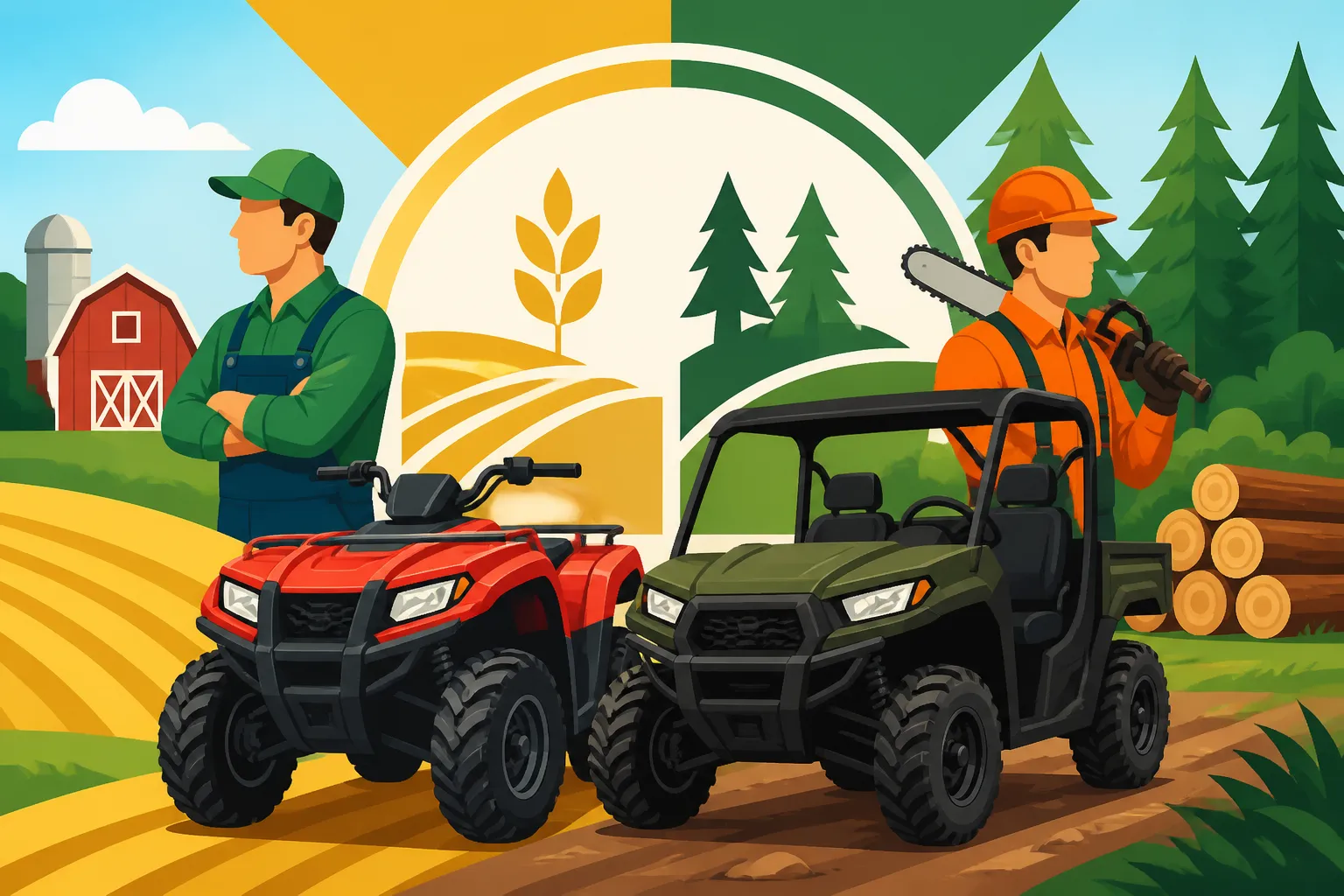
Now, let's get to the good stuff – those specific situations where the rules bend a little for the folks working our land. Nova Scotia recognizes that not every ATV or UTV is a recreational toy; many are essential tools for farmers and those in the forestry industry. Because of this, certain machines used strictly for these purposes might be exempt from the usual registration requirements.
What Qualifies as "Farmer Use" for Exemption
If your ATV or UTV is an integral part of your farming operation, you might be breathing a sigh of relief. The exemption for farmer use generally applies to machines that are being utilized directly for agricultural purposes. This isn't just about tilling fields, though that certainly counts! We’re talking about tasks like hauling feed to livestock, carrying tools for fence repair, checking on crops, or moving equipment around your fields. The key here is that the machine's primary and consistent use must be for the daily, necessary operations of your farm. It’s about productivity, not play. If your machine is solely dedicated to keeping your farm running smoothly, it's likely a candidate for this exemption. This exemption is really designed to support the backbone of our rural economy, allowing farmers to use their essential equipment without unnecessary administrative burden.
What Qualifies as "Forestry Use" for Exemption
Similarly, for those of you working in the woods, managing woodlots, or involved in timber harvesting, there's a specific exemption for forestry use. This covers a range of activities where your ATV or UTV is indispensable. Picture using your machine to haul cut firewood, transport tools for tree planting, survey your woodlot boundaries, clear brush, or even drag small logs. Just like with farming, the critical factor is that the machine is being used directly in connection with your forestry operation. It’s about the practical application of the machine to manage, harvest, or maintain your forest resources. If your quad is a workhorse in your woodlot, helping you with the demanding tasks of sustainable forestry, then this exemption is likely applicable to your situation.
The Critical "Own-Property" or "Directly Connected" Clause
Here’s where it gets really important to pay close attention. These exemptions aren't a free pass to ride anywhere without registration. The core principle underpinning both the farmer and forestry exemptions is that the machine must be used on your own land or on land that is directly connected to your operations. This often means your own farm or woodlot, or perhaps land that you lease or manage for agricultural or forestry purposes.
It’s crucial to understand that if you take your "exempt" farm quad off your property to go recreational trail riding with your buddies, that exemption immediately goes out the window. The moment that machine leaves its designated work environment for recreational purposes, it typically becomes subject to standard registration rules. An officer can stop you and, if you're not registered, issue a fine. The intent of these exemptions is strictly for work use on specific properties, not for general recreational access. This is why it’s so vital to know the boundaries of your operations and when your machine crosses the line from work tool to recreational vehicle. For more detailed information on these specific conditions, look into [Nova Scotia Own-Property Exemption], [When Farm Work Exempts a Machine From Registration], and [When Forestry Work Exempts a Machine From Registration].
Navigating the Specifics of Exempted Operations
So, you're using your machine for farm or forestry work – fantastic! But what does that really look like in the day-to-day, and what happens if your usage blurs the lines a little? Let's get into the nitty-gritty of what's generally covered and what might push you outside the exemption.
Farm Work Beyond Tilling
When we think of "farm work," many immediately picture tractors and plows. But for ATVs and UTVs, the scope of their utility on a farm is much broader, and these are the kinds of uses that typically qualify for the exemption. Imagine a brisk morning in the Annapolis Valley, and you're hopping on your quad to check on the sheep grazing in a far pasture. Or perhaps you're hauling a small trailer full of fence posts to mend a section of perimeter fencing that was damaged in the last storm. Maybe it's winter, and you're using your side-by-side to spread hay for cattle, or to quickly access a remote pump house to ensure water lines aren't freezing. These are all practical, necessary tasks directly related to the operation and maintenance of a farm. They save time, reduce manual labour, and are integral to modern agricultural practices. The exemption recognizes this broad utility, extending beyond just the traditional "field work."
Forestry Tasks Beyond Felling Trees
Similarly, forestry work with an OHV goes far beyond just cutting down trees. Think about the extensive tasks involved in managing a sustainable woodlot in Guysborough County or along the South Shore. You might be using your ATV to scout for pest infestations, check on replanted saplings, or even transport survey equipment to mark property lines. Hauling a chainsaw and fuel to a specific cutting block, dragging out smaller, manageable logs for firewood, or clearing overgrown access trails on your property are all common and valid uses. Perhaps you're moving supplies to a remote hunting blind on your own land, which is part of your overall land management strategy. The exemption acknowledges these varied and often physically demanding tasks, allowing you to use your machine as a vital tool in forest management, without the extra step of provincial registration. It’s about facilitating responsible land stewardship and resource extraction.
What Happens If You Deviate from Exempted Use
This is where many people get tripped up, and it's absolutely crucial to understand. The exemptions for farmer and forestry use are precisely that: for farmer and forestry use. They are not a blanket exemption from registration for owning a machine. Let's say you've spent the morning hauling feed on your farm, and in the afternoon, you decide to join your friends on a public recreational trail system, still riding that same "exempt" quad. The moment you leave your property for that recreational ride, your machine is no longer operating under the conditions of the exemption.
At that point, it typically needs to be registered just like any other recreational OHV. If you're stopped by an officer on the trail, explaining that you used it for farm work earlier that day won't negate the need for registration during its recreational use. The exemption is use-specific and location-specific. It’s important to have separate machines or ensure your work machine is also registered if you plan to use it for both work and play, especially off your own land. Understanding this distinction can save you a significant headache and potential fine down the road.
Documentation and Proof for Exemptions
Even if you're certain your machine qualifies for an exemption, you can't just assume everyone else knows that. When you're out there working, whether it's on your farm in the Annapolis Valley or a woodlot in Cumberland, there's always a chance you might encounter an officer who needs to verify your status. Being prepared with the right documentation is key to a smooth interaction.
Why You Still Need to Prove Your Case
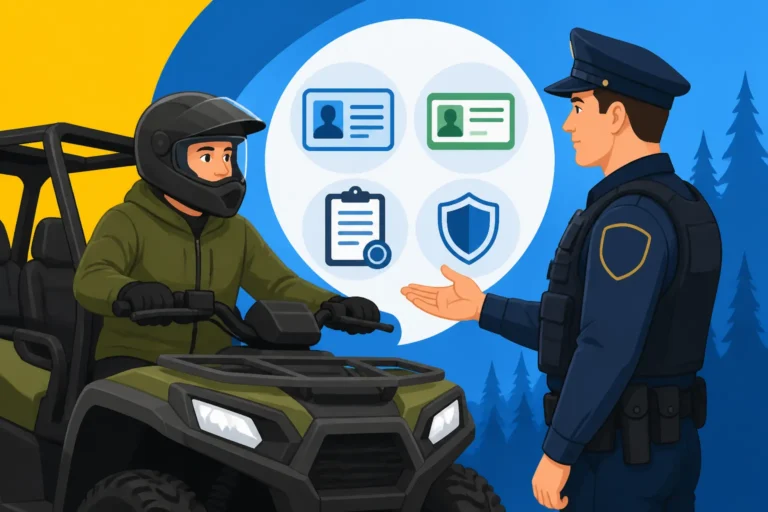
It’s easy to think, "It's my land, I'm working, so I don't need any papers." But from an enforcement perspective, an unregistered OHV looks like an unregistered OHV until proven otherwise. An officer doesn't automatically know your machine is being used for agricultural or forestry purposes on your own land. They need to confirm that you indeed meet the criteria for the exemption. This isn't about distrust; it's about proper enforcement of the regulations and ensuring fairness across all riders. Imagine if anyone could just claim "farm use" without proof – the system would quickly fall apart. Therefore, while you might be exempt from registration, you are not exempt from demonstrating why you are exempt if asked.
Essential Documents to Keep Handy
So, what should you keep with you? At a minimum, you should have proof of ownership for your machine. This could be your original bill of sale. Even though you're not registering it, having a solid record of purchase is always wise. More importantly, you'll want to have documentation that clearly shows you own or manage the land where you're operating the machine for work purposes. This might include:
- Property Deeds or Land Titles: Evidence of your ownership of the farm or woodlot.
- Lease Agreements: If you're operating on leased land for agricultural or forestry purposes.
- Farm Business Registration or Forestry Management Plans: These can further solidify the legitimacy of your work activities.
- A written declaration of use: Sometimes, simply having a clear, concise document stating the machine's primary purpose and location of use can be helpful. For creating formal documents like a bill of sale for internal records or a declaration, tools like LawDepot can provide templates that help ensure clarity and professionalism.
The goal is to provide clear, undeniable evidence to an officer that your operation and machine use fall squarely within the exempted categories. Think of it as your "proof of exemption" kit.
The Role of a Bill of Sale and Purchase Documents
Even when an OHV doesn't require registration due to an exemption, the bill of sale remains a fundamentally important document. It's your official record of ownership, proving that you legally acquired the machine. This is crucial for several reasons:
- Proof of Ownership: If your machine is ever stolen, or if there's any dispute about who owns it, the bill of sale is your primary evidence.
- Original Acquisition: It ties you to the machine from the very beginning.
- Tax Documentation: While you might not be paying registration fees, HST would have been collected at the point of sale, and the bill of sale reflects this.
So, even if you never visit Access Nova Scotia for registration, keep that original bill of sale in a safe place. It’s a vital piece of your machine's history and your legal standing. For further guidance on paperwork related to used machines, you can look into [Nova Scotia Used Machine Paperwork].
Important Considerations Beyond Registration
It's tempting to think that once you've confirmed your machine is exempt from registration, you're all clear. But hold your horses! There's more to responsible OHV ownership in Nova Scotia than just registration. Even for those using their machines for essential farm or forestry tasks, other regulations still apply.
Insurance is Still Non-Negotiable
This is a big one, and it's a mistake many new owners (and even some seasoned ones) make: assuming that because their farm or forestry machine doesn't need to be registered, it also doesn't need to be insured. That's generally not the case. In Nova Scotia, liability insurance is typically a mandatory requirement for operating an OHV, even if it's on your own land or for work purposes. This insurance protects you financially in case your machine causes injury or property damage to someone else.
Imagine a scenario where your farm quad, while performing a task, accidentally rolls into a neighbour's fence or causes an injury to a hired hand. Without proper liability insurance, you could be personally responsible for significant damages and legal costs. The exemption from registration doesn't exempt you from this critical financial protection. Always, always confirm your insurance coverage. Your home or farm insurance policy might offer some coverage, but it's essential to verify its specifics for OHV use. For more on this, check out [Nova Scotia Insurance Requirements for Riders]. It's a small annual cost for significant peace of mind.
Safety Training and Age Requirements
Just because you're using a machine for work doesn't mean safety goes out the window. Nova Scotia has specific rules regarding safety training and the age of OHV operators, and these often apply regardless of whether the machine is registered or exempt for work use. For instance, there are requirements for younger riders, including minimum age limits and the need for certified safety training. Even if a 16-year-old is helping out on the farm, they might still need to meet these training requirements if they're operating the OHV.
These rules are in place to prevent accidents and ensure everyone operating these powerful machines has a baseline understanding of safe operation. You wouldn't let an untrained person operate a tractor, and an ATV or UTV requires similar respect and knowledge. Familiarize yourself with these guidelines, especially if multiple people, including younger family members or employees, will be using the machine. You can find more information about these rules in [Nova Scotia Safety Training at 16] and [Nova Scotia Rules for Riders Under 16]. Safety first, always!
Road Trail Rules and Exemptions
Another area of potential confusion arises when your farm or woodlot work requires you to cross a public road or even ride a short distance along a shoulder to get from one part of your property to another. Nova Scotia has specific "road trail" legislation that governs how and where OHVs can interact with public roads. While the general rule is that registered and insured OHVs can use designated road trails under strict conditions, your farm or forestry exemption doesn't automatically grant you carte blanche on public roads.
There might be specific provisions for agricultural or forestry vehicles to cross roads or travel short distances for operational purposes, but these are often distinct from the recreational road trail rules. It's vital to understand these nuances. You’ll likely still need a valid driver’s license, and you must adhere to all traffic laws, including speed limits and signaling. Don't assume your "work exemption" means you can ignore the rules of the road. Consult resources like [Nova Scotia Road Trails Act Explained] and [Nova Scotia Road Trail Rules Explained] to ensure you're operating legally when your work takes you near or across public thoroughfares.
Common Misconceptions and Hypothetical Scenarios
Even with all the rules laid out, there are still plenty of grey areas and misunderstandings that crop up regarding OHV exemptions. Let's tackle some of the most common myths and walk through a few scenarios that might sound familiar.
"It's My Land, So I Don't Need Anything"
This is perhaps the biggest and most dangerous misconception. While it's true that the farmer and forestry exemptions primarily apply to machines used on your own land, the phrase "I don't need anything" is almost never true. As we've discussed, you absolutely still need insurance. Furthermore, if you or anyone operating the machine is under a certain age, safety training is usually a requirement. You also need to ensure the machine itself is in safe working order, with functioning brakes and lights (especially if you're ever near a public road at dusk).
So, while you might be exempt from provincial registration fees, you are definitely not exempt from the broader responsibilities of safe and insured OHV operation. An officer might not be able to ticket you for lack of registration if you're truly only on your own land for work, but they certainly can if you lack insurance, or if an underage operator is untrained, or if your machine is unsafe. Always be prepared to prove ownership, demonstrate your work purpose, and ensure all other safety and insurance boxes are ticked.
Borrowing or Lending an Exempt Machine
Here's a common hypothetical: you're a farmer in the Valley, and your neighbour, also a farmer, asks to borrow your exempt quad to help them with a task on their adjoining property. Or maybe your son, home from college, wants to take the farm quad out for a spin on the local trails. What happens then?
- Lending for Work on Neighbouring Property: If your neighbour is using your machine strictly for their agricultural or forestry operations on their qualifying land, and you have proof that they are engaged in such work, the exemption might still apply. However, this gets tricky. It's often safer for the machine to be registered if it's regularly leaving your specific property. If the machine were to be involved in an incident, you, as the owner, would need to prove the exemption conditions were still met. Clear written agreements for lending, especially for work purposes, can be useful.
- Lending for Recreational Use: If your son takes your exempt farm quad out on public trails for recreation, it immediately loses its exemption status. At that point, the machine would need to be registered and insured for recreational use, and your son would need to meet all operator requirements (age, training, license). Failure to do so could result in fines for both him and potentially you, as the owner. The key takeaway: the exemption is tied to use and location, not just the machine itself.
When a Machine Changes Use
Let's consider the scenario where a machine starts its life purely as a workhorse, but its role evolves over time. Perhaps you bought a rugged UTV primarily for hauling firewood from your woodlot. For years, it served that purpose faithfully. Now, you’ve retired, sold off most of your woodlot, and you want to use that same UTV to explore the scenic trails around Mahone Bay with your grandchildren.
The moment that UTV transitions from being solely used for forestry work on your private land to being used for recreational purposes on public trails, its exemption status changes. You would then need to go through the full registration process at Access Nova Scotia, pay the required fees, and ensure it meets all the requirements for a recreational OHV, including current insurance. You cannot simply rely on its past "work exemption" for its new recreational life. The machine’s current intended use dictates its registration status. This means paying attention to the spirit of the exemption, which is to facilitate agricultural and forestry operations, not to provide a loophole for recreational riding without registration.
Disclaimer
This article is for general informational purposes only and does not constitute professional advice. Laws, prices and regulations vary by location and change over time. Consult a qualified professional for guidance on your specific situation.