Why the Registry Collects a Trail Levy
Many Nova Scotia ATV and UTV owners find themselves scratching their heads when they look at their registration paperwork, seeing different fees and wondering exactly what each one covers. It's easy to feel like you're just paying into a black hole of bureaucracy, especially when one of those charges is specifically called a "trail levy." This guide is here to unravel the mystery of the Nova Scotia trail levy, explaining what it is, why it's collected, and how it directly benefits the riding community across our beautiful province.
Deconstructing the Nova Scotia Trail Levy
When you go to register your off-highway vehicle (OHV) in Nova Scotia, whether it's a nimble ATV or a rugged side-by-side, you're presented with a few different charges. It’s not just one lump sum, and understanding what each part contributes to can feel like decoding a secret message. The trail levy is one of those distinct charges, and it has a very specific and important role in the provincial OHV ecosystem. It’s often confused with the annual vehicle permit fee or the one-time certificate of registration fee, but it’s a separate contribution designed for a particular purpose.
The Basics: What is the Trail Levy?
At its heart, the Nova Scotia trail levy is a dedicated fee collected at the time of your OHV registration that is specifically earmarked for the development, maintenance, and enhancement of the province's extensive off-highway trail network. Think of it as your direct investment in the very paths and corridors you love to ride. Unlike a general tax that goes into provincial coffers for a wide array of services, this levy is ring-fenced, meaning it can only be used for purposes directly related to OHV trails. This targeted approach ensures that the funds you contribute as an OHV owner come back to you in the form of better riding experiences. It's designed to be a sustainable funding mechanism that grows with the riding community.
When you purchase a new machine from a dealer, or transfer ownership of a used one, this levy becomes part of the initial registration costs. It's often bundled into the overall figures you see at an Access Nova Scotia counter or service centre. You might hear it referred to as the "OHV Infrastructure Fund contribution" or simply the "trail fee." Whatever the exact terminology, its purpose remains consistent: to build and maintain the trails that are essential for the Nova Scotia ATV and UTV community. It's about ensuring there's a safe, legal, and enjoyable place to ride your machine, whether you're out for a leisurely scenic tour or heading out for some serious trail exploration.
Differentiating the Levy from Other Fees
It’s easy to get lost in the numbers when you're looking at your total registration costs. The Nova Scotia trail levy is distinct from other mandatory fees you'll encounter. First, there's the [Nova Scotia Certificate of Registration at $39.80]. This is generally a one-time fee paid when you first put a machine on the books in Nova Scotia. It essentially creates the permanent record of your OHV's existence within the provincial registry. Think of it as the foundational document for your machine's identity.
Then, there's the [Nova Scotia Vehicle Permit at $13.20]. This is your annual operational permit, much like a car's yearly registration sticker. This permit needs to be renewed annually to keep your machine legal for riding on designated trails and to cross roads where permitted. The funds from this permit go towards the general administration of the OHV program and other related governmental costs. So, while both the certificate fee and the vehicle permit are crucial for legal operation, neither of them is specifically designed to fund the physical trails themselves.
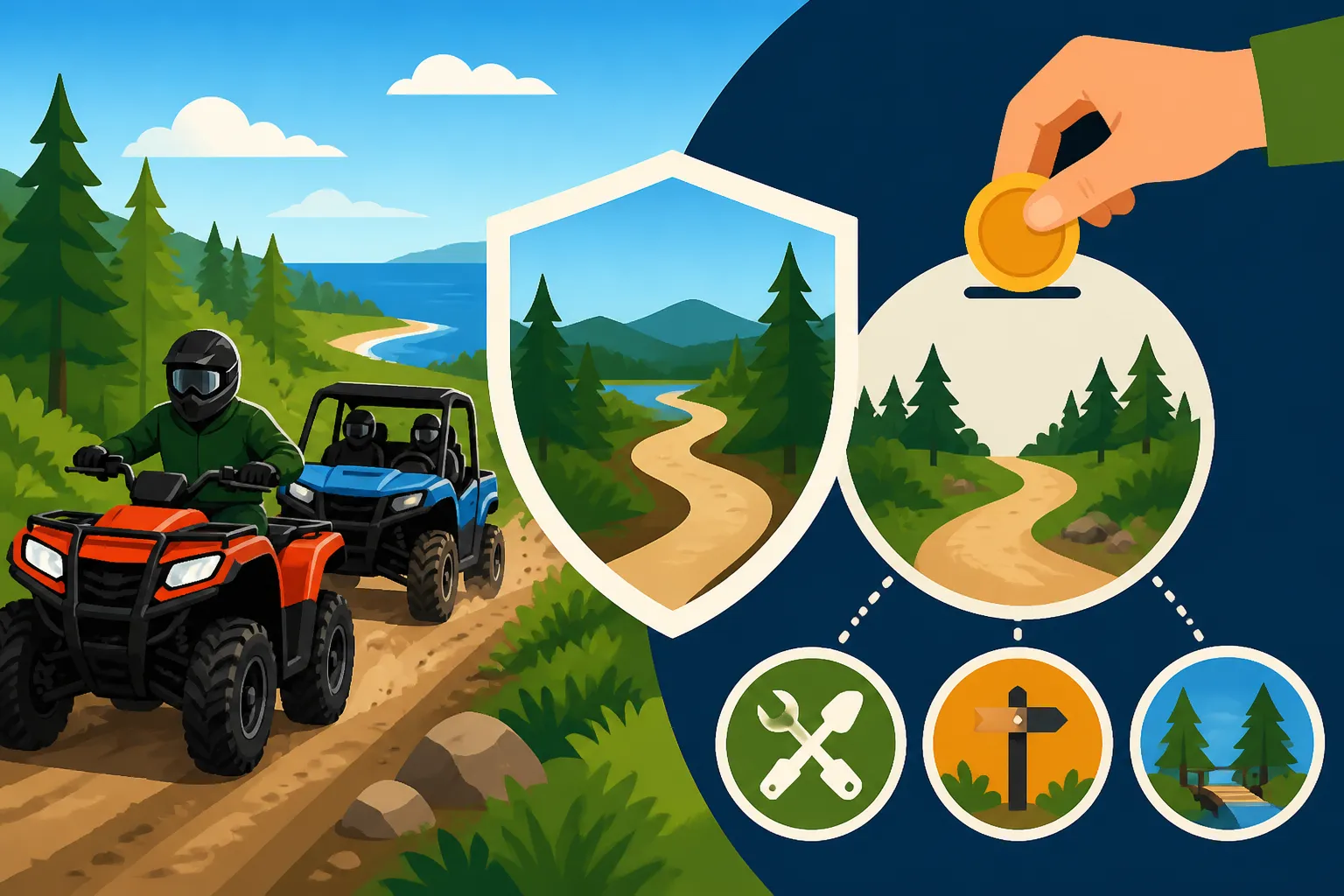
The trail levy, on the other hand, is the specific charge dedicated solely to trail infrastructure. It's the portion of your payment that directly contributes to the digging of new trails, the repair of washouts, the maintenance of bridges, and the clearing of overgrown paths. When you see a well-maintained section of trail, or a new bridge spanning a brook, it's highly likely that the trail levy you and other riders have paid has contributed to making that possible. Understanding this distinction is key to appreciating where your money goes and why each fee plays a necessary role in the overall framework of responsible OHV ownership in Nova Scotia.
The Core Purpose: Why the Levy Exists
The existence of a dedicated trail levy isn't about creating extra hoops for riders to jump through; it's a strategic and necessary measure to ensure the long-term viability and quality of off-highway vehicle riding in Nova Scotia. Without a dedicated funding stream, maintaining and expanding a province-wide trail network would be an impossible task, relying solely on volunteer effort or unpredictable government grants. The levy ensures a consistent, predictable source of funding directly tied to the user base – us, the riders. This "user-pay" model is a common and effective way to fund recreational infrastructure across North America.
Investing in Our Off-Highway Vehicle Infrastructure
Imagine trying to keep an 8,000-kilometre trail network in pristine condition with just bake sales and volunteer hours. It’s simply not feasible. Trails require constant attention: grading to smooth out ruts, clearing fallen trees, repairing washouts after heavy rains or spring thaws, and building or maintaining bridges and culverts. All of this requires equipment, materials, and often, skilled labour. The Nova Scotia trail levy provides the financial backbone for these essential tasks. It’s an investment in infrastructure, just like funding for roads or public parks, but specifically for our OHV community.
This infrastructure investment goes beyond simple maintenance. It also supports the development of new trails, connecting existing segments and expanding the overall network. A more connected network means longer rides, more diverse scenery, and easier access to communities for fuel, food, and lodging. This, in turn, boosts local economies in rural areas that are often passed over by other forms of tourism. For instance, the funds might support a club in Cape Breton looking to extend a scenic coastal trail, or help a group in the Annapolis Valley secure the heavy equipment needed to reroute a section of trail around sensitive wetlands. The levy ensures that these ambitious projects, which directly benefit riders, have a dedicated source of funding to become a reality. It's about making sure that the trails you ride today, and the ones you dream of riding tomorrow, are there for you.
Ensuring Sustainability for Future Generations of Riders
The trail levy isn't just about addressing immediate needs; it's fundamentally about sustainability. Our province is blessed with incredible natural beauty, from rugged coastlines to dense forests, and our trails allow us to explore much of it. To ensure that these opportunities remain for future generations, responsible management and ongoing investment are paramount. Environmental considerations, land access agreements, and safety standards all come with costs, and the levy helps cover these. It supports efforts to manage trails in an environmentally conscious way, preventing erosion, protecting wildlife habitats, and minimizing impact on sensitive areas.
Furthermore, the levy contributes to the long-term relationships between OHV associations, landowners, and government bodies. Maintaining a positive rapport with private landowners, whose properties many trails traverse, is critical. Part of this involves demonstrating a commitment to responsible trail management and securing resources for any necessary land stewardship. Without the financial backing from the levy, these relationships could strain, potentially leading to trail closures. By providing a stable funding source, the trail levy helps to secure and even expand access to trails, fostering a positive image for the OHV community as responsible stewards of the land. It means that children and grandchildren will also have the opportunity to experience the thrill of riding Nova Scotia’s beautiful trails for years to come.
Tracing Your Contribution: Where the Money Goes
Understanding that you're paying a trail levy is one thing, but knowing exactly where that money lands and how it's utilized can provide a greater sense of confidence and ownership. This isn't money that disappears into a bureaucratic void; it's funneled into a specific fund designed to directly benefit the OHV community and the infrastructure it relies upon. The transparency of this process is important for riders to see the value in their contribution.
The Nova Scotia OHV Infrastructure Fund at Work
The trail levy you pay when registering your ATV or UTV is directed straight into the [Nova Scotia's OHV Infrastructure Fund]. This fund is a dedicated pool of money managed by the provincial government, specifically mandated to support the development, enhancement, and maintenance of the provincial off-highway vehicle trail system. It acts as the central reservoir for all trail levy contributions. Funds are allocated from here to various projects and initiatives that align with its core purpose.
Typically, the fund supports projects undertaken by organized ATV clubs and associations across the province, such as ATV Association of Nova Scotia (ATVANS) member clubs. These clubs are the backbone of the trail system, often comprising dedicated volunteers who do the physical work of building and maintaining trails. When a club needs to purchase lumber for a bridge, rent an excavator for a difficult section, or buy signage to improve safety and navigation, they can apply for grants from the OHV Infrastructure Fund. This direct channel ensures that the money collected from riders is invested back into the trails by the very people who know them best – the local riding communities themselves. It's a system designed to empower local initiatives and respond to the specific needs of different regions.
Tangible Impacts: From Maintenance to New Trail Development
The impact of the OHV Infrastructure Fund is visible on the ground, literally. The money helps transform ambitious plans into tangible improvements for riders. For example, a club might identify a critical section of trail that consistently floods in the spring, making it impassable. Funds from the levy could be used to install new culverts, raise the trail bed, or even reroute the section entirely to higher ground. This isn’t just about making the trail passable; it's about making it safer and more resilient to weather events, ensuring year-round access where possible.
Beyond maintenance, the fund actively facilitates new trail development. Picture an old rail line that has fallen into disuse but has the potential to connect two major riding areas. Developing such a corridor involves significant work: clearing vegetation, grading the surface, and securing land use agreements. The OHV Infrastructure Fund is crucial for financing these types of projects, allowing Nova Scotia to expand its network and offer new riding opportunities. You might see new kiosks at trailheads, improved signage along routes, or upgraded staging areas – all direct results of the levy. These enhancements make the riding experience more enjoyable, safer, and help to further establish Nova Scotia as a premier destination for off-highway vehicle enthusiasts. Every dollar contributed through the levy has a ripple effect, improving the quality and accessibility of trails right across the province.
Who Pays, and Who Gets a Pass? Understanding Exemptions
While the trail levy is a cornerstone of funding for Nova Scotia's OHV trails, it's not universally applied to every single off-highway vehicle owner in the province. Like many regulations, there are specific conditions under which the levy is collected and certain situations where an exemption might apply. Understanding these nuances is important, as it helps clarify why some riders contribute while others may not, and it ensures you're prepared for the costs associated with your machine.
Standard Application: Most Riders Contribute
For the vast majority of ATV and UTV owners in Nova Scotia, the trail levy is a standard part of the registration process. If you own an off-highway vehicle that you intend to ride on managed trails, participate in organized club events, or simply use for recreational purposes, you will typically pay the levy. This applies whether you're purchasing a brand new machine from a dealer, buying a used quad through a private sale, or even [Registering a Side-by-Side in Nova Scotia]. The levy is tied to the machine's registration, not specifically to whether you join a club or buy a separate trail permit from ATVANS.
When you complete your registration at an Access Nova Scotia office, or if your dealer handles the initial registration for a new machine, the trail levy will be included in the total fees. It's an automatic part of the process for most recreational machines. This widespread application is what makes the fund so robust and effective; it gathers contributions from the broad base of OHV users, ensuring consistent support for the trail network that we all benefit from. So, unless you fall into a very specific category of exemption, you should expect to pay the trail levy when you register or renew your machine's permit.
Specific Scenarios for Exemption
While most machines contribute, there are certain defined exemptions where the trail levy does not apply. These exemptions are typically for machines used exclusively for specific non-recreational purposes. One common exemption is for machines used solely for farming purposes on agricultural land. A farmer using an ATV to check fences, move feed, or herd livestock on their own property, and not venturing onto public trails, might be exempt. Similarly, machines used exclusively for forestry operations on private woodlots, such as hauling logs or maintaining forest roads, can also fall under this category. [Nova Scotia Farmer and Forestry Exemptions] exist to ensure that essential working vehicles are not unduly burdened by recreational fees.
Another scenario where the levy might not apply is for certain commercial operations or institutional uses. For example, a golf course operator using a UTV strictly for course maintenance and not for recreational riding off the property would likely be exempt. [Nova Scotia Golf Course Operator Exemption] ensures these specialized uses are recognized. Additionally, there are provisions for [Nova Scotia Reserve Land Exemption] for machines used exclusively within the boundaries of a First Nation Reserve. These exemptions are not automatic; specific criteria must be met, and documentation or declarations are usually required at the time of registration to prove eligibility. It’s always best to clarify your situation with Access Nova Scotia or refer to the official regulations, perhaps even using a resource like LawDepot to understand the necessary legal declarations if you believe you qualify for an exemption, to ensure you meet all requirements.
The Rider's Return: Benefits of the Levy
Sometimes, when we pay fees, it feels like money goes into a black hole with no visible return. The Nova Scotia trail levy is different. While it's a mandatory contribution, its benefits are directly observable and experienced by the riding community. This isn't just about paying a fee; it's about investing in the quality, safety, and future of off-highway vehicle riding across the province. The levy effectively translates your contribution into a better experience every time you hit the trail.
Improved Safety and Accessibility on Trails
One of the most significant benefits of the trail levy is the direct impact on trail safety and accessibility. When trails are properly maintained, hazards are reduced. Think about clearing fallen trees, ensuring bridges are structurally sound, or installing proper signage for directions and warnings. These are all crucial for preventing accidents and ensuring riders can navigate the network with confidence. The levy funds allow clubs to conduct regular inspections and maintenance, addressing potential dangers before they become serious issues. This means fewer unexpected obstacles, clearer paths, and safer crossings, all contributing to a more secure riding environment for everyone.
Accessibility also sees a major boost. A well-funded trail system means more sections of trail can be maintained to a consistent standard, making them passable for a wider range of riders and machines. It can involve things like widening sections for side-by-sides, ensuring sufficient turnaround points, or making trailheads more accommodating with adequate parking and easy access. Furthermore, the fund supports initiatives like mapping and GPS data creation, which enhance navigation and make it easier for riders to plan their routes and explore new areas. When a trail is clearly marked and well-maintained, it encourages more people to get out and enjoy our beautiful backcountry, confident in their journey.
Fostering a Robust and Connected Trail Network
The trail levy is instrumental in fostering a truly robust and interconnected trail network throughout Nova Scotia. The province boasts thousands of kilometres of trails, but connectivity is key to maximizing their potential. Funds from the levy allow for strategic development projects that link disparate trail segments, creating longer, more engaging routes that can span multiple counties. Imagine being able to ride from one picturesque town to another, stopping for gas or a meal, all thanks to a continuous trail. This kind of network not only enhances the recreational experience but also supports local businesses in rural communities.
This interconnectedness also strengthens the overall OHV community. When trails link up, it becomes easier for different clubs to collaborate, share resources, and even organize larger, province-wide events. A well-funded network attracts new riders and helps retain existing ones by continuously offering new challenges and scenic beauty. It supports the volunteer efforts of countless individuals by providing them with the resources they need to make a tangible difference. Ultimately, the levy helps to build a sustainable and thriving OHV culture in Nova Scotia, ensuring that the passion for riding continues to grow and that our trails remain some of the best in the country. [Nova Scotia's 8,000 Kilometres of Trail] are a testament to this commitment.
Navigating the Levy During Registration
Understanding the "why" and "where" of the trail levy is one thing, but knowing the practicalities of how it impacts you during the actual registration process is another. It's a straightforward process, but being prepared can save you time and ensure a smooth experience. The trail levy is seamlessly integrated into the existing OHV registration system at Access Nova Scotia.
What to Expect When You Register at Access Nova Scotia
When you head to an [Registry Counter or Service Centre: Where to Register] your ATV or UTV, the staff at Access Nova Scotia will guide you through the necessary paperwork. Whether it's your first time registering a machine, a [Nova Scotia Registration After a Private Sale], or you're simply renewing your annual permit, the trail levy will be part of the calculation for your total fees. You won't typically see it as a separate line item to be paid independently; rather, it's rolled into the overall registration charges. For instance, when you pay your annual fees, the cost for the vehicle permit and the annual infrastructure fund contribution (the levy) are combined.
It's helpful to come prepared with all your necessary documentation, such as your bill of sale, previous registration papers if applicable, and proof of identification. The staff can clarify any questions you have about the fees, including the breakdown of the trail levy. They are there to ensure your machine is legally registered and that all applicable charges are collected. This process is designed to be efficient, and while it might seem like a lot of paperwork and fees at first glance, each component, including the trail levy, serves an important purpose in maintaining the integrity and accessibility of OHV riding in Nova Scotia. You can always call the OHV line for help if you have questions before visiting in person.
Keeping Your Documentation Clear for Smooth Sailing
Accuracy in your documentation is paramount when dealing with any vehicle registration, and your OHV is no exception. When you pay the trail levy, it's recorded as part of your registration. It's crucial to keep your registration certificate and vehicle permit updated and accessible, as these are the documents that prove your machine is legally permitted to operate and that you have contributed to the necessary funds. An officer might ask to see your papers while you're out riding, and having everything in order can prevent unnecessary delays or fines. [Nova Scotia Registration Paperwork Checklist] can be incredibly helpful here.
If you ever sell your machine, the fact that you consistently paid the trail levy, along with maintaining proper registration, is part of demonstrating responsible ownership. This can be an asset during a private sale, as it assures the new owner that the machine has a clean history. When drafting a bill of sale for a private transaction, tools like LawDepot can provide templates that ensure all the necessary details, including purchase price and any declaration of tax paid, are clearly documented. While the trail levy itself isn't directly transferable in the same way as a vehicle permit might be, the continuous payment reflects a history of compliant ownership. Always double-check your paperwork before leaving Access Nova Scotia to ensure all details are correct, and keep copies for your own records, just in case.
Here's a quick overview of the main fees associated with registering an OHV in Nova Scotia, highlighting the trail levy's distinct role:
| Fee Type | Purpose | Frequency | How it Contributes to Trails |
|---|---|---|---|
| Certificate of Registration | Establishes permanent record of your OHV. | One-time | Indirectly, by formalizing OHV ownership within the system. |
| Vehicle Permit | Allows annual operation of your OHV on designated trails and crossings. | Annually | Indirectly, by funding general OHV program administration. |
| Trail Levy | Dedicated to the OHV Infrastructure Fund for trail maintenance/development. | Annually | Directly funds trail building, maintenance, and expansion. |
| HST on Purchase | Provincial and federal sales tax on the machine's purchase price. | One-time | No direct contribution to trails; a general tax. |
| Trail Permit (from ATVANS) | Membership fee for access to ATVANS maintained trails and club benefits. | Annually | Directly supports club-specific trail work and liability coverage. |
The One Fee Paid Once, Another Paid Every Year
It's completely normal to feel a bit overwhelmed by all the different fees and permits involved in owning an ATV or UTV in Nova Scotia. The good news is that once you understand which fees are one-time charges and which ones are recurring, it becomes much clearer. The distinction between a "paid once" fee and an "every year" fee is crucial for budgeting and for understanding your ongoing responsibilities as an OHV owner. This knowledge helps you appreciate the continuous investment being made into the provincial trail network through your contributions.
Why the Certificate Fee Is a One-Time Charge
Let's start with the one-time fee: [Why the Certificate Fee Is a One-Time Charge]. This fee is associated with the Nova Scotia Certificate of Registration. Think of it like the birth certificate for your off-highway vehicle. Once your machine is entered into the provincial registry, that foundational record exists. You pay this fee when the machine is first registered in Nova Scotia, whether it's brand new from a dealer or you're the first person to register a previously unregistered used machine. It establishes your ownership and the machine's identity within the provincial system.
Because the Certificate of Registration is a permanent record, there's no need to pay for it again year after year, or even if you transfer ownership to someone else (though a transfer fee would apply to change the name on the record). It's a foundational administrative cost to get your machine into the system. This one-time charge contrasts sharply with the ongoing costs of maintaining a dynamic and ever-evolving trail system, which requires continuous funding, hence the annual nature of other fees. So, once you've paid that initial certificate fee, you can tick that box off your list for the lifetime of your ownership of that particular machine in Nova Scotia.
Which of Your Two Fees Renews Every Year
Now for the annual charges. When you own an OHV in Nova Scotia, you'll encounter two primary fees that require annual renewal: the Vehicle Permit and the Trail Levy. [Which of Your Two Fees Renews Every Year] is a common question, and it's essential to understand both. The Vehicle Permit is your authorization to operate the machine for the upcoming year. It's similar to the annual registration you'd get for a car. This permit confirms that your machine is legally allowed on designated trails and for specific road crossings.
Alongside the Vehicle Permit, the Nova Scotia trail levy is also an annual payment. This makes sense because the trail infrastructure itself requires continuous maintenance and ongoing investment. Trails are subject to wear and tear from weather, use, and natural events. Bridges need repairs, culverts get clogged, and new segments might need to be built. An annual levy ensures a steady and predictable stream of income for the [Nova Scotia's OHV Infrastructure Fund], allowing for consistent planning and execution of trail projects. So, when you go to renew your machine's permit each year, remember that you're not just renewing your right to ride; you're also making your yearly contribution to the physical trails that make that riding possible, ensuring they remain safe and enjoyable for all.
Disclaimer
This article is for general informational purposes only and does not constitute professional advice. Laws, prices and regulations vary by location and change over time. Consult a qualified professional for guidance on your specific situation.