Nova Scotia Insurance Proof at a Trailhead
If you’re heading to a public trail in Nova Scotia, having insurance may not be enough: you also need to carry proof with you. The practical question is what to bring, when the requirement applies, and how to avoid confusing an insurance card with registration or a trail permit. Here’s how to prepare before you ride.
When Nova Scotia riders need insurance proof
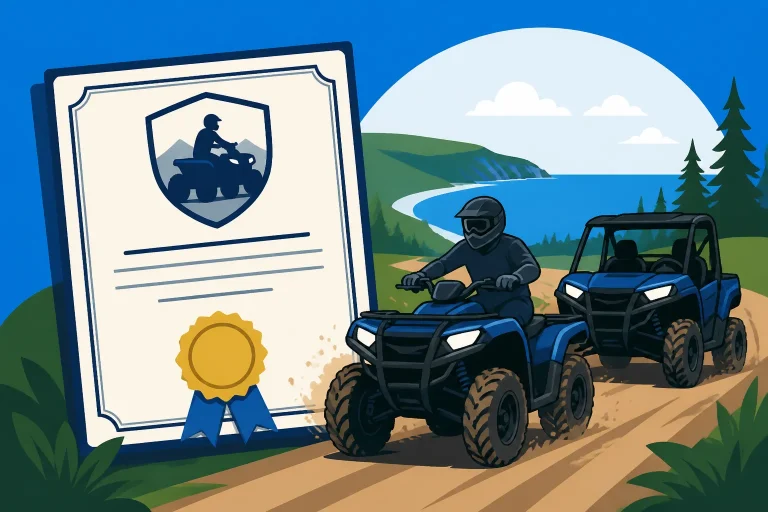
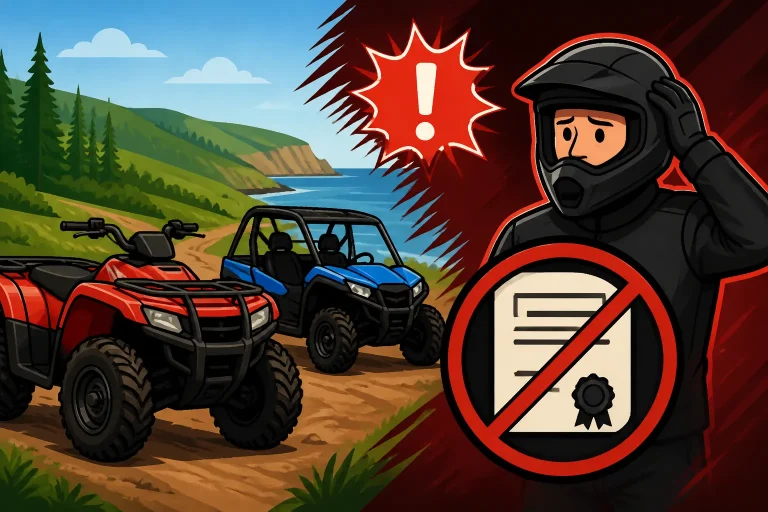
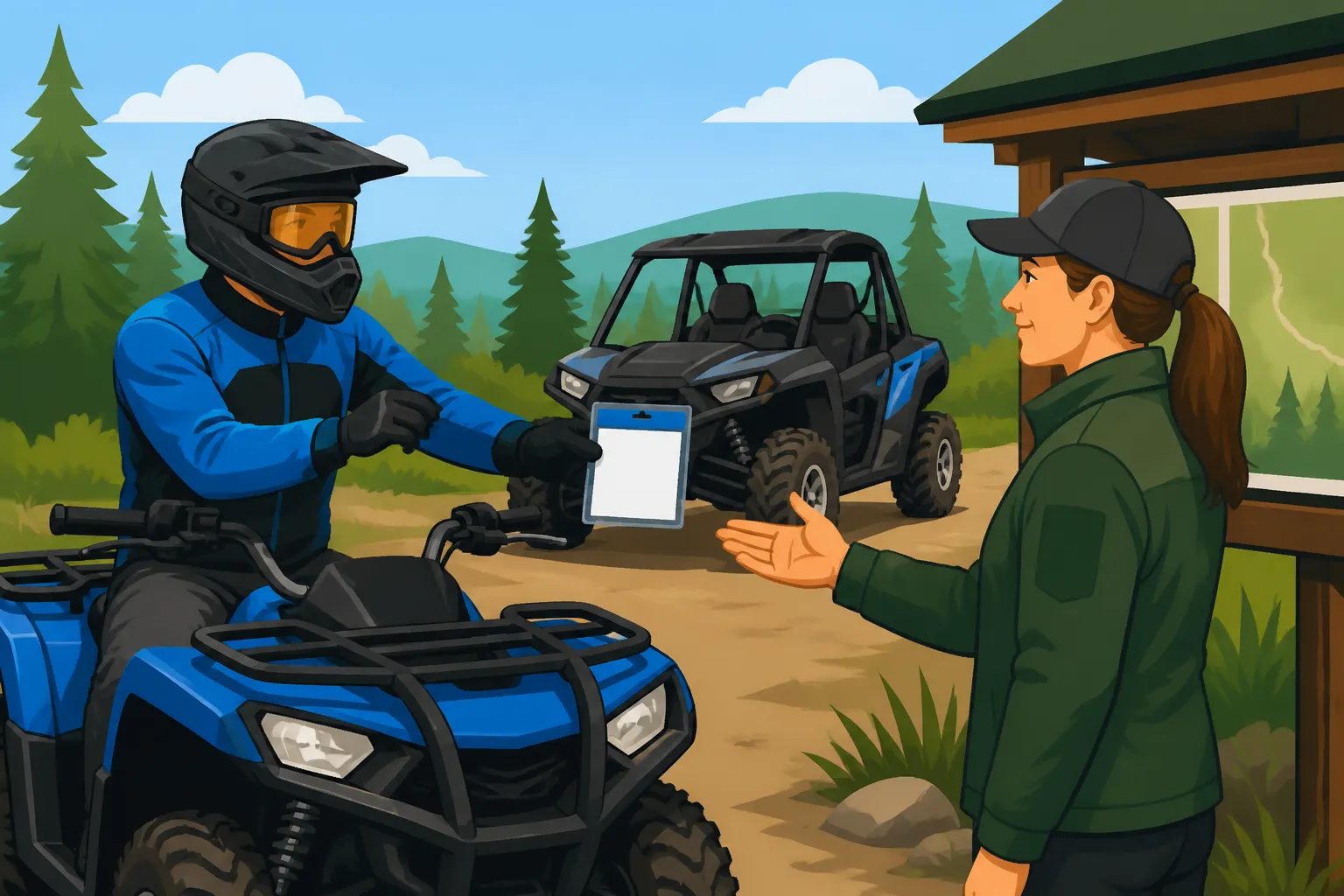
Nova Scotia residents operating an off-highway vehicle on land they do not own or occupy must carry a motor vehicle liability policy, according to Service Nova Scotia – Registry of Motor Vehicles. The requirement matters on public trails and other land outside your own or occupied property. According to the Government of Nova Scotia, the operator must carry proof of insurance, commonly called a liability card or “pink card,” and present it when operating in those places.
That means the person riding needs access to the proof while operating the vehicle. Leaving the card at home, in a truck parked far from the trail, or with someone who is not riding can leave the operator unable to show it when asked. It’s sensible to check that the card is for the machine being used and that the policy is current before setting out.
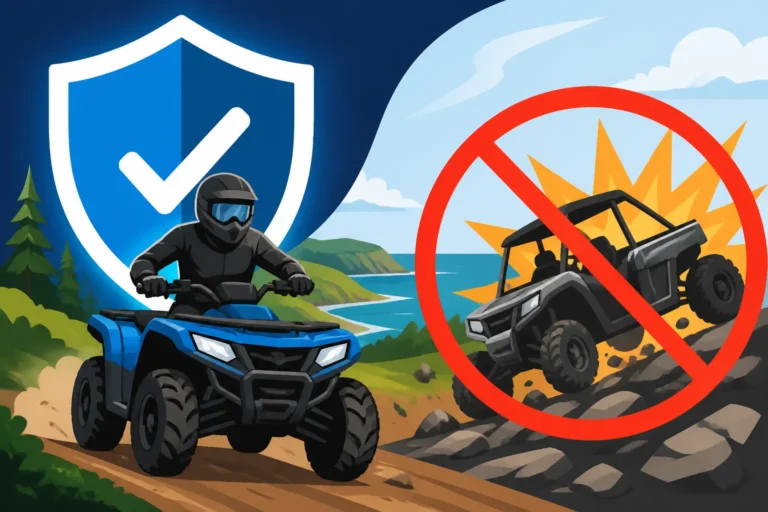
There is an important property-use exception. According to Natural Resources, owners who operate an off-highway vehicle exclusively on property they own or occupy are not required to have third-party liability coverage. That exception is limited to exclusive use on that property; it should not be treated as permission to ride elsewhere without insurance. If your route will take you off your own or occupied land, check your coverage and carry proof.
The insurance requirement is separate from registration and trail access rules. Service Nova Scotia and Municipal Relations says off-highway vehicles must be registered unless they are used exclusively on the owner’s property. The Government of Nova Scotia also identifies carrying insurance proof as a requirement when operating on land you do not own or occupy. A registration permit, trail permit, or purchase receipt does not substitute for an insurance card.
For a wider explanation of the policy requirement, see Nova Scotia Insurance Requirements for Riders and Nova Scotia’s $500,000 Liability Minimum. If you want to understand what liability coverage is for, Insurance That Covers Being Sued explains the distinction between liability protection and coverage for damage to your own machine.
| Riding situation | Insurance and proof to plan for |
|---|---|
| Riding exclusively on property you own or occupy | Natural Resources says the owner is not required to have third-party liability coverage for this use. |
| Riding on a public trail or other land you do not own or occupy | Carry a motor vehicle liability policy and the insurance card, according to Service Nova Scotia – Registry of Motor Vehicles and the Government of Nova Scotia. |
| Riding on your own property and then continuing onto other land | Do not rely on the own-property exception for the whole ride; confirm coverage and carry proof for the part off your property. |
| A different person is operating the machine | The operator should have the card with them, since the Government of Nova Scotia says the operator must carry it. |
If a boundary or access arrangement makes it unclear whether land counts as property you own or occupy, don’t guess based on where the ride starts. Confirm your situation with the insurer or an appropriate official contact before riding. A route can pass from private land onto a public trail, and the insurance obligation can change with the land being used.
What the insurance card proves and what to check
The card is evidence that the vehicle is insured. It is not the insurance policy itself, and carrying it does not create coverage if the policy has expired, been cancelled, or does not apply to the machine or use. Check the policy with your insurer if you are unsure what is covered, who may operate the vehicle, or whether a planned activity fits the policy terms.
Natural Resources lists a minimum third-party liability amount of $500,000 for an off-highway vehicle (as of November 2026). Natural Resources also lists fines for operating without third-party liability insurance: $257 for a first offense, $507 for a second offense, and $757 for a third offense. If you’re unsure whether your policy meets the requirement, ask your insurer to confirm the liability limit rather than relying on an old document or an informal description of the policy.
Before riding, check that the card is legible and matches the vehicle you intend to use. If you have more than one machine, don’t assume that a card for one automatically proves another is insured. Ask your insurer how proof is issued for each vehicle and what you should carry. This is especially worth checking after a policy change, vehicle replacement, renewal, or ownership transfer.
A simple pre-ride check can help:
- Find the current insurance card for the machine.
- Check that the vehicle information is consistent with the machine you will operate.
- Confirm with your insurer that the policy is active and meets Nova Scotia’s liability requirement.
- Put the card where the operator can carry it during the ride.
- If any detail is unclear, resolve it with the insurer before leaving.
A paper card is straightforward to carry, but it should stay readable. A small waterproof document sleeve can help protect it from rain, mud, or a wet pocket. Options such as waterproof card holders sold through Amazon may work for that practical purpose; the holder does not replace the card or make an unofficial copy acceptable. Keep the card accessible without exposing it to avoidable damage.
If you are considering carrying a photo or digital copy instead of the card, confirm directly with the relevant authority or your insurer whether that format will meet the requirement. The Government of Nova Scotia’s guidance says the operator must carry the card; it does not establish here that a phone image is an accepted substitute. The cautious approach is to carry the issued card unless an official source confirms another format is acceptable.
For more on what riders mean by a pink card and how to carry it, see Nova Scotia Pink Card Rules and Carrying a Pink Card on the Trail. If you want to review the insurance boundary between liability protection and other kinds of coverage, Nova Scotia Insurance That Does Not Cover Crashes may also help you frame questions for your insurer.
Keeping insurance proof separate from permits and registration
It’s easy to mix up the documents associated with an off-highway vehicle, especially when preparing for a first ride or buying a used machine. Each document serves a different purpose. Insurance proof shows that the vehicle has liability coverage; registration records the vehicle with the province; and a trail permit relates to access on applicable trails. Having one does not automatically satisfy the others.
According to Service Nova Scotia and Municipal Relations, off-highway vehicles must be registered unless they are used exclusively on the owner’s property. The registration requirement and the insurance requirement are distinct. A registered machine may still need an active liability policy and proof carried by the operator when used on land they do not own or occupy. Likewise, an insurance card does not establish that the vehicle is registered or that a trail permit is in place.
| Document or requirement | What it addresses | What it does not replace |
|---|---|---|
| Insurance card or pink card | Evidence that the vehicle is insured, carried by the operator when the insurance requirement applies | Registration or trail access requirements |
| Registration documents | The vehicle’s registration with the province | Insurance coverage or an insurance card |
| Trail permit | Access under the applicable trail-permit rules | Insurance or registration |
If you’re sorting out the paperwork before your first ride, Nova Scotia Registration Before Your First Ride covers the registration side, while Nova Scotia Trail Permit Cost and How to Buy a Nova Scotia Trail Permit address trail permits. For a permit-focused explanation of the insurance card itself, Insurance Proof at a Trailhead is not a separate document to obtain; the key is the proof issued for the active policy covering the machine.
Ownership changes are another point to check. Service Nova Scotia – Registry of Motor Vehicles says the owner must remove off-highway vehicle plates when the vehicle is sold. Do not assume that paperwork from the previous owner proves that a new owner’s insurance is in place. Arrange coverage with the insurer and confirm what proof should be carried by the person who will operate the vehicle.
The same caution applies if a machine is borrowed or another person in your household will ride it. Ask the insurer whether the policy covers that operator and whether the card identifies the vehicle in a way that can be matched to the machine. Avoid relying on verbal assurances when the policy documents or coverage details are uncertain.
A practical check before you reach the trailhead
Make the insurance check part of packing, not something to sort out after arriving. Confirm the policy is active, take the proof card, and make sure the operator—not just a passenger or someone at home—has it. This is a small step that can prevent a frustrating interruption and help you meet the requirement when riding away from land you own or occupy.
If you are not sure whether your planned route crosses land where the insurance requirement applies, treat that as a question to resolve before riding. Check the land access and route details, then ask your insurer about coverage for the machine and intended use. A public trail or other land you do not own or occupy should not be treated like your own property merely because you are familiar with it or have permission to be there.
Keep the different paperwork together, but don’t treat a bundle of documents as interchangeable. A registration certificate, trail permit, insurance policy summary, and insurance card may all be useful, but they answer different questions. The card is the item the operator needs to carry as proof of insurance under the Government of Nova Scotia’s guidance. If a card is missing, unreadable, or appears out of date, contact the insurer for replacement or confirmation before riding.
For a vehicle used only on property you own or occupy, Natural Resources says third-party liability coverage is not required under that stated exception. If the machine will be used beyond that property, make sure the coverage and proof are ready for the operator. When in doubt, check directly with the insurer and consult the official version of the Off-highway Vehicles Act for legal interpretation.
Sources
- Service Nova Scotia – Registry of Motor Vehicles — Service Nova Scotia – Registry of Motor Vehicles – Off-Highway (off-road) Vehicles (checked November 3, 2026)
- Natural Resources — Insurance for Off-highway Vehicles | novascotia.ca (checked November 3, 2026)
Disclaimer
This article is for general informational purposes only and does not constitute professional advice. Laws, prices and regulations vary by location and change over time. Consult a qualified professional for guidance on your specific situation.