What a Parent Signs for a 16-Year-Old Owner
It’s a tale as old as time, isn’t it? Your teenager has caught the off-highway vehicle bug. Maybe they’ve been riding dirt bikes on closed courses for years, or perhaps their friends just got ATVs, and now they desperately want one too. As a parent in Nova Scotia, you want to support their passion, but the legalities for young riders can feel like a maze, especially when it comes to ownership. This guide will clarify exactly what a parent needs to sign and what responsibilities come with allowing a 16-year-old to own an ATV or UTV in Nova Scotia.
Understanding the Legal Landscape for Young OHV Owners
Navigating the rules around off-highway vehicles (OHVs) in Nova Scotia, particularly when a minor is involved, can certainly feel a bit like slogging through a muddy trail after a heavy rain. You're trying to do everything right, but the path isn't always clearly marked. The core of the matter for young riders and ownership often comes down to age and responsibility.
The province has a clear stance: generally, you need to be 19 years old to be the registered owner of an off-highway vehicle in Nova Scotia. This is a crucial point because it's about legal capacity – the ability to enter into contracts, assume liability, and be held accountable for the machine. However, the legislation, thankfully, understands that many responsible young people are keen riders and that parents are often the facilitators of this passion. That's where the allowance for a 16-year-old owner comes in, but it's not a free pass; it comes with a very specific, and legally binding, parental endorsement. This is where the topic of [Nova Scotia Requires Owners to Be 19] becomes so important to understand in contrast to the exception.
Why Parental Consent is Crucial for Young Riders
When a 16-year-old wants to own an ATV or UTV, the provincial registry requires a parent or legal guardian to step up and take on a significant role. This isn't just a nod of approval; it's a formal declaration that shifts legal responsibility. From the province's perspective, a 16-year-old, while perhaps perfectly capable of riding, isn't yet considered mature enough to fully bear the legal weight of vehicle ownership. This includes liability in case of an accident, compliance with registration and insurance laws, and the financial implications of owning such a machine.
Without this parental consent, the 16-year-old simply cannot be the registered owner. It’s a safeguard, designed to ensure that there’s an adult legally accountable for the machine and its operator. This is why when you hear about [Nova Scotia Registration at 16 With Permission], that 'permission' is far more than just a spoken word – it's a binding commitment. It acknowledges that while your child might be the primary user and 'owner' in their eyes, you, as the parent, are the adult ultimately responsible in the eyes of the law. This responsibility extends to ensuring the machine is properly registered, insured, and operated according to all provincial regulations, whether your child is just riding around the back forty or exploring club trails.
The Nuances of Guardianship and Legal Responsibility
It's important to understand that the term "parent" here means a legal parent or guardian. This isn't something that can be delegated to an older sibling or a well-meaning relative who isn't legally responsible for the minor. The intent is to place the accountability squarely on the shoulders of the adult who has legal custody and parental authority. This distinction becomes even more important if there are complex family situations, requiring clear documentation of guardianship.
This legal framework exists to protect everyone involved: the young rider, other trail users, and even the parent themselves by clearly defining the scope of their responsibility. Without this clarity, the potential for misunderstandings or legal complications down the line increases significantly. So, while it might seem like a bit of paperwork now, it's a foundational step to ensure your young rider can enjoy their machine legally and safely, with clear adult oversight.
The Specific Document: Parental Consent Form
So, your 16-year-old has found the perfect quad, and you’re ready to move forward. The burning question is: what exactly do you have to sign? It's not just a casual note, but a formal document required by Access Nova Scotia, the provincial registry responsible for vehicle registration. This document ensures that the intent for a minor to own an OHV is clearly documented and that the legal responsibility is unequivocally accepted by a consenting adult.
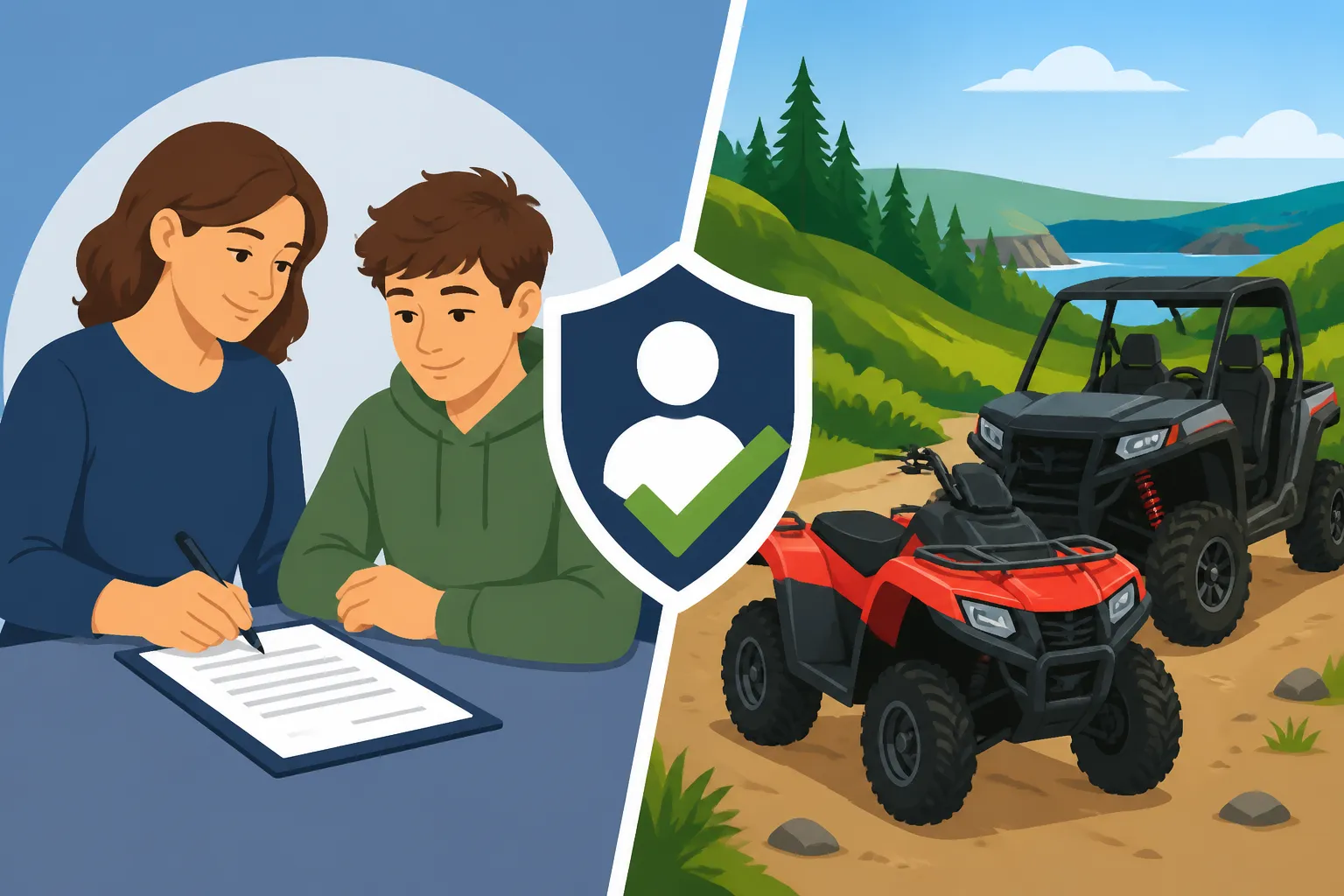
The document you'll be signing is generally referred to as a "Parental Consent for Minor to Own an Off-Highway Vehicle" form. This form is central to the process of [Owning a Machine at Sixteen With a Parent's Signature]. It's a specific administrative form that Access Nova Scotia provides, and it's designed to capture all the necessary information to legally bind the parent to the registration of the machine.
What the Consent Form Entails
When you sit down to sign this form, you're not just initialing a minor detail; you're making a serious declaration. The form will typically require specific information from both you and your child, as well as details about the OHV itself.
Here’s a breakdown of what you can expect to provide and acknowledge:
- Your Information: Full legal name, address, contact information, and your relationship to the minor (i.e., parent or legal guardian). Your signature will be witnessed, often by an Access Nova Scotia representative or another authorized individual.
- Your Child's Information: Their full legal name, date of birth, and address. This confirms they are indeed 16 years of age and the minor in question.
- Vehicle Information: Details about the ATV or UTV, including its Vehicle Identification Number (VIN), make, model, and year. This ensures the consent is tied to a specific machine.
- Declaration of Responsibility: This is the most critical part for you as the parent. By signing, you are declaring that you are the parent or legal guardian of the minor, and you consent to them owning and registering the specified OHV. More importantly, you accept full legal responsibility for the minor's operation of the OHV and for any liabilities that may arise from its ownership or use. This means that in the event of an incident, injury, or legal dispute involving the OHV, you, the signing parent, are legally on the hook.
It’s a clear and direct assumption of risk and responsibility. While online resources like LawDepot can provide general legal forms for various agreements, the Parental Consent form for OHV ownership is a specific government document that must be obtained directly from Access Nova Scotia or downloaded from their official website. You might find it helpful to review general liability waiver templates on sites like LawDepot to understand the shape of legal responsibility, but for this specific provincial requirement, you need the official form.
The Weight of Your Signature
Your signature on this document is a formal, legal undertaking. It means you are agreeing to supervise your child's use of the OHV, ensure they comply with all relevant laws, and take financial responsibility for any damages or injuries incurred while the machine is owned or operated by the minor. This could include fines for non-compliance with OHV regulations, costs associated with property damage, or liability claims resulting from an accident.
For example, if your 16-year-old is riding on a trail that requires a permit, and they don't have one, or if they are involved in an accident where they are deemed at fault, you, as the consenting parent, could face the legal consequences. This is why understanding the full implications of what you're signing is paramount. It’s not just a bureaucratic hoop to jump through; it's a significant commitment that allows your child the privilege of OHV ownership.
Beyond the Signature: Ongoing Responsibilities and Requirements
Signing the parental consent form is just the first step in a larger journey of responsible OHV ownership for a 16-year-old in Nova Scotia. Your commitment as a parent extends far beyond that initial pen stroke. Once the machine is registered, you become instrumental in ensuring your young rider continues to adhere to all provincial regulations, ensuring their safety and the safety of others. It’s about creating a culture of responsibility that lasts as long as they are riding.
Mandatory Safety Training for Young Riders
One of the most critical aspects of enabling a 16-year-old to own an OHV is ensuring they complete proper safety training. In Nova Scotia, while there are some grandfathering exemptions for older riders, new riders under a certain age are generally required to complete a certified OHV safety course. For a 16-year-old, this is not just a good idea; it's often a legal mandate. The course teaches not only safe operating techniques but also trail etiquette, environmental responsibility, and emergency procedures. You can find more details in our post on [Nova Scotia Safety Training at 16].
As the consenting parent, it's your responsibility to ensure this training is completed and that your child has their certificate readily available when riding. Imagine the frustration and potential danger of your child encountering an unexpected obstacle on a remote trail because they weren't properly trained. This training mitigates those risks, preparing them for real-world scenarios.
The Role of Adult Supervision
Even with proper training, a 16-year-old is still a minor, and Nova Scotia’s rules reflect this by often requiring adult supervision, especially for younger riders or in specific circumstances. While a 16-year-old may have more freedom than a younger child, your ongoing supervision remains key to their safe riding experience. You can delve into the specific requirements for [Nova Scotia Youth Supervision Rules] to understand the nuances based on age and riding location.
Supervision doesn't necessarily mean you have to be sitting on the back of their machine every time they ride. It means ensuring they understand and follow the rules, know where they are permitted to ride, and have a clear understanding of your expectations regarding safety. It means regular check-ins, knowing their riding plans, and reinforcing responsible behaviour. This continuous guidance helps prevent common mistakes and ensures they build good habits from the start.
Essential Insurance Requirements
Just like any other vehicle on the road, off-highway vehicles in Nova Scotia require liability insurance. This is not optional, and as the consenting parent, you are responsible for ensuring the machine is adequately insured before your 16-year-old even starts the engine. The provincial minimum liability coverage is in place to protect against the financial fallout of accidents, property damage, or injury to others. Without it, you, as the consenting adult, could face devastating financial consequences in the event of an incident. Our post on [Nova Scotia Insurance Requirements for Riders] lays out the specifics.
It's a common misconception that insurance is only for "bad drivers." In reality, even the most careful rider can be involved in an accident, and an OHV, while fun, can cause significant damage or injury. Ensuring proper insurance is in place is one of the most proactive steps you can take to protect your family and your financial well-being. When registering the machine, you will need to provide proof of this insurance.
Table: Parent's Ongoing Responsibilities Checklist
To help keep track, here's a quick checklist of your ongoing responsibilities as a parent of a 16-year-old OHV owner:
| Responsibility Area | Parental Action / Oversight | Why it Matters |
|---|---|---|
| Registration Renewal | Ensure the annual vehicle permit is renewed on time. | Legal operation, avoid fines. |
| Insurance Coverage | Confirm continuous liability insurance, carry "pink card." | Protects against financial liability in case of an accident. |
| Safety Training | Verify completion of certified OHV safety course. | Develops safe riding skills, required by law for new young riders. |
| Supervision | Monitor riding activities, ensure compliance with rules. | Ensures adherence to all regulations, promotes safe riding habits. |
| Machine Maintenance | Oversee regular maintenance, ensure safe operating condition. | Prevents breakdowns, ensures safe riding, extends machine life. |
| Rules & Regulations | Stay informed on OHV laws (e.g., helmet, age, trail access). | Avoid fines, ensure legal riding, protect rider and public. |
| Trail Permits | If riding on club trails, ensure a valid trail permit is obtained. | Supports trail system, grants legal access to designated trails. |
| Emergency Preparedness | Ensure child knows emergency procedures and carries necessary gear. | Critical for self-reliance in remote areas, quick response to incidents. |
By actively managing these responsibilities, you empower your 16-year-old to enjoy their OHV safely and legally, building a foundation of respect for the rules and the environment.
Navigating the Registration Process with a Minor Owner
Once you've wrapped your head around the legal landscape and understood the implications of your signature, the next practical step is to actually get that ATV or UTV registered. This process isn't overly complicated, but it does require attention to detail and, crucially, your active participation as the consenting parent. You can't just send your 16-year-old down to Access Nova Scotia with a signed note; you'll need to be there.
The actual registration happens at any Access Nova Scotia service centre. These are the provincial hubs where all sorts of government services, including vehicle registration, are handled. It's a straightforward process, provided you have all your ducks in a row.
What to Bring to Access Nova Scotia
To make the registration process as smooth as possible, it's vital to arrive prepared. Missing a single document can mean a wasted trip and a delay in your child getting to ride their new machine. Think of it like packing for a long ride: you don't want to forget anything essential!
Here’s a general checklist of what you'll need to bring:
- Proof of Ownership: This is typically the bill of sale for the ATV or UTV. If it's a brand new machine from a dealer, they'll often provide all the necessary paperwork. For a private sale, a clear, signed bill of sale is crucial, showing the vehicle identification number (VIN), purchase price, and details of both buyer (your 16-year-old) and seller.
- Parental Consent Form: The official "Parental Consent for Minor to Own an Off-Highway Vehicle" form, completed and signed by you, the parent or legal guardian. This is the lynchpin for [Nova Scotia Registration at 16 With Permission].
- Identification: Valid government-issued photo ID for both you (the consenting parent) and your 16-year-old. This could be a driver's license, provincial ID card, or passport.
- Proof of Insurance: Your "pink card" or a valid insurance liability policy certificate for the OHV. As discussed, this is non-negotiable.
- Payment for Fees and Taxes: There are several costs involved with registering an OHV in Nova Scotia, including the one-time certificate of registration fee, the annual vehicle permit fee, and Harmonized Sales Tax (HST) on the purchase price if it hasn't been paid already. Our guide on [Nova Scotia OHV Registration Cost] can give you a general idea of the structure of these fees, but always check current rates with Access Nova Scotia.
- Your 16-Year-Old: Yes, your child, the actual owner, needs to be present during the registration process. This confirms their identity and acknowledges their ownership.
Having a clear [Nova Scotia Registration Paperwork Checklist] can save you a lot of hassle. Before heading out, it's always a good idea to double-check the Access Nova Scotia website or call their OHV line to confirm the most current requirements and forms.
The Actual Registration Steps
Once you're at Access Nova Scotia with all your documents and your young rider, the process usually unfolds as follows:
- Present Documents: You'll present all your prepared documents to the service representative. They will review them for completeness and accuracy.
- Verify Consent: The representative will pay close attention to the parental consent form, ensuring it's properly filled out and signed. They may ask you questions to confirm your understanding of the legal responsibilities you're assuming.
- Process Fees and Taxes: The applicable fees and taxes will be calculated. If you bought the machine privately, you'll pay the HST on the purchase price at this time.
- Issue Certificate of Registration and Permit: Once everything is in order and payments are processed, the registry will issue the Certificate of Registration (which is generally a one-time charge) and the Vehicle Permit (which is renewed annually). The Certificate of Registration officially records your 16-year-old as the owner, with your parental consent noted.
- Receive Permit and Paperwork: You'll receive your child's Certificate of Registration and the Vehicle Permit. Ensure you keep these documents in a safe place, and that your 16-year-old knows to carry the vehicle permit and proof of insurance (pink card) when they are riding.
This isn't just a simple transaction; it's the formal recognition of your child's ownership and your legal backing. By completing this process thoroughly, you ensure your 16-year-old can hit the trails legally and with the peace of mind that comes from proper documentation and parental support. Remember, this is a proactive step that enables safe, legal, and enjoyable OHV experiences for your child for years to come.
Disclaimer
This article is for general informational purposes only and does not constitute professional advice. Laws, prices and regulations vary by location and change over time. Consult a qualified professional for guidance on your specific situation.