Why a Golf Course Machine Is Exempt
It’s a common sight: golf carts, utility vehicles, and even small tractors buzzing around a lush Nova Scotia golf course. Many riders and course operators often wonder, "Do these machines, which are clearly off-highway vehicles, need to be registered with the province?" It's a valid question, especially given the strict rules around ATV and UTV registration. This guide will clarify exactly why machines operating solely on a golf course in Nova Scotia enjoy a special exemption from provincial OHV registration requirements, helping course managers and enthusiasts understand the fine print.
Understanding Nova Scotia's OHV Registration Rules for Golf Courses
The world of off-highway vehicles in Nova Scotia comes with a specific set of rules, particularly when it comes to registration. Generally, if you plan to ride your ATV or UTV anywhere beyond your own private property, or for specific commercial purposes like farming or forestry, you're expected to register it. But golf courses, with their unique operational needs and closed-circuit environments, are a bit of a special case.
What Exactly is an Off-Highway Vehicle in Nova Scotia?
First, let's get clear on what Nova Scotia considers an "off-highway vehicle" (OHV). It's a broad category that includes ATVs, UTVs (side-by-sides), dirt bikes, and snowmobiles. Essentially, if it's motorized, designed for off-road use, and not primarily meant for public roads, it's an OHV. This definition is important because, on the surface, a golf cart or a utility vehicle used to haul sand or equipment around a course fits this description perfectly. Without a specific exemption, you might assume they'd need to go through the same registration process as any recreational ATV, including paying the [Nova Scotia OHV Registration Cost].
The primary purpose of OHV registration is two-fold: to create a record of ownership and to contribute to the Off-highway Vehicle Infrastructure Fund. This fund helps maintain and develop the extensive trail networks across the province, which is vital for the thousands of recreational riders. However, machines that never touch these trails and operate strictly in a controlled, private environment don't quite fit the mold for contributing to public trail infrastructure. This is where the specific exemption comes into play, acknowledging that the nature of golf course operations is distinct from general recreational riding.
The Core Principle of the Golf Course Exemption
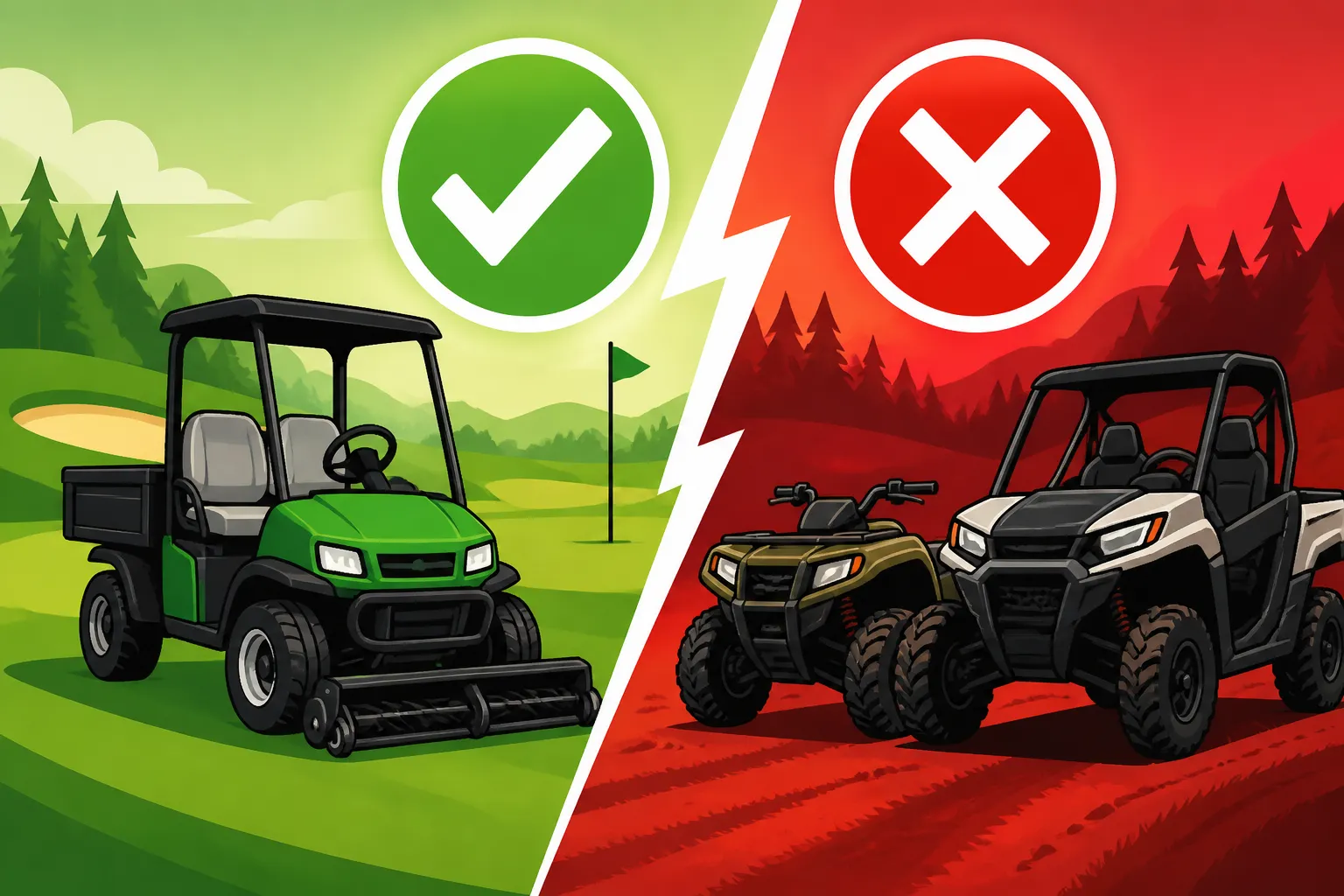
The exemption for golf course machines isn't just a casual oversight; it's a deliberate recognition within the Nova Scotia Off-highway Vehicles Act. The key to this exemption lies in the condition that the OHV is used solely for the purpose of operating the golf course and solely on the private property of that course. This is a crucial distinction. It means that utility vehicles, greens mowers, bunker rakes, and even the golf carts that patrons use to navigate the course, are not subject to provincial registration requirements, so long as their wheels never leave the golf course's boundaries for anything other than transport on a trailer.
This specific carve-out is often referred to as the [Nova Scotia Golf Course Operator Exemption]. It's designed to ease the administrative burden on businesses that use these machines as essential tools for their day-to-day operations, rather than as recreational vehicles. Imagine the paperwork and fees if every single golf cart and maintenance UTV on every course across the province had to be registered annually! The exemption provides a practical solution that aligns with the spirit of the OHV regulations, which are more focused on public trail use and general off-road activity. It means these businesses can focus on maintaining beautiful courses and providing a great experience, without getting tangled in unnecessary registration processes for their fleet.
Specific Scenarios Where the Exemption Applies and Doesn't
Understanding the nuances of the golf course exemption is crucial for both operators and curious riders. While the general rule is "used solely on the property for operations," there are many practical situations that can either uphold or negate this exemption. It's not always as straightforward as it seems, and knowing the boundaries can save a lot of headaches, and potential fines, down the road.
Machines Used Exclusively on the Golf Course
When a machine remains entirely within the confines of the golf course property and is exclusively used for its operation, the exemption is firmly in place. This covers a wide range of vehicles, from the obvious golf carts that players rent, to the more specialized equipment essential for course maintenance. Think about those heavy-duty utility vehicles used to haul sand, fertilizer, or tools across vast stretches of fairway. Picture the specialized greens mowers, bunker rakes, and aerators that keep the course in pristine condition. Even beverage carts or starter carts, if they are off-highway vehicles, fall under this umbrella.
The underlying principle here is that these machines are integral to the business of running a golf course. They are tools for a specific purpose, confined to a controlled environment, and are not contributing to wear and tear on public trails or general off-road ecosystems. This convenience allows course management to operate efficiently without the bureaucratic hurdle of registering every single piece of their operational fleet. It makes perfect sense when you consider the sheer number of carts and utility machines some larger courses might have, all dedicated to a very specific, contained type of use.
When a Golf Course Machine Needs Registration and Insurance
The moment an OHV from a golf course ventures beyond its private property lines, even for a short distance, the exemption typically dissolves. This is the critical point where many operators can inadvertently run afoul of the regulations. For example, if a golf course has two sections separated by a public road, and a maintenance UTV needs to cross that road to get from one section to the other, it immediately loses its exempt status. In such a scenario, that specific machine would need to be properly registered and insured, just like any other OHV on public land. An officer pulling over an unregistered, uninsured machine would see this as a clear violation, potentially resulting in [Nova Scotia Penalties for Riding Unregistered] or [Nova Scotia Penalties for Riding Uninsured].
Similarly, if a course-owned utility vehicle is taken off-site to a mechanic for repairs, it would need to be trailered or, if driven, be fully registered and insured for that journey. The exemption is very strict about the "solely on private property" clause. It also doesn't apply if, say, an employee "borrows" a utility machine after hours for personal recreational riding, even if they stay on the course property. The exemption is tied to the operational use of the golf course. For personal use, even if on private land, you'd typically fall under the general rules, which might involve age requirements like [Nova Scotia Registration Requires Owners to Be 19] or [Nova Scotia Registration at 16 With Permission] depending on the rider. It's vital for course operators to have clear policies and training to prevent these boundary infringements and ensure compliance, thereby avoiding any legal complications or insurance issues.
Practical Considerations for Golf Course Operators
For anyone managing a golf course in Nova Scotia, understanding the registration exemption is helpful, but putting it into practice requires a bit more thought. While you might be exempt from registering your fleet, there are still best practices and important considerations to keep in mind to ensure smooth operations and compliance. It’s about being prepared for various situations and making sure your internal processes support the spirit of the regulations.
Documentation and Proof of Use
Even though your golf course machines might not have a provincial registration number, it's incredibly wise for courses to maintain thorough internal records for their entire OHV fleet. This includes purchase receipts, serial numbers, and a clear declaration of their primary and exclusive use on the golf course property. While not a provincial requirement, such documentation can be invaluable if questions arise from an enforcement officer or in the event of an insurance claim. Having a robust system in place demonstrates due diligence and clarifies the intended use of each machine.
Consider using a resource like LawDepot to help draft internal usage policies or declarations of exclusive operational use. Such documents can formalize your course's commitment to adhering to the exemption's conditions. For instance, a written policy distributed to all staff operating OHVs can clearly state that machines are not to leave the property or be used for personal recreation. If an officer ever inquires about a particular machine, being able to quickly present clear evidence of ownership and a defined operational use within the golf course's private boundaries can quickly resolve any potential misunderstanding, confirming that the [Nova Scotia Golf Course Operator Exemption] is indeed being correctly applied.
Crossing Public Roads or Transporting Machines
This is often the trickiest area for golf course operators. While machines on the course are exempt, the moment they interact with public roads, even in the smallest way, the rules change. If your course layout necessitates crossing a public road to access another section of your property, that specific machine, during that specific transit, needs to be registered and insured as if it were a regular OHV. This often means having a permit for that machine, displaying it, and having appropriate liability insurance. This might seem cumbersome for a 30-second crossing, but the law is clear: public roads are not private property.
Most commonly, golf course operators will opt to trailer machines if they need to move them off-site for maintenance, or between non-contiguous parts of the course. This circumvents the need for OHV registration, but then you'll need to ensure your trailer itself is properly registered. Don't forget [Trailer Registration in Nova Scotia] if you plan on hauling your machines. It's a pragmatic approach that keeps your OHV fleet compliant without incurring unnecessary registration costs for machines that otherwise remain on private land. It's always best to err on the side of caution and either trailer the machine or ensure it's fully compliant if it has to touch a public thoroughfare, even briefly.
Broader Exemptions and What This Means for Other Private Land Use
The golf course exemption isn't an isolated quirk in Nova Scotia's OHV regulations. It's part of a broader philosophy that acknowledges the specific operational needs of certain industries and landowners. Understanding these parallels can provide a clearer picture of why certain machines are exempt and helps other private landowners gauge their own compliance needs. It highlights a common thread: when an OHV is strictly a tool for a specific purpose on private land, the province often provides an exemption from general registration.
Comparing to Other Private Land Exemptions
The principle behind the golf course exemption is quite similar to other key exemptions in Nova Scotia. For example, if you own an ATV and ride it exclusively on your own private land for personal use, you generally don't need to register it. This is known as the [Nova Scotia Own-Property Exemption]. The logic is simple: you're not using public trails or contributing to the demand for public infrastructure, so the core reasons for registration don't apply.
Similarly, farmers and forestry workers who use ATVs or UTVs solely for work on their farm or woodlot property also enjoy specific exemptions. This is detailed in the [Nova Scotia Farmer and Forestry Exemptions]. Again, the emphasis is on the machine being an operational tool, confined to a specific private land use. The common thread among all these exemptions is that the machine's primary function is tied to a specific type of private property use, rather than general recreation or public trail access. This demonstrates a consistent approach by the province to differentiate between recreational riding on public lands and the use of OHVs as essential tools in commercial or private settings.
Best Practices for Exempt Operations
Even when a golf course machine is exempt from provincial registration, smart operators don't take that as an excuse to ignore safety and liability. Accidents can still happen on private property, and having a plan in place is crucial. While not legally mandated for exempt machines, carrying liability insurance for your fleet is a very strong recommendation. This proactive step can protect the golf course from significant financial strain should an incident occur, such as a golf cart accident involving a patron or an employee. It’s worth checking what coverage options are available, even for those machines that don't hit the public trails.
Beyond insurance, maintaining machines in safe working order is paramount. Regular inspections and scheduled maintenance not only prolong the life of your fleet but also prevent breakdowns and potential accidents. Furthermore, ensuring that all operators, whether staff or patrons, are properly trained on the safe use of these machines is critical. For internal documentation regarding safety protocols or liability waivers for patrons, resources like LawDepot can be invaluable in creating legally sound forms. While the [Nova Scotia Insurance Requirements for Riders] typically refer to registered machines, smart course operators understand the value of self-protection through robust insurance and safety practices for their entire fleet, registered or not. Being exempt from registration doesn't mean being exempt from common sense and good business practices.
| Feature | Exempt Golf Course Machine (on course) | Registered OHV (general use) |
|---|---|---|
| Provincial Registration | Not required | Required |
| Annual Permit Fee | Not required | Required (e.g., [Nova Scotia Permit Renewal at $13.20]) |
| Off-highway Vehicle Tax | Not required (unless it leaves property for transport and wasn't previously taxed) | Required at first registration/purchase ([Nova Scotia Tax Collected at Registration]) |
| Trail Levy | Not required | Required ([Nova Scotia's Combined $53.20 Annual Figure]) |
| Liability Insurance | Highly recommended (private policy) | Required by law ([Nova Scotia Insurance Requirements for Riders]) |
| Operating Location | Solely on private golf course property | Public trails, private land (with permission), road crossings |
| Purpose | Golf course operations | Recreation, work (farming/forestry if exempt), utility |
| Required Paperwork | Internal records, purchase docs | Certificate of Registration, Vehicle Permit, Proof of Insurance |
| Penalties for Misuse | Internal disciplinary, potential liability claims | Fines for unregistered/uninsured operation ([Nova Scotia Minimum Fine of $250]) |
Disclaimer
This article is for general informational purposes only and does not constitute professional advice. Laws, prices and regulations vary by location and change over time. Consult a qualified professional for guidance on your specific situation.