What a Lien Means on a Financed Quad
It’s a pretty common situation: you've found the perfect ATV or UTV, maybe even fallen in love with a used machine online, only to hit a snag when you realize there might be a "lien" on it. Understanding what a lien is, how it impacts your purchase or sale, and how to deal with it is absolutely crucial for any Nova Scotia off-highway vehicle enthusiast. This guide will walk you through everything you need to know about liens on financed quads, making sure you can navigate these waters with confidence and avoid potential headaches.
Understanding What a Lien Is on Your Off-Highway Vehicle
Let's cut through the jargon and get to the heart of the matter. When we talk about a lien on an ATV or UTV, we're really talking about a legal claim or right against that machine, which is held by a creditor – usually the bank or financial institution that lent money to the owner to buy it. Think of it as collateral. If you don't pay your loan, the lender has the right to repossess that machine to get their money back. It's a security interest that protects the lender.
Defining a Lien in Simple Terms
In the simplest terms, a lien means that someone else has a financial stake in your machine, even if you’re the one riding it every weekend. It's a way for lenders to ensure they get paid back. When you finance an off-highway vehicle, whether it's a quad, a side-by-side, or even a dirt bike, the bank or credit union will register a lien against that specific serial number (VIN). This registration officially notes their interest in the machine. It's not about ownership in the traditional sense, but about who has a right to the asset if the loan defaults. This information becomes part of the public record, often linked to the vehicle's registration details, which is why it's so important to check.
Who Holds the Lien The Lender
The most common lien holder on a financed quad is the financial institution that provided the loan. This could be a large bank, a local credit union, or even the financing arm of a major manufacturer like BRP, Polaris, or Honda. They hold the lien until the loan is paid off in full. It’s their insurance policy, essentially. Without that lien, they'd be taking a much bigger risk by lending money for a depreciating asset. This also means that if you, as the buyer, are looking at a machine that still has a lien, you need to understand that the seller doesn't fully own it outright yet. Their ownership is conditional on them making those payments. It’s a very important detail when you are considering [Nova Scotia Registration and Financing].
Why Liens Matter for Nova Scotia Owners
For us Nova Scotia riders, understanding liens is critical for two main reasons: buying and selling. If you’re looking to purchase a used machine, buying one with an existing lien that isn’t properly discharged can leave you in a very sticky situation. You could pay for the ATV, only to have the lender come looking for it if the original owner stops making payments. It doesn't matter that you paid the seller; the lien follows the machine. On the flip side, if you're selling a machine you still owe money on, you absolutely cannot just take the buyer’s cash and hand over the keys without dealing with that lien first. Doing so could lead to serious legal repercussions for you. The province's registration system tracks this information, so it’s not something you can easily skirt around.
How Liens Impact Buying and Selling a Financed Quad in Nova Scotia
Navigating the waters of buying or selling an off-highway vehicle that has a lien can feel like traversing a particularly muddy section of trail – tricky, but manageable if you know the right path. It requires diligence, transparency, and often, a bit of extra paperwork.
Buying a Quad with an Existing Lien The Risks
This is where many buyers get tripped up, often unknowingly. Imagine you find a fantastic deal on a quad, meet a private seller, pay them cash, get a bill of sale, and head off to Access Nova Scotia to complete your [Nova Scotia Registration After a Private Sale]. You might then discover there’s an undischarged lien on the machine. The biggest risk is that if the seller defaults on their loan, the lender can still repossess the quad from you, even though you’re now the registered owner. You’d be out both the quad and the money you paid the seller, and your recourse would be a lengthy legal battle with the seller, which is never fun. This is why a crucial step for any buyer is to always, always perform a lien search on the machine's VIN before you hand over any money. You wouldn't want to buy a quad only to find out later that it's legally someone else's problem.
Selling a Quad with a Lien The Process
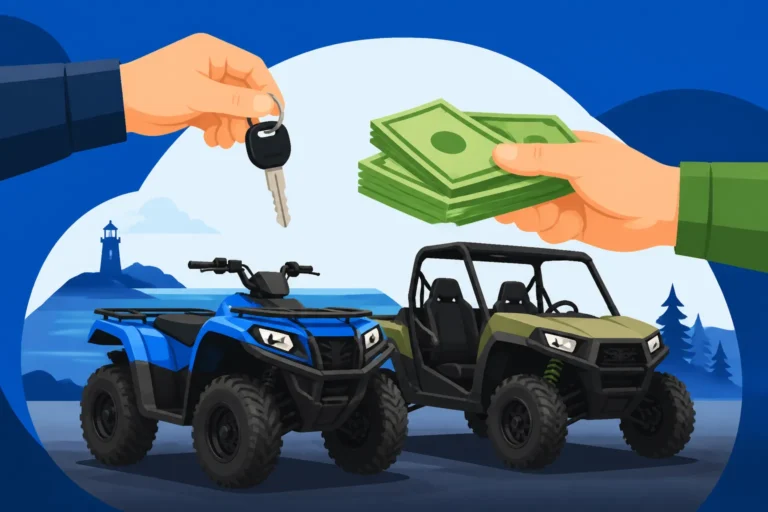
If you're the seller and your ATV or UTV still has a lien on it, you can't simply transfer ownership without addressing that lien. The process typically involves ensuring the outstanding loan amount is paid off during the sale. Often, what happens is that a portion of the buyer's payment goes directly to your lender to clear the lien. For example, if you're selling a quad for $8,000 and you still owe $5,000, the buyer might write a cheque for $5,000 directly to your lender and another cheque for $3,000 to you. This ensures the lender is paid and the lien is discharged simultaneously with the transfer of ownership. It's a bit more involved than a straightforward private sale, but it's the only legal and responsible way to do it. You’ll want to have all your [Nova Scotia Used Machine Paperwork] in order, including the original loan documents and a contact for your lender.
The Role of the Nova Scotia Registry of Motor Vehicles
While the Registry of Motor Vehicles doesn't hold the lien itself, they are absolutely crucial in tracking and acknowledging liens. When a financial institution registers a lien against your OHV, it’s recorded with the Personal Property Registry, which is often tied into the provincial vehicle registration systems. This is why when you go to register a machine, the staff at Access Nova Scotia can often see if there's an active lien. They won't register the vehicle in your name until that lien is discharged or transferred appropriately, which is another reason why checking is so important. When you’re at the counter discussing your [Nova Scotia Certificate and Vehicle Permit], they'll want to ensure everything is above board. This is also why checking a serial number before you move the money is vital; a quick search can tell you if there are any outstanding claims against the VIN.
Here's a quick comparison of what buyers and sellers need to do regarding liens:
| Action / Role | Buyer's Due Diligence | Seller's Responsibility |
|---|---|---|
| Before Sale | Perform a lien search (PPR search) on the VIN. | Contact your lender for the exact payoff amount. |
| During Sale | Ensure funds are directed to the lender to clear the lien. | Arrange for the lender to release the lien upon payment. |
| After Sale | Verify the lien has been formally discharged. | Obtain a discharge letter/document from the lender. |
| Registration | Present clear title for new registration. | Ensure all paperwork is ready for buyer, including discharge. |
| Documentation | Get proof of lien discharge. | Provide all necessary transfer and discharge documents. |
Clearing a Lien: The Steps to Take
Clearing a lien is typically a straightforward process once the financial obligation is met. It involves a few key steps that ensure the public record reflects that the debt on your ATV or UTV is paid off and the lender no longer has a claim.
Paying Off the Loan
The first and most obvious step to clearing a lien is to pay off the outstanding loan balance in full. This can happen in a couple of ways:
- Directly by the Seller: If you, as the seller, have sufficient funds, you can pay off the loan yourself before even listing the machine for sale. This simplifies the selling process immensely, as you'll have a clear title from the start.
- Using the Buyer's Funds: As mentioned earlier, a very common scenario in private sales is that the buyer's payment is used to clear the loan. The buyer might make out a cheque directly to your lending institution for the remaining balance. This often happens at the time of sale, sometimes even at the bank or Access Nova Scotia, to ensure both parties are protected and the funds are properly disbursed. It’s a very practical solution that allows for a smooth transaction, especially when the buyer is already organized with their [Nova Scotia Registration Payment Methods].
Receiving the Discharge Documents
Once the loan is paid off, the lender is legally obligated to provide you with documentation confirming that the lien has been discharged. This is often called a "discharge letter," a "lien release," or sometimes a "certificate of satisfaction." This document is your proof that their claim against your ATV or UTV has been removed. It’s absolutely vital that you get this document. Do not let this slide! Sometimes, lenders are a bit slow in sending these out, so it's good practice to follow up if you don't receive it within a reasonable timeframe (usually a few weeks). This letter will typically reference the VIN of your machine, clearly stating that the lien associated with it has been satisfied. Keep this document safe with your other important papers, like your [Nova Scotia Registration Paperwork Checklist].
Updating the Registration
With your discharge documents in hand, you (or the new owner, if it was part of a sale) should take them to Access Nova Scotia. While many liens are automatically removed from the Personal Property Registry once paid off and reported by the lender, it's always best to be proactive and ensure the vehicle's registration record is updated. This confirms that there are no longer any encumbrances on the machine. If you've sold the quad, the buyer will present this along with their bill of sale when they go to register the machine in their name. This final step legally confirms that the machine is free and clear, allowing for a clean transfer of ownership. It's the moment of truth for both parties, solidifying the transaction.
Protecting Yourself When Dealing with Liens
Whether you're looking to buy a new-to-you quad or sell your current one, being proactive about liens is the best way to protect your interests. A little bit of homework upfront can save you a whole lot of grief down the line.
For Buyers: Checking for Liens Before Purchase
This cannot be stressed enough: always, always, always perform a lien search on any used ATV or UTV you're considering buying privately. You can do this through the Nova Scotia Personal Property Registry. For a small fee, you can search the VIN (Vehicle Identification Number) of the machine, and the registry will provide you with a report detailing any registered liens against it. This simple step is your best defense against inadvertently buying a problem. If the report comes back clean, great! If it shows a lien, then you know precisely what needs to be addressed before you even think about handing over money. Don't rely on the seller's word alone, no matter how trustworthy they seem. Your financial future is too important. This is part of the essential [Checking a Serial Number Before the Money Moves] process.
For Sellers: Being Transparent and Prepared
If you’re selling a machine with an active lien, transparency is key. Be upfront with potential buyers about the lien and explain the process for clearing it during the sale. This builds trust and shows you’re a responsible seller. Before you even list your machine, contact your lender to get the exact payoff amount. Have all your loan documents ready, and be prepared to facilitate the payment directly to your lender from the buyer's funds. Being organized makes the process smoother for everyone and instills confidence in your buyer. If you're clear on how to manage the transaction, it often speeds up the decision-making process for the buyer, especially if they are comparing a [Nova Scotia Private Sale vs Dealer Purchase].
Using Legal Templates and Professional Assistance
Sometimes, the paperwork involved can feel daunting, especially if it’s your first time dealing with a financed machine. Don’t be afraid to seek assistance. Legal template services like LawDepot offer resources for creating official bills of sale and other documents that can outline the terms of your agreement, including how a lien will be handled. While these templates are excellent starting points, for complex situations or if you have any doubts, consulting with a legal professional can provide invaluable peace of mind. They can review your specific circumstances and ensure all legal bases are covered, protecting both buyer and seller. Having a well-structured bill of sale, potentially adapted from a LawDepot template, ensures that everyone understands their responsibilities regarding the lien. Furthermore, LawDepot also offers other useful documents, like promissory notes, that might be useful if you're engaging in any partial financing agreements with a private buyer. Remember, whether you're using a LawDepot document or any other agreement, clear communication and written records are your best friends in these transactions.
This article is for general informational purposes only and does not constitute professional advice. Laws, prices and regulations vary by location and change over time. Consult a qualified professional for guidance on your specific situation.