Hauling a Machine to a Club Trail
So, you've got your off-highway vehicle, you're itching to hit the incredible trails Nova Scotia has to offer, but there's that crucial step between your driveway and the trailhead: getting your machine there safely and legally. It’s not just about strapping it down and hoping for the best; there are a fair number of considerations, from the type of trailer you use to the paperwork you need to have on hand, that can make all the difference for a stress-free day on the trails. This guide is all about navigating the practicalities and rules for hauling your ATV or UTV to a Nova Scotia club trail, making sure your adventure starts on the right foot, not with a roadside headache.
The Basics of Hauling Your Off-Highway Vehicle in Nova Scotia
Getting your ATV or UTV to a club trail in Nova Scotia involves a bit more than just tossing it in the back of a truck, especially for larger machines or multiple units. Thinking ahead about your hauling setup can save you a lot of grief, both on the road and with local regulations. It's about safety, capacity, and understanding what your vehicle and trailer are capable of handling.
Choosing the Right Trailer for Your Machine
The first big decision is what kind of trailer will best suit your needs. For a single, smaller ATV, you might get away with a utility trailer that serves multiple purposes around the yard. These are often single-axle, open-deck trailers that are fairly lightweight and easy to manoeuvre. They're a good budget-friendly option if you already own one, but always check its weight capacity against your machine's weight, plus any gear you might carry. Overloading a trailer is a recipe for disaster, affecting handling, braking, and tire wear.
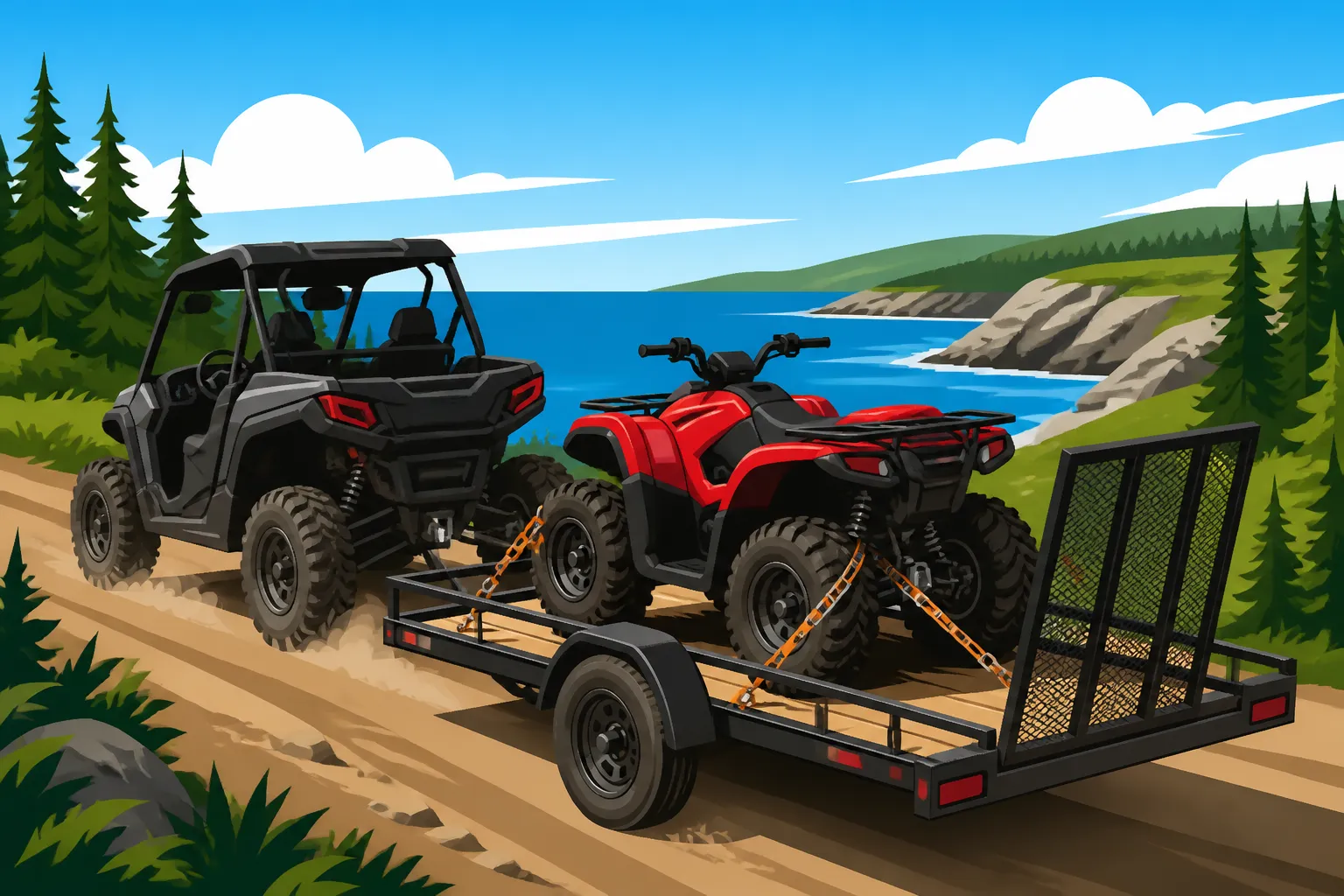
If you're hauling a larger side-by-side, multiple ATVs, or if you plan on carrying a lot of gear for extended trips, a dedicated ATV/UTV trailer or a heavier utility trailer with tandem axles might be necessary. Tandem axles distribute the weight more evenly, provide greater stability, and offer a bit of redundancy in case of a flat tire on one axle. Enclosed trailers offer the ultimate protection from the elements and theft, but they come with a higher price tag, increased weight, and greater wind resistance, which impacts fuel economy. Consider the typical weight of your machine, whether you'll ever haul more than one, and if you need the security and weather protection an enclosed trailer offers.
Essential Trailer Maintenance and Safety Checks
Before you even think about loading up your machine, a thorough inspection of your trailer is paramount. This isn't just about avoiding a ticket; it's about preventing dangerous situations on the highway. Start with your tires – check the pressure, condition, and tread depth. Look for any cracks, bulges, or signs of dry rot, especially if the trailer sits for extended periods. Worn-out trailer tires are a common cause of roadside breakdowns. Next, test all your lights: brake lights, turn signals, and running lights. A faulty wiring connection is easy to fix in your driveway but a huge hassle in the dark on the side of a rural highway.
Your hitch connection is equally critical. Ensure it's the correct size for your tow ball, properly secured, and that the safety chains are crossed under the tongue and attached to your tow vehicle. Don't forget to check your wheel bearings – if they're making noise or getting hot, they might need grease or replacement. Overlooking these small details can lead to big problems. Also, take a moment to consider the proper loading and weight distribution of your OHV. Aim for about 10-15% of the total trailer and load weight to be on the tongue, which helps prevent sway and keeps your rig stable. Loading too far back can lift the tongue, making the trailer unstable, while too much weight forward can overload your tow vehicle's rear suspension.
Legalities of Hauling in Nova Scotia
Navigating the roads of Nova Scotia with a trailer in tow requires adherence to specific legal guidelines. It's not just about common sense; it's about respecting the laws designed to keep everyone safe. From making sure your trailer is properly registered to securing your machine for transit, there are several key legal points you need to be aware of.
Trailer Registration and Plates
In Nova Scotia, most trailers, including those used for hauling ATVs and UTVs, need to be registered with the Registry of Motor Vehicles and display a valid license plate. This is often an area where riders get caught out, assuming a small utility trailer might be exempt. While there are some narrow exemptions, particularly for very small, lightweight homemade trailers used exclusively for specific purposes, generally if it's on the road, it needs to be plated. The specific requirements can vary based on the trailer's gross vehicle weight rating (GVWR) and how it's used. It's always best to err on the side of caution and ensure your trailer has proper registration. You'll want to have proof of this readily available, just as you would for your tow vehicle. For more detailed information on this, you might find our article on [Trailer Registration in Nova Scotia] quite helpful.
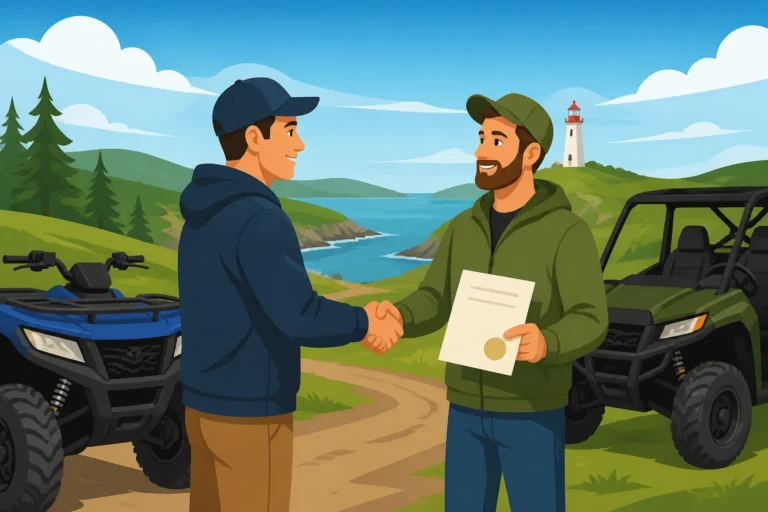
When you're dealing with buying or selling a trailer, especially a used one, having the right paperwork is crucial for registration. A clear bill of sale and the previous owner's registration documents will make the process at Access Nova Scotia much smoother. If you're creating a bill of sale or any other legal document for a private sale of an OHV or trailer, resources like LawDepot can provide templates that ensure all necessary information is included, protecting both buyer and seller. This peace of mind is invaluable when transferring ownership.
Securing Your Machine for Transport
This is perhaps the most critical aspect of hauling: making absolutely sure your off-highway vehicle is secured. An improperly secured ATV or UTV can shift, damage your trailer, or worse, become a hazard to other drivers on the road. You should use a minimum of four tie-down straps – one at each corner of your machine. These straps should be rated for the weight of your OHV and be in good condition, free from cuts, frays, or damaged hardware. Many riders prefer ratchet straps for their ability to achieve high tension, but cam buckle straps can work for lighter machines if applied correctly.
The goal is to compress the machine's suspension slightly, preventing it from bouncing and allowing the straps to loosen. Avoid overtightening to the point of damaging your suspension components or bodywork. Always secure to the frame or a strong, designated tie-down point on the machine, not to handlebars, racks, or plastic body panels that could bend or break. After loading, give your machine a good shake to ensure it's not moving. It's also a good practice to stop a few kilometres down the road after leaving your driveway to double-check all your straps; sometimes things settle, and a slight retightening might be necessary.
Tow Vehicle Requirements and Driver Licensing
Your tow vehicle plays a starring role in this entire operation. It's not just about having a hitch; your vehicle needs to be capable of safely pulling the combined weight of your trailer and your OHV. Every vehicle has a specified towing capacity, usually listed in the owner's manual or on a sticker inside the door jamb. Exceeding this capacity can lead to accelerated wear on your engine, transmission, and brakes, and seriously compromise your ability to stop and control the trailer, especially in an emergency. Remember to account for the weight of passengers and cargo inside your tow vehicle as well, as this subtracts from your available towing capacity.
For most recreational hauling of ATVs and UTVs with a standard pickup truck or SUV, a regular Class 5 driver's license in Nova Scotia is generally sufficient. You typically don't need a special license endorsement unless you're hauling very heavy loads, multiple large machines, or a commercial setup that puts you into a higher weight category requiring a Class 1, 3, or 4 license. However, if you're ever in doubt about the specific requirements for your setup, it's always wise to check with Access Nova Scotia to ensure you're compliant. Knowing your limits and staying within them is key to a safe journey to the trails.
Planning Your Route to the Trailhead
Once your machine is securely loaded and your legal bases are covered, the next step is planning your actual drive to the club trail. This isn't always as simple as plugging the trailhead address into your GPS. Rural Nova Scotia roads can present their own set of challenges, and local regulations might affect your journey.
Navigating Road Restrictions and Community Ordinances
While your OHV might not be permitted on the main roads, your truck and trailer certainly are. However, that doesn't mean all roads are created equal for towing. Some rural roads, especially older ones, might have low-hanging trees or narrow passages that make navigating with a wide or tall trailer tricky. Certain bridges might have weight restrictions, though this is less common for recreational OHV trailers than for commercial vehicles. Larger towns or villages might have specific ordinances about where you can park a truck and trailer, or even restrictions on noise levels, so be mindful when passing through.
It's always a good idea to scout your route ahead of time, especially if you're heading to a new trailhead. Looking at satellite maps can give you an idea of road conditions and potential obstacles. Once you arrive at the trailhead, look for designated parking areas that can accommodate your truck and trailer. Pulling off onto soft shoulders or blocking access points can be frustrating for other users and potentially lead to fines. Being a responsible rider extends to how you arrive and park at the trailhead.
Pre-Ride Checks and Trailhead Etiquette
You’ve arrived! But before you unload and immediately hit the throttle, take a few moments for some final checks. Once your machine is off the trailer, give it a quick once-over. Are the tires properly inflated for the trail conditions? Is there any visible damage from the drive? Check fluid levels and ensure everything is buttoned up. This is also a good time to make sure you have all your essential riding gear on and your permit visible if required.
Trailhead etiquette is also incredibly important. Be mindful of noise levels, especially if the trailhead is near homes. Avoid revving your engine unnecessarily. Take care when unloading not to kick up excessive dust. If the trailhead is busy, be patient and allow others space to unload and stage their machines. Properly dispose of any trash – pack it in, pack it out. Leaving the trailhead tidy for the next group is a simple act of respect. For a deeper dive into how to be a considerate trail user, you might want to read [Nova Scotia Trail Etiquette Locals Expect] and [Leaving a Trailhead Tidy After a Group Ride]. These practices help maintain good relations with landowners and the local community, ensuring trails remain open for all of us to enjoy.
What to Carry When Hauling and Riding
Preparation is the key to a successful and stress-free day on the trails, and that preparation starts long before you even leave your driveway. Knowing what documents to have on hand and what gear can save you in a pinch, both on the road and out on the trail, is crucial for any Nova Scotia rider.
Essential Documents and Safety Gear
When hauling your OHV, you're essentially operating two vehicles: your tow vehicle and your trailer, with the OHV being your cargo. This means you need to carry the relevant documentation for all three. For your tow vehicle, you'll need your valid driver's license, vehicle registration, and proof of insurance. For your trailer, you'll need its registration papers. And for your ATV or UTV, you absolutely need its [Nova Scotia OHV Registration Cost] certificate and vehicle permit, along with proof of liability insurance. Remember, insurance became mandatory for off-highway vehicles in Nova Scotia back in 2007.
It’s always a good practice to carry these documents in a waterproof bag or container, especially the OHV ones, as you’ll want them with you on the trail. A physical "pink card" or electronic proof of insurance for your OHV is a must-have. Officers can and do ask to see these. For more specifics on what insurance entails, check out [Nova Scotia Insurance Requirements for Riders] and [Carrying Papers on a Coastal Ride]. Beyond paperwork, a basic safety kit for your tow vehicle and trailer can be a lifesaver. This includes a spare tire for your trailer, a jack, a lug wrench, and perhaps some basic tools for minor repairs or strap adjustments. For your OHV, consider a small tool kit, a tire repair kit, a first-aid kit, and a fully charged cell phone.
Contingency Planning for Roadside Issues
Even the most meticulous planner can encounter unexpected issues on the road. A flat tire on your trailer, a blown fuse for your trailer lights, or an unexpected mechanical issue with your tow vehicle can quickly turn a fun day into a frustrating ordeal. Having a plan for these contingencies is vital. Before you leave, program essential contact numbers into your phone: roadside assistance, a local mechanic, and perhaps a friend or family member who can come help if you're really stuck.
Knowing how to change a trailer tire or troubleshoot a basic electrical issue can save you hours of waiting. If you're not mechanically inclined, ensure your roadside assistance plan covers towing a trailer. In more remote areas of Nova Scotia, cell service can be spotty, so consider your route and potential dead zones. While we're talking about responsible travel, it's worth a quick mention that impaired driving laws apply to tow vehicles just as they do to any other vehicle. Alcohol and operating any motor vehicle, including one towing a trailer, simply do not mix. You can learn more about the consequences in our article on [Nova Scotia Impaired Riding Penalties]. Being prepared for the unexpected allows you to tackle any challenge that arises with confidence, keeping your focus on the enjoyment of the trails.
Your Nova Scotia ATV & UTV Adventure Awaits
Hitting the trails in Nova Scotia with your ATV or UTV is an experience like no other, but it truly begins the moment you start preparing to haul your machine. From picking out the right trailer and ensuring it's in top condition, to understanding the specific legal requirements for registration, insurance, and safe transport, every step counts. Remembering to secure your valuable machine properly, planning your route, and carrying all the necessary documents are not just suggestions – they are essential practices for a safe, legal, and enjoyable ride.
By taking the time to understand these elements, you're not just avoiding potential headaches; you're also contributing to the overall safety and positive reputation of off-highway vehicle recreation in Nova Scotia. So, whether you're heading to the [Nova Scotia ATV Trails: The ATVANS Network] for a day of ripping through the woods or planning a multi-day exploration, a well-planned haul sets the stage for a fantastic adventure. Double-check those straps, secure your papers, and hit the road knowing you're ready for whatever the Nova Scotia wilderness throws your way!
Disclaimer
This article is for general informational purposes only and does not constitute professional advice. Laws, prices and regulations vary by location and change over time. Consult a qualified professional for guidance on your specific situation.