A Bill of Sale From a Neighbour in Nova Scotia
So, you're eyeing that trusty off-highway vehicle (OHV) your neighbour has been meaning to sell – maybe it's their old ATV, a well-used utility side-by-side, or a compact sport model. It feels like an easy transaction because you know them, right? You might think a simple handshake and cash is all it takes, but trust me, getting a proper bill of sale, even from someone you trust on the next concession, is crucial for both of you. This guide will walk you through why a formal bill of sale is essential in Nova Scotia, what needs to be in it, and how it sets you up for a smooth registration process.
Why a Bill of Sale Is Non-Negotiable, Even for a Friendly Neighbour Sale
It’s completely natural to feel a bit awkward asking your long-time neighbour for formal paperwork, especially if you’ve been borrowing tools or sharing garden produce for years. There’s a perception that "good neighbours" don't need all that fuss. But when it comes to a significant purchase like an ATV or UTV, skipping the official documents can lead to headaches and heartaches down the road, making things far more complicated than they need to be. Think of it less as a sign of distrust and more as a smart, adult way to ensure everyone is protected and clear on the terms of the sale.
Protecting Your Investment and Friendship
Let's imagine you buy a quad from your neighbour, Bob. You hand him the cash, shake hands, and take the machine home. A few months later, a past mechanical issue surfaces that Bob didn't know about, or perhaps he genuinely forgot to mention it. Without a clear bill of sale outlining the "as-is" nature of the sale, or any representations made, you could find yourselves in a sticky situation, straining a perfectly good neighbourly relationship. A bill of sale acts as a legal record of the transaction. It formally transfers ownership, clearly states the purchase price, and often includes terms that protect both the buyer (you) and the seller (Bob) from future disputes. It clarifies the condition of the machine at the time of sale and confirms the exchange of funds for the vehicle. This clarity helps preserve your friendship by preventing misunderstandings and providing a reference point if questions arise later.
Moreover, having a formal document means you have undisputed proof that the machine is yours. Should it ever be stolen, or if there's any confusion about who the rightful owner is, that bill of sale is your rock-solid evidence. It’s not just about what happens at the moment of sale, but also about securing your rights as the new owner for years to come. This document lays the foundation for your peace of mind and the continued goodwill between neighbours.
Meeting Access Nova Scotia's Requirements
Beyond protecting your personal interests, the provincial registry, Access Nova Scotia, requires specific documentation to register an off-highway vehicle in your name. You can't just show up with a story and a pocket full of cash; they need proof. A properly completed bill of sale is one of the cornerstone documents they'll ask for. Without it, you'll hit a significant roadblock when trying to put your new-to-you machine on the books. [Nova Scotia Registration Paperwork Checklist] will show you all the other documents you'll need.
Access Nova Scotia needs to verify who sold the machine, who bought it, the date of the transaction, and the purchase price to calculate any applicable taxes. They are looking for clear, unambiguous information that outlines the transfer of ownership. If you arrive without this crucial piece of paper, or if the bill of sale is incomplete or unclear, you could face delays, be asked to return with proper documentation, or even be unable to register the machine at all. This means your excitement to hit the trails could be put on hold indefinitely, which is definitely a buzzkill for any new OHV owner. Ensuring you have a valid bill of sale from your neighbour streamlines this entire process, allowing you to get your [Nova Scotia Certificate of Registration at $39.80] and [Nova Scotia Vehicle Permit at $13.20] without unnecessary hassle.
Crafting Your Nova Scotia ATV/UTV Bill of Sale: What Must Be Included
When you're dealing with a private sale, especially one with a neighbour, there's no dealer paperwork to fall back on. This means the responsibility for creating a complete and accurate bill of sale falls squarely on your shoulders, or your neighbour's, but ideally, it's a collaborative effort. Don't worry, it's not overly complicated, but it does require attention to detail to ensure all the necessary information is captured. Think of it as creating a mini-contract that protects both parties and satisfies the legal requirements for transfer of ownership.
Essential Details for the Machine and Parties
A robust bill of sale must clearly identify both the buyer and the seller, as well as the specific off-highway vehicle being transferred. This isn't the time for nicknames or vague descriptions; precision is key. For the individuals involved, you'll need the full legal names of the buyer and seller, along with their current addresses and contact information (phone numbers and email addresses are a good idea). This establishes who is involved in the transaction.
For the ATV or UTV itself, you need specific identifying details. This includes the make (e.g., Polaris, Honda, Can-Am), model (e.g., Sportsman, Rancher, Outlander), year of manufacture, and critically, the Vehicle Identification Number (VIN). The VIN is like the machine's DNA; it's unique and essential for proper registration and tracing its history. Always double-check that the VIN on the bill of sale exactly matches the VIN physically located on the machine itself. You'll also need the purchase price clearly stated in Canadian dollars, and the date the transaction took place. If there are any specific conditions of sale, such as "sold as-is, where-is," those should also be explicitly written. [Checking a Serial Number Before the Money Moves] is a good idea to ensure the VIN is legitimate and hasn't been tampered with.
The Importance of Signatures and Witnesses
Once all the essential details are accurately filled out, the bill of sale needs to be signed by both the buyer and the seller. These signatures signify that both parties agree to the terms outlined in the document and confirm the transfer of ownership. It's not just a formality; it's a legal act. Make sure both parties sign the document, and that the date of signing is clearly marked.
While not always legally mandatory in Nova Scotia for a bill of sale to be witnessed, having a neutral third party witness the signatures can add an extra layer of authenticity and protection. A witness can attest that the signatures are genuine and that both parties appeared to enter into the agreement freely. If you choose to have a witness, ensure they also print their name, sign, and date the document. It’s good practice for both the buyer and seller to receive an original copy of the signed bill of sale for their records. You might consider using a reputable online service like LawDepot, which provides templates and guidance for creating these documents, often including sections for witnesses and clear instructions on what information is needed. This helps ensure your document is comprehensive and legally sound for your Nova Scotia purchase.
Beyond the Basics: Preparing for a Smooth Registration Process
Alright, you've got your new-to-you ATV or UTV from your neighbour, and you've meticulously completed your bill of sale. That's a huge step, but the journey to hitting the trails legally in Nova Scotia isn't quite over. There are a few more critical pieces of the puzzle you'll need to sort out before Access Nova Scotia will officially put that machine in your name and issue your permit. Understanding these steps beforehand can save you another trip to the service centre and get you out riding faster.
Addressing Missing Paperwork and Previous Ownership
Ideally, when you buy a machine from your neighbour, they should be able to provide you with their existing Nova Scotia Certificate of Registration and Vehicle Permit. This shows their legal ownership and makes your transfer process much smoother. However, sometimes things get lost, or the neighbour might have purchased it without proper paperwork years ago themselves. If the seller doesn't have the original Certificate of Registration, things get a bit more complicated, but it's not impossible to overcome. You may need to provide a sworn declaration stating the circumstances of the sale and why the original documents are missing. Access Nova Scotia staff can guide you through this process, which might involve signing specific forms or declarations.
The key is transparency. Don't try to hide the fact that previous paperwork is missing. Be upfront with the registry staff, explain the situation, and be prepared to provide any additional information they request. In some cases, if the chain of ownership is severely broken, it might even require obtaining a special ID number for the machine if the VIN is unreadable or non-existent, but this is less common for a neighbour sale. For clarity, a bill of sale is crucial in these situations too, as it establishes the direct transfer from the last known owner to you, even if the paper trail before them is murky. [Nova Scotia Registration Without a Bill of Sale] goes into more detail on how to handle these specific situations.
The Financial Side: Understanding Taxes and Fees
Beyond the purchase price you negotiated with your neighbour, you'll need to account for taxes and registration fees when you go to Access Nova Scotia. In Nova Scotia, Harmonized Sales Tax (HST) is collected on the purchase price of off-highway vehicles, even in private sales. This isn't something your neighbour collects; it's paid directly to the province when you register the machine. The amount of HST will be calculated based on the purchase price you declared on your bill of sale. If Access Nova Scotia suspects the declared price is significantly lower than the market value for that type of machine, they may assess a fair market value for tax purposes.
In addition to HST, there are specific fees for the actual registration process. This includes the one-time [Nova Scotia's $39.80 Certificate Fee Explained] which establishes your legal ownership, and the annual [What Nova Scotia's $13.20 Vehicle Permit Buys]. These fees are typically paid at the time of registration. It's vital to budget for these costs so you're not caught off guard when you're at the counter. Understanding that these are separate from the amount you paid your neighbour helps avoid confusion and ensures you have all the funds ready. You might even use a service like LawDepot to help organize your financial records for the sale, ensuring all declared values are clear for tax purposes. [Nova Scotia HST on an ATV Purchase] provides a deeper dive into the tax implications of buying an OHV.
Here's a quick checklist of what Access Nova Scotia will typically want to see when you register your neighbour's ATV or UTV:
| Document/Information | Required? | Notes |
|---|---|---|
| Completed Bill of Sale | Yes | Must include buyer/seller names, addresses, machine details (VIN, make, model, year), purchase price, date, signatures. |
| Seller's Original Certificate of Registration | Highly Recommended | Shows previous ownership. If missing, prepare for a sworn declaration. |
| Seller's Original Vehicle Permit | Recommended | Shows machine was previously permitted. |
| Proof of Identity (Buyer) | Yes | Driver's License or other government-issued ID. |
| Proof of Nova Scotia Address (Buyer) | Yes | Utility bill, lease agreement, etc. |
| Funds for HST and Registration Fees | Yes | Be prepared for the current tax rate and applicable permit/certificate fees. |
| Insurance (Pink Card) | Yes | Proof of valid liability insurance is mandatory for registration. |
Your Next Steps After the Handshake and Signature
With the bill of sale signed and the machine officially in your possession, the next critical phase is getting it legally registered and permitted in your name at Access Nova Scotia. This is the final hurdle before you can confidently and legally enjoy your new-to-you ATV or UTV on Nova Scotia's trails. Taking care of this promptly ensures you avoid potential fines and can access all the great riding opportunities our province has to offer.
What to Bring to Access Nova Scotia
When you head to your local Access Nova Scotia centre, you’ll want to be thoroughly prepared to make the process as smooth and quick as possible. This means having all your ducks in a row with the correct documentation and payment methods. As we've discussed, the completed and signed bill of sale is paramount. You'll also need the seller's original Certificate of Registration and Vehicle Permit if they had them – these are invaluable for demonstrating the chain of ownership. If the seller didn't have these, be ready to explain and sign any necessary declarations.
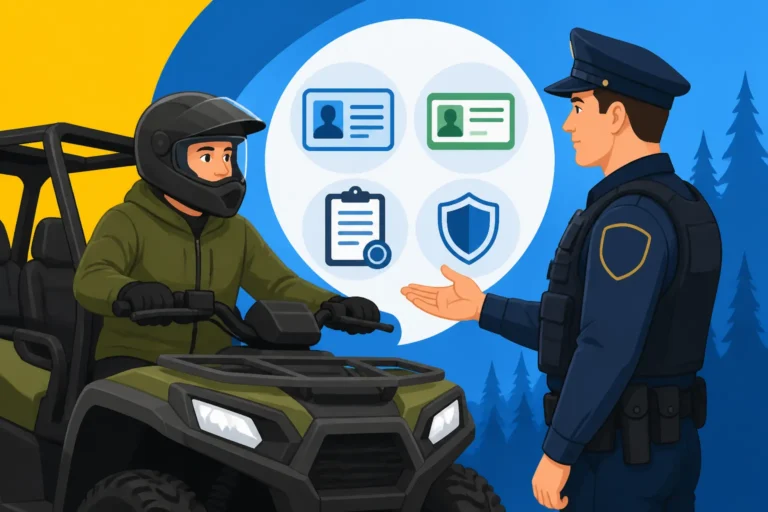
Crucially, you'll need your own valid government-issued identification, typically a Nova Scotia driver's license, and proof of your current Nova Scotia address. You'll also need proof of liability insurance for the OHV. In Nova Scotia, all registered off-highway vehicles must carry a minimum amount of liability insurance. Your insurance provider will issue you a "pink card" or similar proof of coverage, which you must present at the counter. Finally, be prepared to pay the applicable HST on the purchase price and the registration fees. These costs will vary, so it’s always a good idea to check with Access Nova Scotia or on their website for the most up-to-date figures before you go. [Nova Scotia Registration Processing Time] can often be quick if you have everything in order.
Understanding Annual Renewal and Future Responsibilities
Once your ATV or UTV is registered in your name, you'll receive your Certificate of Registration and the Vehicle Permit. While the Certificate of Registration is generally a one-time fee, your Vehicle Permit needs to be renewed annually. This annual renewal fee keeps your machine legally permitted for use. You'll typically receive a renewal notice in the mail, but it's ultimately your responsibility to ensure it's renewed on time. Missing the renewal date could lead to your permit lapsing, meaning you'd be riding an unpermitted machine, which carries its own set of risks and potential fines. [Nova Scotia ATV Permit Renewal] can typically be done easily online or in person.
Beyond the annual permit renewal, you also have ongoing responsibilities as an OHV owner. This includes ensuring your liability insurance remains current and active. Lapsed insurance is a serious offence and can have significant consequences if you're involved in an accident. Always carry your proof of insurance (pink card) and your Vehicle Permit with you when you ride. You'll also want to keep your machine well-maintained and ensure it complies with all provincial regulations regarding safety equipment, noise levels, and operating rules. This includes rules around where you can ride, helmet laws, and age restrictions for operators. Staying informed and compliant not only keeps you safe but also helps preserve access to trails for all riders.
Disclaimer
This article is for general informational purposes only and does not constitute professional advice. Laws, prices and regulations vary by location and change over time. Consult a qualified professional for guidance on your specific situation.