What an Auction Machine Needs Before a Nova Scotia Permit
Buying an off-highway vehicle (OHV) at an auction can feel like a win – sometimes you snag a fantastic deal that feels too good to be true. But the initial excitement can quickly turn into a headache when you realize the machine comes with little to no paperwork, leaving you scratching your head about how to get it legally registered and ready for the trails here in Nova Scotia. This guide will walk you through the often-confusing process of preparing an auction-bought ATV or UTV for registration, ensuring you have all your ducks in a row before heading to Access Nova Scotia.
The Unique Challenges of Auction Purchases
When you're browsing the lots at an auction, whether online or in person, the focus is often on the machine itself: its condition, its mileage, and of course, the price. What often takes a backseat, or is entirely absent, is a clear understanding of the paperwork that comes with it. This is where auction purchases diverge significantly from buying from a dealership or even a reputable private seller, and it's where many new owners get tripped up.
Why Auctions Are Different for Paperwork
Auctions are designed for quick turnover, often selling items "as-is, where-is" with minimal guarantees, especially concerning documentation. Unlike a dealer who is legally obligated to provide a proper bill of sale, process the initial registration paperwork, and often handle any lien checks, an auctioneer's responsibility is typically limited to facilitating the sale itself. This means you might receive a basic receipt with the purchase price, but crucial details like the previous owner's name and address, or a clear chain of ownership, are often missing. This lack of a comprehensive paper trail can create significant hurdles when you try to register your new-to-you machine, leading to frustrating delays and extra legwork. It’s not uncommon to walk away with a great machine but no official certificate of registration or a detailed bill of sale, which are standard requirements for the Nova Scotia Registry.
Common Missing Documents
The Nova Scotia Registry of Motor Vehicles, operating through Access Nova Scotia, has specific requirements for registering an off-highway vehicle. When you purchase from a standard dealer, they usually handle all the necessary forms, including the [Nova Scotia's Certificate and Vehicle Permit]. For a private sale, you'd typically receive the previous owner's Certificate of Registration, signed over to you, along with a mutually agreed-upon bill of sale.
With an auction purchase, however, you're highly likely to encounter one or more of these critical missing documents:
- Original Certificate of Registration/Vehicle Permit: This is the primary proof of prior ownership and registration history. Without it, the Registry has no easy way to track the machine's previous life.
- Detailed Bill of Sale: While you'll get an auction receipt, it might not contain all the information a Nova Scotia Registry clerk needs, such as the full names and addresses of both the seller (which in this case would be the previous owner, not the auction house itself, technically) and the buyer, the full Vehicle Identification Number (VIN), and the precise date of sale.
- Proof of Ownership History: Without a signed-over certificate or a detailed bill of sale from the actual prior owner, establishing an undisputed chain of custody can be challenging. The auction house acts as an intermediary, not typically the owner, making direct contact with the previous owner difficult, if not impossible. This can make the process feel like you're trying to put together a puzzle with half the pieces missing, and the Registry needs to see the whole picture.
Essential Steps to Prepare Your Auction Machine
Getting an auction machine ready for registration in Nova Scotia requires a proactive approach. You can't just show up at Access Nova Scotia with a basic receipt and expect smooth sailing. There are several key steps you need to take to bridge the documentation gap and satisfy the Registry's requirements.
Obtaining Proof of Purchase and Ownership
This is hands down the most crucial step after an auction purchase. Your auction receipt is your starting point, but it often isn't enough on its own. You need to ensure it includes, at a minimum:
- The full legal name of the auction company.
- The date of the sale.
- A clear description of the machine, including its make, model, year, and crucially, its full Vehicle Identification Number (VIN).
- The purchase price you paid.
If the auction receipt is sparse on details, or if you feel it doesn't adequately convey the transfer of ownership, you might need to take additional steps. For instance, if the auction acted merely as an agent, and the actual seller was a previous individual, you might need a more formal document. This is where you might consider drafting a bill of sale that formalizes the transaction, even if it's between you and the auction house, ensuring all necessary details are included. Resources like LawDepot can be incredibly helpful for generating legally sound documents such as a bill of sale, ensuring it contains all the fields typically required by provincial registries. This ensures that even if the auction house's paperwork is minimal, you have a robust document stating the terms of the sale and the transfer of ownership to you. Without clear proof of purchase, Nova Scotia simply cannot process your registration. This is especially true if you are looking into [Nova Scotia Registration Without a Bill of Sale], where a statutory declaration will become paramount.
Verifying the VIN and Machine Identity
The Vehicle Identification Number (VIN) is your machine's unique fingerprint. It's essential for legal registration, identifying the machine, and performing crucial checks. As soon as you take possession of your auction-bought OHV, locate the VIN. It's usually stamped into the frame, often near the front suspension, on the left side, or on the engine casing.
- Cross-Reference: Compare the VIN on the machine exactly with the VIN listed on your auction receipt. Any discrepancy, even a single digit, will cause significant problems at the Registry.
- Condition Check: Ensure the VIN is clear, legible, and appears untampered with. If the numbers are scratched out, covered, or look altered in any way, you have a serious problem on your hands. This could indicate a stolen machine or an attempt to obscure its history. If you encounter this, you'll likely need to contact law enforcement and definitely won't be able to register it until the issue is resolved.
- Photographic Evidence: Take clear photographs of the VIN on the machine. This documentation can be helpful if there are any questions later on. The Registry needs to be absolutely certain of the machine's identity. If the VIN is gone or unreadable, you might be looking at needing a [Nova Scotia Special ID Numbers at $2.30] assigned by the province, which adds another layer of bureaucracy to the process. Make sure you are [Checking a Serial Number Before the Money Moves] before you commit to the purchase.
Checking for Liens and Encumbrances
This is a critical, often overlooked step that can prevent you from legally owning your auction purchase outright. A lien is a legal claim against an asset (in this case, your ATV or UTV) used as collateral for a debt. If the previous owner financed the machine and failed to pay off the loan, the lender could still have a claim on it, even after it's sold at auction. If you purchase a machine with an outstanding lien, you could become responsible for that debt or, worse, have the machine repossessed.
- Conduct a Lien Search: In Nova Scotia, you can perform a lien search (often through Service Nova Scotia's registry of personal property) using the VIN. This search will reveal if any financial institutions or individuals have a registered claim against the machine.
- Why it Matters for Auctions: Auction houses rarely guarantee that a machine is free of liens. While they might sell on behalf of a lender after a repossession, it's not a given. Always assume you need to perform your own due diligence. Finding a lien after purchase means you've bought someone else's problem, and the Nova Scotia Registry will not issue a permit if there's an active lien against the vehicle unless that lienholder explicitly releases their claim. Understanding [Nova Scotia Registration and Lien Records] is vital here. If you discover a lien, you'll need to contact the lienholder to understand your options, which might include paying off the debt or returning the machine to the auction.
Navigating the Nova Scotia Registry Process
Once you've diligently gathered all your documents and performed your due diligence, it's time to approach Access Nova Scotia. This step requires patience and meticulous preparation, especially since you're dealing with an auction purchase that likely lacks some standard paperwork.
The Statutory Declaration Option
For machines purchased at auction, or in any situation where you genuinely cannot obtain the original Certificate of Registration or a fully compliant bill of sale, Nova Scotia provides an option: the Statutory Declaration. This is a formal, legal document where you solemnly declare, in writing, that you are the rightful owner of the machine and explain the circumstances of its acquisition. It acts as a substitute for missing ownership documentation.
- What it Contains: A statutory declaration must include your full name and address, a detailed description of the OHV (make, model, year, and VIN), the date and place of purchase, the purchase price, and a clear explanation of why you don't have the standard paperwork (e.g., "purchased at ABC Auction on [Date], and no previous ownership certificate was provided"). It must also include a statement that you know of no liens or encumbrances against the machine.
- How to Get One: You need to have your statutory declaration witnessed and signed by a Commissioner of Oaths, a Notary Public, or a lawyer. These professionals verify your identity and confirm that you are making the declaration truthfully. This often involves a small fee for their services. Again, using platforms like LawDepot can simplify the process of drafting a comprehensive statutory declaration, ensuring it covers all the necessary legal points before you take it to be witnessed. It's a key piece of paperwork when you find yourself [Signing a Declaration When the Papers Are Missing].
Required Documents for Registration
When you head to an Access Nova Scotia centre, you'll need a comprehensive package of documents to successfully register your auction-bought OHV. Think of it as presenting a complete case for your ownership to the Registry clerk.
Here's a checklist of what you'll typically need:
- Proof of Purchase: Your detailed auction receipt.
- Statutory Declaration: If you don't have the original Certificate of Registration or a complete bill of sale (which is highly likely with an auction machine), this sworn statement is essential.
- Proof of Identity: Your valid driver's license or another government-issued photo ID.
- Proof of Nova Scotia Residency: A utility bill, lease agreement, or other official document showing your current Nova Scotia address.
- Payment for Fees and Taxes: Be prepared to pay the applicable registration fees (the one-time certificate fee and the annual vehicle permit fee) and the Harmonized Sales Tax (HST) on the purchase price of your machine if it wasn't already collected by the auction house or declared elsewhere. [Nova Scotia HST on an ATV Purchase] is 14 percent and is collected at registration.
- Insurance Information: While you might not need the physical pink card at the counter, you will need to declare that you have valid liability insurance for the machine. It's always a good idea to have your policy details handy.
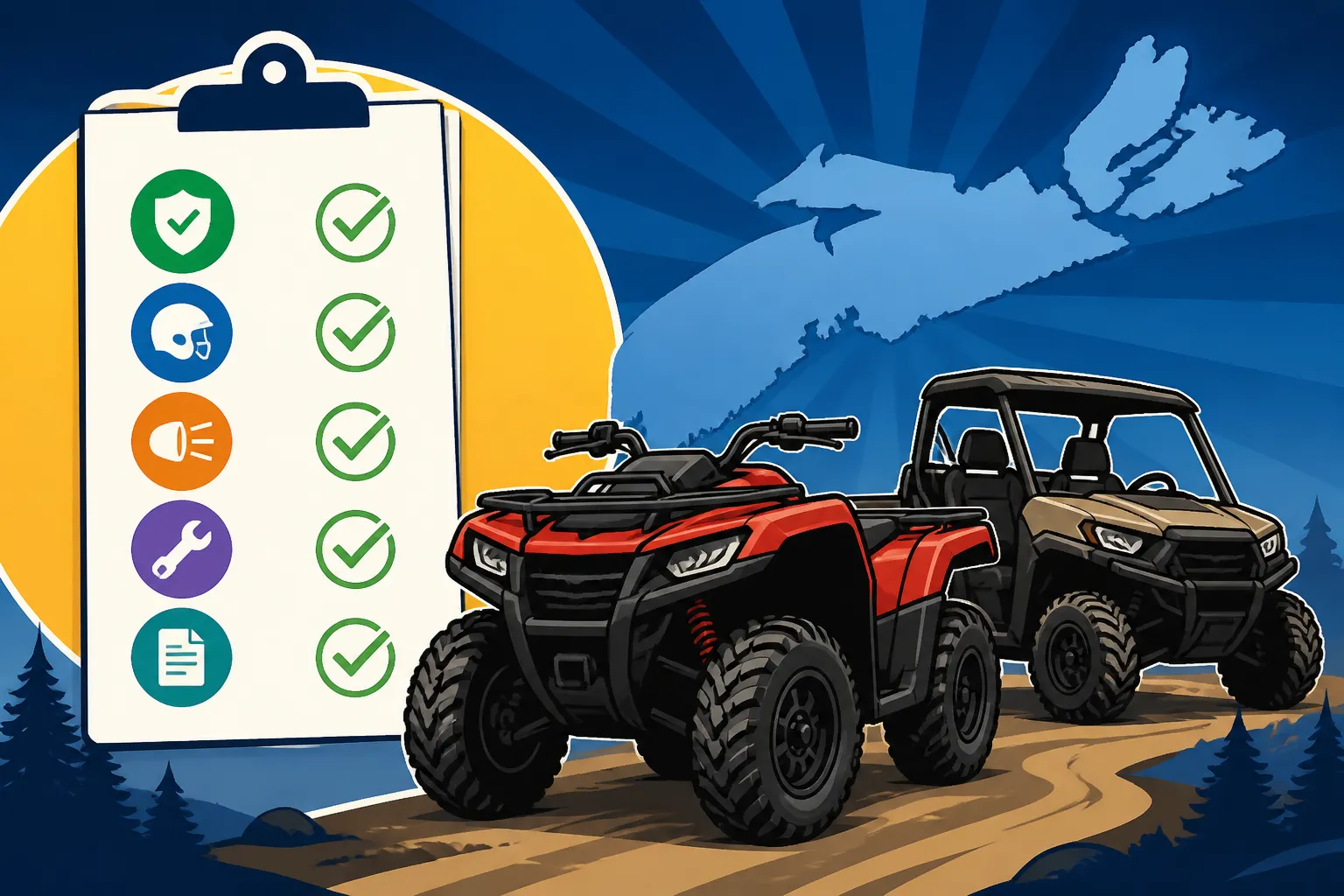
Having all these documents organized and ready will significantly speed up your visit. For a broader view of all the items you might need, consult a comprehensive [Nova Scotia Registration Paperwork Checklist].
What to Expect at Access Nova Scotia
Visiting Access Nova Scotia can sometimes feel daunting, especially when you're dealing with non-standard paperwork like an auction purchase. However, with thorough preparation, you can make the process as smooth as possible.
- Be Patient and Prepared: The clerk will meticulously review all your documents. They might have questions about the circumstances of the purchase, especially regarding the statutory declaration. Answer truthfully and calmly.
- Explain Your Situation Clearly: Briefly explain that the machine was purchased at an auction and why certain documents (like the previous owner's signed-over permit) are not available, which led you to prepare a statutory declaration.
- Potential for Delay: Be aware that processing an auction-bought machine might take longer than a straightforward registration. In some cases, if there are complexities or further verification needed, the clerk might not be able to issue the permit on the spot, and your application might be reviewed by a supervisor.
- No Plate, Just a Permit: Remember, OHVs in Nova Scotia don't get traditional license plates. Instead, you'll receive a vehicle permit that needs to be carried with you when riding.
- Where to Go: You can visit any Access Nova Scotia centre to register your machine. You don't need to go to a specialized location. [Registry Counter or Service Centre: Where to Register] will guide you to the correct place.
After Registration: Staying Compliant
Getting your auction machine registered is a huge step, but it's not the end of your obligations as an OHV owner in Nova Scotia. There are ongoing requirements you need to meet to ensure you're always riding legally and safely.
Insurance Requirements
Once your machine is registered, the next critical step (and legal requirement) is to ensure it's properly insured. In Nova Scotia, all off-highway vehicles must carry valid liability insurance. This isn't just a recommendation; it's the law.
- Minimum Coverage: You'll need a minimum of $500,000 in third-party liability coverage. This covers damages or injuries you might cause to others or their property while operating your OHV. It's essential because accidents can happen, and the financial repercussions without insurance can be devastating. [Nova Scotia's $500,000 Liability Minimum] protects you from significant personal financial exposure.
- Pink Card: Your insurance company will provide you with a "pink card" (proof of insurance). You must carry this card with you whenever you are operating your machine, whether on your own land or on trails. An officer can ask to see it, and failing to produce it can result in penalties. Always consult your broker to understand the full scope of [Nova Scotia Insurance Requirements for Riders] and ensure your policy meets all provincial standards.
Annual Renewals and Trail Permits
Your Nova Scotia OHV permit isn't a one-and-done deal. There are ongoing annual requirements to keep your machine legal.
- Annual Vehicle Permit Renewal: While the initial Certificate of Registration is a one-time fee, the vehicle permit portion must be renewed annually. You'll typically receive a renewal notice in the mail. Missing this deadline can result in fines if you're caught riding with an expired permit. The [Nova Scotia ATV Permit Renewal] process is straightforward, but it's crucial to stay on top of it.
- ATVANS Trail Permit: If you plan on riding on the extensive network of managed off-highway vehicle trails maintained by the All-Terrain Vehicle Association of Nova Scotia (ATVANS) and its member clubs, you'll also need an annual ATVANS trail permit. This permit helps fund trail maintenance, signage, and insurance for the trail system. You can purchase this permit directly through ATVANS or one of its member clubs. The [Nova Scotia Trail Permit Cost] is a small investment that supports the riding community and ensures you have legal access to thousands of kilometres of incredible trails across the province.
By understanding and adhering to these requirements, you can transform your auction find from a paperwork headache into a source of endless adventure on Nova Scotia's beautiful trails.
Here's a quick comparison of the document needs:
| Document Type | Standard Private Sale | Auction Purchase (Likely Scenario) |
|---|---|---|
| Proof of Purchase | Detailed Bill of Sale (Seller & Buyer info, VIN, price) | Auction Receipt (Might be basic; needs supplement) |
| Previous Registration | Original Certificate of Registration (signed over) | Often Missing |
| Lien Check | Highly Recommended (Seller should provide clear title) | Absolutely Critical (Buyer's responsibility) |
| Proof of Identity | Required (Buyer) | Required (Buyer) |
| Proof of Residency | Required (Buyer) | Required (Buyer) |
| Statutory Declaration | Usually Not Needed | Often Required (to affirm ownership if papers missing) |
| VIN Verification | Standard check | Absolutely Critical (cross-reference receipt) |
| Payment for Fees/Taxes | Required | Required |
| Insurance Information | Required | Required |
Disclaimer
This article is for general informational purposes only and does not constitute professional advice. Laws, prices and regulations vary by location and change over time. Consult a qualified professional for guidance on your specific situation.