Signing a Declaration When the Papers Are Missing
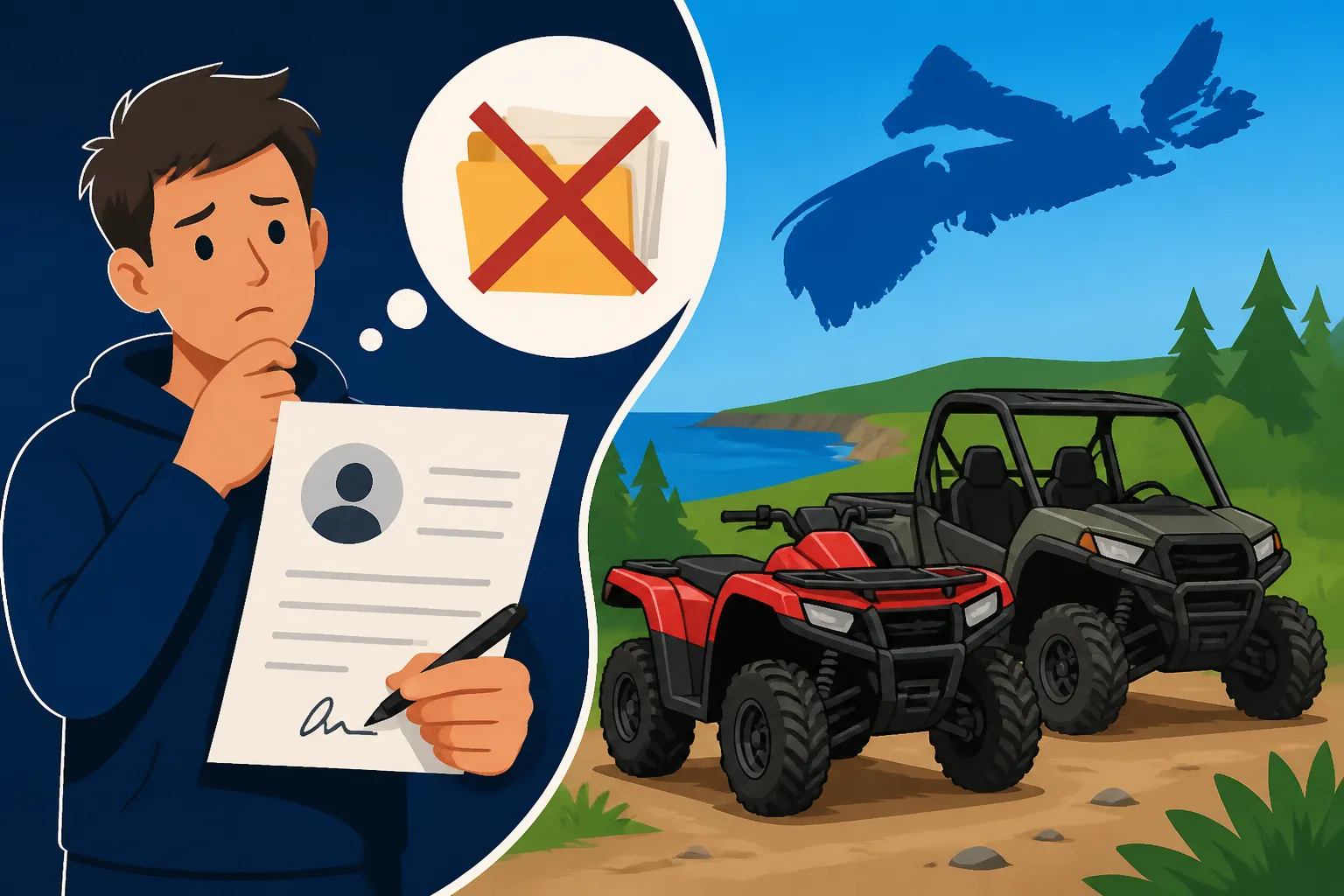
It's a common story in Nova Scotia: you find a fantastic deal on a used ATV or UTV, you're excited to hit the trails, but when it comes time to register your new machine, you realize the paperwork from the previous owner is nowhere to be found. This situation can feel like a real roadblock, leaving you wondering if your new toy will ever see the light of day. This guide will walk you through the process of using a statutory declaration to register your off-highway vehicle (OHV) in Nova Scotia, even when you don't have all the traditional documents.
The Frustration of Missing ATV/UTV Paperwork in Nova Scotia
There's nothing quite like the thrill of bringing home a new-to-you off-highway vehicle, whether it's a quad for tackling the rocky coastlines or a side-by-side for exploring the vast interior woodlots. That initial excitement, however, can quickly turn into a sinking feeling when you realize the previous owner's documentation, like the original bill of sale or the [Nova Scotia's Certificate and Vehicle Permit], has gone missing. It's a surprisingly common predicament here in Nova Scotia, and it can leave you scratching your head, wondering how on earth you'll get your machine legally on the books.
Why Papers Go Missing and What It Means for You
Paperwork tends to vanish for a variety of reasons, none of which are usually malicious, but all of which create a headache for the new owner. Perhaps you bought the machine in a private sale from someone who simply wasn't meticulous with their records, or maybe they’d owned it for so long they never imagined they'd need to dig out the original purchase documents. Sometimes, you might inherit a machine, and the estate simply doesn't have the previous owner's meticulously organized files. Older machines, especially those that have changed hands multiple times, are also prime candidates for missing documentation. You might even purchase a machine from outside Nova Scotia, only to find their provincial paperwork isn't quite what Access Nova Scotia expects.
The immediate consequence of this missing paperwork is a huge hurdle in getting your machine registered. Without proof of ownership, Access Nova Scotia can't issue you a new [Nova Scotia's Certificate and Vehicle Permit], which means you can't legally ride. You're left with a perfectly good machine sitting in your yard, gathering dust, while the trails beckon. It's frustrating, to say the least, and it can feel like you've bought a very expensive paperweight.
The Legal Requirement for Ownership Documentation
The Nova Scotia Registry of Motor Vehicles, through its Access Nova Scotia centers, needs a clear, unbroken chain of ownership for every off-highway vehicle. This isn't just bureaucratic red tape; it's a critical step to prevent theft, ensure machines are legally obtained, and properly record the asset for tax purposes. They need to be sure that the person applying for registration is indeed the rightful owner. Without a bill of sale, a previous certificate, or other formal documents, that chain of ownership becomes murky.
If you attempt to operate an OHV without proper registration, you're not just risking a stern talking-to; you're facing significant legal consequences. The fines for operating an unregistered machine in Nova Scotia can be quite steep, starting with a [Nova Scotia Minimum Fine of $250]. These penalties underscore just how serious the province is about ensuring all off-highway vehicles are properly accounted for. It's not a risk worth taking, especially when there's a legitimate pathway to getting your machine registered even with missing papers.
The Statutory Declaration: Your Lifeline to Registration
When faced with the daunting task of registering an ATV or UTV with missing ownership documents, many Nova Scotians feel like they're at a dead end. However, there's a very specific and legally recognized solution for this problem: the statutory declaration. This document acts as your sworn statement of facts, allowing you to bridge the gap created by lost or non-existent paperwork.
What Exactly is a Statutory Declaration?
At its core, a statutory declaration is a formal written statement of facts, affirmed as true by the person making it, and witnessed by an authorized individual. Think of it as a sworn testimony, but in written form. When you sign a statutory declaration, you are essentially attesting, under penalty of perjury, that everything stated within that document is accurate and truthful to the best of your knowledge. This isn't a casual letter; it carries significant legal weight, much like an affidavit used in court.
For the purpose of registering an OHV in Nova Scotia, its purpose is clear: to formally declare how you came into possession of the machine and why the standard documentation is unavailable. It allows you to create a verifiable record of ownership when traditional paper trails have run dry. Because it's a sworn statement, Access Nova Scotia can rely on its contents as legitimate proof, provided it is properly executed and complete.
When a Statutory Declaration is Accepted by Access Nova Scotia
Access Nova Scotia will generally accept a statutory declaration in situations where the traditional proofs of ownership, such as a formal bill of sale or the previous owner's [Nova Scotia's Certificate and Vehicle Permit], are genuinely unavailable. Common scenarios include:
- No Bill of Sale: You purchased the machine privately, and the seller either didn't provide a formal bill of sale or you've since lost it.
- Inherited Machine: The OHV was passed down to you as part of an estate, and there's no clear purchase documentation or formal transfer of ownership from the deceased. [Nova Scotia Registration After the Owner Dies]
- Older Machines: You acquired a very old machine where documentation might never have existed in a formal sense, or it's simply been lost over decades.
- Gifted Machine: Someone gave you the machine as a gift, and there was no formal paper transaction.
However, it's crucial to understand that a statutory declaration isn't a magic bullet for every situation. It will generally not be accepted if there's any suspicion of fraud, theft, or if the information provided is clearly incomplete or contradictory. Access Nova Scotia staff are trained to look for red flags. It's about honesty and diligence; you're providing a sworn account of what happened, not trying to circumvent legitimate rules. Always ensure you are truthful and accurate in your declaration, as providing false information can lead to serious legal repercussions.
Crafting Your Declaration: Key Details to Include
A statutory declaration needs to be thorough and precise to be accepted by Access Nova Scotia. It's not enough to simply say "I own this quad." You need to provide a complete narrative that establishes your legitimate claim to the machine. You can find templates and guidance for creating legal documents like this through services such as LawDepot, which offers customizable forms to ensure you cover all the necessary bases.
Here's a breakdown of the crucial details you'll need to include:
-
Your Full Identifying Information:
- Your full legal name, current address, and contact information.
- Your Nova Scotia driver's license number or other government-issued ID.
-
Machine Details:
- The full make, model, and year of the ATV or UTV.
- The Vehicle Identification Number (VIN) or serial number. This is absolutely critical. [Checking a Serial Number Before the Money Moves]
- Any other unique identifiers, such as engine size or colour.
-
Circumstances of Acquisition:
- Date of Acquisition: When did you take possession of the machine? Provide as precise a date as possible.
- Location of Acquisition: Where did the transaction or transfer take place (e.g., "from John Smith at his residence in Truro, Nova Scotia")?
- How it was Acquired: Clearly state whether it was a purchase, a gift, an inheritance, or another form of transfer.
- Previous Owner's Information (if applicable): If you purchased it from someone, include their full name, last known address, and contact information. Even if you only have a name and general area, it helps.
-
Reason for Missing Documents:
- Explain clearly why you don't have the standard paperwork. Was the bill of sale lost? Was it never provided? Was the machine inherited without formal estate documents? Be concise and factual.
-
Statement of Ownership and Encumbrances:
- Explicitly state that you are the sole and rightful owner of the off-highway vehicle.
- Declare that the machine is free from any liens, encumbrances, or outstanding financial claims. This is important because Access Nova Scotia needs to know there aren't other parties with a legal claim on the machine. You can also mention the process for [Nova Scotia Registration and Lien Records] in your research.
- Confirm that the machine was not stolen and that you have no knowledge of any other person having a superior claim to its ownership.
-
Your Sworn Statement:
- A formal statement that you believe the contents of the declaration to be true and correct, and that you are aware of the legal consequences of making a false declaration.
Using a template from a reputable source like LawDepot can ensure that your declaration includes all the necessary legal language and covers all the bases required by Nova Scotia's registry. It takes the guesswork out of drafting such an important document yourself.
The Process of Completing and Submitting Your Declaration
Once you've drafted your statutory declaration with all the necessary details, the journey isn't quite over. There are specific steps you need to follow to make it a legally binding document and then present it to Access Nova Scotia for approval. This process requires attention to detail and a willingness to provide any supplementary information they might request.
Getting Your Declaration Witnessed and Sworn
This is a critical step that gives your statutory declaration its legal authority. Your declaration must be sworn before an authorized individual. In Nova Scotia, this typically means a:
- Notary Public: A legal professional authorized to witness and certify documents.
- Commissioner of Oaths: An individual appointed by the government to administer oaths and take affidavits. Many lawyers, some government officials, and even some municipal clerks hold this designation.
- Lawyer: Any practicing lawyer can administer an oath.
When you go to have your declaration witnessed, you will need to bring photo identification. The witness will ensure you understand the document, confirm your identity, and then watch you sign it. They will then sign and stamp the document themselves, certifying that you swore the truthfulness of the contents before them. It’s a formal process, and the witness will reiterate the seriousness of making a sworn statement – false declarations carry legal penalties. There will typically be a fee for this service, which can vary depending on who you choose to witness the document.
Gathering Supporting Documentation (Even Without the Originals)
Even if you don't have the original bill of sale or previous registration, any shred of evidence you do have can bolster your statutory declaration. Think of this as building a case for your ownership. While the declaration is your primary tool, supplementary materials can strengthen your position and make Access Nova Scotia's decision-making process much smoother.
Consider gathering:
- Photographs of the Machine: Clear photos showing the machine's condition and, importantly, the VIN or serial number plate.
- Correspondence: Emails, text messages, or written notes from the previous owner (if any) discussing the sale or transfer.
- Repair Receipts: Any receipts for parts or service you've had done in your name since acquiring the machine. This shows you've been investing in it as the owner.
- Previous Registration Attempts: If you've tried to register it before and were advised to get a declaration, note that down.
- Insurance Documents: If you've managed to get temporary insurance, or even a quote, this can show you're taking steps towards legal ownership.
- VIN Verification: A clear, legible photograph of the machine's VIN is paramount. If it's an older machine and the VIN is hard to read or missing, you might need to consult with Access Nova Scotia directly about [Nova Scotia Registration When the VIN Is Gone] to see if they can assign a special identification number.
The more documentation you can provide, even circumstantial evidence, the more credible your statutory declaration becomes. It shows you've done your due diligence and are genuinely trying to comply with the rules.
Presenting Your Case to Access Nova Scotia
Once your statutory declaration is properly completed, sworn, and you've gathered any available supporting documents, it's time to visit an Access Nova Scotia centre. This is where your efforts culminate, and you finally get the chance to put your machine on the books.
Here's what you should be prepared for:
- Bring Everything: Take your original, signed and witnessed statutory declaration, all supporting documents you've collected, and your government-issued photo ID.
- Be Ready for Questions: The staff at Access Nova Scotia are there to ensure everything is legitimate. They might ask you questions about how you acquired the machine, why the papers are missing, or details from your declaration. Be honest, calm, and clear in your responses.
- Expect Fees and Taxes: Even with a declaration, you'll still be responsible for the standard registration fees and any applicable taxes. For example, if you haven't already paid HST on the purchase, you'll likely pay [Nova Scotia Tax Collected at Registration] at the counter. Make sure you have the means to pay.
- Understand Potential Delays: While many statutory declaration cases are straightforward, some might require further review by a supervisor or a more detailed investigation. Don't be discouraged if it doesn't happen instantly. Be patient and polite. They are processing [Nova Scotia Registration Processing Time] for many different types of vehicles.
Remember, services like LawDepot can help you prepare the correct format for your declaration, making the submission process smoother by ensuring all legal requirements are met before you even walk through the door. Having a professionally prepared document can significantly reduce potential friction points with the registry staff.
Avoiding Future Headaches: Best Practices for ATV/UTV Ownership
While the statutory declaration is an excellent tool for navigating past missing paperwork, the best approach is always prevention. By adopting some sound practices when buying and owning an ATV or UTV, you can avoid these stressful situations altogether and ensure a smooth ownership experience from day one.
Always Get a Proper Bill of Sale
This cannot be stressed enough. A properly completed bill of sale is the cornerstone of a clear ownership record. Whether you're buying from a dealer or a private seller, insist on one. This document is essential not only for your initial registration but also for future sales and for proving ownership if your machine is ever stolen. A good bill of sale should include:
- Date of Sale: When the transaction occurred.
- Full Names and Addresses: Of both the buyer(s) and seller(s).
- Contact Information: Phone numbers and email addresses for all parties.
- Machine Description: Make, model, year, and crucially, the full Vehicle Identification Number (VIN).
- Purchase Price: The agreed-upon price of the machine.
- Signatures: Signatures of both buyer and seller, indicating agreement to the terms.
- Warranty/As-Is Clause: A statement regarding the machine's condition and whether any warranty is offered.
Having this document in hand makes the registration process straightforward, as it provides all the necessary information for [Nova Scotia Used Machine Paperwork] without needing additional declarations. You can easily find templates for bills of sale through resources like LawDepot, ensuring all pertinent details are covered and leaving no room for ambiguity.
Keeping Your Papers Safe and Accessible
Once you have your registration, certificate, and bill of sale, treat them like gold. These aren't just pieces of paper; they're your proof of legal ownership.
- Physical Copy in a Safe Place: Keep the original documents in a secure location at home, such as a fireproof safe or a locked cabinet.
- Digital Backups: Scan or photograph all important documents and save them to a cloud storage service (like Google Drive, Dropbox) or an external hard drive. This provides a backup in case the physical copies are lost or damaged.
- Accessible Copies for Riding: While you should keep your originals safe, it's wise to carry copies of your [Nova Scotia's Certificate and Vehicle Permit] and proof of insurance (pink card) when you're out riding. Some riders laminate copies or keep them in a waterproof bag in a compartment on their machine. An officer might ask to see your papers during a trail stop, so being able to quickly produce them is important. [Carrying Papers on a Coastal Ride]
Due Diligence Before You Buy
The best way to avoid missing paperwork issues is to be proactive before you even hand over your hard-earned cash. A little research upfront can save you a lot of grief later.
- Check the VIN: Always verify the VIN on the machine matches any documentation provided by the seller. Run a VIN check if possible (some third-party services offer this) to see if the machine has been reported stolen or has any liens against it. [Checking a Serial Number Before the Money Moves]
- Ask for History: Inquire about the machine's history, how long the seller has owned it, and why they are selling. A reputable seller will be transparent.
- Inspect the Papers: Ask to see the previous registration documents and bill of sale before you commit to buying. If the seller is hesitant or can't produce them, that's a red flag that requires further investigation or, at the very least, a clear understanding that you'll need a statutory declaration.
- Meet at the Registry: For private sales, consider meeting the seller at an Access Nova Scotia centre. This allows you to complete the transfer of ownership immediately and ensures all paperwork is in order under the watchful eye of the registry staff.
By following these steps, you can greatly reduce the chances of encountering registration problems due to missing paperwork and ensure your Nova Scotia ATV or UTV adventures start (and continue) on the right foot.
| Scenario for Missing Papers | Recommended Action | Necessary Document | Example of Use |
|---|---|---|---|
| Lost Bill of Sale | Draft Statutory Declaration | Sworn Declaration, any previous receipts/proof of payment | Purchased quad, lost original receipt |
| Inherited Machine | Draft Statutory Declaration | Sworn Declaration, death certificate, will (if any) | Received machine from deceased relative |
| Gifted Machine | Draft Statutory Declaration | Sworn Declaration, previous owner's details (if known) | Friend gifted an old dirt bike |
| Old Machine, No History | Draft Statutory Declaration | Sworn Declaration, VIN verification, photos | Acquired vintage ATV with no records |
| No Previous Owner Info | Draft Statutory Declaration | Sworn Declaration, detailed machine description | Found abandoned machine (after legal period) or obtained from very distant relative |
Disclaimer
This article is for general informational purposes only and does not constitute professional advice. Laws, prices and regulations vary by location and change over time. Consult a qualified professional for guidance on your specific situation.