An Act Proclaimed in 2023
For years, off-highway vehicle (OHV) riders across Nova Scotia wrestled with a patchwork of rules regarding where they could legally ride their ATVs and UTVs, especially when it came to connecting trails or accessing services. This often led to frustration, confusion, and sometimes even unintentional infractions. However, a significant shift occurred with the proclamation of new legislation in 2023, specifically the Off-highway Vehicles Act. This comprehensive guide will break down exactly what this act means for you, your machine, and the future of trail riding in Nova Scotia, helping you understand the new opportunities and responsibilities.
The Road to Change: Understanding Nova Scotia's 2023 Act
Before 2023, the idea of legally riding an ATV or UTV on public roads in Nova Scotia was largely a grey area, primarily limited to a few municipal bylaws or informal understandings. This created significant challenges for riders who wanted to travel between trail systems, access fuel, or reach amenities without having to trailer their machines every short distance. The existing framework simply wasn't built for the modern OHV community and its desire for interconnected riding experiences.
What the Proclamation Meant for OHV Riders
The proclamation of the Off-highway Vehicles Act in September 2023 marked a monumental step forward for ATV and UTV enthusiasts in Nova Scotia. This wasn't just a minor tweak to existing rules; it was the formal recognition and establishment of a province-wide framework for designated "road trails" – specific segments of public roads where off-highway vehicles are now legally permitted to operate under certain conditions. For countless riders, this meant an end to guessing games and the beginning of a more structured, accessible riding environment. Suddenly, those frustrating gaps between trails could potentially be bridged, opening up new routes and expanding the horizons of where you could explore.
Imagine living in a rural community where the closest gas station or restaurant was just a couple of kilometers down a quiet paved road, but you couldn't legally get there on your quad. The new act directly addresses these kinds of practical barriers, offering a regulated pathway for riders to make those essential connections. This is about more than just convenience; it’s about integrating OHV use into the fabric of Nova Scotia's recreational and, in some cases, daily activities, while still maintaining safety for all road users. It signifies a mature approach to off-highway vehicle management, acknowledging their role in the provincial landscape.
Evolution from Pilot Projects to Permanent Legislation
The 2023 proclamation didn't come out of nowhere; it was the culmination of years of discussion, advocacy, and, critically, a series of pilot projects. Starting as early as 2018, the Nova Scotia government, in collaboration with communities and stakeholders, initiated trials to explore the feasibility and safety of allowing OHVs on designated road segments. These pilot projects were carefully monitored, gathering crucial data on everything from rider behavior to public acceptance and safety statistics. Locations like Pictou embarked on whole-town access trials, offering invaluable insights into how OHVs could coexist with other traffic in different community settings.
These initial trials, such as the [Nova Scotia's 2018 Road Trail Pilot] in seven communities, were absolutely essential. They provided real-world experience, allowing policymakers to understand the practical implications of such a change, refine rules, and address potential concerns before rolling out a province-wide framework. The feedback from riders, residents, and law enforcement during these pilot phases directly informed the legislation that was eventually proclaimed. It demonstrated a commitment to evidence-based policymaking, rather than simply imposing new rules without understanding their impact. This iterative process, moving from small-scale pilots to a comprehensive act, ensured that the final legislation was more robust, thoughtful, and ultimately, better suited to the needs of Nova Scotians.
Navigating Nova Scotia's New Road Trail Rules
With the new act in place, it's paramount for every OHV rider to understand the specific rules and regulations that govern riding on designated road trails. This isn't just about avoiding a fine; it's about ensuring your safety, the safety of others, and preserving the positive reputation of the OHV community. These rules are distinct from those governing traditional trails or private land, and they come with specific requirements that must be met before you even consider taking your machine onto a road trail. Many riders, excited about the new opportunities, often overlook the finer points, which can lead to unnecessary trouble.
Essential Requirements for Riding on Road Trails
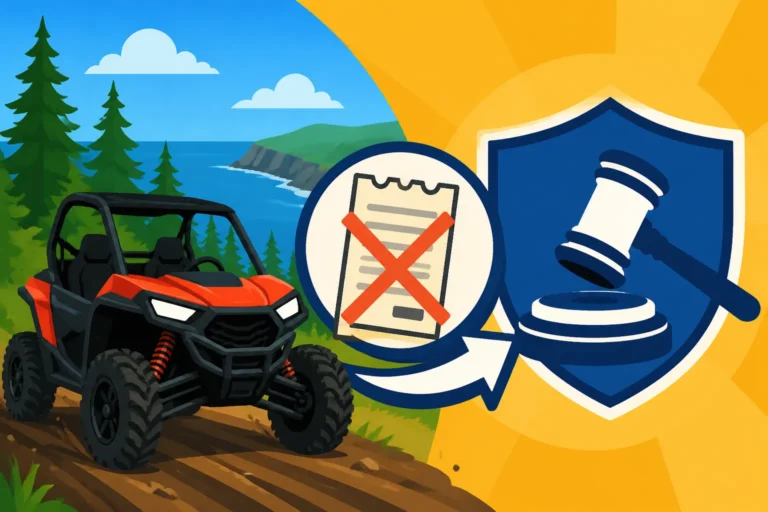
Before you even think about putting a tire on a designated road trail, your machine and you, as the operator, must meet several non-negotiable criteria. Firstly, and perhaps most importantly, your off-highway vehicle must be registered with the Province of Nova Scotia. This is not optional. You'll need to go through the proper channels, typically at an Access Nova Scotia centre, to ensure your machine is legally on the books. This often involves paying the initial [Nova Scotia OHV Registration Cost] and receiving your [Nova Scotia's Certificate and Vehicle Permit]. You can't just throw a SuperATV winch on your machine and assume you're good to go; the foundational paperwork is key.
Secondly, you absolutely need valid liability insurance. This isn't just a good idea; it's a legal requirement for riding on road trails. The province mandates a minimum liability coverage, typically [Nova Scotia's $500,000 Liability Minimum], to protect against potential damages or injuries in an accident. You'll need to carry proof of this insurance – your "pink card" – with you at all times when operating on a road trail. Lastly, the operator themselves must hold a valid driver's licence. A learner's permit, unfortunately, won't cut it. This ensures that anyone operating an OHV on these road segments has a foundational understanding of road rules and responsibilities, bringing a level of consistency with other vehicle operators. For new residents, it's critical to understand [Nova Scotia Registration for a New Resident] also requires establishing proof of address.
Operational Guidelines and Restrictions
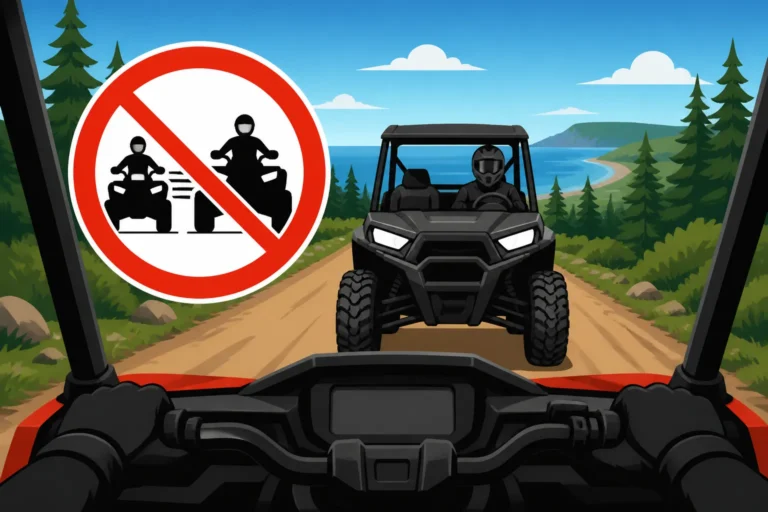
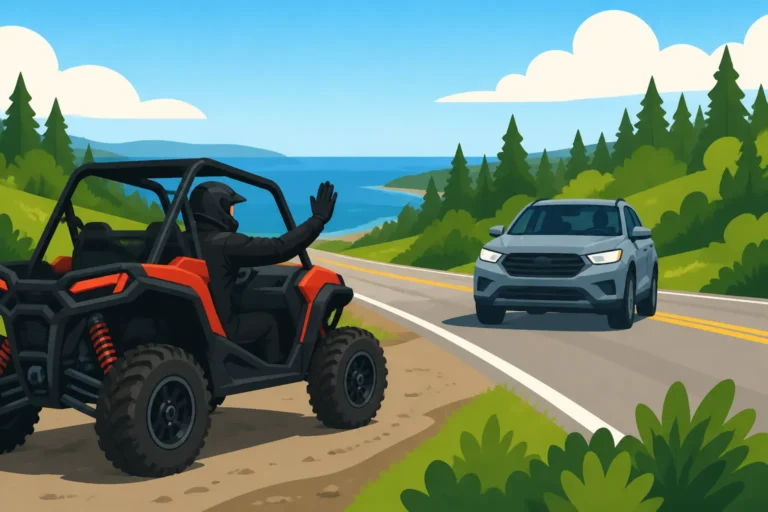
Even when all the registration, insurance, and licensing requirements are met, there are very specific operational rules that must be followed on road trails. Speed is a major one: you cannot exceed 25 km/h on a road trail, regardless of the posted speed limit for other vehicles. This reduced speed helps ensure safety, given the different characteristics of OHVs compared to cars. Riding single file is another critical rule, and passing other vehicles or OHVs on a road trail is strictly prohibited. You must also yield to all other traffic, underscoring that OHVs are guests on these shared thoroughfares.
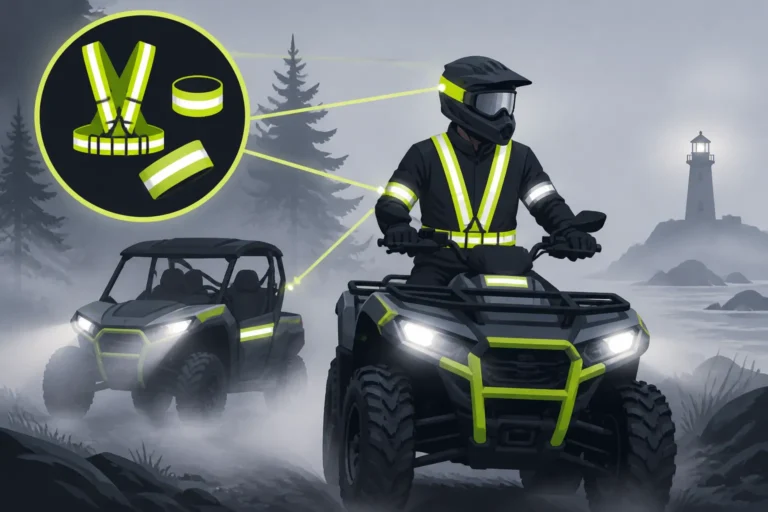
Times of operation are also regulated. You can generally only ride on road trails from half an hour before sunrise to half an hour after sunset. Night riding, which involves enhanced risks, is not permitted on these public road segments, even if your machine is equipped with brilliant SuperATV lighting. Furthermore, machines must be equipped with working headlights and tail lights that meet specific visibility standards, ensuring you're seen by others. Passengers are permitted, but they must be at least nine years old and able to place their feet on the footrests. These guidelines aren't arbitrary; they are designed to mitigate risks and promote safe coexistence with other road users and residents, particularly in populated areas.
Here's a quick summary of key road trail rules:
| Requirement | Details |
|---|---|
| Registration | Mandatory provincial registration for the OHV. |
| Insurance | Minimum $500,000 liability insurance required; proof (pink card) must be carried. |
| Operator Licence | Full driver's licence required (learner's permits not accepted). |
| Speed Limit | Maximum 25 km/h on all designated road trails. |
| Formation | Must ride single file; passing is prohibited. |
| Yielding | OHVs must yield to all other vehicles. |
| Hours of Operation | Half an hour before sunrise to half an hour after sunset. |
| Lighting | Working headlights (visible 300 ft) and tail lights (visible 200 ft) required during operational hours. |
| Passengers | Must be 9 years or older and able to reach footrests. |
| Helmet | Approved helmet (DOT, CSA, Snell, BSI) mandatory for all riders and passengers. |
| Age Requirement | Driver must be 16 with a full license, [Nova Scotia Requires Owners to Be 19] (unless parental consent for 16). |
Enforcement and Penalties
Ignoring the rules governing Nova Scotia's new road trails comes with real consequences. Law enforcement officers are empowered to pull over OHV operators and verify compliance with the act. This means they can ask to see your registration, proof of insurance (your pink card), and your driver's licence. If any of these essential documents are missing or invalid, you could be facing significant fines. For instance, operating an unregistered machine carries a [Nova Scotia Minimum Fine of $250] and can go much higher depending on the severity and context of the infraction. Operating an uninsured machine also carries hefty penalties, reflecting the serious risk posed to public safety.
Beyond fines, repeated offenses could lead to more severe actions, including impoundment of your machine or even licence suspension in some cases. It's not just about what you can do, but what you must do to ride responsibly. Officers are also looking for adherence to the operational rules, such as speed limits and riding in single file. An OHV equipped with an aftermarket exhaust system that exceeds factory noise limits, even if it has performance parts like SuperATV axles, could also draw unwanted attention and lead to fines under noise regulations. The provincial government and local authorities are committed to ensuring these road trails are used safely and respectfully, and riders who choose to flout the rules risk jeopardizing the future expansion of such access for everyone.
Beyond the Act: The Future of OHV Riding in Nova Scotia
The proclamation of the Off-highway Vehicles Act in 2023 is not the end of the story for OHV riding in Nova Scotia; it's really just the beginning of a new chapter. This legislation lays the groundwork for a more integrated and accessible trail system, offering incredible potential for riders, communities, and local economies. However, this expansion also comes with new responsibilities for the riding community to ensure its long-term success and acceptance. Understanding the bigger picture helps riders appreciate the privilege and the necessity of adhering to the rules.
Connecting Communities and Expanding Trail Networks
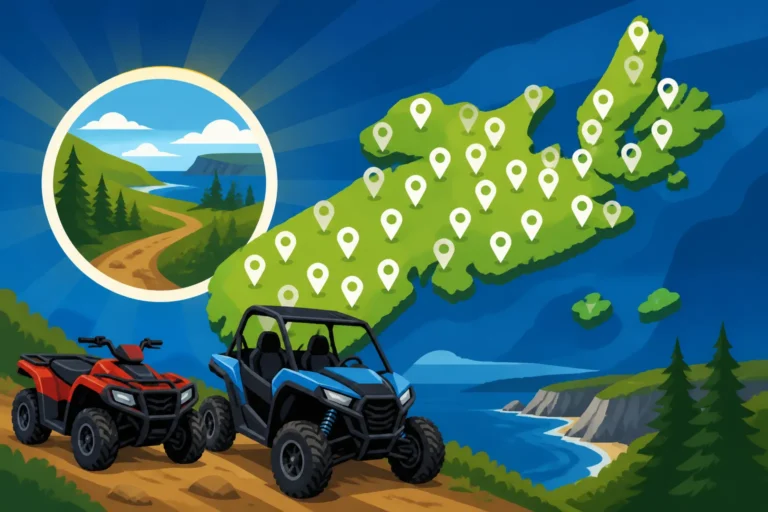
One of the most exciting aspects of the new act is its potential to physically connect existing trail networks and link them to various communities. Imagine being able to ride from one rail trail to another, or to easily access a local diner or fuel station without having to load your machine onto a trailer. This connectivity significantly enhances the riding experience, making longer tours and more diverse adventures possible. Organizations like ATVANS ([Nova Scotia ATV Trails: The ATVANS Network]) have long advocated for this kind of integration, seeing it as crucial for the growth and sustainability of the sport.
The phased approach to designating road trails means that we can expect to see a gradual expansion of these connected routes. What started with pilot projects has already grown into a network, with plans for more communities to participate. For example, some municipal areas are exploring initiatives like [Pictou's All-Roads Trial in Nova Scotia], where a whole town opens its streets to OHVs under specific conditions. This not only benefits riders by expanding their options but also brings economic benefits to small towns along the trails, as riders stop for gas, food, and accommodation. This is truly a win-win, provided riders remain respectful and adhere to all local and provincial regulations.
Challenges and Responsibilities for Riders
While the 2023 act opens up many doors, it also places a greater onus on individual riders to be good ambassadors for the sport. The continued success and expansion of road trails depend heavily on how responsibly OHV operators conduct themselves. Disregard for speed limits, excessive noise, or disrespect for other road users could quickly lead to negative public perception and, potentially, a rollback of access. It's a delicate balance, and every rider has a role to play in maintaining it. The onus is on us, the riding community, to prove that we can share these spaces safely and respectfully.
Moreover, while the act addresses road access, riders still need to be mindful of [Nova Scotia Trespass Law for Riders] when off designated trails. Just because you can use a road trail to get somewhere doesn't mean you can ride anywhere once you're off it. Always seek [Nova Scotia Private Woodlot Permission] before riding on private property. Education is key here. Riders should actively seek out information on [Nova Scotia Road Trail Rules Explained] and ensure their machines are properly maintained and equipped for safety, including wearing appropriate gear like a helmet, eye protection, and sturdy boots. Accessories like a heavy-duty SuperATV bumper can offer protection, but proper riding technique and adherence to rules are the ultimate safety measures. Our collective behavior will shape the future of OHV access in Nova Scotia for years to come.
Disclaimer
This article is for general informational purposes only and does not constitute professional advice. Laws, prices and regulations vary by location and change over time. Consult a qualified professional for guidance on your specific situation.