How a One-Year Trial Opened Every Town Road
It's incredibly frustrating for off-highway vehicle (OHV) enthusiasts in Nova Scotia when you just want to get from one great trail to another, or even grab a coffee in town, but you're constantly wondering where you're allowed to ride your ATV or UTV. For years, riders faced a patchwork of rules that often left them feeling disconnected from local amenities and fellow riders. This guide is going to take a deep dive into how a specific one-year trial project began to change that landscape, opening up municipal roads in select communities and setting a precedent for wider access across the province.
The Genesis of Nova Scotia's Road Access Pilot
For a long time, ATV and UTV riders in Nova Scotia often felt like they were operating in a legal grey area when it came to town and municipal roads. While there were dedicated trail networks, the reality of getting to those trails, or even just crossing a short paved section to reach a gas station or a friend's house, was a constant headache. This frustration wasn't just about convenience; it spoke to a larger desire for integration and recognition within rural communities where OHVs are often a vital part of daily life and local economies.
Why the Need for Road Access Arose
Picture this: you're out enjoying a fantastic ride on a beautiful Saturday morning, far from the hustle and bustle. Suddenly, you realize you're low on fuel, or maybe you're craving a hot lunch. Your map shows a gas station or a diner just a kilometer down the main road in the next village. But for many years, that short stretch of asphalt was a no-go zone, forcing riders to either turn back, find an alternative (often illegal) route, or arrange for a trailer. It was a logistical nightmare that limited the utility and enjoyment of their machines. Community leaders and local businesses also saw the potential economic benefits of allowing riders to access services directly, bringing much-needed revenue into small towns. The existing legislation, primarily focused on off-road use, simply hadn't kept pace with the growing popularity and practical application of ATVs and UTVs in everyday life. Riders often felt like outsiders, despite being integral to the fabric of many communities.
The Initial Scope and Goals of the Pilot
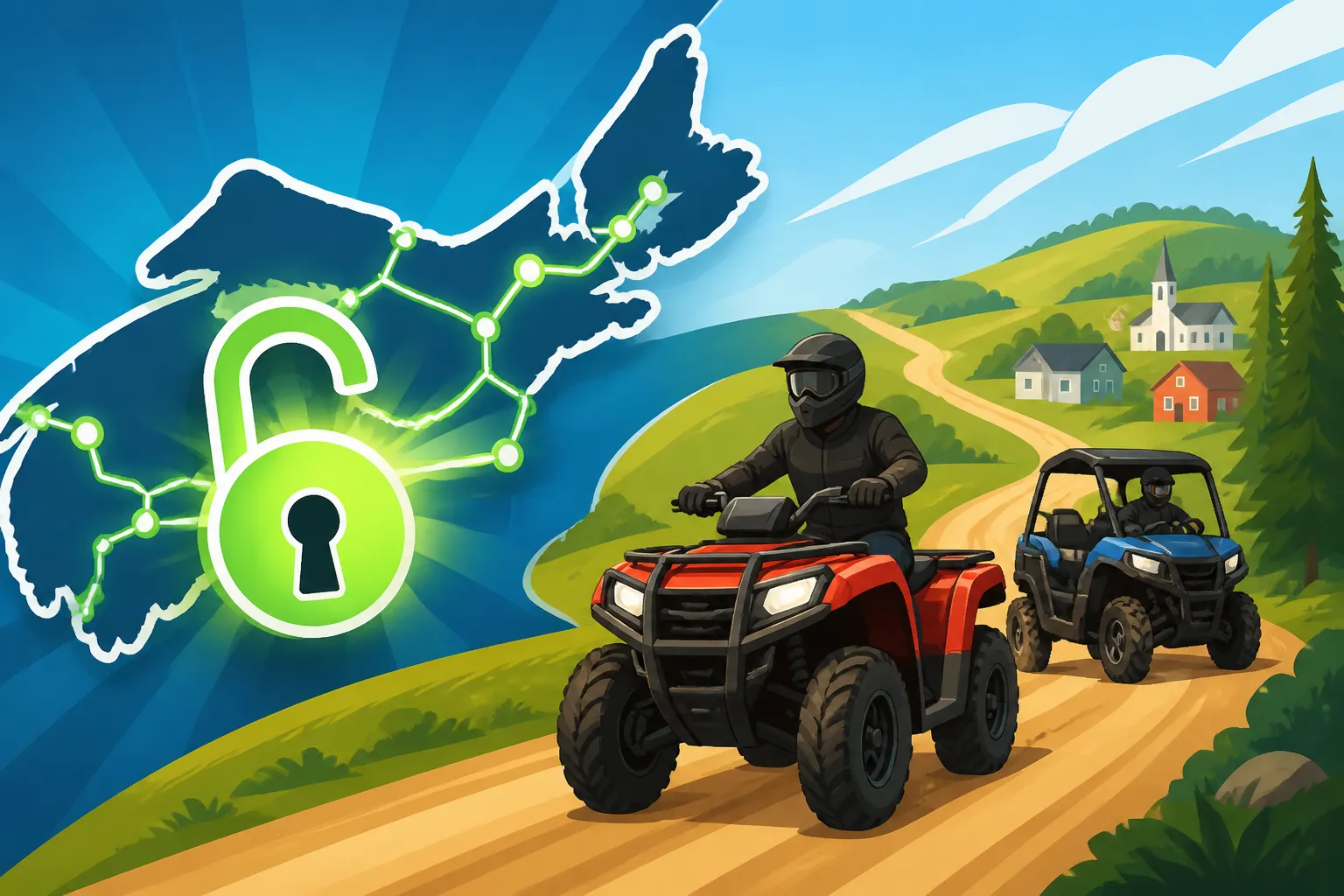
Recognizing these persistent challenges and the calls from various stakeholders, the province initiated the Nova Scotia Road Trails Act in 2018, which led to a pilot project. This wasn't a sudden, province-wide free-for-all; it was a carefully structured, one-year trial designed to test the waters in specific communities. The goal was to observe how OHVs could safely integrate with existing road traffic, gauge public sentiment, and gather data to inform future policy decisions. For instance, towns like Pictou embraced a comprehensive approach, allowing OHVs on all municipal roads within their boundaries for the duration of the pilot, rather than just designating specific "road trails." This bold move, detailed further in [Pictou's All-Roads Trial in Nova Scotia], was a game-changer for local riders, transforming how they interacted with their community. The project specifically aimed to determine if such broader access could be managed safely and effectively, paving the way for more permanent and widespread changes.
Early Community Engagement and Feedback
Before the wheels even hit the pavement (literally!), extensive community engagement was crucial. Local municipal councils, law enforcement, residents, and ATV clubs were all brought to the table. These discussions were often passionate, with some residents expressing concerns about noise, safety, and potential damage to road infrastructure, while riders championed the benefits of increased accessibility and economic activity. The provincial government's approach was to listen, address concerns, and explain the careful parameters of the trial. For example, during public meetings, officials clarified specific safety requirements and speed limits that would be enforced. This early dialogue helped to build trust and ensure that the pilot project was developed with a balanced perspective, aiming to mitigate potential negative impacts while maximizing the benefits for riders and communities alike. These early conversations directly influenced which communities opted in and the specific rules they adopted.
Understanding the Rules of the Road During the Trial
When these municipal roads opened up, it wasn't a free-for-all; specific rules were put in place to ensure safety and order. Many riders, excited by the new access, quickly realized that riding on a municipal road was a different ballgame than tearing down a wooded trail. It required adherence to traffic laws, proper machine preparation, and an understanding of designated routes.
Key Regulations for ATV/UTV Operators on Public Roads
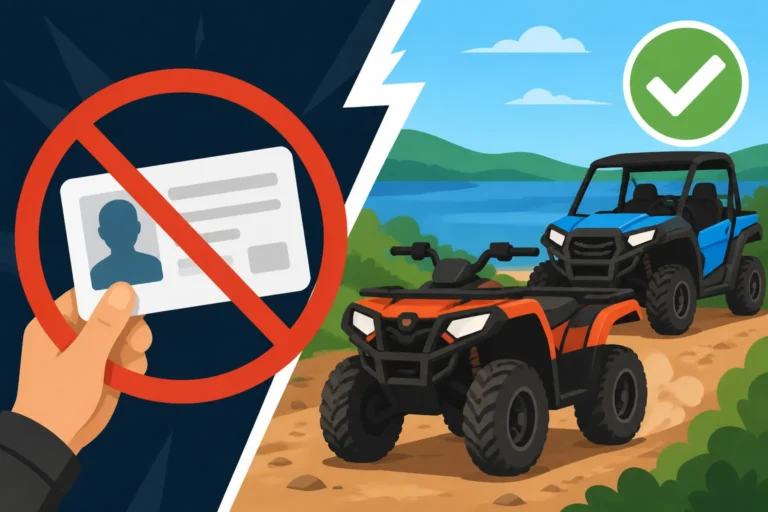
During the trial, operators had to adhere to a strict set of rules that mirrored some regular vehicle regulations while also maintaining specific OHV requirements. For starters, you absolutely needed to have your machine properly registered and insured. This wasn't optional; it was a fundamental requirement for anyone operating on any public road, even during the pilot. Riders also had to possess a valid driver's license. No learner's permits were allowed for operating on these designated road sections. The speed limit was often capped at a maximum of 25 km/h, even if the posted limit for cars was higher. Riders were expected to stay as far to the right of the paved or gravel surface as practicable and travel in single file, never passing another OHV. These were critical measures to ensure the safety of both riders and other road users. Furthermore, operating hours were often restricted, typically from half an hour after sunrise to half an hour before sunset, as detailed in [Nova Scotia Road Trail Operating Hours]. You couldn't just hop on your quad and cruise Main Street at midnight.
Machine Requirements and Safety Gear
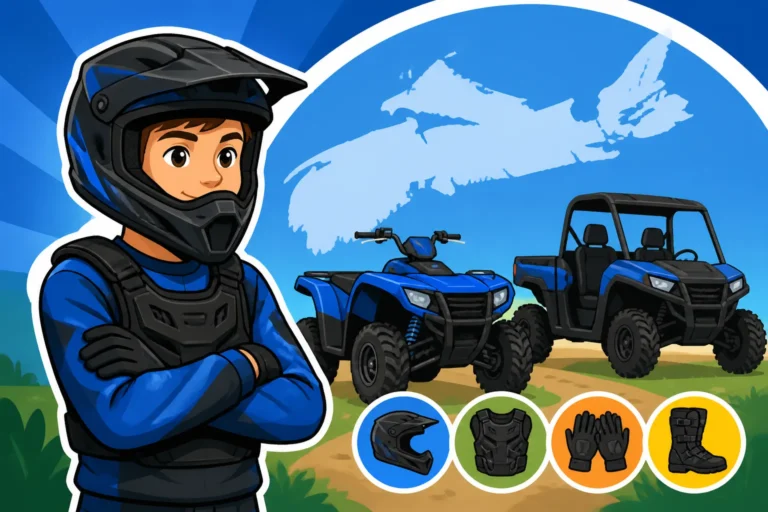
Beyond operational rules, there were strict requirements for the machines themselves and the safety gear riders had to wear. Every ATV or UTV needed to have working headlights, taillights, and brake lights. While turn signals weren't always mandatory for off-road use, many riders, seeking to comply with new regulations for road access, looked to aftermarket suppliers like SuperATV for essential additions such as turn signal kits or DOT-approved windshields. Horns and mirrors were also vital for navigating shared roads safely. And of course, helmets were non-negotiable. Not just any helmet, either – it had to be approved to standards like DOT, CSA, Snell, or BSI, as specified in [Nova Scotia Helmet Standards Accepted]. For riders under 16, additional gear like long sleeves, long pants, gloves, and sturdy boots was also required. These equipment standards were a crucial component of the trial, aiming to minimize risks associated with mixing OHVs with other traffic.
| Requirement | Regular Trail Riding | Pilot Road Access (Municipal Roads) |
|---|---|---|
| Registration | Required (except exemptions) | Always Required |
| Insurance | Required (liability) | Always Required |
| Driver's License | Not always required (off-road) | Full Driver's License Required |
| Speed Limit | Varies by trail/conditions | Typically 25 km/h Max |
| Helmet | Always Required | Always Required (Approved Standards) |
| Lights | Required (dusk/night) | Headlight, Taillight, Brake Light Always Required |
| Mirrors | Not always required | Required |
| Turn Signals | Not always required | Often required (or hand signals) |
| Operating Hours | No specific restrictions | Half hour after sunrise to half hour before sunset |
| Passenger Age | Varies (often 8+) | [Nova Scotia Passengers Must Be 9 or Older] |
Navigating Designated Road Trails vs. General Road Access
It's important to distinguish between the specific "all-road" access granted in some pilot communities and the more general concept of "designated road trails" that became more widespread. In a community like Pictou, as part of the trial, riders could use virtually any municipal road to get where they needed to go within the town limits, provided they followed the aforementioned rules. This was truly about opening every town road in that specific context. However, in other areas, the pilot might have seen the designation of specific, limited "road trails" – short segments of roads connecting trail networks, allowing for safe crossings, or providing access to services. These are different from the broad, whole-town access tested. This distinction is key for riders. Knowing if you're in a municipality that opened all its roads under a specific pilot or if you're only allowed on clearly marked segments is crucial for staying within the law. The province's approach aimed to allow for both models, learning from each. For more on the specifics of where you can ride, check out [Nova Scotia Road Trails: Where You Can Ride].
Impact and Evolution: Beyond the One-Year Mark
The one-year trial was more than just a temporary experiment; it was a crucial learning experience that profoundly influenced the future of OHV legislation in Nova Scotia. The data collected, the feedback received, and the observed realities on the ground helped to shape a more comprehensive and sustainable approach to integrating ATVs and UTVs into the province's transportation network.
Rider Experience and Community Reception
For riders, the pilot was largely a breath of fresh air. Finally, they could access towns, visit local shops, or connect trail systems without fear of being ticketed. This newfound freedom not only enhanced their riding experience but also fostered a greater sense of legitimacy and inclusion. Many reported feeling more connected to their communities, making planned stops at gas stations or restaurants, and even taking pride in demonstrating responsible riding habits. [Nova Scotia Registration Before Your First Ride] became even more important as riders ensured they met all legal requirements before venturing onto newly accessible roads. Local businesses in pilot communities often reported a noticeable increase in traffic and sales from OHV riders, turning what was once a transient presence into a valuable customer base.
However, community reception wasn't universally positive. Some residents, particularly in more densely populated areas of the pilot communities, still raised concerns about noise levels, dust, and perceived safety risks. While many riders were diligent in following the rules, the actions of a few irresponsible individuals sometimes cast a shadow over the entire OHV community. There were certainly learning curves on both sides – residents learning to share roads with ATVs and UTVs, and riders learning to operate their machines more responsibly in shared public spaces.
Challenges Encountered and Lessons Learned
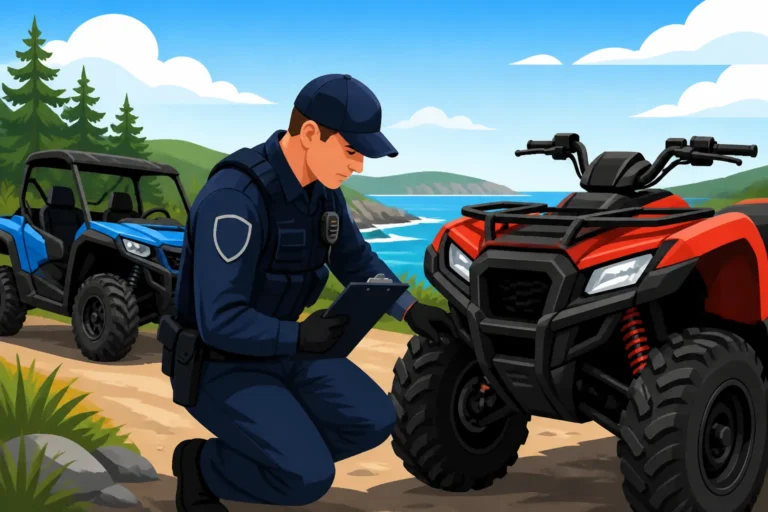
The trial period was not without its bumps and twists. Enforcement proved to be a significant challenge. Police services had to adapt to new regulations, educating both riders and the public about the changes. Distinguishing between a legitimately licensed, insured, and equipped OHV adhering to the speed limit and an unregistered, uninsured machine operating illegally often required more resources and training. Noise complaints, despite efforts to enforce factory exhaust standards, remained a recurring issue in some areas. There were also instances of riders exceeding the posted 25 km/h limit or not respecting the operating hours.
These challenges provided invaluable lessons. They highlighted the need for clearer signage, more public awareness campaigns, and consistent enforcement. They also underscored the importance of rider education and the role of ATV clubs in promoting responsible riding. The provincial government and participating municipalities gained critical insights into which rules were effective, which needed refinement, and what resources were necessary to manage a successful shared-road environment. This formative experience directly fed into the subsequent, more permanent legislation, showing that trials are vital for practical policy development.
How the Pilot Paved the Way for Future Legislation
Ultimately, the one-year trial was a resounding success in terms of gathering data and informing future policy. The lessons learned, both positive and negative, directly influenced the development and refinement of the broader [Nova Scotia Road Trails Act Explained]. The pilot proved that, with proper regulation, enforcement, and rider responsibility, OHVs could indeed share municipal roads safely and effectively in specific contexts. It helped establish the framework for what became a more permanent system of designated road trails and municipal agreements across the province.
While not every town road across Nova Scotia instantly opened up forever after the trial, the pilot undeniably paved the way for the significant expansion of road access that we see today. It shifted the conversation from "if" ATVs and UTVs could use roads to "how" they could do so responsibly. This foundational work laid the groundwork for the future expansion phases, such as [Nova Scotia's 2025 Road Trail Expansion] and [Nova Scotia's 2026 Road Trail Expansion], allowing for more communities to participate and connecting more trails, ultimately fostering a more accessible and enjoyable riding experience for everyone in Nova Scotia. The initial trial proved the concept, demonstrating that a future where riders could access services and connect trails directly was not just a dream, but a viable reality.
Disclaimer
This article is for general informational purposes only and does not constitute professional advice. Laws, prices and regulations vary by location and change over time. Consult a qualified professional for guidance on your specific situation.