Why a Learner’s Permit Will Not Do
It's incredibly frustrating when you're all geared up for an adventure on Nova Scotia's expanding network of road trails, perhaps with a shiny new machine or your trusty quad, only to discover a seemingly small detail like your driver's license status can completely derail your plans. Many riders, especially those new to the province or just getting into the off-highway vehicle (OHV) scene, mistakenly believe that a regular learner's permit for a car or motorcycle will grant them access to these designated multi-use roads. This guide is here to clear up that common misconception and explain exactly why a learner's permit simply won't cut it for operating an ATV or UTV on Nova Scotia's public road trails, ensuring you understand the actual requirements before you hit the trail.
The Full Driver's Licence Requirement for Nova Scotia Road Trails
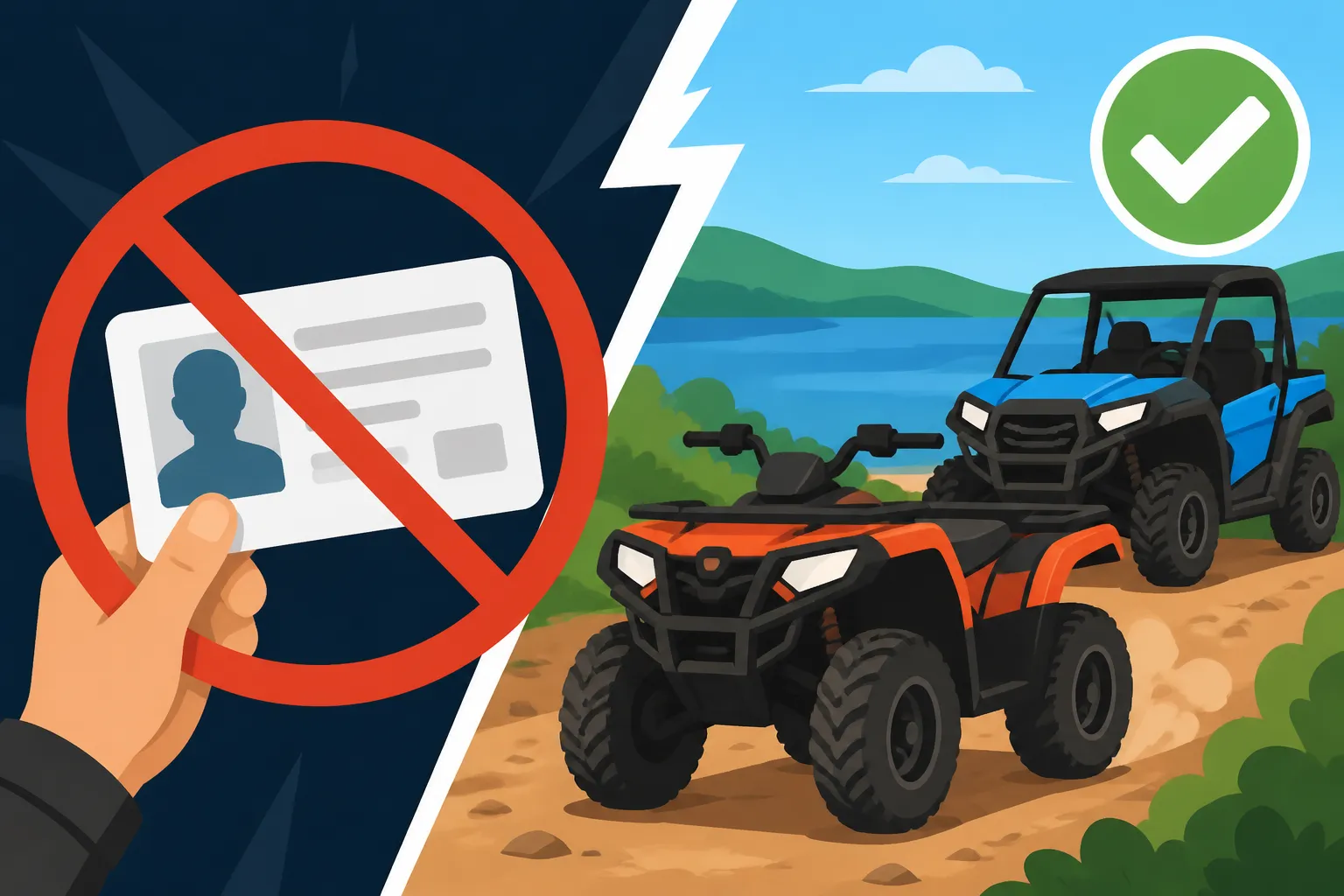
Let's cut right to the chase: if you plan to operate an off-highway vehicle on any designated road trail in Nova Scotia, you must possess a valid, full driver's licence. This isn't just a suggestion; it's a hard and fast rule embedded in the province's Off-highway Vehicles Act and its associated regulations. This specific requirement often catches riders by surprise, especially if they've been operating their machines on private land or traditional trails for years without needing to interact with the Department of Motor Vehicles in this particular way.
The provincial government's rationale behind this strict rule is primarily about safety and ensuring that anyone sharing the road with other vehicles, even at lower speeds on designated trails, has demonstrated a full understanding of road rules and responsibilities. A learner's permit, by its very nature, signifies a driver who is still learning and requires supervision. On a road trail, especially one shared with other vehicles or pedestrians, that level of inexperience and the need for supervision is simply deemed too high a risk. It's about minimizing hazards for all users of these shared spaces.
Think about it from the perspective of other road users. When you're driving a car, a learner's permit means you have a fully licensed driver beside you, ready to take over if needed. On an ATV or UTV, especially one kitted out with SuperATV accessories for comfort and utility, there isn't typically a co-pilot who can intervene in the same way. The operator is solely responsible, and the province wants to ensure that person has proven their competency behind the wheel of any motorized vehicle on public roads. It's a fundamental distinction that separates general trail riding from operating on public infrastructure.
Understanding the Legal Distinction: OHVs on Public Roads
The core of this issue lies in how Nova Scotia's legislation categorizes off-highway vehicles and their permissible operating environments. Traditionally, ATVs and UTVs were considered purely off-road machines, meant for private property, dedicated trails, or woods roads, where the rules of the road simply didn't apply in the same way. However, with the advent and expansion of the [Nova Scotia Road Trails Act Explained], the landscape changed dramatically. These road trails, while often rural and low-traffic, are still considered public roads.
This means that when you're riding your machine on a segment of a public road that has been designated as an OHV road trail, you are, by law, operating a vehicle on a public roadway. This brings with it all the responsibilities and requirements typically associated with driving a car or truck on the same road. This isn't just about having a license; it also extends to [Nova Scotia Requires Registration and Insurance] for any machine on these road trails, ensuring that if an incident occurs, there's a legal framework in place.
The province isn't trying to make it harder for enthusiasts; rather, they're attempting to integrate OHV use into the existing public road system safely. A learner's permit holder, while potentially skilled in off-road maneuvering, hasn't completed the necessary steps to demonstrate full proficiency in navigating traffic, understanding signage, and reacting to unforeseen situations that arise on a public thoroughfare. The requirements are designed to bridge the gap between recreational trail riding and responsible public road use, even if that road is a quiet, designated OHV route. Without a full license, you simply haven't satisfied that critical safety and legal benchmark.
What a Learner's Permit Does Allow for OHV Operation
Now, to be clear, a learner's permit isn't entirely useless if you're an aspiring ATV or UTV rider in Nova Scotia. It just doesn't open the door to road trails. Generally speaking, a learner's permit for a car (Class 7) or motorcycle (Class 6L) allows you to operate that specific type of vehicle under specific conditions, most notably with a supervisor. An off-highway vehicle, while motorized, falls under its own distinct set of regulations when it comes to licensing for operation.
So, if you only have a learner's permit, where can you ride your ATV or UTV? Primarily, your options are limited to private property where you have explicit permission from the landowner. This could be your own land, a friend's farm, or a woodlot. You might also be able to operate on certain private trails that are not part of the public road trail network and do not require a full driver's licence for access, though you'll still need to ensure your machine is properly [Nova Scotia OHV Registration Cost] and you carry the minimum [Nova Scotia's $500,000 Liability Minimum] insurance.
The key takeaway here is that the regulations distinguish between "off-highway operation" and "on-highway operation" (even if it's a designated OHV road trail). A learner's permit holder cannot legally traverse a designated road trail to get from one section of a traditional trail to another, nor can they use a road trail to access services like a gas station or restaurant. For those activities, a full driver's licence is absolutely essential. Many riders find themselves in a bind, perhaps having purchased a utility UTV from SuperATV for their property, only to realize they can't legally drive it down the road to their neighbour's land because they only have a learner's permit. It's a nuance that can really throw a wrench into weekend plans.
Pathways to Full Road Trail Access
If you're an enthusiastic ATV or UTV rider with only a learner's permit, the good news is that obtaining full road trail access is a clear, achievable goal. It simply means following the established process to earn your full driver's licence. This typically involves completing the graduated licensing program in Nova Scotia, which progresses from a learner's permit to an newly licensed driver (Class 5N or Class 6N) and eventually to a full, unrestricted Class 5 or Class 6 licence.
The exact steps and timelines for achieving a full licence will depend on whether you're pursuing a Class 5 (car/light truck) or Class 6 (motorcycle) licence. Generally, it involves a waiting period, passing a road test, and adhering to specific restrictions during the intermediate stages. Once you have a full Class 5 or Class 6 licence, you will be considered legally qualified to operate an off-highway vehicle on Nova Scotia's designated road trails, provided you meet all other requirements such as registration, insurance, and [Nova Scotia Helmet Law for Riders].
Here’s a simplified breakdown of the licensing path:
| Licence Type | Description | OHV Road Trail Access | Requirements |
|---|---|---|---|
| Learner's Permit | Class 7 (car) or Class 6L (motorcycle). Requires supervision. | NO | Minimum age, knowledge test, vision test. |
| Newly Licensed | Class 5N (car) or Class 6N (motorcycle). Some restrictions (e.g., passenger limits, no alcohol). | YES | Passed road test after a waiting period (e.g., 12 months with Class 7 or 6L), no supervisor required. |
| Full Licence | Class 5 (car) or Class 6 (motorcycle). Unrestricted. | YES | Completed newly licensed phase (e.g., 24 months with Class 5N or 6N), no significant driving infractions. |
Keep in mind that while obtaining your full driver's licence is the primary step for road trail access, it's also crucial to complete the mandatory [Nova Scotia Safety Training at 16] if you are under 19, or if you simply want to enhance your riding skills and safety knowledge. Many experienced riders, even those with full licenses, choose to take these courses to refine their techniques and stay current with best practices. Safety training is about more than just legal compliance; it's about responsible riding, something every enthusiast, whether on a stock machine or one upgraded with premium SuperATV components, should prioritize.
So, if you're eager to explore more of Nova Scotia's beautiful landscape on your ATV or UTV, focus on progressing through the graduated licensing system. It's a small investment of time and effort that will unlock a world of legal and safe riding opportunities on the province's burgeoning road trail network.
Disclaimer
This article is for general informational purposes only and does not constitute professional advice. Laws, prices and regulations vary by location and change over time. Consult a qualified professional for guidance on your specific situation.