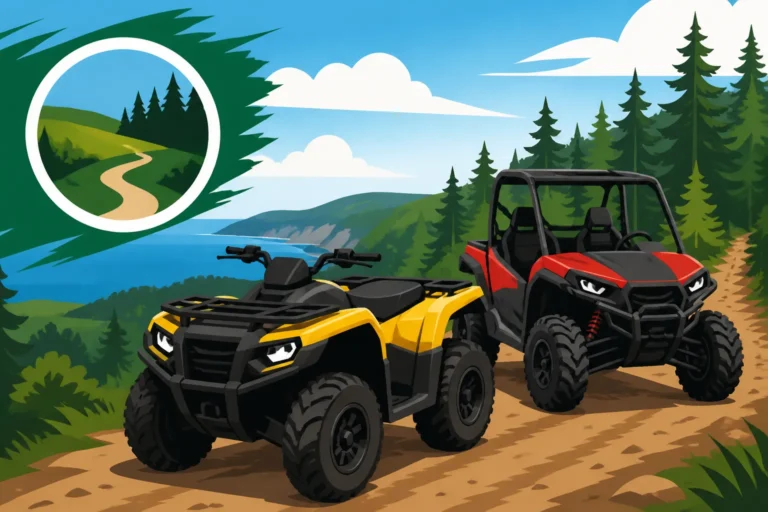
Nova Scotia Riding Season Month by Month
A Nova Scotia ride can start on a sunny afternoon and turn cold, foggy, or muddy before you get back to the truck. Thaw, rain, coastal weather, and changing trail access all affect when and where an ATV or UTV ride makes sense. This month-by-month guide helps you plan around seasonal conditions, check access before leaving, and prepare for the ride you actually have.
January to March for winter riding
January and February bring cold, snow, and shared corridors
Winter riding can be rewarding, especially when a firm surface makes travel easier than it would be during a wet spring. But conditions vary across the province. A route near the coast may be damp or bare while higher ground in Cape Breton or inland areas has snow and ice. Cold also affects your hands, visibility, and the machine itself, so pack for a long delay—not just the planned ride.
Some corridors may be groomed or used by snowmobilers. That does not mean an ATV or UTV can automatically use them. Access can depend on the trail manager, landowner, conditions, and local rules. Check before heading out, and give groomed winter trails and other users plenty of room. For a broader look at seasonal access, see [Nova Scotia Riding in Winter] and [Sharing a Groomed Corridor With Snowmobiles in Winter].
Before a winter trip, check your machine’s battery, tire condition, lights, and fuel level. Bring warm layers, waterproof gloves, a tow strap, a first-aid kit, and a charged phone. A mapping app such as onX Offroad can help you plan and keep track of a route, but treat it as a planning aid rather than proof that a trail is open to motorized riding. Confirm permissions and closures with the relevant local club or land manager.
March is a transition month, not a reliable opening signal
March can look promising one day and turn into a soft, waterlogged mess the next. Snowmelt, rain, and freeze-thaw cycles can leave ruts, exposed mud, and unstable trail edges. A surface that feels solid in the morning may soften after temperatures rise. Avoid assuming that a route is rideable just because a nearby road is clear.
This is a good month to plan rather than push. Check local updates, inspect your machine, organize recovery gear, and identify alternate routes in case a section is closed. If a trail is soft enough that your tires are digging in, turning around is usually kinder to the corridor than trying to power through. [Nova Scotia Spring Thaw and Trails] explains why early-season trail conditions deserve extra caution.
April and May for spring thaw and cautious starts
April often calls for patience
In April, thaw and rainfall can make trails especially vulnerable to damage. Wet ground can deform under tires, and a single attempt to bypass a muddy stretch may widen the trail or damage the surrounding area. Conditions can differ sharply between regions, and even nearby routes may have different drainage, shade, or exposure.
Check for closures before every ride, not just at the start of the season. Local clubs and trail managers may close sections to protect the surface or respond to washouts and other damage. If the route is closed, respect the closure instead of looking for an informal detour. The guidance in [Nova Scotia Trail Conditions and Closures] and [Nova Scotia Club Trail Maintenance] can help you understand why access may change quickly.
May can offer better opportunities, but check each route
As the ground dries, more routes may become suitable for riding, but there is no single province-wide date when trails are ready. A well-drained gravel corridor may firm up before a shaded, muddy section. Recent rain can also change conditions after a route seemed manageable the previous weekend.
For a May ride, choose a shorter loop with a clear turnaround point. Let someone know where you are going, and avoid trying to squeeze in an unfamiliar route just before dark. Maps and apps, including onX Offroad, can be useful for keeping your route organized, but confirm that the specific segment allows ATV or UTV use. Trail permission is not guaranteed by a line appearing on a map. See [Nova Scotia Riding in Spring] for more seasonal planning context.
June to August for longer summer rides
June is a good time to build up to longer days
By June, many riders are ready to plan longer outings, but spring’s uneven conditions may still matter in wet or shaded places. Check for lingering closures and recent trail reports before you commit to a long point-to-point trip. If you are riding with a group, make sure everyone understands the route, fuel plan, and meeting points.
A practical early-summer outing might begin near a familiar trailhead, follow a confirmed open route, and return by the same corridor rather than relying on an uncertain connection. Carry water, food, basic tools, and a first-aid kit. On coastal routes, fog can reduce visibility and make navigation less comfortable, even when the forecast looked fine earlier. [Nova Scotia Coastal Fog and Riding] offers useful considerations for exposed areas.
July and August are popular, so plan for people and weather
Summer often brings more riders, walkers, cyclists, and visitors to shared outdoor areas. Slow down near trailheads, villages, and multi-use sections, and leave room for people travelling at a different pace. Keep noise down near homes and camps, and follow posted signs rather than assuming every old railbed or woods road is open to machines. [Nova Scotia Trail Etiquette Locals Expect] is a helpful companion for busy-season rides.
Heat, dust, and sudden showers can all affect a summer outing. Carry more water than you expect to need, protect yourself from sun and insects, and be ready for a wet ride even if the day begins bright. Before travelling to a new area, check whether the route permits motorized use, whether there are current closures, and where you can safely park and unload. [Nova Scotia Riding in Summer] and [Nova Scotia Trail Maps Worth Downloading] can help you prepare without treating any one map as a substitute for current access information.
| Month | Typical planning focus | What to check before riding |
|---|---|---|
| January | Cold-weather preparation and shared winter corridors | Access permissions, snow conditions, lighting, warm gear |
| February | Variable snow, ice, and visibility | Grooming or closures, machine condition, route options |
| March | Freeze-thaw and early melt | Soft ground, water, closures, turnaround points |
| April | Protecting wet trails | Club updates, land access, recent rain |
| May | Gradual return to longer outings | Drainage, open segments, alternate routes |
| June | Building toward full-day rides | Fuel plan, route connections, lingering closures |
| July | Busy trails and longer daylight | Shared use, dust, water, parking, local rules |
| August | Heat, storms, and late-season wear | Weather, trail condition, supplies, route updates |
| September | Cooler weather and changing light | Fog, daylight, surface conditions, wildlife |
| October | Shorter days and wet leaves | Visibility, lights, traction, route length |
| November | Colder weather and unpredictable surfaces | Ice, closures, daylight, winter access rules |
| December | Winter transition | Current conditions, shared corridors, cold-weather gear |
September to December for fall and winter transitions
September and October bring cooler rides and changing light
September can be an excellent time to enjoy cooler temperatures, but conditions can still change quickly in coastal and highland areas. Fog, showers, and damp surfaces may affect traction and visibility. Keep your route flexible and bring layers so a comfortable start does not leave you chilled when the weather shifts.
In October, shorter daylight becomes a more important part of planning. Set a turnaround time that leaves a comfortable margin before dark, and check that your lights work before setting off. Wet leaves can hide ruts, rocks, and drainage features, so slow down on unfamiliar sections. [Nova Scotia Riding in Fall] covers seasonal considerations that are easy to overlook when the trail still feels dry and familiar.
November and December require a fresh access check
November is often a changeover period: temperatures drop, daylight shrinks, and surfaces may alternate between wet, frozen, and muddy. Do not assume a route that was open in October will remain suitable or accessible. Follow posted closures and local updates, and avoid riding through soft sections simply because the calendar says the season is ending.
By December, winter conditions may affect trail access and shared use. Check whether motorized riding is permitted on your intended route and whether another user group is using or maintaining the corridor. Pack for colder conditions, tell someone your plan, and choose a route that you can shorten if weather or visibility deteriorates. [Nova Scotia Trails Open Year-Round] is a useful starting point for thinking about year-round access, but confirm the status of the particular trail before travelling.
Make a simple month-by-month planning routine
A reliable seasonal routine can prevent a frustrating drive to a closed trailhead—or a much riskier situation farther from home. A day or two before you ride, check the route and access information, look at the expected weather, and decide on a backup plan. On the day itself, reassess conditions. Heavy rain, fog, fresh snow, or a new closure can make yesterday’s plan a poor fit.
Use this short checklist before each outing:
- Confirm that the specific trail or corridor permits ATV or UTV riding.
- Check for current closures, washouts, and seasonal restrictions.
- Match the route length to daylight, weather, and the group’s experience.
- Carry water, food, warm or rain layers, a first-aid kit, and basic recovery gear.
- Share your route and expected return time with someone who is not riding with you.
- Turn around if the trail is soft, visibility becomes poor, or conditions feel unsafe.
The best Nova Scotia riding season is not simply the warmest stretch of the year. It is the time when the route is open, the surface can handle traffic, the weather suits your group, and you have enough daylight and preparation to ride comfortably. Build your plans around those conditions, and be willing to change them when the trail tells you to.
Disclaimer
This article is for general informational purposes only and does not constitute professional advice. Laws, prices and regulations vary by location and change over time. Consult a qualified professional for guidance on your specific situation.