Nova Scotia Riding With Kids on the Trail
Taking kids on an ATV or UTV trail in Nova Scotia can be a great family day out, but the planning matters: age rules, machine fit, trail access, weather and a child’s comfort all affect whether the ride feels fun or stressful. This guide explains how to prepare, choose an appropriate route, ride together safely and know when to turn back.
Check the rules before you choose a trail
Know the age and supervision requirements
Nova Scotia sets a minimum age for operating an off-highway vehicle, and additional requirements apply to young riders. A child’s age alone does not tell you whether they can ride a particular machine or trail: supervision, training, the type of riding area and how the machine fits the rider can all matter. Review [Nova Scotia Rules for Riders Under 16] before making plans, and confirm the rules that apply to your child and the exact kind of ride you have in mind.
For younger children, don’t assume that a wide, familiar club trail counts as a closed course. Some rules distinguish between age groups and where they may operate a machine. A private driveway or a quiet section of woods may feel controlled to a parent, but that does not automatically make it a legally acceptable riding area. If you’re unsure whether a location qualifies, get clarification before unloading.
Supervision needs to be active, not just nearby. A responsible adult should be able to see the young rider, keep up with them and step in quickly if the situation changes. The details matter, so read [Nova Scotia Supervision Requirements] and [Nova Scotia Requires a Supervisor Nineteen or Older] before riding. If your group has several children, make sure the supervising adult can realistically monitor all of them rather than relying on the more experienced kids to look after one another.
Sort out training, registration and trail access
A child may need to meet training requirements before operating an ATV or UTV. Keep any required certificate or proof of training accessible, and check that the machine itself has the registration and insurance required for the type of riding you plan to do. For an overview of the training rules, see [Nova Scotia Safety Training at 16] and [Nova Scotia Safety Certificates Are Mandatory]. Requirements can differ according to a rider’s age and circumstances, so don’t rely on what applied to an older sibling or a parent years ago.
Trail access is a separate question from whether a child is allowed to operate the machine. A route shown on a map may cross land where riding is restricted, or it may be closed because of damage, seasonal conditions or a local decision. Check the relevant club’s latest information and follow the signs at the trailhead. If you’re riding on the ATVANS network, make sure each machine has the required trail permit; don’t assume an adult’s permit covers another machine in the family. [Nova Scotia Trail Permits From ATVANS] explains the permit system, while [Do Nova Scotia Kids Need Their Own Permit?] is useful when you’re sorting out what applies to a child riding a separate machine.
Before the first outing, put the essentials in one place: proof of registration and insurance, permits, training documents if required, and a phone number for the supervising adult. Having the paperwork ready is much easier than trying to find it at a trailhead while a child is waiting in riding gear.
Choose a ride that fits your child, not your usual pace
Match the machine and route to the rider
A child should be able to reach and use the controls comfortably, sit in a stable position and understand how the machine responds. If they have to stretch for a brake lever, shift their weight awkwardly or tiptoe to steady themselves, the machine may not be a good fit. The question isn’t simply whether the child can start it; it’s whether they can manage it calmly when the trail is uneven, the machine slows or they need to stop.
Start with a short, familiar route that has room to pull over and little pressure to keep moving. Avoid beginning with a long point-to-point ride where the group has to reach a destination, keep up with faster riders or navigate unfamiliar junctions. A few easy kilometres followed by a snack break can be a better first outing than an ambitious half-day loop. If the child is tired, cold or overwhelmed, the planned distance becomes less important than getting back safely.
Use this quick comparison to think through the plan:
| Consideration | A more manageable choice | A reason to reconsider |
|---|---|---|
| Rider experience | A short route with predictable terrain | A technical trail or unfamiliar long loop |
| Child’s comfort | They can control the machine and explain basic signals | They are struggling with reach, balance or attention |
| Group pace | The slowest rider sets the pace | The child is expected to catch up |
| Trail conditions | Dry, open sections with easy places to stop | Deep mud, washouts, heavy traffic or poor visibility |
| Return plan | A clear turnaround point and an easy way back | A route with no simple exit if someone is tired |
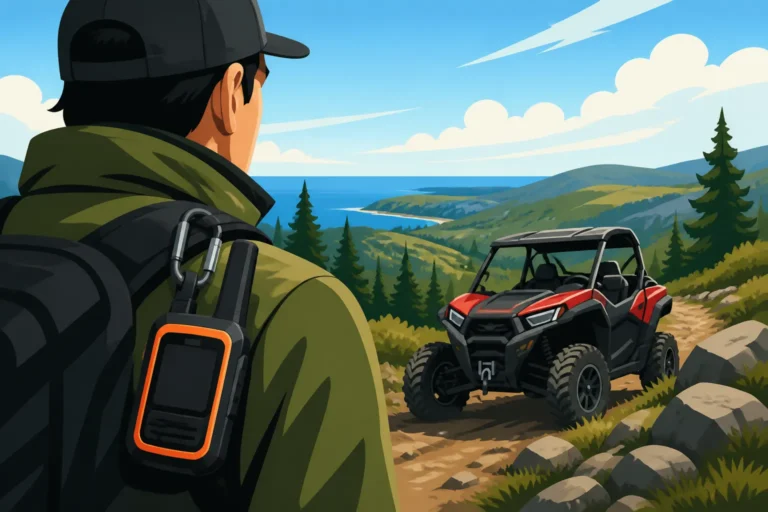
Route-planning tools can help you prepare, but they are not permission to ride wherever a line appears on a screen. You can use onX Offroad to look over potential routes and discuss the day’s plan before leaving home, then check current club notices, trailhead signs and local access restrictions. A map does not replace the person who maintains the trail or the sign posted at a gate.
Plan around stamina, weather and places to stop
Children may tire sooner than adults, especially when they are concentrating on operating a machine or sitting through vibration and bumps. Build in frequent breaks before anyone is desperate for one. Choose a route with obvious stopping points, and agree in advance that any rider can ask for a pause without being teased or hurried. A child who knows they can speak up is less likely to hide discomfort until it becomes a problem.
Nova Scotia weather can change the feel of a ride quickly. Wind, coastal fog, rain and cooler temperatures can make an otherwise easy trip uncomfortable. Pack layers, water and food, and check that everyone has suitable gear before leaving the vehicle. If visibility drops or the ground becomes slippery, shorten the outing rather than trying to preserve the original itinerary. When planning in an app such as onX Offroad, use the route view as one part of preparation—not as a substitute for checking conditions and deciding whether the group is ready.
Give the child a simple, memorable plan. Point out where the group will stop, what to do if they lose sight of the adult and how to signal that they need help. For example, agree that everyone stops in a safe place if the group gets separated, rather than riding farther ahead to search. Keep the plan short enough that a child can repeat it back to you before the engines start.
Make safety routines practical for the whole family
Check helmets, clothing and machine condition
A helmet that fits properly is essential; an adult-sized helmet that shifts around is not a safe substitute for one fitted to the child. Check the fastening, confirm that the helmet stays secure when the child moves their head, and make sure it meets the applicable standards. [Nova Scotia Helmet Standards Accepted] is a useful starting point for understanding helmet requirements. Eye protection matters too, particularly when dust, mud or branches are likely.
Dress for the ride, not just the weather in the parking area. Closed-toe boots that protect the feet and ankles, gloves and durable clothing can help reduce scrapes and keep hands warm. For young riders, check the specific clothing and equipment rules in [Nova Scotia Gear Rules for Riders Under 16]. Avoid loose cords, dangling straps and clothing that could catch on controls or branches. Before the ride, ask the child to sit on the machine in their gear and move through the controls once more.
Do a basic machine check before every outing. Look for obvious damage, check that the brakes and lights work, and make sure tires and controls are in usable condition. A child should know how to stop the machine and what to do if something feels wrong. Keep the explanation age-appropriate: show them where the controls are, then ask them to demonstrate the stopping routine while the machine is stationary.
Set group rules that children can remember
Make the rules few and concrete. For example: stay where the adult can see you, stop when the group stops, don’t pass the lead rider, and never leave the trail. Explain what each rule looks like in practice. “Stay close” can mean different things to different children; “keep the adult in view and stop at every marked junction” is easier to follow.
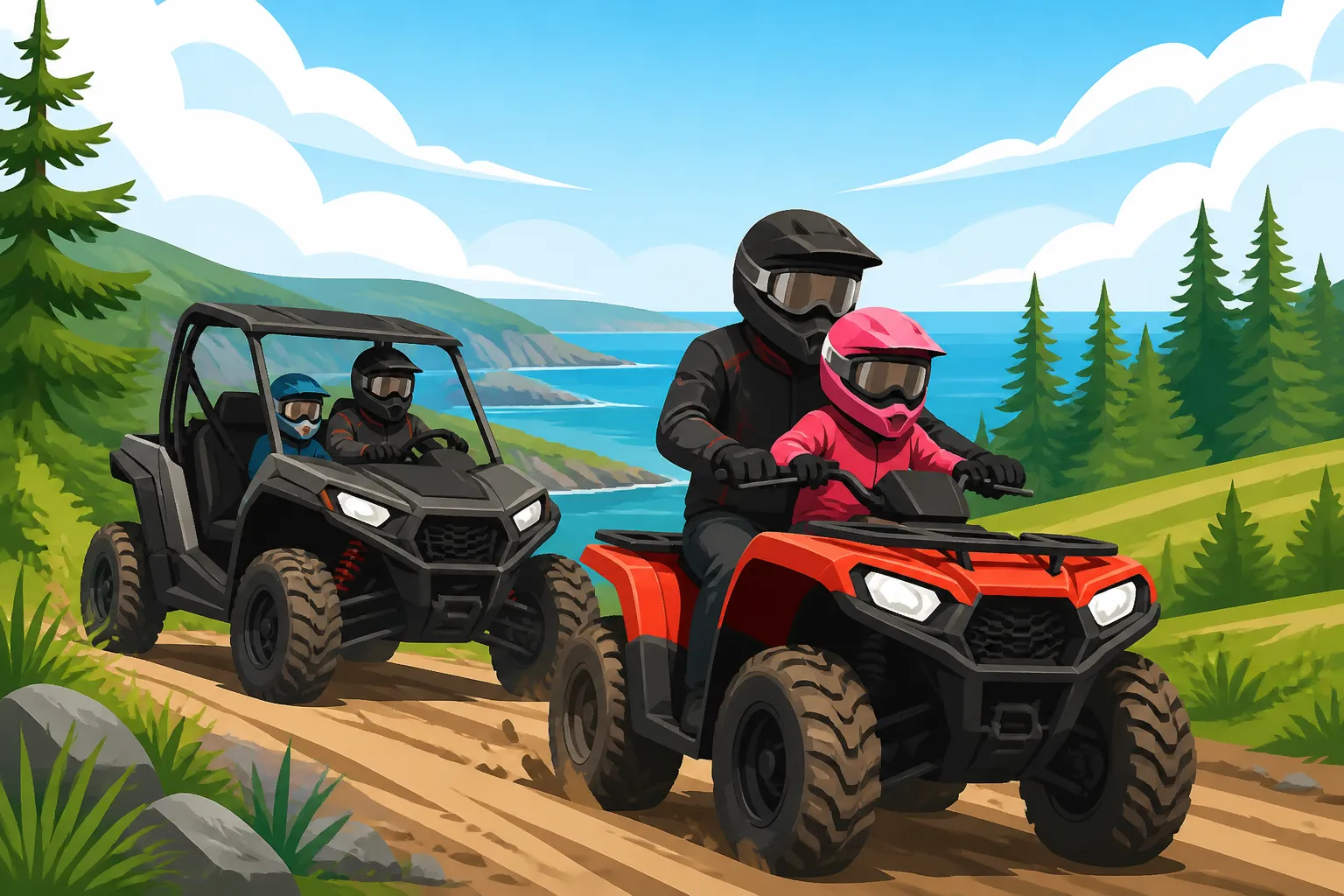
Choose a lead rider and a rear rider when the group is large enough to need them. The lead rider should know the route and keep the pace comfortable for the youngest participant. The adult at the back can check that no one has fallen behind. If there is only one supervising adult, keep the group small enough that the adult can maintain control and visibility. Don’t let a confident child become the informal guide for younger riders.
Agree on clear stop signals before starting. A child who needs a break should be able to signal without taking a hand off the controls in a risky way; choose a safe method and practise it while parked. Also explain that they should never cross a road, watercourse or other hazard just because they see the rest of the group on the other side. The adult should guide crossings and keep the group together.
Decide when to ride, change the plan or head home
Read the trail as you go
A route that looked easy at home may feel different once the group reaches a rough stretch, a narrow bridge or a muddy low spot. Pause before obstacles and decide whether they are appropriate for the least experienced rider. If you’re unsure, turn around, find another route or have an adult scout the section on foot where that is safe and permitted. The goal is not to prove that a child can get through every obstacle; it’s to help them build judgment.
Watch for signs that the ride is becoming too much: delayed responses, repeated mistakes, tense body language, complaints of cold or pain, or a child who stops communicating. These signs can mean fatigue, discomfort or simply that the route is more demanding than expected. Stop somewhere safe, check in privately and offer a realistic choice: take a break, use an easier return route or end the ride. Don’t make a child feel they have to keep going to avoid disappointing the adults.
Trail conditions can also affect everyone’s safety. After heavy rain, a trail may be slick or damaged; during spring thaw, soft ground can rut easily. Follow closures and stay on the marked corridor rather than trying to ride around a wet section. Before a trip, check [Nova Scotia Trail Conditions and Closures] and local club updates. An onX Offroad route can support your planning, but it may not reflect a fresh closure, a washed-out section or a temporary reroute.
Make the first ride a success, even if it is short
A successful family ride is one where the child feels safe enough to want to go again. That may mean turning back after a short distance, taking a long break or letting the child ride only a portion of the route. Praise good decisions—slowing down, asking for help, stopping at a junction—not just distance covered or speed. Those habits matter far more than finishing a loop.
After the ride, ask specific questions while the experience is fresh. Which part felt comfortable? Was anything confusing? Did they feel rushed or cold? Their answers can help you choose the next route and adjust clothing, break timing or group size. A child may not volunteer concerns during the ride, especially if they think the adults are eager to continue.
Keep planning tools in their proper place. onX Offroad can help you talk through route options and identify points to investigate, but pair it with local trail information and on-the-ground signs. Save a shorter backup plan, identify a safe turnaround point and tell someone at home where you expect to ride. With realistic expectations and a willingness to change course, children can build confidence gradually—without turning a family outing into a test of endurance.
Disclaimer
This article is for general informational purposes only and does not constitute professional advice. Laws, prices and regulations vary by location and change over time. Consult a qualified professional for guidance on your specific situation.