Nova Scotia Riding Compared to PEI
Planning an ATV or UTV ride in Nova Scotia when you’re used to PEI can be trickier than it looks. The landscapes feel close, but trail access, permits, route continuity and local rules may differ from one province to the other. This guide compares what to expect, what to check before you unload, and how to avoid turning a riding weekend into a paperwork problem.
How Nova Scotia and PEI Riding Feel Different
Terrain, scenery and the shape of a ride
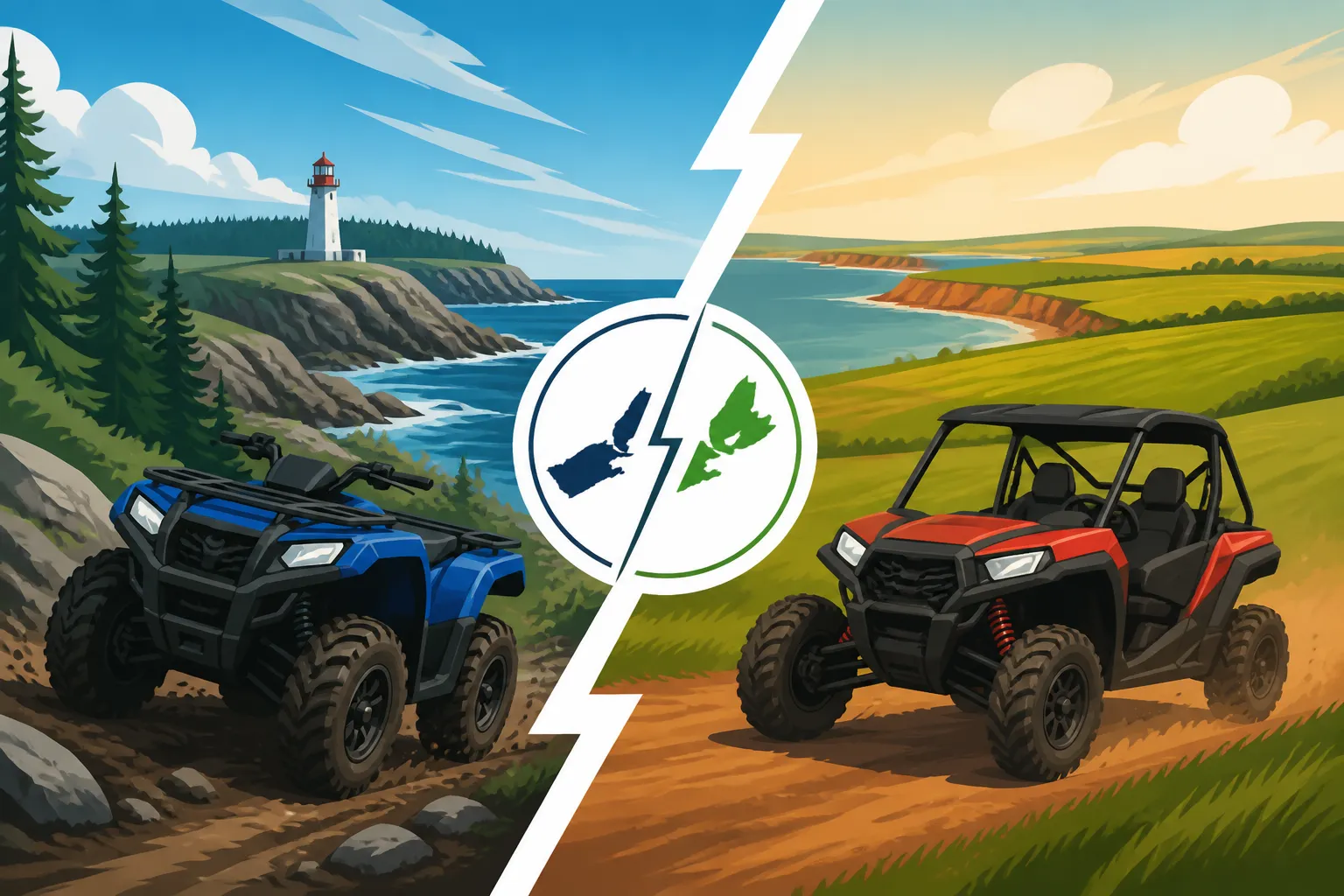
Nova Scotia offers a broad mix of riding environments: wooded corridors, old rail beds, inland routes and coastal scenery. Cape Breton rides can feel very different from routes in the Annapolis Valley or along the Northumberland Shore. Distances between trailheads and services can also shape your day, especially when a route passes through quieter rural areas.
PEI is smaller, so a ride can feel more compact on a map. That does not mean every route connects neatly or that a scenic road, beach or shoreline is open to off-highway vehicles. Red-sandstone scenery and coastal views can be part of the appeal, but appearance is not a guide to legal access. Stick to routes that are confirmed as open to your machine.
| Riding consideration | Nova Scotia | PEI |
|---|---|---|
| Route planning | Expect to plan by corridor, trailhead and local conditions; some rides cover long rural stretches | Compact geography can make destinations seem close, but access and route connections still need checking |
| Scenery | Wooded trails, rail corridors, coastal areas and varied inland landscapes | Island scenery and coastal settings, with access dependent on designated routes |
| Trail information | Provincial ATV organization and local clubs can help with trail access and conditions | Check PEI’s own trail and permit information rather than assuming Nova Scotia guidance applies |
| Province-to-province paperwork | Confirm registration, insurance and trail-permit requirements for the specific ride | Do not assume a pass or permit from the other province automatically gives access |
| Best planning habit | Check the route, closures, permitted machine types and services before leaving | Do the same, and be especially cautious about assuming a short distance means an open connection |
If you are comparing a Cape Breton weekend with a PEI day trip, think beyond kilometres. A route’s surface, permitted machine types, trail access points, fuel options and current closures can matter more than the straight-line distance. [Nova Scotia ATV Trails: The ATVANS Network] is a useful starting point for understanding how the provincial trail network and local clubs fit together.
Trail continuity and permitted access
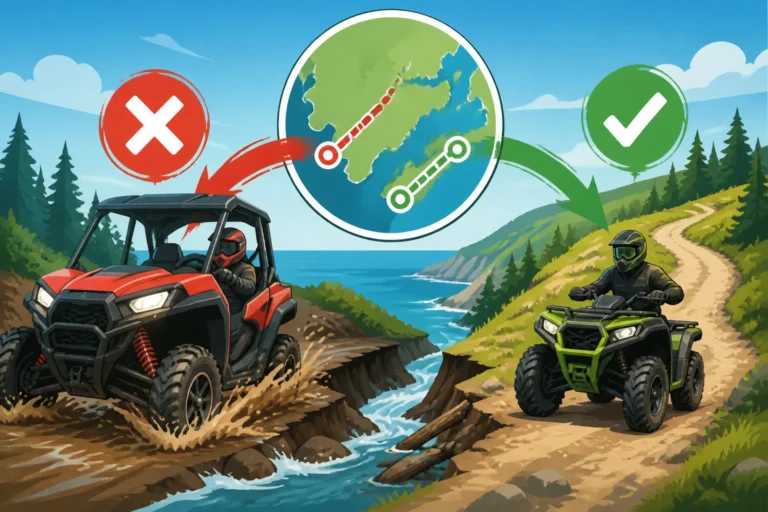
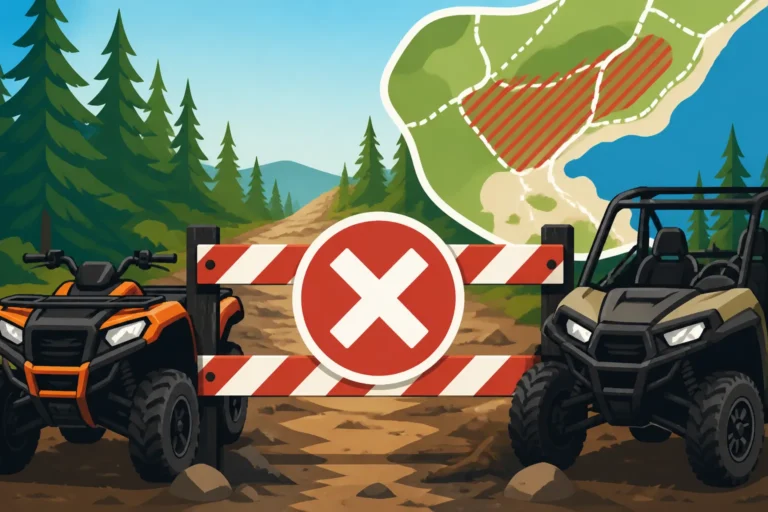
A route shown as a line on a map is not automatically a legal ATV or UTV trail. It could cross private land, be limited to another type of user, or include a section that is temporarily closed. This is true in both provinces, even when a route looks like an obvious continuation on a screen.
On a longer Nova Scotia ride, a trail may pass through several local areas with different maintenance conditions. On PEI, a destination may appear close to another trail but still lack a lawful connection for your machine. For either province, check the complete route—not just the trailhead and endpoint. [Checking Whether a Segment Allows Machines] is a helpful reminder to confirm access one segment at a time.
A mapping app such as onX Offroad can help you review route lines and organize a planned ride, but a digital map is not permission to use private land or a guarantee that a trail is open. Treat it as one planning tool alongside current club or land-manager information. If a route is unclear, stop and confirm before riding it rather than relying on a visible track or a line saved from an earlier trip.
Permits, Registration and Rules Across the Provincial Line
Keep vehicle paperwork separate from trail access
One common source of confusion is treating registration and a trail permit as if they were the same thing. They serve different purposes. A machine’s required registration and insurance are one part of being road-legal or otherwise compliant; a trail permit or membership may be a separate requirement for using particular club trails.
That distinction matters when you cross between Nova Scotia and PEI. A document that proves your machine is registered does not necessarily grant access to a club trail, and a trail permit does not replace registration or insurance requirements. Before travel, check the rules for the province where you will ride and the specific trails you plan to use. Start with [Nova Scotia Riders Visiting PEI] and [Nova Scotia Visitors From PEI] for the cross-border questions, then confirm details with the relevant provincial organization or local club.
Do not rely on an old sticker, an expired email or a friend’s experience from a previous season. Permit arrangements and trail access can change. Confirm what applies to your own machine, how long you will be riding and whether your planned route includes club-managed corridors. [Nova Scotia's Club Membership Trail Permit] and [Nova Scotia's Thirty-Day Visitor Permit] explain two Nova Scotia permit options; they are not a substitute for checking PEI’s requirements when riding there.
Check age, equipment and operating rules separately
Even if you ride the same machine in both provinces, do not assume every operating rule carries over unchanged. Requirements concerning helmets, passengers, road use, lights, age and supervision may vary by location and by the type of route. A legal trail and a public road are not interchangeable, either: a machine permitted on a trail may not be permitted on a road or shoulder.
Make a quick pre-trip checklist for each province. Confirm the rider requirements, the machine’s permitted use, the equipment you must carry or wear, and whether any portion of the planned route involves a road or crossing. If you’re riding with children or inexperienced operators, check those rules before choosing the trail rather than trying to work them out at the trailhead.
For Nova Scotia routes, use [Nova Scotia Trail Conditions and Closures] to check for changing access and maintenance issues. Local clubs can also help clarify whether a corridor is open to ATVs or UTVs and whether a reroute is in place. A trail that was usable last time you visited may have changed after a storm, maintenance work or a land-access decision.
Planning a Safer, Smoother Ride
Build the route around confirmed information
A good route plan starts with the exact trail, not a vague destination such as “the coast” or “the old rail line.” Identify your starting point, turnaround options, fuel stops and any sections where access is uncertain. For a group ride, share the plan before leaving so nobody assumes the lead rider has checked every detail.
Use more than one source where possible. Club information can help establish whether a trail is maintained and open; a mapping app such as onX Offroad can help you review the route and keep your group oriented. Check the map against local access information, and do not treat a saved track as proof that the corridor is still available. [Nova Scotia Trail Maps Worth Downloading] can help with planning a ride on the Nova Scotia side.
Before setting out, check the weather and trail condition. A wet stretch can become difficult for a novice rider, while a detour or washed-out section can affect the timing of a longer ride. Leave yourself room to turn back. If a group has mixed riding experience, choose a route that gives everyone a manageable option instead of pushing on because the original plan looked easy on a screen.
Prepare for distance, services and changing conditions
The practical difference between a relaxed ride and a stressful one often comes down to small preparations. Carry enough fuel for the route you have confirmed, bring water and basic first-aid supplies, and make sure everyone knows the regrouping plan. On remote or unfamiliar trails, mobile coverage may be unreliable, so agree on what the group will do if riders get separated.
Nova Scotia’s longer rural corridors can make fuel planning especially important. In PEI, shorter distances may make services feel closer, but do not count on every community or business being open when you arrive. Check your machine, secure your load and bring the essentials for the weather you are likely to encounter. Coastal fog, rain and changing temperatures can make a ride feel very different from the forecast at home.
Respect trail closures and local signs even when a detour seems inconvenient. Clubs and landowners may close a section to protect the trail, address damage or manage access. [Nova Scotia Club Trail Maintenance] offers useful context for why those decisions matter. Staying on the marked corridor helps avoid widening muddy sections, damaging sensitive ground or creating conflict with landowners and other trail users.
Choosing Between a Nova Scotia Ride and a PEI Ride
Which province suits your plans?
If you want a ride with varied scenery and the possibility of linking longer rural corridors, Nova Scotia may be the better fit for your itinerary. Its trail experience can differ substantially by region, so choose an area first—such as Cape Breton, the Annapolis Valley or the Northumberland Shore—then confirm the specific trails and access points. Don’t assume that a route is continuous just because several trail segments appear close together.
PEI may appeal if you want an island-focused trip and a more compact set of destinations. The key is to plan around confirmed ATV access rather than expecting to ride freely between scenic points. If you are visiting from Nova Scotia, verify the current permit and operating requirements before departure, and make sure your insurance and machine paperwork are appropriate for the trip.
For either province, the best choice depends on your group’s experience, the type of machine, the time available and the trail conditions. A family ride with frequent stops calls for different planning than a full-day route with experienced operators. Decide what kind of day you want, then pick a trail that fits instead of trying to force a preferred route to fit the group.
A practical pre-ride checklist
Use this short checklist before loading your ATV or UTV:
- Confirm that every trail segment is open and allows your type of machine.
- Check the destination province’s registration, insurance, permit and operating requirements.
- Confirm whether a separate trail permit or club membership is needed.
- Review current trail conditions, closures, reroutes and access notices.
- Plan fuel, food, water, first aid and a group communication plan.
- Save a route for navigation, but verify it against current local access information.
- Follow signs, stay on the marked corridor and turn back if access is unclear.
For a cross-border trip, give yourself time to check the rules before the day of the ride. That simple step can prevent a frustrating surprise at a trailhead and help you choose a route everyone in the group can enjoy.
Disclaimer
This article is for general informational purposes only and does not constitute professional advice. Laws, prices and regulations vary by location and change over time. Consult a qualified professional for guidance on your specific situation.