Nova Scotia Riding Compared to New Brunswick
Planning an ATV trip between Nova Scotia and New Brunswick can get confusing fast: a trail permit, a registration document, and permission to ride on a road are not necessarily the same thing. This guide compares the riding experience, access rules, terrain, and trip logistics so you can prepare for each province without assuming your paperwork or route plan carries over.
What Riding Feels Like in Each Province
Nova Scotia offers coastal variety and connected trail trips
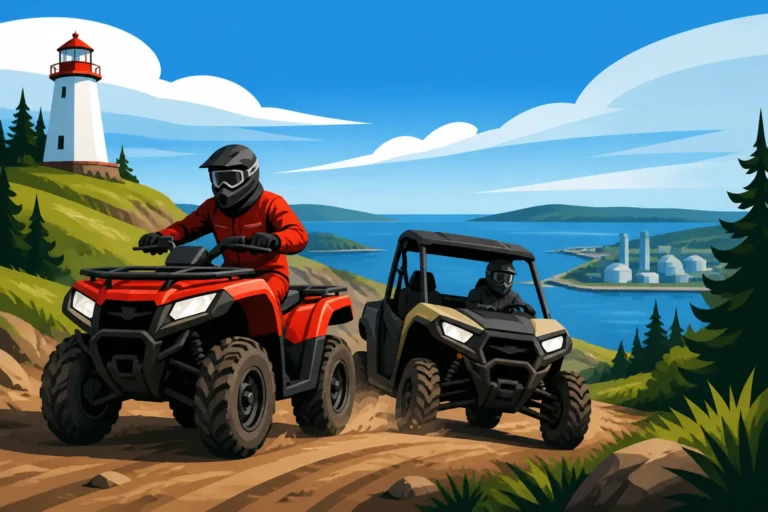
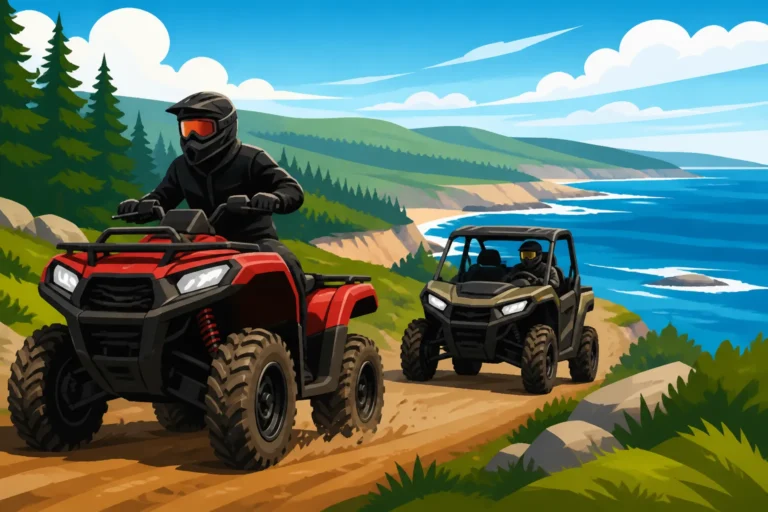
Nova Scotia riding often means a mix of wooded corridors, old rail lines, rural roads open to permitted off-highway vehicles, and routes that bring you close to coastal communities. The province’s shape can make a ride feel like a changing tour rather than a long stretch of the same forest: a day may include inland trail, a stop near a village, and a windy section with ocean views. Cape Breton, the Annapolis Valley, the Eastern Shore, and the Northumberland Shore each have their own character, so the ride you plan near Baddeck may feel very different from one near Pugwash or Bridgewater.
Some of the appeal is how trails can connect to places where riders can stop for fuel, food, or an overnight stay. That convenience varies by route, though. A mapped line does not guarantee an open, maintained trail, and a road that looks like a convenient connector may not be legally open to machines. Check local club information and signs before riding. For ideas about route types and destinations, see [Nova Scotia's 8,000 Kilometres of Trail] and [Nova Scotia Trailheads Worth Knowing].
New Brunswick may suit a different kind of route plan
New Brunswick trips can also offer long wooded rides and rural trail corridors, but the experience depends on the specific area and the route network you choose. Rather than comparing the provinces as if one were universally better, consider what you want from the trip: a scenic coastal detour, a multi-day ride with community stops, a quiet forest route, or a destination reached by trailer. The availability and condition of legal routes can change from one corridor to another in either province.
For riders crossing the provincial border, the biggest practical difference may not be the scenery. It may be the need to confirm that your machine, permit, insurance, and intended route meet the rules on both sides. Treat each province as a separate riding area with its own requirements, and plan the route around confirmed access rather than drawing a straight line between two points.
| Riding consideration | Nova Scotia | New Brunswick |
|---|---|---|
| Route planning | Check club trails, road-trail access, signs, and closures for the specific area | Confirm local trail access and provincial requirements for the route |
| Scenery and terrain | Coastal, wooded, rural, and former rail-corridor settings vary by region | Forest and rural corridors vary by region and local network |
| Border crossing | Do not assume a Nova Scotia permit or document covers riding in New Brunswick | Check whether your home-province documents meet the requirements where you plan to ride |
| Road access | Road-trail access is subject to provincial rules and local conditions | Confirm applicable rules and access for each road or trail segment |
| Best planning habit | Check current route information shortly before departure | Check current route information shortly before departure |
Permits, Registration, Insurance, and Road Access
Keep machine registration separate from trail permission
A machine’s registration documents and a trail permit serve different purposes. Registration is tied to the vehicle and its ownership, while a trail permit or membership can relate to access on participating trail networks. Neither should be treated as a blanket permission to ride every trail, woods road, beach, or public road. Before leaving home, check what documents you need for the machine and what authorization applies to the specific route.
This distinction matters when you cross from Nova Scotia into New Brunswick. A permit that was accepted on one side of the border may not provide access on the other. Nova Scotia’s reciprocity arrangements with New Brunswick have changed, so confirm the current requirements rather than relying on an old sticker, email, or advice from a previous trip. See [Nova Scotia Ended Reciprocity With New Brunswick] and [Nova Scotia's Club Membership Trail Permit] for background on the separate permit questions.
Insurance is another separate check. Carry the proof required for the trip, and confirm that your policy applies to the kind of riding you intend to do. If you are unsure whether a document is sufficient, ask your insurer or the relevant trail organization before setting out. A registration certificate, trail permit, and insurance card are not interchangeable, even when you keep them together in the machine.
Road trails are not the same as ordinary trail riding
In Nova Scotia, certain roads may be designated for off-highway vehicle use under provincial and local rules. That does not mean an ATV or UTV can use any road that appears to connect two trails. Riders need to understand where road-trail access applies, what operating conditions are attached, and what equipment or driver requirements may matter. Read [Nova Scotia Road Trail Rules Explained] before planning a route that includes public roads.
A cross-border ride adds another layer: a road that is open to machines in one province does not establish that the road or trail beyond the border is open as well. Route maps, trail signage, and local guidance are useful, but check the specific segments you intend to use. If the route depends on a short connector through a town or along a public road, verify that connector instead of assuming it is legal because the larger trail network is open.
Choosing Routes and Preparing for Conditions
Match the route to your machine and the group
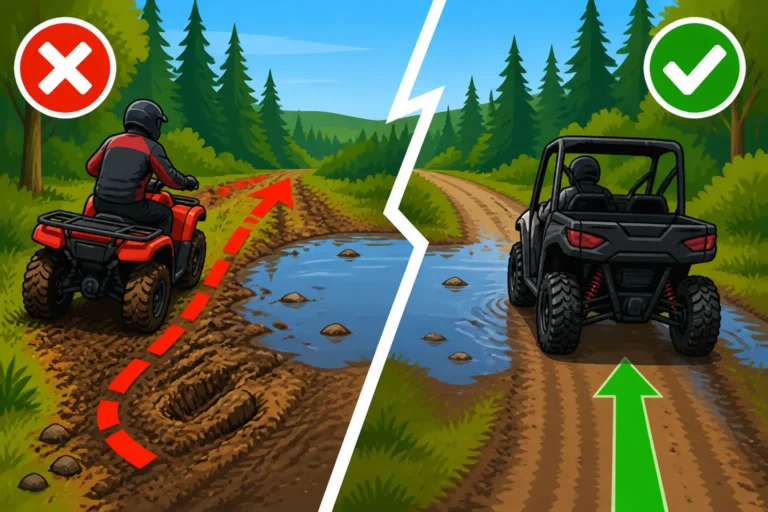
A comfortable route for an experienced rider on a well-equipped side-by-side may not be a good fit for a youth rider, a newly purchased ATV, or a group with mixed experience. Check the route’s surface, length, remoteness, and access to fuel or services. Consider whether your machine is suitable for narrow wooded sections, rocky ground, muddy stretches, or exposed coastal weather. If you are riding with children or newer riders, choose a route that lets the group stop and turn back without pressure.
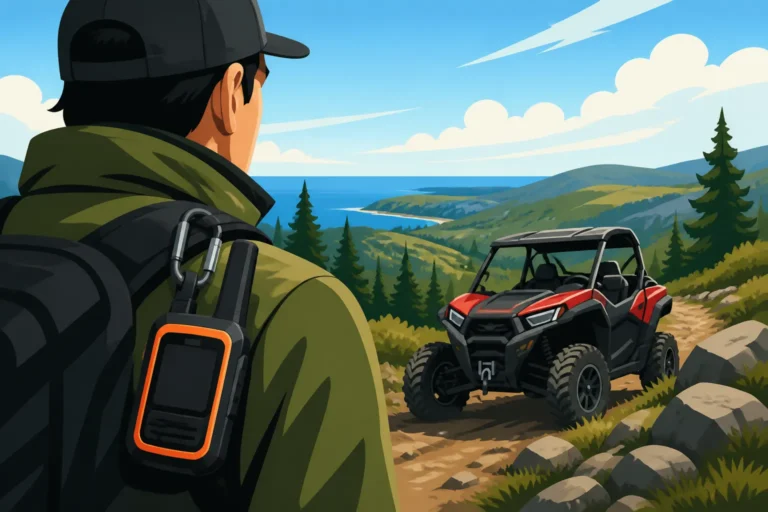
Navigation apps can help you organize a ride, but a digital line is not proof that a segment is legally open. For example, onX Offroad can be one tool for reviewing routes and planning waypoints; compare what you see with local trail information, posted signs, and any closures. Use onX Offroad as a planning aid rather than a substitute for permission or current local guidance. Save relevant information before leaving an area with limited cell service, and bring a backup navigation option.
Think through the trip as a series of confirmed segments. Note where the route begins, where you can legally access fuel, where the group can stop, and where you would turn around if a bridge, washout, or closure blocks the way. This is especially useful on a multi-day trip: a small detour that is manageable near a town can become a serious problem when the next service point is far away.
Plan for coastal weather, remote sections, and trail changes
Nova Scotia weather can shift quickly, particularly along exposed coastal routes. Fog, rain, wind, and changing temperatures affect visibility and comfort, while wet conditions can make a familiar trail harder to handle. New Brunswick routes also call for attention to weather and trail conditions, so check the forecast for the actual riding area rather than relying on conditions at home or at your overnight stop.
Trail conditions can change after heavy rain, storms, or seasonal thaw. A route that appeared passable in an older map may have a washed-out culvert, a closed section, or a reroute. Check local club notices close to departure, and do not ride around a closure or through a wet section simply to stay on schedule. If you use onX Offroad to review your route, pair that planning with current local updates and on-the-ground signs. A GPS track should never overrule a gate or closure notice.
For a remote ride, share your route and expected return time with someone who is not on the trip. Bring suitable clothing, food and water, basic repair supplies, and a way to contact help that does not depend entirely on mobile coverage. When riding near coastal homes or villages, keep noise and speed considerate; the welcome that makes a route possible depends partly on riders respecting the people who live beside it.
A Practical Cross-Border Planning Checklist
Confirm the details before loading the trailer
A little preparation can prevent an expensive or frustrating day at a trailhead. Check each province’s current requirements separately, then verify access for the actual trails and road segments you plan to use. Do not rely on a friend’s old permit, a route copied from a previous season, or a map line that does not explain whether machines are permitted.
Use this checklist before departure:
- Confirm the machine’s registration and ownership documents are in order.
- Check the trail permit or membership requirements for each province and trail network.
- Confirm that your insurance covers the intended use and that you can produce the required proof.
- Verify road-trail rules, driver requirements, and any local restrictions on the route.
- Check trail closures, detours, weather, and fuel or service options.
- Save maps and route notes offline, and carry a backup navigation method.
- Share the planned route and return time with someone who is staying behind.
If you are uncertain about a document or a short connector road, pause and confirm before the trip. That is easier than arriving at a gate and discovering that a permit, road segment, or machine setup does not fit the rules.
Choose the province for the trip you actually want
Nova Scotia can be a particularly appealing choice when your group wants varied coastal and rural scenery, access to communities along the way, or a ride that combines trail corridors with carefully checked road-trail sections. New Brunswick may be the better fit for a route or destination that suits your group’s preferred terrain and available network. In either case, the best province is the one where you can confirm legal access, match the route to your riders, and ride without rushing.
For a first cross-border trip, keep the itinerary modest. Choose a confirmed trail area, avoid building the day around uncertain connectors, and leave time to turn back if conditions change. Use tools such as onX Offroad to help organize waypoints, but check the rules and local trail information directly for the places you plan to ride. That combination—good preparation, realistic expectations, and respect for closures—makes a much better trip than trying to cover the most distance.
Disclaimer
This article is for general informational purposes only and does not constitute professional advice. Laws, prices and regulations vary by location and change over time. Consult a qualified professional for guidance on your specific situation.