Nova Scotia Permit Replacement If Lost
It's incredibly frustrating when you're all geared up for a ride on the beautiful trails of Nova Scotia, only to realize your ATV or UTV permit has gone missing. Whether it's slipped out of your wallet on a bumpy ride, been misplaced during a frantic search for other documents, or simply vanished into the ether of your home office, a lost permit can put a real damper on your plans. This guide will walk you through exactly what to do when your Nova Scotia off-highway vehicle permit decides to play hide-and-seek, ensuring you know how to get a replacement quickly and without unnecessary stress.
The Frustration of a Missing Permit
We’ve all been there. You’re planning a weekend trip, maybe heading up to Cape Breton or down to the South Shore, and as you gather your essential gear, the little paper permit for your quad or side-by-side is nowhere to be found. It’s more than just an inconvenience; it can truly halt your riding adventures and even land you in a sticky situation if you decide to risk it. The feeling of uncertainty and the scramble to retrace your steps are familiar woes for many riders in Nova Scotia.
Why a Physical Permit Matters on the Trail
While many of us carry digital copies of various documents on our phones these days, a physical off-highway vehicle permit remains a crucial piece of paper to have with you when you’re out on the trails. Law enforcement officers have the authority to request proof of registration and insurance, and presenting a valid, physical permit is the clearest way to satisfy that requirement. An expired or missing permit can lead to questions, delays, and nobody wants their ride cut short by an officer asking for paperwork you don't have.
Think about it: out in the backcountry, perhaps on a remote segment of the [Celtic Shores Coastal Trail in Nova Scotia], cell service can be spotty at best. Relying solely on a digital image on your phone might not always be feasible, especially if your battery dies or if the screen is unreadable due to glare or damage. Having that physical permit tucked safely in a waterproof pouch in your riding gear provides peace of mind and ensures a smooth interaction should you be stopped. It's not just about avoiding a fine; it's about being prepared and respecting the rules that keep our trails open and safe. Always carry your papers on a coastal ride to avoid any hassles.
Common Scenarios Leading to a Lost Permit
So, how exactly do these elusive little permits go missing? The reasons are as varied as the trails we ride. Often, it's simply a case of misplacement at home. Maybe it got filed away with old insurance documents, tucked into a seldom-used jacket pocket, or even fell behind a desk. Another common scenario involves the elements. A permit can easily get damaged or lost during a particularly muddy or wet ride, perhaps falling out of a wallet that wasn't properly secured or getting soaked to the point of disintegration.
Consider a scenario where you've just transferred ownership of a machine, and in the flurry of paperwork, the new permit hasn't found its permanent home yet. Or perhaps you've been doing some maintenance in the garage, and the permit, usually kept in the machine's small storage compartment, was temporarily removed and forgotten. These real-life situations happen frequently, and while frustrating, they are usually easily remedied. The important thing is to recognize it early and take action to get a replacement, rather than riding unregistered and risking a [Nova Scotia Fines for an Unregistered Machine].
Your Steps to Getting a Replacement Permit
Don't panic! Getting a replacement for your lost or damaged Nova Scotia OHV permit is a straightforward process, designed to get you back on the trails as quickly as possible. The key is knowing what information you’ll need and where to go to make it happen. It’s much simpler than an initial registration since your machine’s details are already in the system.
Gathering Your Information
Before you head out, gather the essential details that prove you're the rightful owner of the off-highway vehicle. The most critical piece of information you'll need is the Vehicle Identification Number (VIN) of your ATV or UTV. This unique 17-character code is found on the machine itself, usually stamped on the frame, and also on your [Nova Scotia Certificate of Registration at $39.80]. If you still have your Certificate of Registration, that’s fantastic, as it contains all the necessary details. If you've also misplaced the certificate, don't worry, but try to locate the VIN from the machine directly.
You'll also need to provide your personal identification, such as a valid driver's license, to confirm you are the registered owner. Having proof of address can also be helpful, though often your driver's license suffices. Any other documents related to your original purchase or previous registration, like a bill of sale or previous insurance papers, might not be strictly required for a replacement permit but can be useful to have on hand if there are any discrepancies or questions about ownership. When it comes to proving ownership or establishing legal claims for other purposes, legal document services like LawDepot can assist with creating robust bills of sale or other declarations.
Where to Go for a Replacement
The primary place to obtain a replacement off-highway vehicle permit in Nova Scotia is an Access Nova Scotia Centre. These centres are strategically located across the province to serve residents with various government services, including vehicle registrations and permits. You can find locations in larger communities like Halifax, Sydney, Truro, and Bridgewater, as well as smaller towns. It’s always a good idea to check their website for current operating hours and any specific requirements before you visit, especially if you're making a special trip from a rural area.
While some simpler transactions can occasionally be handled by phone or mail, obtaining a replacement permit typically requires an in-person visit to ensure proper identification and verification. This helps prevent fraud and ensures the permit is issued to the correct registered owner. So, plan for a quick trip to your nearest Access Nova Scotia office to get this sorted out.
What to Expect at Access Nova Scotia
When you arrive at an Access Nova Scotia Centre, you’ll likely take a number and wait for your turn. Have your identification and machine’s VIN ready. When you get to the counter, simply explain that you need a replacement for your lost or damaged off-highway vehicle permit. The staff are generally very helpful and accustomed to these requests. They will access your machine’s registration records using your VIN and personal details.
You may be asked to fill out a short form confirming the loss of your permit and requesting a duplicate. This is a standard procedure. Once everything is verified, they will issue you a brand-new permit on the spot. The process is usually quite quick once you're at the counter, provided you have all your information ready. You’ll be able to pay the required fee right there using one of the accepted [Nova Scotia Registration Payment Methods]. This efficiency means you can often be in and out with your new permit in hand, ready to plan your next trail adventure. For a broader overview of the paperwork, you might want to review the [Nova Scotia Registration Paperwork Checklist] for initial registration, which covers some of the same core documents.
Understanding the Costs and What You Get
Dealing with government paperwork often brings up questions about fees, and getting a replacement OHV permit in Nova Scotia is no different. It’s important to understand what you're paying for and what documents you receive, as there’s a distinct difference between the yearly permit and the one-time registration certificate.
The Fee for a Replacement Permit
Good news here! The fee for a replacement, or duplicate, off-highway vehicle permit in Nova Scotia is quite modest. It costs the same as a regular annual permit renewal, meaning it won’t break the bank to replace a lost one. This fee covers the administrative cost of issuing a new document and updating any records if necessary. You can get more details on the exact cost by looking at [Nova Scotia Duplicate Permits at $13.20]. This makes the financial hit minimal, focusing more on getting you re-certified quickly rather than penalizing you heavily for a lost document.
It’s a flat fee, regardless of whether your previous permit was brand new or nearing its expiry date. The replacement permit will carry the same expiry date as your original permit, meaning it will be valid until the end of the calendar year for which it was originally issued. This simple fee structure helps riders avoid prolonged downtime due to missing paperwork.
The Difference Between a Permit and a Certificate
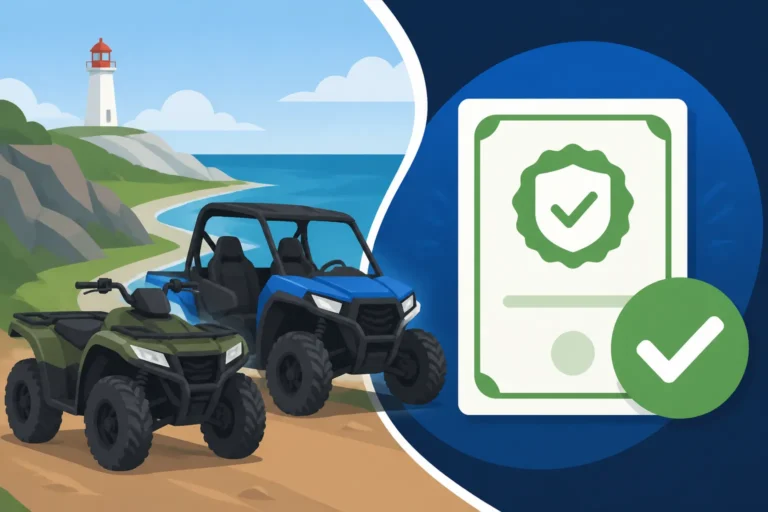
This is where some confusion can arise for new and even experienced riders. In Nova Scotia, when you first register an off-highway vehicle, you receive two main documents: the Certificate of Registration and the Vehicle Permit. The [Nova Scotia Certificate of Registration at $39.80] is a one-time charge, and it's essentially the permanent record of ownership for your machine. Think of it as the 'title' for your ATV or UTV. You pay for this once, and it doesn't need to be renewed unless there’s a change in ownership. This document should be stored securely at home, not carried on the machine.
The [What Nova Scotia's $13.20 Vehicle Permit Buys], on the other hand, is your yearly operational permit. This is the document you do carry on your person or on your machine when riding. It shows that your machine is currently allowed on designated trails and confirms it’s covered by the Nova Scotia OHV Infrastructure Fund. It needs to be renewed annually, similar to a vehicle plate sticker. When you’re seeking a "replacement permit," it’s this annual vehicle permit you’re referring to. Understanding this distinction is key to knowing what paperwork you need to retrieve or replace.
What Happens if Your Certificate Is Missing Too?
If you find yourself in the unenviable position where both your annual vehicle permit and your original Certificate of Registration have gone missing, the process is a little more involved, but still manageable. Since the Certificate of Registration is proof of ownership, replacing it requires more stringent verification to ensure you are the legal owner. You would still visit an Access Nova Scotia Centre. They will use the VIN of your machine to search their records.
You might need to provide additional proof of ownership, such as your original bill of sale, previous insurance papers, or even a sworn affidavit if you have absolutely no other supporting documents. In some cases, you may be asked to fill out a declaration. For crucial legal documents like declarations of ownership, or even generating a new bill of sale if you plan to sell the machine in the future, online services like LawDepot can provide templates. The cost to replace a Certificate of Registration is separate from the annual permit fee. The staff at Access Nova Scotia are well-versed in these situations and can guide you through the exact requirements needed to get both documents re-issued, though it might take a bit more time than simply replacing the annual permit.
Proactive Measures to Prevent Future Loss
A lost permit is a nuisance you’d rather not repeat. Taking a few simple, proactive steps can save you a lot of headache, time, and stress down the road. After all, the best way to deal with a lost permit is to never lose it in the first place!
Smart Storage Solutions for Your Documents
Once you have your new permit in hand, think about how you'll store it. Instead of just tossing it into your glove box or an open pocket, consider a dedicated, waterproof document holder. Many riding jackets and pants come with secure, zippered internal pockets that are ideal for this. For your off-highway vehicle itself, a small, waterproof case or bag specifically designed to attach to your quad or UTV can keep your permit safe from the elements and secure during bumpy rides. This way, your permit is always with the machine when you need it, and it's protected.
At home, keep your Certificate of Registration and any other important ownership documents (like the original bill of sale, insurance policy, and maintenance records) in a secure, fireproof safe or a locked file cabinet. These are not documents you need to carry on the trail, so keeping them separate and safe from loss or damage at home is crucial. Having an organized system for all your important papers, whether physical or digital, makes retrieval much easier when you need them.
Digital Backups and Record Keeping
Even with the best physical storage, accidents happen. That’s where digital backups come in handy. Before your next ride, take clear photographs or scan copies of your off-highway vehicle permit, Certificate of Registration, and insurance card. Store these digital copies in a secure cloud storage service, on a password-protected USB drive, or email them to yourself. This way, even if the physical document is lost or destroyed, you’ll have immediate access to all the necessary information, including the VIN, permit number, and expiry date.
These digital copies won't replace the need for a physical permit on the trail, but they are invaluable for quickly recalling information needed for a replacement application, an insurance claim, or confirming details over the phone if you have questions for Access Nova Scotia staff. In fact, keeping good records generally is a smart move, whether it's for your off-highway vehicle or other assets where legal documents (like those found on LawDepot) might play a role in proving ownership or intent.
Ensuring All Your Machines Are Covered
If you're lucky enough to own multiple off-highway vehicles—a sport quad for thrilling rides, a utility UTV for chores, or perhaps a youth quad for the kids—it’s easy to get permits mixed up or forget one. Make it a routine to check the permit status of each machine before the riding season begins. Note the expiry date for each [Nova Scotia Permit Renewal at $13.20] on your calendar or in a digital reminder system.
A great tip from seasoned riders is to create a small laminated card for each machine with its VIN, permit number, and expiry date, keeping it with the machine itself. This serves as a quick reference and backup, reducing the chances of a permit going astray or being overlooked. By being diligent with your documentation for every machine, you minimize the risk of a lost permit derailing your plans and help ensure you always comply with Nova Scotia’s OHV regulations. For any specific questions, remember that [Nova Scotia Registration Questions Staff Hear] covers a lot of common scenarios.
Disclaimer
This article is for general informational purposes only and does not constitute professional advice. Laws, prices and regulations vary by location and change over time. Consult a qualified professional for guidance on your specific situation.