Nova Scotia Riding in Fall
Fall is a rewarding time to ride in Nova Scotia, but shorter days, wet leaves, fog and seasonal trail closures can turn a relaxed outing into a frustrating one. This guide helps you choose a sensible route, prepare for changing conditions and check access before unloading your ATV or UTV, whether you’re riding near Cape Breton, the South Shore or the Annapolis Valley.
Plan a fall ride around changing conditions
Choose a route for the day you have, not just the view you want
Autumn scenery can make a familiar route look irresistible, but the best fall ride is one that matches the weather, daylight and trail conditions that day. A clear morning near Baddeck can still lead to fog on an exposed stretch, while a sunny afternoon in the Annapolis Valley may follow hours of rain elsewhere. Check the forecast for the actual riding area rather than relying only on conditions at home.
Think about the kind of ride you want before choosing a destination. A short out-and-back near a known trailhead is easier to manage if the afternoon turns cold or wet. A longer ride through Cape Breton, Guysborough County or the South Shore may offer more varied scenery, but it also means more time away from paved roads and services. Keep a conservative turnaround time; in late fall, sunset arrives sooner than many riders expect.
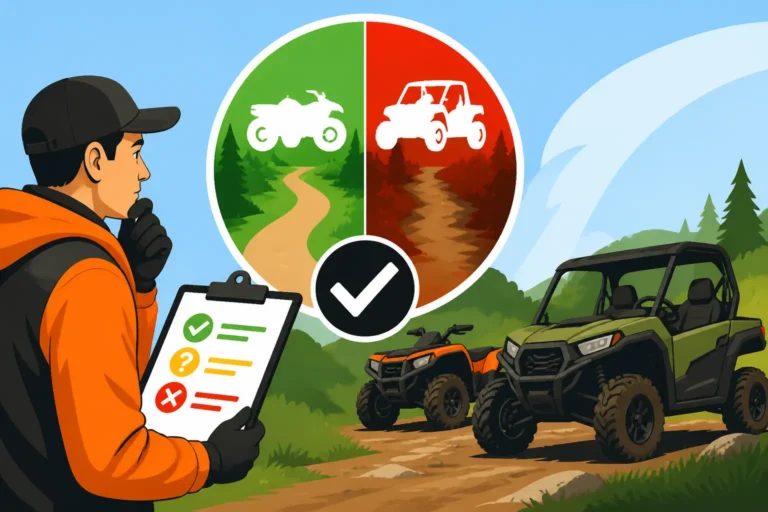
Access can vary by route and by segment. A rail trail, woods road or connecting corridor that looks continuous on a map may have sections closed to motorized use, seasonal restrictions or private-property access conditions. Check [Nova Scotia Trail Conditions and Closures] before you leave, and confirm that each part of your planned route allows the type of machine you’re bringing. Don’t treat a map line as proof that riding is permitted.
Match your plans to fall surfaces
Wet leaves can hide roots, rocks, ruts and drainage dips. They can also make a firm-looking trail slick, especially in shaded areas or beneath trees. After rain, clay and soft ground may be difficult to judge from the seat. Slow down before corners, avoid sharp steering or braking on slippery slopes, and leave extra room between machines so the rider ahead doesn’t disappear in a cloud of leaves or spray.
A route that is comfortable in summer can become more demanding when the ground is saturated. If you encounter a deep puddle, soft shoulder or flooded section, don’t assume the best solution is to ride around it. Going around a wet spot can widen the trail and damage the ground beside it. Turn back or use an approved alternative instead. These habits matter especially on shared corridors and trails that pass through woodlots.
| Fall condition | Why it matters | A sensible response |
|---|---|---|
| Wet leaves | Can conceal hazards and reduce grip | Reduce speed and leave more stopping distance |
| Heavy rain | May soften trail surfaces or create runoff | Recheck conditions and avoid damaged or flooded sections |
| Fog | Reduces visibility and makes navigation harder | Use lights, ride in a group and shorten the route |
| Early sunset | Leaves less time to return before dark | Set a firm turnaround time and carry working lights |
| Cold wind | Can make a long ride uncomfortable quickly | Dress in layers and pack dry gloves |
For more on how rain affects surfaces and trail use, see [Nova Scotia Trail Riding After Rain]. If the route is already soft, the weather is worsening or you can’t tell where the trail continues, choosing another day is often the safer and more considerate call.
Pick a fall riding area with access in mind
Explore regions without assuming every route is open
Nova Scotia’s regions each offer a different feel in autumn. Cape Breton can bring changing coastal weather and wide-ranging views; the Annapolis Valley offers a mix of inland and rural scenery; and the Eastern Shore and South Shore can feel exposed when wind and fog roll in. These are broad regional descriptions, not guarantees that a particular road, trail or property is open to ATVs or UTVs.
Before heading toward a well-known destination, check the exact route and the rules for every segment. A trail’s name or popularity doesn’t establish motorized access. Some corridors are multi-use, some are managed by clubs, and some may have restrictions or temporary closures. If a section is marked closed, blocked or unclear, don’t ride around a barrier to keep your planned loop intact.
This is particularly important near parks, beaches, dunes and sensitive coastal areas. A scenic road or trail near a protected place doesn’t automatically grant access within it. Follow posted signs, stay on the permitted corridor and respect private-property boundaries. For regional ideas and planning context, [Nova Scotia Riding in Cape Breton] can help you think about the area, but verify current access separately before you go.
Use maps as planning tools, not permission slips
A reliable map helps you understand distance, junctions and possible bail-out points. Download or save the information you’ll need before leaving a service area, since cellular coverage can be unreliable on remote routes. Keep a paper map or another offline navigation option if you’re travelling somewhere unfamiliar, and make sure someone at home knows your general route and expected return time.
Apps such as onX Offroad can be useful for reviewing route information and keeping navigation available when cell service is limited. Treat any app as one planning resource, not as confirmation that a trail is open or legally accessible. Compare its information with local signage, club updates and official access guidance. If a map shows a route crossing land you don’t have permission to enter, don’t ride it.
A good habit is to review the route at home, then check it again at the trailhead. Look for changed signs, gates, detours and washouts. [Nova Scotia Trail Maps Worth Downloading] offers further map-planning context, while [Nova Scotia Trail Signage Explained] is useful for thinking through what to do when posted directions don’t match what you expected. If you’re uncertain about a junction, stop somewhere safe and sort it out before proceeding.
Prepare your ATV or UTV for autumn
Pack for cold, rain and an earlier return
Fall weather can shift during a single ride. Dress in layers that work when you’re moving and when you’re stopped. A warm base layer, wind-resistant outer layer, waterproof clothing and dry gloves can make a long pause for a mechanical issue much more manageable. Avoid relying on the warmth you feel while riding; once you stop in wind or rain, you can cool down quickly.
Check the basics before leaving: tires, brakes, throttle, steering, lights, fuel and any machine-specific equipment. Make sure your headlight and tail light work, even if you intend to finish well before dark. A wet ride can make a small problem more awkward, so bring a basic tool kit, water, a first-aid kit and a way to contact help. For a remote outing, consider how you’ll communicate if your phone has no signal.
Keep navigation and electronics ready for offline use. If you use onX Offroad, save the relevant map information in advance rather than waiting until you reach a coverage gap. Carry a charging option if your device depends on battery power, and don’t let a phone screen distract you while moving. Pull over safely before checking a route or changing navigation settings.
Build a route that leaves room for delays
Plan a ride that allows for slower travel on slippery ground, stops to check signs and unexpected detours. Share your route and return time with someone who isn’t riding with you. If your group includes riders with different experience levels, agree on a pace and regrouping points before starting. Don’t let the fastest rider set the pace for everyone else.
The group should also discuss what happens if someone gets separated or a machine breaks down. Keep sight of one another where practical, and stop at a safe place if the group loses contact. On narrow trails, be patient when meeting other users and follow local rules about yielding and passing. Fall foliage is lovely, but stopping suddenly in a blind corner to take a photo can create a hazard for everyone behind you.
Before the ride, check that registration, insurance and any trail permit requirements are in order for the machine and route. A provincial vehicle registration and an ATV trail permit serve different purposes; one shouldn’t be assumed to replace the other. Review [Nova Scotia Trail Permits From ATVANS] and [Nova Scotia Insurance Proof at a Trailhead] if you need to clarify those parts of your preparation.
Ride considerately through the fall season
Look out for wildlife and other trail users
Leaves and brush can limit sightlines, and wildlife may be harder to spot when it’s moving through cover. Slow down in wooded sections, around bends and near places where animals may cross. If you see wildlife, give it space and avoid chasing or crowding it. Don’t assume an animal will move out of your way just because it hears the machine.
Autumn trails may also be shared with hikers, cyclists, hunters or people working in the woods. Ride at a speed that lets you respond calmly, and make your presence known without startling anyone. When you meet another trail user, slow down early, follow posted rules and leave room to pass safely. [Nova Scotia Wildlife on the Trail] and [Nova Scotia Trail Etiquette Locals Expect] provide more context for sharing routes respectfully.
Be especially alert around active work areas. Logging trucks, maintenance vehicles and equipment may appear around bends or at trail crossings. Follow signs and instructions from workers, and don’t pass through a closed or active work zone because it looks quiet. If you see a hazard, damaged bridge or unclear detour, report it to the appropriate club or trail contact rather than improvising a new route.
Keep your route flexible
A good fall plan includes a backup. If rain has made the trail too soft, visibility drops, a gate is closed or a sign indicates a restriction, be ready to turn around or choose a different legal route. This can feel disappointing when you’ve driven a long way to reach the trailhead, but forcing the original plan can create risks for your group and damage the trail for everyone.
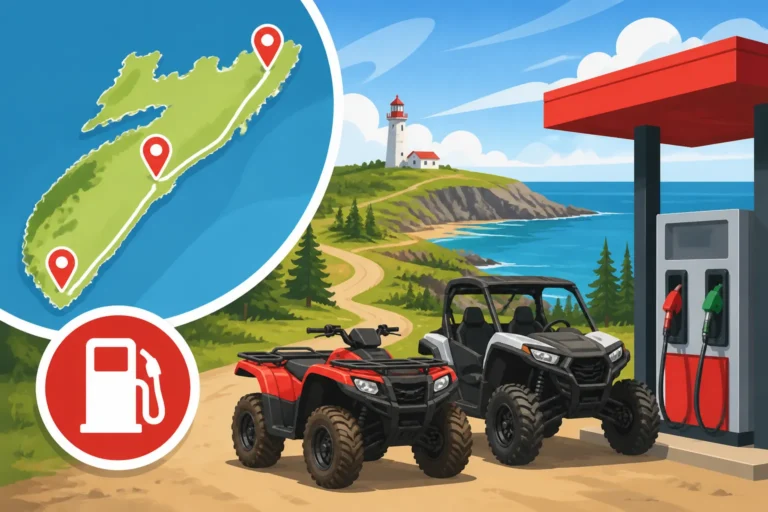
Before leaving, check your fuel range, weather and expected daylight, then choose a turnaround point that gives you time to get back without rushing. Carry a charged phone, but don’t count on having reception everywhere; [Nova Scotia Cell Coverage on Remote Trails] can help you plan for that limitation. Leave your route with someone, and let them know when you’re safely back.
Fall riding is most enjoyable when the ride fits the conditions rather than fighting them. A shorter loop on firm ground can be better than a long route through wet, uncertain terrain. Confirm access, prepare for cold and low visibility, and be willing to change plans. That way, the season’s colours are a bonus—not a reason to take chances.
Disclaimer
This article is for general informational purposes only and does not constitute professional advice. Laws, prices and regulations vary by location and change over time. Consult a qualified professional for guidance on your specific situation.