Nova Scotia’s 8,000 Club Members
A figure of 8,000 ATV club members can sound like a simple membership statistic, but it points to something riders feel on the ground: trails need people, local knowledge and ongoing care. This guide explains what club membership means in Nova Scotia, how it connects to trail access, and how to find a useful way to get involved without assuming every club works the same way.
What Nova Scotia’s 8,000 club members represent
Membership is a network, not just a number
A large membership represents many individual riders connected through local clubs and a provincial association. That network can help keep trail corridors usable, share information about conditions and closures, and give riders a place to ask practical questions. It is not simply a count of machines or a promise that every member rides the same routes.
The figure also says little by itself about where members live, how often they ride, or what kind of riding they prefer. One person might join to support a trail near home; another might be preparing for group rides across a wider area. Some members may help with maintenance, while others contribute mainly by following club rules and supporting organized work.
That distinction matters if you are deciding whether membership is worthwhile. It is reasonable to ask what a nearby club actually does, what its membership includes, and whether its activities match your interests. A club with a corridor near your cottage may be a good fit even if you rarely attend events. A rider hoping to volunteer regularly may want a club with active work days and a clear way to participate.
For a broader look at the local organizations that make up this network, see [Nova Scotia's 48 Member Clubs]. The club count and the member count describe related but different things: one tells you about the number of organizations, while the other reflects the people connected with them.
Members help connect riders with local knowledge
A map can show a route, but it cannot always tell you what has changed since the last time someone rode it. A club member may know that a bridge is being repaired, a section is soft after rain, a gate must be closed behind you, or a landowner has temporarily asked riders to stay off a corridor. That kind of local knowledge can prevent an enjoyable outing from becoming an awkward or unsafe one.
This is especially helpful for riders who are new to an area. A visitor planning a weekend around Baddeck, Antigonish, the Annapolis Valley or the South Shore may not know which routes are open to machines, where to park, or whether a trail connects to another riding area. Asking a local club can be more useful than relying on a route line that appears on a general-purpose map.
Membership can also create a natural point of contact when you have a question that is too specific for a broad online search. You might ask which trailhead works for a beginner, whether a particular section is suitable for a side-by-side, or where to check for a closure before leaving home. For an overview of the broader network, [Nova Scotia's 8,000 Kilometres of Trail] is a useful companion topic.
How clubs support trails and riding areas
Trail maintenance is regular, practical work
A trail corridor needs more than a cleared path. Depending on the location and season, maintenance can involve brushing back growth, checking signs, inspecting drainage, reporting washouts, coordinating repairs, and helping riders understand where the marked route goes. On a former rail line, an access road or a forest trail, the work can look quite different, but it all contributes to keeping the route understandable and usable.
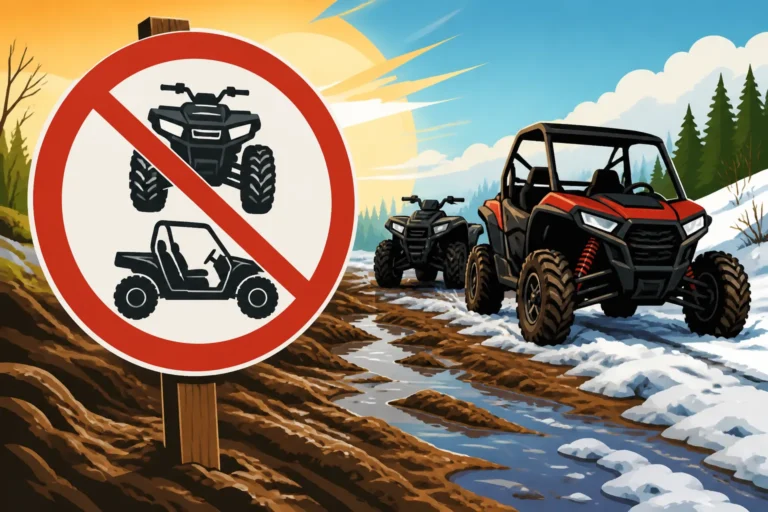
Nova Scotia’s weather can make that work especially visible. Heavy rain may wash out a low section, wind can bring branches down across a corridor, and spring thaw can leave a trail too soft to support traffic without damage. A club may need to close or reroute a section rather than risk turning a temporary problem into lasting erosion. That can be frustrating when you have already planned a ride, but respecting the closure protects the trail and the relationships that allow it to remain available.
Maintenance is also not always a dramatic project. Replacing a faded marker, trimming a sightline or reporting a damaged culvert can make a route easier for the next rider to follow. For more detail on the day-to-day role of local organizations, see [Nova Scotia Clubs and What They Maintain]. Understanding what maintenance involves helps explain why a member network can matter even when a rider does not personally attend every work session.
Access depends on cooperation with landowners and communities
A trail may cross land used for several purposes, and access can depend on good relationships with landowners, communities and other trail users. Riders who stay on the marked corridor, respect posted restrictions and leave gates as they found them help protect those relationships. A single shortcut through a field or around a wet section can create a much larger problem than it seems at the time.
The same care applies around homes and public spaces. Slowing down near residences, keeping noise under control, yielding appropriately, and avoiding unnecessary stops on private driveways all help make shared access more sustainable. Local clubs often understand which sections are sensitive and can help explain the expectations that are easy for a visitor to miss.
That is one reason it is worth treating club information as more than a route suggestion. Local advice may include practical conditions that do not appear on a map: a seasonal closure, an access point that should not be used, a narrow section where meeting another vehicle is difficult, or a change in how a corridor is being managed. For broader guidance, [Nova Scotia Trail Etiquette Locals Expect] covers the habits that help riders share trails respectfully.
| What club support can help with | Why it matters to a rider |
|---|---|
| Trail-condition updates | Helps you avoid closed, damaged or unsuitable sections |
| Local route knowledge | Makes planning easier when you are unfamiliar with an area |
| Signage and corridor care | Reduces wrong turns and accidental travel beyond the route |
| Volunteer coordination | Gives interested riders a practical way to help |
| Community relationships | Supports responsible access across shared or private land |
What membership may mean for trail access
A club membership and a trail permit are not always the same thing
Riders sometimes use “club membership” and “trail permit” as if they mean the same thing. They can be connected, but it is important to check what a particular purchase or membership actually provides. A club may offer membership benefits, while trail access may also depend on a separate permit, the machine being used, the location, and the rules that apply to that corridor.
Before riding, confirm the requirements for the specific trail system you plan to use. Do not assume that belonging to a club automatically gives you permission to ride every route in the province. Likewise, do not assume that a permit from one province or organization will be accepted everywhere in Nova Scotia. The safest approach is to check the club or association information for the area and make sure your documents and machine meet the applicable requirements.
If you are trying to understand how membership and permits fit together, start with [Nova Scotia's Club Membership Trail Permit] and [Nova Scotia Trail Permits From ATVANS]. These topics can help you distinguish between joining an organization and meeting the requirements for using a particular trail network.
This distinction also protects you from a common planning mistake: arriving at a trailhead with the wrong assumption. A rider might have registered and insured a machine but still need to confirm trail access. Another might have joined a club but not checked whether a chosen route is open to ATVs or UTVs. Registration, insurance, club membership and trail permission are related parts of responsible riding, but they do not automatically replace one another.
Membership does not replace checking conditions
Even when you have the right membership or permit, trail conditions can change. A route that was open last month may be affected by a washout, forestry activity, weather damage or a temporary access restriction. Before setting out, check the latest information available from the relevant club or trail organization and have a backup plan.
It helps to think of planning as a short routine rather than a one-time task. Confirm that the route is open, check whether the planned corridor allows your type of machine, identify a suitable place to park, and make sure everyone in the group knows where the route begins and ends. If a trail crosses a road or joins another network, make sure you understand the rules for that transition instead of assuming the trail permission carries over.
Digital mapping can make that routine easier, particularly when several riders are trying to stay together or when a route is unfamiliar. onX Offroad can be one tool for organizing route information and keeping track of a planned ride, but a digital line should not be treated as proof of access. Compare it with current local guidance and posted signs before riding. You can also explore [Nova Scotia Trail Maps Worth Downloading] for more on preparing with maps.
Finding a club that fits your riding
Start with the area where you actually ride
A club is most useful when it has a connection to the places you want to ride. Start by naming the area you use most often: perhaps a trail near home, a family camp, a cottage, or a region you visit for weekend rides. Then look for a club associated with that area and find out whether it welcomes new members, shares updates, or has activities that suit your schedule.
If you ride in several parts of the province, do not feel that you need to choose based on a single favourite route. You might begin with the club closest to home and ask how it connects with neighbouring groups. Some riders prefer local knowledge and a familiar trailhead; others are more interested in discovering different regions. The right fit depends on how you ride, not on whether a club has the most events or the largest online presence.
A good first contact can be a straightforward question: “I ride around this area and would like to understand membership and trail access. Where should I start?” You can also ask whether there are beginner-friendly routes, upcoming volunteer opportunities, or a recommended source for condition updates. For help locating an organization, see [Finding a Member Club Near You in Nova Scotia].
Ask what is included before joining
Before you sign up, ask what the membership covers and what it does not. Find out whether the club shares trail updates, holds meetings or rides, coordinates volunteer days, or provides guidance about permits. Ask how members receive notices about closures and whether membership is tied to a particular machine or rider. Those details can vary, so a quick question can save confusion later.
It is also fair to ask what participation looks like. Some clubs may have a calendar of activities; others may rely more on member communication and occasional work parties. If you have limited time, ask whether there are small tasks you can take on. If you are new to organized trail riding, ask whether a member can recommend an introductory ride or explain local expectations.
Membership does not have to mean becoming a committee member or spending every weekend on trail work. It can simply be a way to support the local network and learn more about riding in that area. If you do want to contribute more actively, [Nova Scotia Club Volunteer Days] offers a useful starting point for understanding how riders can get involved.
Using maps and local information responsibly
Combine route planning with current trail updates
Planning a ride is easier when you can see the route, identify access points and discuss the plan with your group. A paper map, a club map or a mapping app can all help, but each has limits. A route shown on a map may be outdated, may not show a temporary closure, or may run close to land where access is restricted. Treat maps as planning tools, not as permission.
If you use onX Offroad to organize a ride, make sure your group also knows how to follow the actual marked corridor and where to check for local updates. Save useful information before entering areas with weak mobile coverage, and agree on a meeting point in case the group becomes separated. A digital track is helpful for orientation, but it cannot replace signs, landowner directions or current club notices.
For a multi-day ride, build in a little flexibility. A closed bridge or muddy section can change the day’s plan, and a group may need to turn around rather than continue. Tell someone who is not riding where you expect to be and when you plan to return. If the route crosses more than one local area, check with each relevant source rather than assuming that one club’s update covers the whole trip.
Use technology to support, not override, local knowledge
Mapping tools are particularly useful when you want to compare possible routes or keep a group oriented. onX Offroad may help riders organize route ideas and review a planned trip, while club communications can provide context about whether a corridor is currently open and appropriate to use. Using both sources can reduce the uncertainty that comes with riding somewhere unfamiliar.
A common mistake is to see a track and assume it is an official ATV route. A line can be present on a map for many reasons, and its appearance does not establish that riders have permission to use it. Before following a route, confirm that it is intended for your machine and that access is allowed. If you cannot confirm that, choose a route with clear local guidance rather than taking a chance.
This matters even more when a route approaches a beach, watercourse, private woodlot, park or road. Access rules can differ by place, and a route that looks continuous on a screen may include a section where riding is not allowed. If you have questions about current conditions, [Nova Scotia Trail Conditions and Closures] is a relevant topic to check alongside information from the local club.
Becoming a good member of the riding community
Small habits make trails better for everyone
You do not need to organize a major project to contribute to the riding community. Staying on the marked route, keeping speeds appropriate for conditions, carrying out what you bring in and reporting damage to the right organization are meaningful habits. If you notice a fallen tree, missing sign or washout, take note of the location and report it rather than attempting an unfamiliar repair that could create a safety issue.
When meeting other trail users, slow down and give them room. Be considerate near homes and work sites, and follow any posted request to stop, reroute or avoid a section. These choices can feel minor on a quiet ride, but they shape how communities and landowners experience ATV and UTV traffic over time.
If you join a club, read its communications and keep contact details current. That makes it easier to receive updates and helps the organization reach members when conditions change. You can also share accurate information with your riding group: rather than forwarding an old screenshot without context, include where and when you got the update and encourage everyone to confirm it before the ride.
Choose a level of involvement you can sustain
Some members have the time and skills to take part in trail work or planning. Others can contribute by attending an event, helping with a club activity, supporting responsible riding, or simply staying informed. There is no need to overpromise. A realistic commitment is more helpful than signing up for tasks you cannot complete.
If you are comfortable volunteering, ask what work is planned and what equipment or experience is needed. Trail maintenance can involve physical work, and certain repairs should be handled by people with the right skills and permissions. Showing up for a scheduled task and following the coordinator’s instructions is often more useful than making an unplanned change on your own.
For riders who are new to organized trail use, joining a club can make the landscape feel less confusing. You can learn who maintains a corridor, where to check for updates and how local expectations differ from one area to another. The value of a large member network is ultimately practical: it brings people together around access, stewardship and the shared experience of riding Nova Scotia’s trails.
Disclaimer
This article is for general informational purposes only and does not constitute professional advice. Laws, prices and regulations vary by location and change over time. Consult a qualified professional for guidance on your specific situation.