Nova Scotia Riders Buying a PEI Pass
A Nova Scotia trail permit used to make cross-province planning feel straightforward. Now, riders heading to Prince Edward Island need to check a separate island pass requirement before unloading their ATV or UTV. The key is to treat trail access, machine registration and insurance as separate checks, then confirm each one for your route and travel dates.
Why Nova Scotia riders need to check PEI’s pass rules
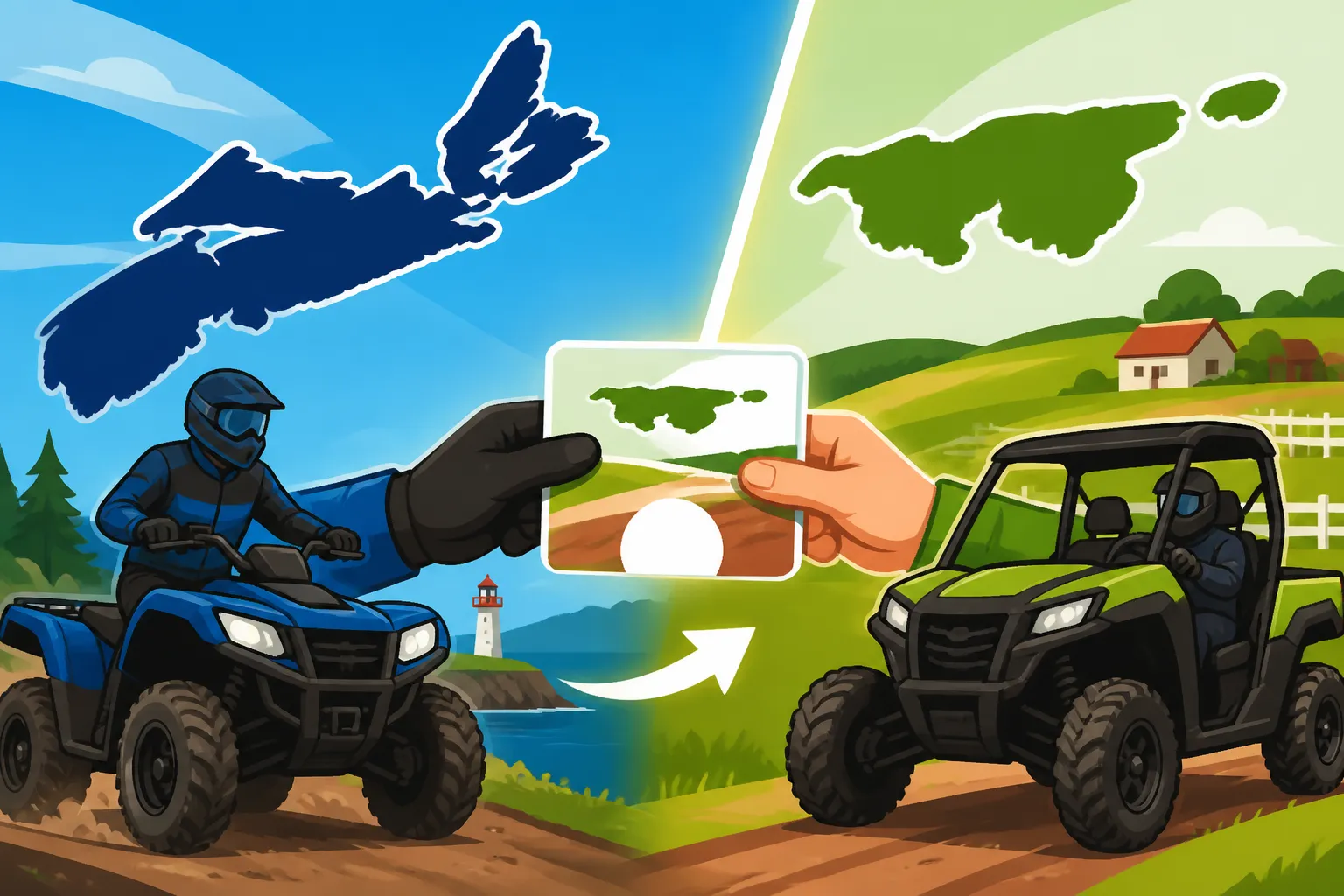
The reciprocity arrangement between Nova Scotia and PEI ended in 2026. In practical terms, a Nova Scotia trail permit should not be treated as permission to ride PEI trails. Riders should plan to obtain the required PEI pass before using trails there, even if their machine and permit are valid at home. The change is explained in Nova Scotia and PEI Reciprocity Ended in 2026, and An Island Pass Required From 2026 outlines the resulting pass requirement.
A trail permit is not the same as provincial registration. Registration identifies the machine and its registered owner under the applicable rules; a trail permit or pass provides access to a trail network under that network’s conditions. Insurance is a separate matter again. Carrying one document does not automatically satisfy the other requirements.
| What to check | What it covers | What a Nova Scotia rider should do |
|---|---|---|
| PEI trail pass | Access to eligible PEI trails under the current permit rules | Arrange the required pass before riding and confirm its conditions |
| Machine registration | Registration or permit requirements for the machine | Carry the documents required for the machine and verify they are valid |
| Insurance | Required coverage and proof of coverage | Confirm the policy applies in PEI and carry acceptable proof |
| Trail rules | Where and how the machine may be ridden | Check the local route, permitted machine types and any closures |
| Road use | Rules for riding on or crossing roads | Check separately; a trail pass does not grant road access |
Do not assume your Nova Scotia pass will be accepted because you bought it for a full riding season, because you belong to a club, or because the provinces previously had a reciprocity arrangement. Those details do not replace checking the current PEI requirement. A local club membership or a pass for another province may also have conditions that differ from a visitor pass.
For an overview of the Nova Scotia side of the trip, see Nova Scotia Riders Visiting PEI. The essential takeaway is simple: treat the PEI pass as a separate item on your trip checklist, rather than an extension of your Nova Scotia permit.
How to plan the pass before crossing
Buying or arranging the pass before travel can help prevent a frustrating situation at the trailhead. Start by checking the current instructions from the organization responsible for PEI trail permits or the trail system you intend to ride. Confirm how visitors obtain a pass, how long it remains valid, whether it applies to one machine or more, and what proof you need to carry.
The exact process and conditions can change, so do not rely only on an old pass, a previous trip, or a friend’s recollection. The reference Buying a Pass Before You Cross is a useful starting point for the planning question, but confirm the current details before setting out.
Before paying, check these points:
- Pass eligibility: Confirm that the pass is available to visiting riders from Nova Scotia and that it covers the kind of riding you plan to do.
- Machine coverage: Ask whether each ATV or UTV needs its own pass. Do not assume one pass covers every machine in a group or household.
- Validity period: Check the start and end dates, and whether the pass is suitable for a day trip, a longer visit or repeated trips.
- Proof and display: Find out whether you need a receipt, permit document, sticker or another form of proof, and how it must be carried or displayed.
- Trail coverage: Confirm that the pass applies to the specific trails you want to ride. A provincial pass may not cover every private, municipal or separately managed route.
- Purchase and payment: Check the approved way to obtain the pass and which payment methods are accepted. Keep the confirmation in case you need to show it.
- Changes and refunds: If your plans may shift, review the provider’s rules for cancellations, replacements or changes before you buy.
Keep proof accessible during the ride, not buried in luggage back at your vehicle. If the pass is digital, save the confirmation where it can be opened without reliable mobile service. If it must be displayed on the machine, follow the current placement instructions and make sure it remains visible and secure.
A pass may be offered for a defined period or under particular conditions. Do not infer its terms from the name or from what another rider purchased. Ask specifically whether your planned dates, machine and trail area are included. If you are traveling as a group, make a list of the machines and verify that the pass arrangement covers each one.
Some visitors may be interested in obtaining both provinces’ permits for separate rides at home and away. That is different from buying one pass that works in both places. Buying Two Permits for Two Provinces addresses the distinction. A Nova Scotia permit remains relevant to riding on eligible Nova Scotia trails; it simply should not be counted on for PEI access.
Check registration, insurance and trail access separately
A PEI trail pass does not replace the documents or equipment requirements that apply to the machine and rider. Before leaving Nova Scotia, check the registration paperwork, insurance proof, and local operating rules that apply to your trip. If you are unsure what your Nova Scotia permit covers, Nova Scotia Trail Permits From ATVANS and Nova Scotia Trail Permit Cost can help clarify the home-province side. For a broader review of paperwork when riding outside the province, see Nova Scotia Registration for a Visiting Rider.
Registration paperwork
Carry the machine’s relevant registration documents and make sure the information is legible and matches the machine. If you recently bought it, transferred ownership, or changed the registered owner, check that the paperwork is complete before travel. A trail pass is not proof that ownership or registration requirements have been met.
For a machine with unusual paperwork, such as one recently purchased privately or brought into the province, sort out questions before the trip rather than expecting a trail organization or enforcement officer to resolve them on the spot. Keeping copies of essential documents separately from the originals can also help if something is lost, though a copy may not substitute for a required original.
Insurance proof
Check with your insurer that your policy applies while the machine is in PEI and that the intended use is covered. Carry the proof of insurance required for the trip. A registration document or pass does not establish that the machine is insured. Nova Scotia Pink Card Rules and Nova Scotia Insurance Proof at a Trailhead explain why proof of coverage deserves its own checklist item.
Do not assume that coverage for riding in Nova Scotia automatically answers every question about travel elsewhere. Confirm the territory, permitted use, and any exclusions directly with your insurer. This is particularly important if the machine is modified, used for a special purpose, or covered by a policy with conditions that may affect trail riding.
Trail and road rules
A trail pass grants only the access it describes. It does not give a rider permission to use any road, shoulder, beach, private property or closed trail. Check the route before riding and obey posted signs, gates, closures and instructions from trail managers. If a trail crosses land managed by different organizations, access conditions may change along the route.
Road riding and road crossings are separate from trail access. A pass does not by itself authorize travel on public roads. Verify the rules that apply to each road segment, and do not assume that a route shown on a map is open to off-highway vehicles simply because it connects two trails.
Also check whether the route is open to your specific machine type. ATV and UTV access may differ on some corridors, bridges or local connections. Weather, maintenance work or landowner decisions can close a trail after you have planned your trip, so check for current notices close to departure.
A practical pre-trip checklist
Use this short checklist before loading the machine:
- Confirm that the PEI pass requirement applies to your visit and arrange the correct pass for each machine.
- Save or carry the required pass confirmation and follow any display instructions.
- Check the pass validity dates and confirm it covers the trails you plan to ride.
- Carry the machine’s registration documents and verify that ownership details are current.
- Confirm with your insurer that coverage applies in PEI and bring acceptable proof.
- Check trail openings, machine restrictions, closures and local access rules.
- Review road crossings and any road segments separately from the trail-pass question.
- Tell your group which documents each rider must carry and make sure every machine is covered.
- Keep a backup copy of key paperwork, while retaining any originals that may be required.
- Recheck the rules and route shortly before departure, especially if your plans were made well in advance.
It can help to keep the pass confirmation, registration details and insurance proof together in a waterproof document pouch. For a digital pass, save a local copy on your phone so you are not depending on a mobile signal at a remote trailhead. If the pass provider gives specific instructions about what counts as proof, follow those instructions rather than relying on a screenshot or email that may not meet the requirement.
If any detail is unclear, ask the pass provider or relevant trail organization before traveling. Get a clear answer about whether the machine, dates and trail network are covered. This is easier to sort out at home than after reaching PEI with a machine ready to ride.
The main planning change is not complicated: a Nova Scotia permit and a PEI pass serve separate trail-access purposes. Confirm the island pass, then check registration, insurance and route rules independently. With those pieces settled before the ferry or crossing, you can avoid mistaking a valid home-province permit for permission to ride every trail in PEI.
Disclaimer
This article is for general informational purposes only and does not constitute professional advice. Laws, prices and regulations vary by location and change over time. Consult a qualified professional for guidance on your specific situation.