Nova Scotia Requires a Supervisor Nineteen or Older
A child can be the right age and have the right machine, yet still be riding unlawfully if nobody meets Nova Scotia’s supervision rule. For riders under 16, the supervising adult’s age and training matter; being a parent or experienced rider is not enough on its own. Here’s how to understand the 19-or-older requirement, prepare for a ride, and avoid confusing supervision with permits or other youth rules.
Who Can Supervise a Young Rider
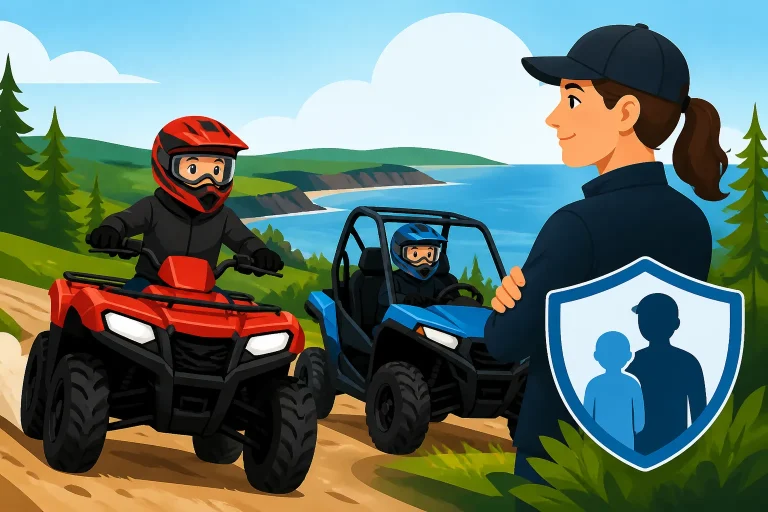
In Nova Scotia, an adult supervising a young off-highway vehicle rider must be at least 19 years old. The adult must also meet the applicable safety-training requirement. A parent, relative, family friend or club member can supervise if they qualify; the relationship to the child does not replace the age or training requirements.
The rule is about the person actually supervising the ride. Having a qualified adult somewhere at the property, at the trailhead or reachable by phone is not a reliable substitute for active supervision. Plan for the adult to stay with the young rider and be able to monitor what is happening. The law and any current official guidance should settle the exact requirements for the location and type of riding.
The supervising adult does not have to be the child’s parent or legal guardian. That can make group rides easier to organize, but it also means a family should confirm the chosen adult is eligible before setting out. A capable rider who is 18, for example, does not meet the age threshold simply because they have years of experience.
For a closer look at the age and training conditions, see Why a Supervisor Must Be Nineteen and Trained. The broader rules are covered in [Nova Scotia Supervision Requirements] and Nova Scotia Youth Supervision Rules.
| Situation | What to check |
|---|---|
| Rider is under 16 | Arrange qualifying adult supervision before riding |
| Proposed supervisor is under 19 | Choose another supervisor who meets the age requirement |
| Supervisor is 19 or older | Confirm they also meet the applicable training requirement |
| Several young riders are going | Check the limit on how many riders one supervisor may oversee |
| Ride includes a road trail or another restricted area | Check the rules for that location as well as the youth-supervision rule |
| Rider is visiting from another province | Do not assume a home-province rule or permit changes Nova Scotia’s youth requirements |
A supervisor’s age and training are only part of the plan. The young rider may also need to meet age, machine-size, equipment, training and location rules. Registration, insurance and trail access requirements are separate again. Meeting one requirement does not cancel the others.
What Supervision Means in Practice
Supervision should be active, not a name on a permission form. The adult needs to know where the young rider is, what route they are taking and what conditions they will encounter. They should be able to respond if the rider gets into difficulty, approaches a hazard or is no longer riding safely.
That practical standard matters on club trails, private land and any other place where the young person is allowed to ride. A supervising adult who cannot see or adequately monitor the rider may not be providing meaningful supervision. Keep the group together, choose terrain suited to the least experienced rider and agree on where to stop or turn back.
Before the ride, the adult and young rider should discuss:
- Where riding is permitted and where it is not.
- The route, turnaround points and any places where the group must wait.
- How the young rider should respond to other trail users, vehicles, gates and changing conditions.
- What to do if the machine stalls, the rider falls behind or someone is injured.
- Whether the adult can maintain appropriate supervision with the size and pace of the group.
A supervisor also has to judge whether the child can manage the machine and conditions, not just whether the child is legally old enough. A machine that is too large or powerful for the rider can make control difficult, especially on uneven, slippery or narrow terrain. The rider should be able to reach and use the controls properly, stop reliably and handle the machine without being pushed beyond their ability. Choosing a Machine That Matches the Rider’s Size can help with that assessment.
One adult may not be enough for a large group
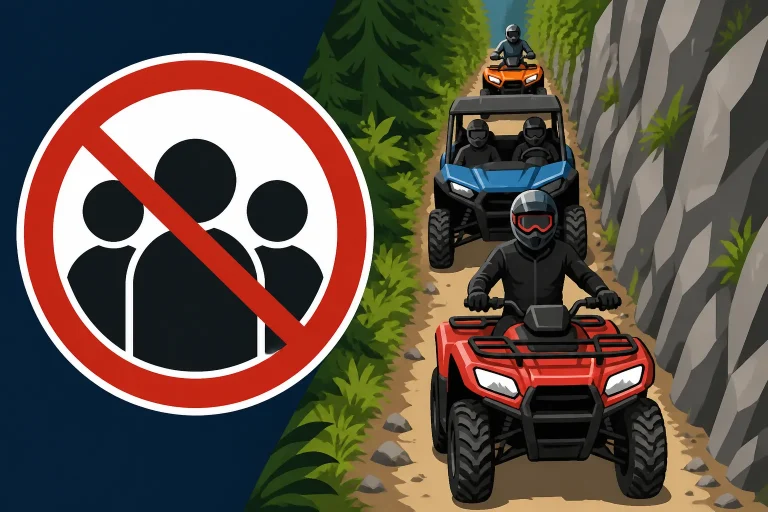
Nova Scotia’s rules limit the number of riders under 14 that one supervisor may oversee. The stated limit is eight riders under 14 at a time. That is a maximum, not a recommendation that every adult should supervise a group of that size. Terrain, visibility, riding ability and the riders’ ages can make a smaller group the safer choice.
A group with children of different ages may also be harder to manage than a group of riders who have similar skills and can keep a steady pace. If the route has blind corners, difficult surfaces or places where riders can become separated, assign additional qualified adults or split the group. Supervisors Limited to Eight Riders focuses on that limit.
A supervisor should not assume that keeping a large group moving together is enough. If a rider cannot be observed or reached when needed, adjust the plan. A more conservative route or smaller group is often the practical solution.
Age, Training and Location Rules Are Separate
The requirement for a supervisor aged 19 or older applies within a wider set of youth rules. A young rider’s eligibility can depend on age, the type of machine and where the ride takes place. Do not treat adult supervision as blanket permission to ride anywhere.
Nova Scotia has separate requirements for riders under 16, including age-related restrictions and training rules. A child’s age can affect where they may operate an off-highway vehicle and what conditions apply. Before taking a young rider onto a trail or road trail, check the rules for that specific location. Nova Scotia Rules for Riders Under 16 explains the wider youth framework.
Riding age and road-trail eligibility are not interchangeable. A child who may ride under supervision in one setting is not automatically eligible to operate on a road trail. Road trails have their own conditions, including requirements relating to the rider, machine and route. Check Nova Scotia Road Trail Rules Explained before planning a route that uses one.
The same care applies to closed courses. Some youth riding rules are tied to where the machine is operated, and a private driveway or a quiet field should not automatically be assumed to meet a legal definition. Check Nova Scotia Closed Course Requirements if the child’s age or the proposed location makes that distinction relevant.
Safety training needs its own check as well. A young person’s training status and the supervisor’s training status are different questions. The adult’s eligibility does not establish that the child has met any training requirement that applies to them. For riders approaching the age when training rules change, see Nova Scotia Safety Training at 16. If an exemption may apply because of an older certificate or ownership history, verify that separately through Nova Scotia’s Grandfather Exemption.
A useful pre-ride check is to ask four questions:
- Is the rider old enough for this type of riding and this location?
- Is the machine appropriate for the rider and permitted in that setting?
- Does the rider meet any applicable training or equipment requirements?
- Is the supervising adult at least 19 and appropriately trained?
If any answer is unclear, pause and confirm it before riding. A general assumption based on what another family does is not a dependable substitute for checking the relevant rules.
Permits and Reciprocity Do Not Replace Supervision
A trail permit, vehicle registration or insurance policy does not make a young rider eligible to ride without the required adult supervision. Those documents address different requirements. Likewise, an adult who is allowed to supervise does not make an unregistered, uninsured or otherwise ineligible machine legal to use.
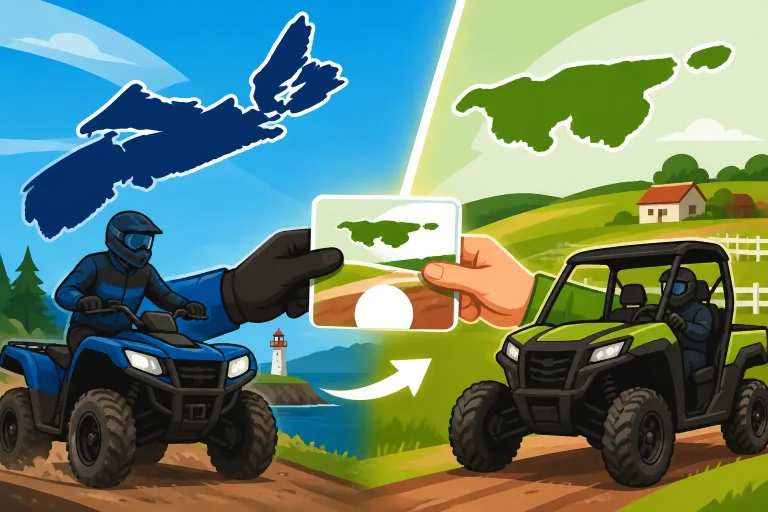
This distinction is important for visitors. A rider coming from another province should check Nova Scotia’s requirements rather than assume their home jurisdiction’s rules carry over. A permit that provides trail access is not a youth-supervision exemption, and a visiting adult still needs to meet the local conditions for supervising a young rider. The same principle applies to an out-of-province youth: check both the rider rules and the access requirements before travelling.
A family preparing for a ride can sort the requirements into three groups:
- Rider and supervisor: age, training, supervision and any applicable equipment rules.
- Machine: registration, insurance and suitability for the rider and location.
- Access: trail permit, permission to use private land and any location-specific operating rules.
The details can change depending on where the ride takes place. A club trail, private property and road trail may not have identical access rules. Before leaving, confirm that the route is open to the machine and that the rider is eligible to use it. For trail-access costs and buying options, see Nova Scotia Trail Permit Cost and How to Buy a Nova Scotia Trail Permit.
Do not assume a reciprocal permit or out-of-province document settles every issue. Reciprocity concerns trail access arrangements; it does not necessarily address the rider’s age, training, supervision, registration or insurance. Confirm the current requirements with the relevant provincial or trail organization before relying on a permit for a planned trip.
A simple pre-ride checklist
Use this checklist when a young rider is joining a family outing:
- Confirm the rider’s age and the location-specific rules.
- Confirm the supervisor is at least 19 and meets the applicable training requirement.
- Keep the group within the supervision limit, especially when riders are under 14.
- Match the machine and route to the young rider’s size and ability.
- Check the machine’s registration and insurance requirements.
- Confirm trail access, permit conditions and permission for any private land.
- Review the route, hazards, stopping points and what to do if the group separates.
- Make sure required safety equipment is in good condition and fits the rider.
For a visiting family, add a check that the permit or access arrangement is valid in Nova Scotia. Do this before the trip rather than at the trail entrance, where it may be difficult to resolve a paperwork or eligibility question.
Common Mistakes to Avoid
Assuming a parent can supervise regardless of age
The rule is based on the supervisor’s qualifications, not their relationship to the rider. A parent who is under 19 does not meet the stated age requirement. Arrange for another qualifying adult rather than treating parental permission as a substitute.
Treating experience as a replacement for training
A long history of riding may make an adult more capable, but it does not automatically satisfy a formal training requirement. Confirm the supervisor’s eligibility rather than relying on experience alone.
Counting a nearby adult as the supervisor
An adult who stays at home, waits at a distant trailhead or is only available by phone may not be actively supervising the ride. Plan for the qualified adult to accompany and monitor the young rider.
Assuming a permit covers every rule
Trail access documents do not replace youth requirements, machine registration, insurance or permission to ride on private land. Check each category separately.
Taking a child onto a road trail because an adult is present
Road-trail rules are distinct. Adult supervision alone does not make a young rider eligible to operate there. Check the rider and machine requirements for the specific route.
Overloading one supervisor
Even when a group is within the stated maximum, a crowded or spread-out ride can be difficult to supervise safely. Add another qualified adult or reduce the group size when terrain, visibility or skill differences make close monitoring difficult.
Choosing a route for the adults rather than the least experienced rider
A route that is comfortable for experienced adults may be too demanding for a child. Narrow the plan to the young rider’s ability, with room to stop or turn around without pressure.
When in doubt, check the current official guidance before setting out. That is especially worthwhile if the ride involves a youth near an age threshold, a visiting rider, a road trail, a closed-course question or an adult whose training status is uncertain.
Frequently Asked Questions
Does the supervisor have to be the child’s parent?
No. A parent is not required, but the adult who supervises must meet the applicable age and training requirements. Confirm the adult is eligible before the ride.
Can an 18-year-old supervise a rider under 16?
No. The supervisor must be at least 19 years old. Riding experience or family permission does not replace the age requirement.
Can one adult supervise several young riders?
Yes, within the applicable limit. Nova Scotia limits one supervisor to eight riders under 14 at a time. A smaller group may be easier to monitor, depending on the route and riders’ abilities.
Does a trail permit remove the supervision requirement?
No. A trail permit concerns access, not a young rider’s supervision eligibility. Check supervision, rider, machine and access rules separately.
Disclaimer
This article is for general informational purposes only and does not constitute professional advice. Laws, prices and regulations vary by location and change over time. Consult a qualified professional for guidance on your specific situation.