Why the Machine Must Fit the Rider
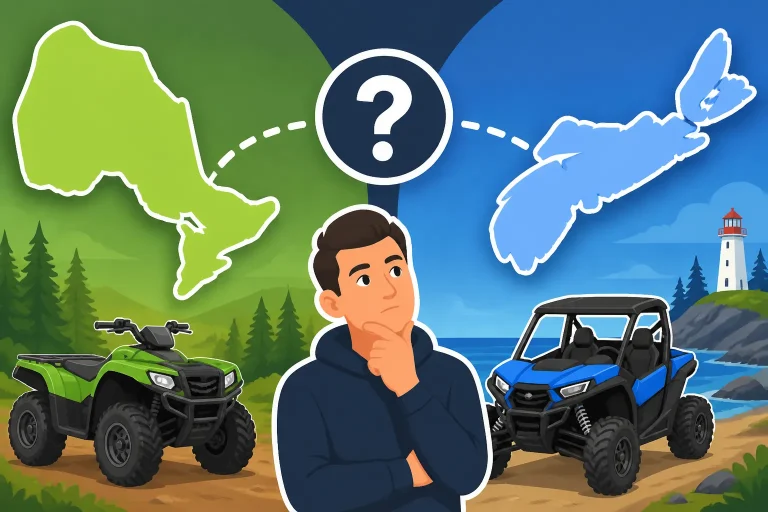
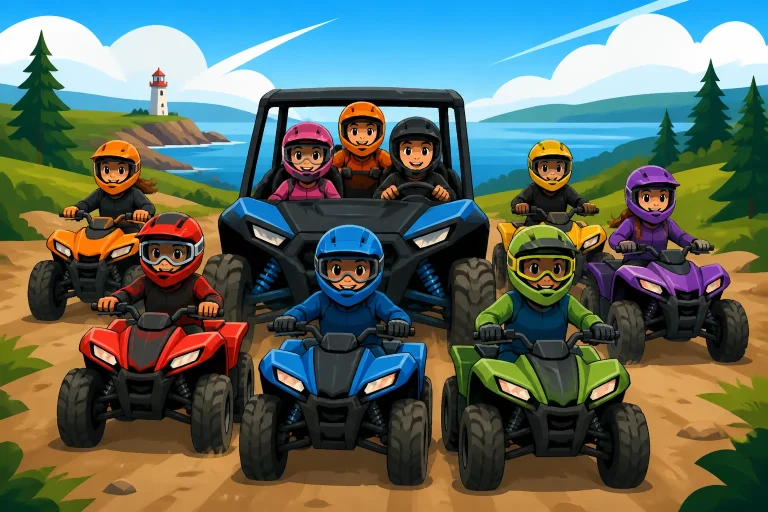
A machine that looks manageable in a driveway can be difficult to control once the ground gets rough. For young riders in Nova Scotia, choosing an ATV or UTV is not just about age or engine size: the rider must be able to operate it safely, and youth rules still apply. Here’s how to assess fit, understand the limits of age-based guidance, and separate machine choice from permits and supervision.
What “the machine must fit the rider” means
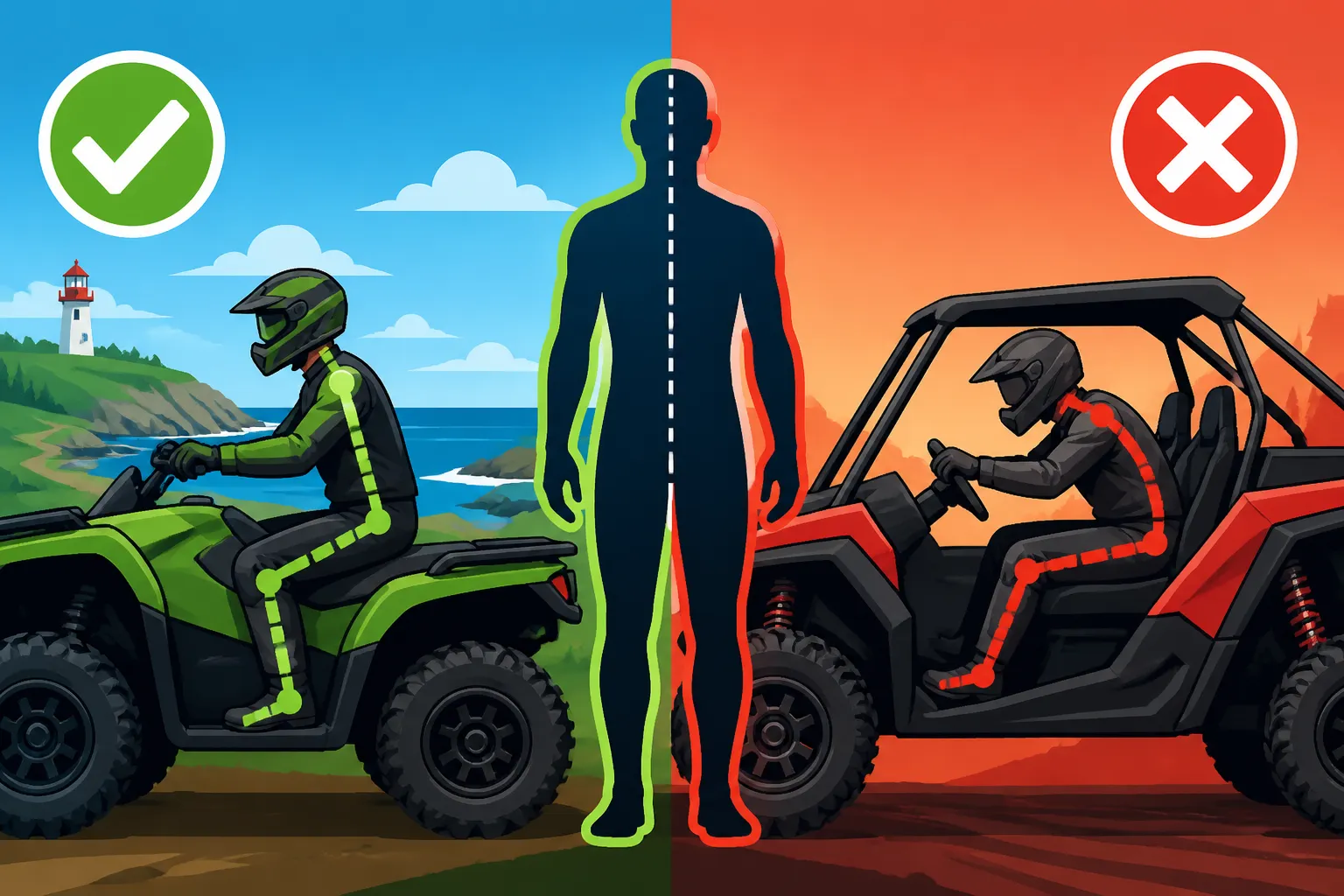
A good fit means the rider can control the machine without stretching, straining or relying on someone else to do the hard parts. The rider should be able to reach the controls, use them correctly and maintain a stable position while the machine is stopped and moving. A machine that is too large or powerful can be difficult to steer or stop, even if the rider can climb aboard.
Fit is not a single measurement. It depends on the rider’s height, strength, reach, coordination and experience, as well as the machine’s design and the terrain. A small rider may have trouble controlling a heavy machine even if they can reach the handlebars. A rider who can manage a quad on level ground may struggle on a slope, in mud or when the machine’s tires lose traction.
For a basic fit check, have the rider sit on the machine with the engine off and assess whether they can:
- Keep a secure, balanced position without being pushed forward or stretched back.
- Reach the handlebars and operate the brake and throttle smoothly.
- Turn the handlebars through their useful range without losing their grip or balance.
- Use the foot controls, if fitted, without shifting awkwardly.
- Hold the machine steady while mounting, dismounting and stopping.
- Understand how to shut it off and what to do if it does not respond as expected.
A stationary check is only a first step. It cannot establish that a young rider is ready for the machine. Supervised practice in a safe, permitted area is needed to see whether the rider can start, stop, turn and respond to changing ground conditions. If the rider has to fight the controls, cannot reach them comfortably or cannot stop reliably, the machine does not fit yet.
The same principle applies to a UTV, even though its steering wheel, seat and pedals may feel familiar. The rider still needs to reach and operate the controls, see the path clearly and remain properly positioned. A UTV’s larger size and weight do not make it automatically easier for a young person to handle. Its passenger seating also does not mean that a young driver is ready to carry someone else.
Fit is more than engine size
Engine displacement is easy to compare in a listing, but it is not a complete measure of how challenging a machine will be. Weight, throttle response, braking, wheelbase, centre of gravity, tires and power delivery all affect how it behaves. Two machines with similar engine sizes can feel quite different to a new rider.
A throttle limiter or other speed-reducing feature may help manage how quickly a machine accelerates, but it does not make an oversized machine easy to steer or stop. It also does not replace supervision, training or compliance with Nova Scotia’s rules. Never assume a machine is suitable simply because its speed can be restricted.
Manufacturers may provide age, size or use guidance for a particular model. Treat that information as an important starting point, not as a substitute for checking the current rules and assessing the actual rider. A rider’s age alone cannot tell you whether they can control a machine safely.
If you are comparing options, consider the full combination: the rider’s reach and strength, the machine’s controls and weight, the terrain where it will be used, and the adult supervision available. Nova Scotia Engine Size Guidance for Youth can help put engine size into context, but a number on a specification sheet cannot answer every fit question.
How age and rider fit work together in Nova Scotia
Nova Scotia has rules that affect who may operate an off-highway vehicle and under what conditions. Meeting a fit check does not remove those requirements. Likewise, being old enough to operate a machine does not automatically mean that every machine is suitable.
The minimum legal riding age, supervision rules and training requirements are separate questions from whether a particular ATV or UTV fits a particular person. A family choosing a machine should check each one rather than treating age as a shortcut for the whole decision. For the broader age rules, see Nova Scotia Rules for Riders Under 16 and Why 6 Is the Youngest Legal Riding Age.
For riders under 16, the rules include supervision requirements. An adult’s presence can provide guidance and help respond to an emergency, but it cannot compensate for a machine that the young rider cannot control. A supervisor should not assume that a child can manage a larger model just because an adult is close by. The supervision rules are explained in [Nova Scotia Supervision Requirements].
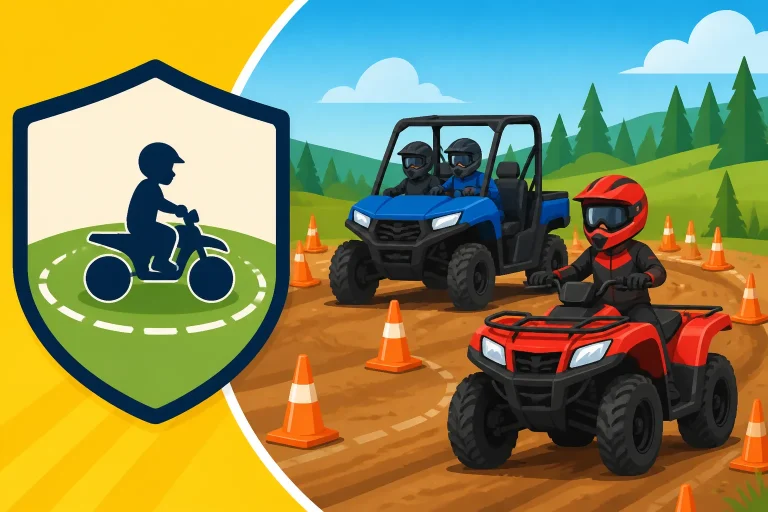
The rider’s level of training matters too. A young person who has completed a course may have learned important operating skills, but a certificate does not make every machine an appropriate choice. Match the machine to the rider’s demonstrated ability and follow the applicable training and operating rules. See Nova Scotia Safety Training at 16 for information about training requirements and how they relate to age.
When a child is still growing, fit can change over time. That does not mean the family should buy a machine the child will “grow into.” A machine that is hard to control now can create risk now. Reassess fit as the rider grows, gains experience or moves to different terrain rather than assuming that an earlier assessment remains valid.
The practical distinction is:
| Question | What it helps establish | What it does not establish |
|---|---|---|
| Is the rider old enough under the rules? | Whether the rider meets an age requirement | Whether the machine fits or the rider is skilled enough |
| Is the rider supervised as required? | Whether required adult oversight is in place | Whether the rider can control an oversized machine |
| Has the rider completed required training? | Whether applicable training requirements are met | Whether the rider can safely operate every model |
| Can the rider reach and use the controls? | Whether basic physical fit may be possible | Whether the rider can handle real trail conditions |
| Does the model’s guidance suit the rider? | A useful reference for the model and intended use | A guarantee of safe operation or legal compliance |
These questions need separate answers. If any one is uncertain, pause before allowing the young person to ride. Confirm the current requirements and get advice from an appropriate training provider or qualified dealer familiar with the model.
A practical way to assess an ATV or UTV
A useful assessment starts with the rider and the intended use, not with the machine’s advertised age range. Consider where the machine will be used, what the rider will be expected to do and who will supervise. A model that seems manageable in a level yard may be a poor choice for narrow, uneven or muddy trails.
Start with the rider’s abilities
Think about the rider’s strength, coordination, attention and experience. Can they follow instructions, recognize hazards and stop when asked? Can they keep both hands in control, respond without panic and maintain a stable position when the machine moves? If the rider is still learning basic balance or has trouble operating similar controls, choose a safer way to build skills before moving up.
The rider should be able to explain the basic controls and safety steps in their own words. They should know how to stop the machine, how to shut it off and what to do if they lose control or become unsure. An adult should not confuse a child’s enthusiasm with readiness.
Check the machine while it is off
With the machine secured and switched off, check posture and reach. The rider should not need to lean far forward, lock their elbows or sit on the edge of the seat to operate the controls. They should be able to turn the handlebars while staying balanced. For a UTV, check that the rider can sit correctly, reach the steering wheel and pedals, and see the route from the normal driving position.
Also consider whether the rider can mount and dismount safely. If they need to be lifted onto the seat, cannot keep the machine stable or struggle to get off without help, those are warning signs. An adult can help with a stationary inspection, but the goal is to determine whether the rider can operate the machine independently within the applicable rules.
Check handling under controlled conditions
Any first ride or fit test should happen in a suitable area where the rider is allowed to operate the machine, with proper supervision and protective equipment. Start with simple movements at a controlled pace. Watch whether the rider can:
- Start and stop smoothly.
- Keep a steady position while moving.
- Turn in both directions without losing control.
- Use the brakes with enough control to stop reliably.
- Respond to instructions without making abrupt movements.
- Avoid obstacles and choose a safe path.
Do not make a first fit test on a public road or a busy trail. Avoid adding passengers, steep slopes, deep mud or other difficult conditions to an initial assessment. If the rider struggles with an easy task, do not try to prove the machine is manageable by making the test harder.
Consider the terrain and the machine’s weight
A machine’s behaviour changes with the surface and slope. Loose gravel, wet roots, mud and uneven ground can make steering and braking more demanding. A young rider may be able to control a machine on flat ground but have difficulty when the tires slip or the vehicle leans.
Weight matters when a machine needs to be stopped, turned or recovered. A heavier model may be difficult for a smaller rider to manage if it starts moving unexpectedly. Think about the likely riding conditions, not just the easiest conditions available during a demonstration.
For a UTV, also consider the added complexity of passengers, doors, seat belts and the vehicle’s size on a narrow trail. Being seated inside a cab can feel more secure, but it does not erase the need for control, judgment and compliance with youth rules.
Common buying mistakes and safer alternatives
A machine may be described as suitable for a broad age range, but children of the same age can differ greatly in height, strength and experience. A general age label should not replace an in-person check. If a seller cannot provide clear model guidance, locate the manufacturer’s information before buying and ask a qualified dealer to explain the machine’s controls, weight and intended use.
Buying a machine to grow into
Choosing a larger machine because the rider will eventually be big enough is a common temptation. The problem is that the rider has to control it today, not in a future season. If the rider cannot reach or use the controls now, waiting or selecting a better-fitting model is safer than relying on restricted speed or adult proximity.
A machine can also become unsuitable after a rider grows if their experience does not keep pace with their size. Reassess skills as well as physical fit. A taller rider may reach the controls but still need more practice before handling a heavier or more powerful vehicle.
Treating a limiter as a complete safety solution
Reducing top speed can be one part of a plan, but it does not correct poor reach, awkward posture, excess weight or weak braking control. It may also give a parent false confidence if the rider has not practiced essential skills. Use any speed-control feature as directed by the manufacturer, and keep the machine within the rider’s ability.
Comparing only engine sizes
A smaller engine is not automatically the best fit, and a larger one is not automatically unsafe in every situation. Engine size is one factor among many. Compare the physical dimensions, weight, throttle and braking characteristics, manufacturer guidance and intended terrain. Ask how the machine behaves at low speed, where a new rider needs precise control.
Assuming a UTV is a simpler option
A UTV may offer a seated position and a steering wheel, but it still has substantial mass and can have more complex controls. The rider needs to use the pedals and steering accurately, understand the vehicle’s dimensions and follow the rules for the setting where it will be driven. Do not let an enclosed cab or passenger seats create the impression that a young driver can safely operate a vehicle that does not fit.
Letting a child ride because a friend does
Another family’s decision does not show that a machine is suitable or that the same conditions apply. The other rider may be a different age, have different training or be riding on different property. Assess the child and machine in front of you, and verify the applicable requirements.
When buying used, ask for the model and year, owner’s manual and any available maintenance or operating information. Check the machine’s condition and controls before purchase. If you are also sorting out registration or ownership records, Nova Scotia Used Machine Paperwork and Nova Scotia Registration Without a Bill of Sale cover separate paperwork questions. Ownership documents do not establish that a machine is suitable for a young rider.
Fit, permits and riding access are different checks
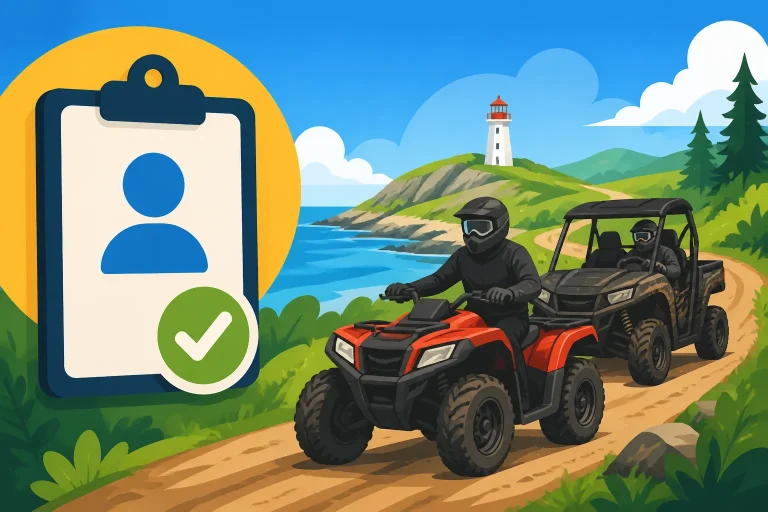
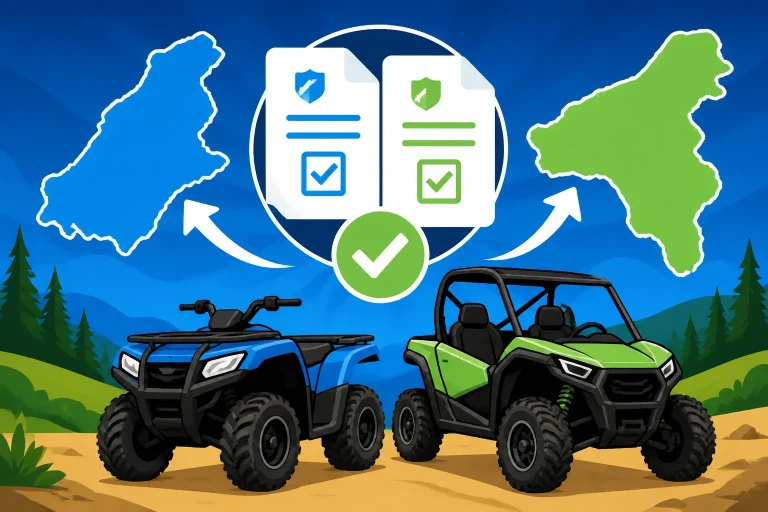
A machine that fits the rider is not automatically ready for every kind of riding. Registration, insurance, trail permits, training, supervision and access rules may apply independently. A family should confirm the requirements for the machine and the place where it will be operated before setting out.
This matters especially when a family is travelling or a young rider is visiting Nova Scotia. A permit or registration issued elsewhere does not necessarily answer every question about who can operate the machine, what supervision is required or whether a particular trail is open to it. Check current rules for the machine, rider and riding location. [Nova Scotia Visitors From New Brunswick] and [Nova Scotia Visitors From PEI] explain visitor considerations; do not assume that a permit settles youth eligibility.
A parent or guardian can make the process clearer by checking these items before a ride:
- The rider meets the applicable age, supervision and training requirements.
- The machine’s design and controls suit the rider’s size and ability.
- The rider has practiced stopping, steering and responding to instructions.
- Required registration, insurance and trail access documents are in order.
- The riding area allows the machine and is appropriate for the rider’s skill.
- Protective equipment is correctly fitted and in good condition.
Permits and documents should be checked with the relevant official provider or trail organization because requirements can vary by activity and location. A machine’s paperwork does not prove that a young person can safely operate it. The rider’s fit and readiness remain a separate judgment.
If the machine does not fit, the safest decision is to wait, choose a more suitable model or keep the rider off it until they can control it reliably. If the rules are unclear, confirm them before riding rather than relying on a seller’s description, an online listing or another family’s routine. It is easier to delay a ride than to correct a poor match once the machine is moving.
Frequently Asked Questions
Does a child’s age tell me which ATV size to buy?
No. Age is relevant to Nova Scotia’s operating rules, but it does not measure reach, strength, coordination or experience. Check the rules and assess the actual rider on the specific machine.
Is a smaller engine always safer for a young rider?
Not necessarily. Engine size is only one part of the picture. Weight, controls, braking, throttle response and terrain also affect how difficult a machine is to operate.
Does a speed limiter make an oversized machine suitable?
No. A limiter may reduce speed, but it does not solve problems with reach, balance, steering or braking. It cannot replace training, supervision or a proper fit.
Can a parent supervise a child on any machine?
Supervision does not make every machine appropriate. The rider still needs to meet the applicable rules and be able to control the machine. Check Nova Scotia Rules for Riders Under 16 and [Nova Scotia Supervision Requirements] for the separate youth requirements.
Does having a trail permit mean a young rider can use the machine?
A permit concerns access under its terms; it does not by itself establish age eligibility, supervision, training or machine fit. Confirm the requirements that apply to the rider, vehicle and riding area.
Disclaimer
This article is for general informational purposes only and does not constitute professional advice. Laws, prices and regulations vary by location and change over time. Consult a qualified professional for guidance on your specific situation.