Nova Scotia Permit Questions Clubs Hear
Nova Scotia clubs hear the same permit questions from new owners, visiting riders and families: who needs a pass, where it works, and whether an out-of-province permit counts. The key is to separate a trail permit from registration, insurance and permission to ride. Knowing which one you need—and checking the rules for your route—can prevent a wasted trip.
What a Nova Scotia trail permit covers
A trail permit is for access to participating ATV club trails. It is not the same as a vehicle registration permit, and it does not by itself make a ride legal everywhere. A machine may need registration and insurance under provincial rules even when the rider has a valid trail permit.
That distinction is often the first thing a club wants to clarify. A rider might be properly registered but still lack the permit needed for the club trail they plan to use. The reverse is possible, too: a trail permit does not replace required registration or insurance. For a broader look at how these requirements fit together, see Nova Scotia Registration and the Trail Permit.
A trail permit also does not grant permission to travel across every piece of land or along every corridor. Club trails can use land with different owners and agreements. A route may include a closed segment, a seasonal restriction or a section where permission does not extend beyond the marked trail. Riders should check current trail notices and stay on the authorized route rather than treating a permit as general access to nearby woods.
| Question | What the answer usually depends on |
|---|---|
| Do I need a trail permit? | Whether you plan to ride on a participating club trail |
| Does the permit register my machine? | No; registration is a separate requirement |
| Does it cover every trail in the province? | No; check the trail network, access rules and closures |
| Can I use a permit from another province? | Reciprocity depends on the province and current arrangements |
| Does a permit cover a dirt bike or snowmobile? | Do not assume so; those vehicles may need separate arrangements |
There are different ways to get access, including a permit connected with club membership and a permit-only option. Membership can be useful if you want to support or get involved with the club maintaining the trails you ride. The permit-only option may suit someone who wants trail access without joining a club. Compare the choices in Nova Scotia Club Permit vs Standalone Permit.
If you ride only occasionally, ask whether a short-term option is available and whether it fits your plans. A visitor permit is a separate option with its own period of validity; it is not a substitute for checking where it can be used. See Nova Scotia Thirty-Day Permit Rules before relying on a short visit pass.
Who needs a permit, and when?
Clubs commonly ask whether each rider or each machine needs a permit. The practical answer depends on the permit’s terms and the way the machine will be used. Before a group ride, confirm that every machine in the group has the required permit for the trail network. Do not assume that a permit bought for one machine automatically covers another.
That question comes up often when a household owns more than one ATV or UTV. A permit for a primary machine may not provide access for a second machine. If you expect to switch vehicles or bring another machine along, check the rules for Nova Scotia Permit for a Second Machine instead of guessing at the trailhead.
A club may also ask whether a child riding with an adult needs a permit of their own. Age-related riding rules and trail permit requirements are different issues. A young rider still has to meet the applicable safety, supervision and age rules, and the machine they ride may need the appropriate permit. Read Do Nova Scotia Kids Need Their Own Permit? and confirm the details with the permit provider before a family outing.
The most useful questions to ask are specific:
- Which machine will be used, and is the permit valid for that machine?
- Which trail network or club route are you planning to ride?
- Is the permit valid for the dates of your trip?
- Are there current closures or access restrictions on the route?
- Does everyone in the group meet the applicable riding rules?
When buying a permit, follow the instructions provided for displaying or carrying proof. Some riders expect a familiar sticker, while permit evidence may be supplied in another form. Do not rely on an old decal, a receipt from a previous season or another rider’s paperwork as proof that your current machine is covered. For details on what to expect, see Why Your Permit Arrives as a Letter, Not a Sticker.
Timing matters, too. Many standard permits are associated with the calendar year, so buying late in the year may mean a shorter period of use than a rider expects. A visitor permit works differently. Check the start and end dates shown in the current permit terms rather than assuming every permit runs for the same period. Nova Scotia Permit Expiry Date explains what to confirm.
Will an out-of-province permit work?
Reciprocity is one of the most confusing topics at a club gate because riders may remember an arrangement that has changed, or assume that a pass recognized in one province will be accepted everywhere. The safe approach is to check the current rule for the province that issued your pass and the Nova Scotia trail network you plan to ride.
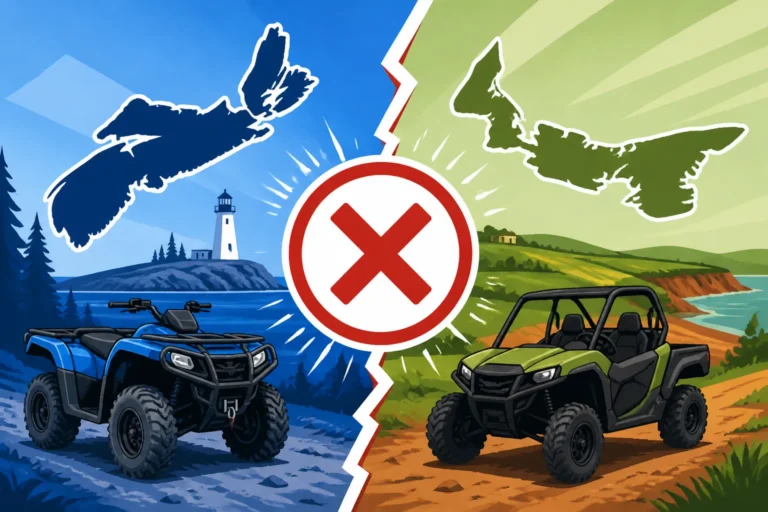
Nova Scotia’s arrangements with neighbouring provinces are not all the same. The listed guidance says reciprocity with New Brunswick ended and that PEI reciprocity ended in 2026, while Ontario permits are honoured. Because these arrangements can change, confirm the current position with the provincial ATV association or the relevant club before travelling. A pass purchased at home should not be treated as automatic proof of access in Nova Scotia.
A visiting rider should also check whether their permit is valid for the specific kind of machine they are bringing. A pass for an ATV does not necessarily cover a dirt bike, and snowmobiles have separate trail permit arrangements. The same applies to an out-of-province pass: recognition in one category does not prove recognition for another.
When asking a club about reciprocity, provide the name of the issuing province, the type of permit and the machine you intend to ride. Ask whether the permit is accepted on the route you want, not just whether Nova Scotia has a general agreement with that province. For additional context, see Nova Scotia Riders Visiting New Brunswick and Nova Scotia Riders Visiting PEI.
If your pass is not accepted, ask about the available Nova Scotia option before setting out. A visitor permit may be suitable for a short stay, while a longer visit may call for a different choice. The correct option depends on the length of the visit and the access you need. Nova Scotia Permit for a Visitor covers the questions to settle before buying.
What clubs can clarify—and what they cannot
A local club is often the best place to ask about trail access, route conditions and closures. Clubs may maintain trails, share local notices and explain how their network works. They can often tell you whether a route is open, where it connects and which local restrictions riders should know about.
They may not be the right office for every permit question. A club volunteer may not be able to decide whether an out-of-province permit is officially recognized, interpret a registration requirement for your specific machine or provide a definitive answer about insurance coverage. For those issues, contact the permit provider, the relevant provincial association or the appropriate government office. For help finding a nearby organization, see Finding an ATVANS Club Near Your Trails.
It also helps to be precise about what you are asking. “Is my ATV covered?” could mean covered by a trail permit, registered, insured or allowed on a particular route. Those are separate questions. A clearer version is: “I have this type of permit from this province; can I use it on this club trail with this machine during these dates?” That gives the club a better chance of answering—or directing you to the right place.
Before riding, verify the items that sit outside the trail permit:
- Registration: Check whether the machine must be registered and whether its paperwork is in order.
- Insurance: Confirm the required coverage and carry proof as required.
- Trail status: Check for closures, seasonal restrictions, damage or reroutes.
- Land access: Stay on authorized corridors and respect landowner conditions.
- Rider requirements: Confirm that each rider meets the applicable age, supervision and equipment rules.
A club permit is most useful when treated as one part of a ride plan, not a blanket authorization. Check the correct permit for each machine, confirm the date range and route, and verify reciprocity before crossing the provincial border. When a club cannot settle a question, ask who can and confirm the answer before unloading at the trailhead.
Disclaimer
This article is for general informational purposes only and does not constitute professional advice. Laws, prices and regulations vary by location and change over time. Consult a qualified professional for guidance on your specific situation.