What a Visitor Riding for a Month Needs
A month of ATV riding in Nova Scotia is long enough that a short-visit pass may not fit, but a full-season permit may be unnecessary. The right choice depends partly on where your machine is registered and whether your home permit is recognized. Sort out trail access, vehicle documents and insurance before you travel so a paperwork gap does not disrupt the ride.
Start with the trail permit, not just your machine papers
Nova Scotia has a 30-day visitor trail permit for eligible visitors. It is a separate issue from your ATV or UTV’s registration and insurance: having those documents does not, by itself, establish that you can use a club trail. Likewise, a trail permit is not a replacement for valid vehicle papers or insurance.
The visitor permit is intended for a limited stay. If your plans cover about a month, check the permit’s exact start date, expiry and eligibility before buying. Don’t assume that “30 days” means a calendar month or that you can extend the pass once you arrive. The applicable rules and purchase process can change, so confirm them with the permit provider before setting out.
| What to check | Why it matters for a month-long visit |
|---|---|
| Whether you qualify for the visitor permit | Eligibility may depend on where you live and what permits you already hold. |
| Permit start and expiry dates | Your riding dates should fit within the permit’s validity period. |
| Your home permit’s recognition | Reciprocity differs by province and can change. |
| Machine registration and insurance | Trail access does not replace required vehicle documents. |
| The route and trail status | A permit does not make every road, trail or property open to riding. |
If you are eligible for the 30-day pass, compare it with the alternatives before purchasing. A Nova Scotia’s Thirty-Day Visitor Permit is aimed at temporary visits. A Nova Scotia’s Club Membership Trail Permit may suit you better if you want the benefits of joining a local club or expect to ride beyond the visit period. The Nova Scotia’s Trail Permit Without a Club is another option to investigate if you want a permit without club membership. Check what each option covers and whether its validity lines up with your itinerary.
Avoid buying a pass based only on the number of days you expect to ride. A month-long visit might include days spent travelling, repairing a machine or waiting out poor trail conditions. What matters is the permit’s actual validity period, not the number of rides you fit in.
It is also worth checking whether the visitor permit gives you the trail access you expect. A pass does not grant permission to cross private property, open a closed trail or ride in places where machines are prohibited. It does not replace local rules or a landowner’s permission. Confirm that each part of your planned route allows your type of machine and is open when you intend to go.
Check reciprocity for your home province or territory
Do not assume that a permit or registration from home automatically gives you the same trail access in Nova Scotia. Reciprocity can depend on where the machine and rider are from, which permit they have, and whether the arrangement is still in effect. A visitor permit may be the right choice for some riders, while a particular out-of-province permit may be recognized for others.
The rules are especially important for visitors arriving from nearby provinces. Nova Scotia’s arrangements with New Brunswick and Prince Edward Island have changed, while Ontario permits are listed as honoured. Check the current requirements for your province rather than relying on what a friend did on an earlier trip. The details for Nova Scotia Riders Visiting New Brunswick, Nova Scotia Riders Visiting PEI and Nova Scotia Visitors From Ontario can help you identify the relevant questions.
When checking, be ready to explain:
- Where you live and where the machine is registered.
- What type of trail permit or pass you hold at home.
- Whether you are bringing an ATV, UTV or another type of off-highway vehicle.
- How long you plan to ride in Nova Scotia.
- Whether the machine will be used on club trails, road trails, private land or a mix.
A home registration card, club membership card or trail pass may prove something useful, but those documents are not interchangeable. Ask the permit provider what it recognizes and what you still need to carry. If the answer is unclear, get the requirements confirmed before travelling rather than treating an old permit sticker as proof of current access.
Check the machine category too. A permit issued for one kind of vehicle may not cover another. In particular, don’t assume an ATV trail permit covers a dirt bike or snowmobile; separate permit rules may apply. If you are bringing a side-by-side, make sure the permit and trail rules allow that machine on the specific corridors you plan to ride.
Bring registration, insurance and proof you can produce on the trail
Before leaving home, check that the machine’s registration or equivalent vehicle documents are current and that the name and identifying details match the vehicle. Visitors should not assume that a Nova Scotia trail permit will solve a registration problem from their home jurisdiction. For an overview of how vehicle paperwork and trail access differ, see Do You Need to Register an ATV in Nova Scotia?.
Bring proof of insurance and confirm that the policy applies to the kind of riding you plan to do in Nova Scotia. Ask your insurer or broker about coverage outside your home province, any limits on off-road use, and whether your policy covers the machine while it is being transported or stored. Permit-related coverage, where applicable, should not be mistaken for personal insurance on the machine. Nova Scotia Association Insurance Explained describes the distinction between association coverage and the protection an owner may need from an insurer.
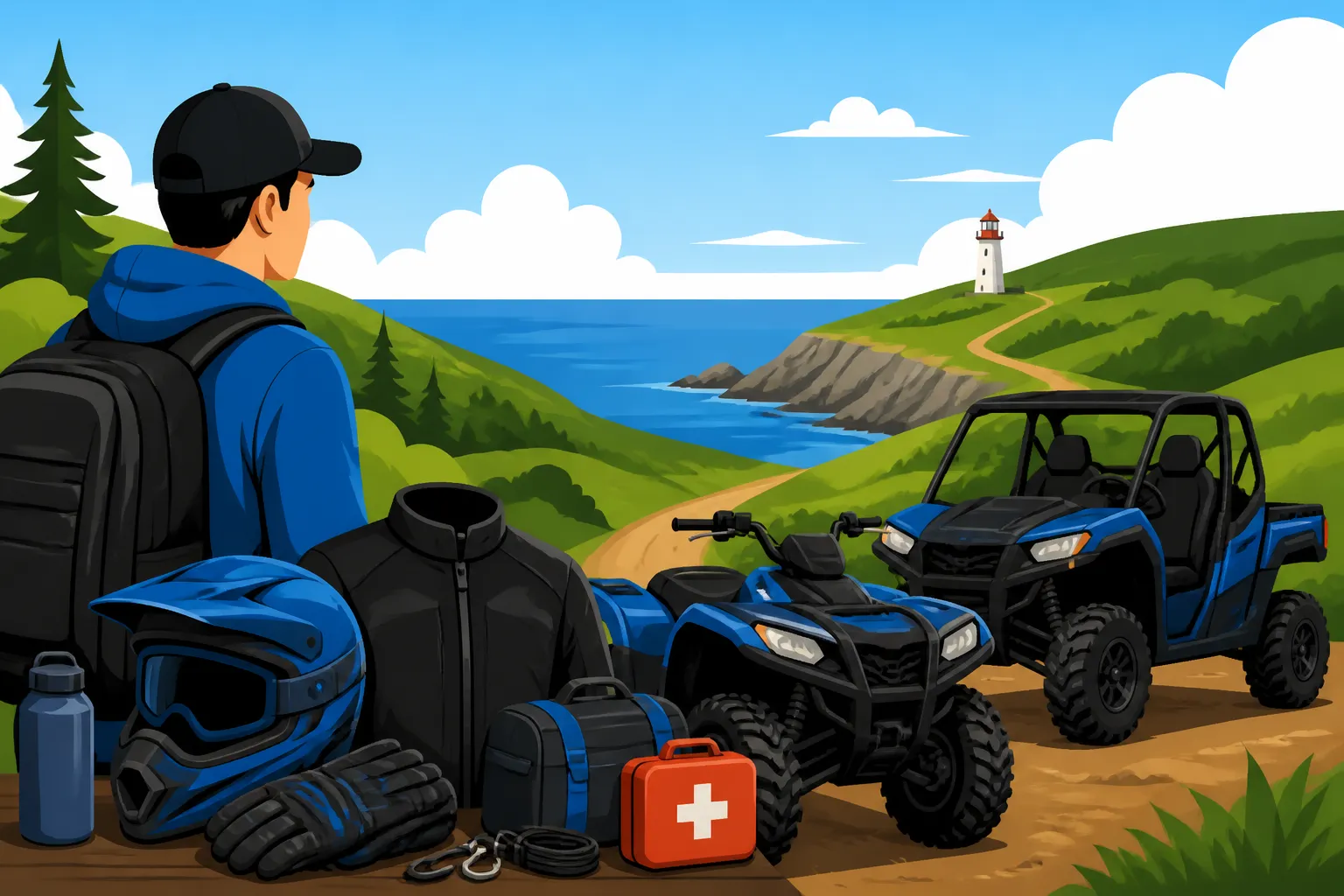
Keep documents available during the ride, not just in the vehicle at your accommodation. A practical pack list includes:
- The trail permit and any confirmation or receipt associated with it.
- The machine’s registration or equivalent papers.
- Proof of insurance.
- Your driver’s licence or other identification, where relevant to the route and activity.
- Emergency contact and medical information.
- A current map or offline route information.
A waterproof document sleeve can help protect paper copies from rain and mud; a small one from Amazon is one possible option. Keep digital copies as backups, but don’t rely on a phone if you may be outside cell coverage or the battery is depleted. Make sure any paper copy is legible and easy to show.
Registration, insurance and trail access are separate from safety qualifications. Check whether the rules that apply to you require a safety certificate or other training, and bring proof if you have it. Visitors should not assume that being old enough to ride or holding a licence for a road vehicle automatically meets off-highway training requirements. The relevant background is covered in Nova Scotia Safety Certificates Are Mandatory; confirm how the rule applies to your age, experience and visitor status before you ride.
Plan the month around places you are allowed to ride
A permit is only one part of trip planning. Nova Scotia has club trails, road trails and other routes, and they do not all have the same access rules. A trail permit does not let you ride on a road that is closed to machines, cross a property without permission, or take an ATV onto a beach, dune or other restricted area. Check the status and permitted vehicle types for each segment of your route.
Road trails have their own operating rules, which can differ from club-trail rules. Confirm that your machine, documents and intended route meet the road-trail requirements before including these roads in a trip. Do not treat a road trail as a general connection wherever a route on the map appears convenient.
For a month-long visit, build flexibility into the itinerary. Trail conditions, closures and access can change, and a route that worked last season may not be available now. Check with local clubs or the relevant trail organization shortly before riding. Ask about current closures, washouts, construction, seasonal restrictions, parking and whether your machine type is permitted. A local club can also help identify trailheads and connections that are appropriate for visitors.
Think through the day-to-day logistics as well:
- Transport: Check that your trailer and tie-downs are suitable, and confirm where you can park at each trailhead.
- Fuel: Plan fuel stops around the route instead of assuming every village has a convenient station.
- Communications: Download maps or save directions for areas where mobile service may be unreliable.
- Weather and trail conditions: Have a shorter alternative in case rain, fog or a closure changes your plan.
- Private land: Stay on the marked corridor, respect signs and gates, and get permission where required.
- Documents: Keep your permit and vehicle papers with the machine when it is in use.
If you will ride for the full visit, save a copy of your permit confirmation and note its expiry date in your trip plan. Check the permit’s replacement process in advance in case it is lost or damaged; Nova Scotia Trail Permit Lost or Damaged covers that specific problem. Do not rely on a photograph alone unless the provider confirms that a digital copy is accepted.
The simplest preparation is to confirm three things before departure: which trail permit applies to you, what vehicle documents and insurance you need to carry, and whether each planned route is open to your machine. Then recheck the trail conditions close to the riding date. That small amount of preparation can prevent a month-long trip from being built around access you do not actually have.
Disclaimer
This article is for general informational purposes only and does not constitute professional advice. Laws, prices and regulations vary by location and change over time. Consult a qualified professional for guidance on your specific situation.