Letting the Dealer Register a Brand New Machine
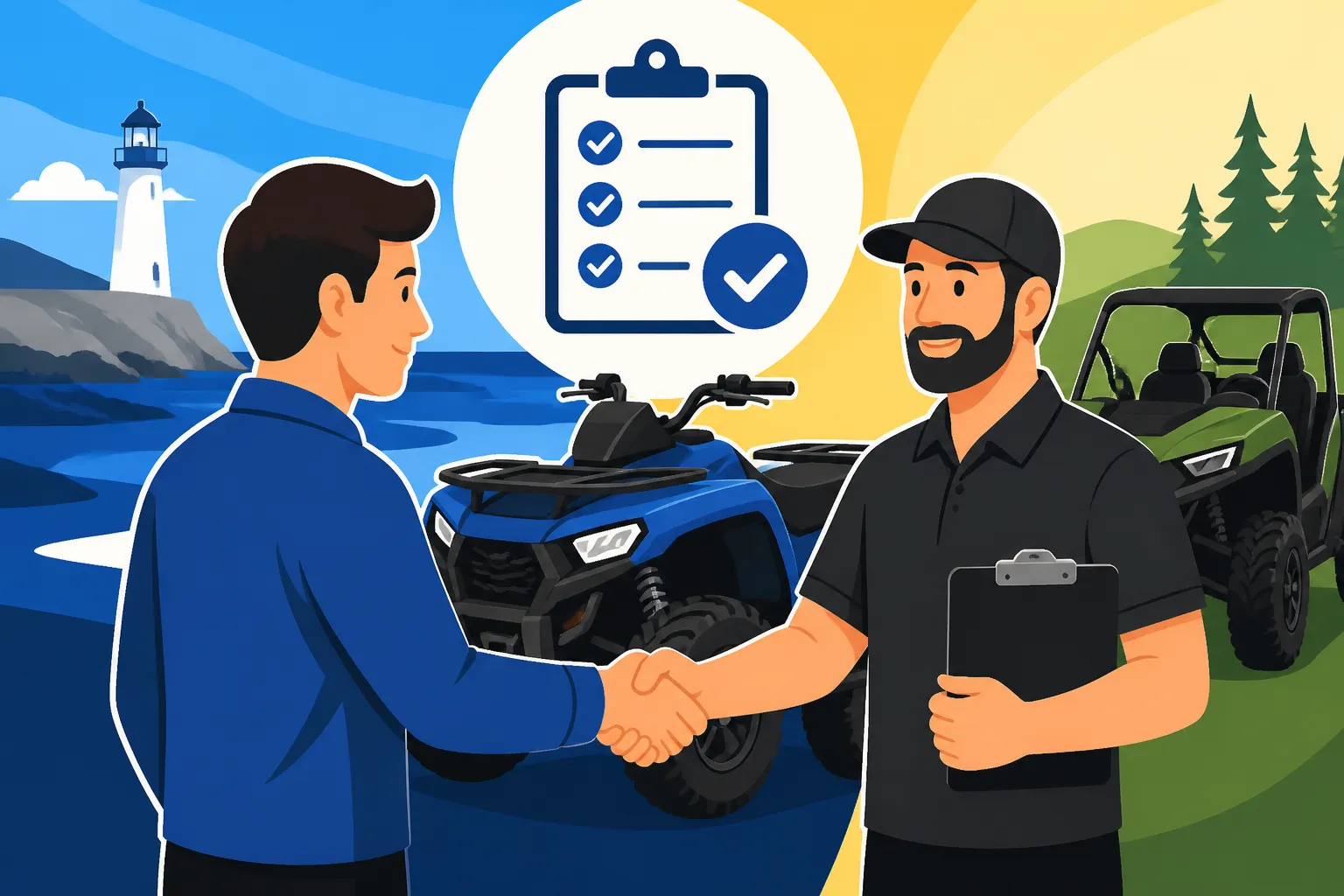
Buying a brand-new ATV or side-by-side in Nova Scotia is an exciting moment, but the last thing anyone wants after picking out their perfect machine is to get bogged down in a mountain of paperwork. The hassle of understanding provincial regulations, figuring out what forms you need, and then trekking to an Access Nova Scotia centre can quickly dampen that new-machine glow. This guide will walk you through why letting your dealer handle the registration process for your brand-new off-highway vehicle (OHV) is often the easiest and most stress-free path, and what you can expect when they do.
Why Letting the Dealer Handle Registration is a Smart Move
Let's be real, you're buying a new machine to hit the trails, explore some backroads, or get some serious work done on your property, not to become an expert in provincial bureaucracy. The registration process, while not overly complicated, does require attention to detail and knowledge of specific forms and fees. This is where a reputable dealer can truly shine, turning a potential headache into a smooth, seamless experience.
Saving Yourself Time and Hassle
Think about it: when you buy a new car, you don't typically go to the Registry of Motor Vehicles yourself to get the plates and registration, right? The dealership handles all of that. The same convenience often applies when you're buying a new ATV or UTV. Dealers have established processes for submitting paperwork to Access Nova Scotia. They have the forms on hand, they know exactly what information is required, and they're used to dealing with the system. This means you skip the wait times, the potential need for return trips if something is incomplete, and the general frustration of navigating government services. You can focus on picking out your gear, planning your first ride, or simply enjoying the anticipation of your new machine.
Imagine trying to wrangle all the documents, ensuring they're correctly filled out, and then finding a block of time during business hours to visit an Access Nova Scotia office. For many of us with busy lives, this can feel like an impossible task. Dealers are literally set up to do this day in and day out, making it part of their service to get you on the trail faster and with less stress.
Ensuring Accuracy and Compliance
One of the biggest worries for any new OHV owner is doing something wrong with the paperwork and facing penalties down the line. Nova Scotia has specific requirements for [Nova Scotia OHV Registration: What You Pay] and ensuring your machine is legally on the books. From making sure the Vehicle Identification Number (VIN) is correctly transcribed to accurately reporting the purchase price for tax purposes, there are several details that need to be spot on.
A slight error or omission could mean your registration is rejected, leading to delays and more trips to the registry. For instance, sometimes people might misinterpret a form or forget a crucial signature. Dealers, having processed countless registrations, are well-versed in these nuances. They know the common pitfalls and can catch errors before they become problems. This expertise ensures your new machine is registered accurately and fully complies with all Nova Scotia Off-Highway Vehicles Act regulations, giving you peace of mind.
The Dealer's Expertise in Nova Scotia Paperwork
Your local ATV or UTV dealer isn't just selling you a machine; they're also a resource for navigating the legal requirements of ownership in Nova Scotia. They understand the specific fees, like the initial [Nova Scotia's $39.80 Certificate Fee Explained] and the annual [Nova Scotia Vehicle Permit at $13.20], and how sales tax is applied. They often have direct lines or established relationships with Access Nova Scotia centres, which can help expedite the process.
They'll know, for example, about the [Nova Scotia Tax Collected at Registration] and how to ensure that is properly accounted for, whether it's the HST on a new purchase or handling the tax declaration on a used machine (though we're talking new here, the principle of their knowledge still applies). This isn't just about filling out forms; it's about understanding the entire process, including any recent updates or changes to regulations. They stay on top of these things so you don't have to. For complex situations, like registering a business machine, their insight can be invaluable.
What a Dealer Needs From You for Registration
While the dealer takes on the heavy lifting, you'll still need to provide them with some key pieces of information and documentation. It's not a completely hands-off process, but it's certainly much simpler than doing it all yourself. Being prepared with these items will help your dealer complete the registration quickly and efficiently.
Essential Personal Information and Identification
Just like any official transaction, your dealer will need to verify who you are. This typically includes:
- Your full legal name: As it appears on your official identification.
- Your current address: This needs to be your residential address in Nova Scotia. They'll need this for official correspondence and to ensure the correct jurisdiction for your registration. You might be asked for proof of address, such as a utility bill, so it’s good to have that handy.
- Your date of birth: This is crucial, especially since [Nova Scotia Requires Owners to Be 19] to register an OHV in their own name. If you're 16, they'll guide you through the process of [Nova Scotia Registration at 16 With Permission] from a parent or guardian.
- A valid form of photo identification: This is usually your driver's license or a provincial identification card. This confirms your identity and ensures the information provided is accurate.
Don't forget that if there will be two owners on the registration, all required personal information and identification for both individuals will be needed. The dealer can help streamline the process for [Nova Scotia Registration With Two Owners].
Proof of Purchase and Payment Details
For a brand-new machine, the proof of purchase is usually generated right there at the dealership. This includes the bill of sale, which clearly outlines the machine's details, the purchase price, and any trade-in value. This document is critical because it's what Access Nova Scotia uses to determine the amount of HST payable (if it hasn't already been factored into the price and remitted by the dealer) and to verify ownership.
You'll also need to finalize your payment for the machine. Whether you're paying cash, using a debit card, or arranging financing, the dealer will process this. If you are financing, the dealer will coordinate with the financial institution. They'll also ensure that the taxes, like the provincial portion of the HST, are collected appropriately. While the dealer usually handles the remission of sales tax, it's paid as part of your overall purchase. The [Nova Scotia HST on an ATV Purchase] is a significant part of the cost, and the dealer makes sure it's accurately recorded and remitted.
Understanding the Fees and Taxes Involved
When buying a new machine through a dealer, all the associated fees and taxes are typically rolled into the final transaction. This makes budgeting much easier than trying to calculate everything separately. The dealer will clearly outline:
- The purchase price of the OHV: This is the core cost of your new ATV or UTV.
- Harmonized Sales Tax (HST): In Nova Scotia, this applies to the purchase price of a new machine. The dealer will calculate and collect this from you, remitting it to the government.
- Registration fees: This includes the one-time Certificate of Registration fee and the annual Vehicle Permit fee. The dealer will collect these and forward them to Access Nova Scotia. For a quick overview, you can check out [Nova Scotia OHV Registration Cost].
- Dealer administration fees (if applicable): Some dealerships might have a small administration fee for handling the paperwork, PDI (pre-delivery inspection), and setup. These should be clearly communicated upfront.
It’s always a good idea to ask for a breakdown of all costs. A clear invoice should show the machine's price, HST, registration fees, and any dealer fees. This transparency helps you understand exactly what you're paying for. If you're preparing any personal legal documents like a bill of sale for other aspects of your life, resources like LawDepot can be helpful for standard templates, but for the actual vehicle registration, the dealer will provide the required provincial forms.
The Dealer's Process: From Sale to Permit in Hand
Once you've chosen your machine and provided all your information, the dealer takes over. This is where their streamlined process saves you time and stress. They’ll work behind the scenes to get your new OHV properly registered with the province.
Completing the Nova Scotia Registration Forms
Dealers typically have direct access to the required forms, either paper copies or digital portals, provided by Access Nova Scotia. They'll use the information you've given them to accurately complete the Certificate of Registration and the Vehicle Permit application. This includes details like:
- Machine details: Make, model, year, colour, engine size, and the all-important VIN.
- Owner information: Your name, address, and date of birth.
- Purchase information: Date of sale and purchase price.
They'll ensure all necessary fields are filled out correctly and that any required declarations, such as those related to taxes, are properly signed. This attention to detail is paramount to prevent delays. They essentially act as your agent, handling the bureaucratic steps on your behalf. For example, if you need to understand specific forms, Nova Scotia's Certificate and Vehicle Permit outlines the types of documents you'll receive.
Paying the Necessary Fees and Taxes
After completing the forms, the dealer will manage the payment of the registration fees and any outstanding HST directly to Access Nova Scotia. As mentioned earlier, these amounts are usually collected from you as part of your total purchase price. This means you won't have to worry about separate payments to the province after leaving the dealership.
This consolidated payment process is a major convenience. Imagine having to pay the machine's price to the dealer, then go to Access Nova Scotia to pay the [Nova Scotia's Combined $53.20 Annual Figure] (the Certificate and Permit fees), and then potentially deal with the HST separately. Your dealer simplifies this by handling all these financial transactions for you, ensuring that everything is settled before you take possession of your registered OHV. This also includes the provincial portion of the OHV Infrastructure Fund levy, which is part of the annual permit fee.
Receiving Your Official Documents
Once Access Nova Scotia processes the dealer's submission, your official registration documents will be issued. The dealer will typically provide you with these documents before you leave with your new machine. These include:
- The Certificate of Registration: This is your proof of ownership, valid for the lifetime of the machine as long as you own it and it remains registered.
- The Vehicle Permit: This is your annual operating permit, which needs to be renewed annually. It shows that your machine is currently registered and permitted for use.
- A temporary operating permit (if applicable): In some cases, if the official documents aren't immediately available, the dealer might provide a temporary permit allowing you to legally operate the OHV while waiting for the permanent papers.
Always double-check these documents to ensure your name, address, and the machine's details are correct. Keep them in a safe place, and remember that you need to carry copies of your [Nova Scotia Certificate and Vehicle Permit] when operating your OHV.
What to Verify Before You Leave the Dealership
While the dealer takes care of the process, your responsibility doesn't end until you've verified everything and understand your obligations as a new OHV owner. A quick check of a few key items before you drive off can save you potential headaches down the road.
Checking Your Certificate and Vehicle Permit
Before you pull out of the dealership lot, take a moment to carefully review the Certificate of Registration and the Vehicle Permit that the dealer hands over. Look for:
- Correct personal information: Is your name spelled correctly? Is your address accurate?
- Correct machine details: Does the VIN match your machine exactly? Are the make, model, year, and colour correct?
- Valid dates: Ensure the Vehicle Permit is current and not expired. The dealer should provide you with a permit that is valid for the upcoming year or current year.
- Signatures: Verify that all necessary provincial signatures or stamps are present.
If you spot any discrepancies, bring them to the dealer's attention immediately. It's much easier to correct errors while you're still at the dealership than to try to fix them later with Access Nova Scotia yourself. Remember, these are your legal documents for the machine, and accuracy is key.
Understanding Your Insurance Obligations
In Nova Scotia, having proper liability insurance is mandatory for operating an off-highway vehicle, especially if you plan to use it on designated trails or any public land where allowed. While the dealer typically handles registration, they usually do not arrange your insurance. That's your responsibility.
Before you leave, confirm that you have arranged your own insurance coverage for your new machine. Most people contact their existing auto or home insurance provider to add the OHV to their policy. You'll need to know your machine's VIN and purchase details. [Nova Scotia Insurance Requirements for Riders] state a minimum liability coverage, so ensure your policy meets or exceeds this. You should always carry proof of insurance, often called a "pink card," with you when you ride. The dealer can certainly remind you of this requirement and point you to resources, but the onus is on you to secure it.
Asking About Trail Permits and Other Necessities
Beyond registration and insurance, there's another crucial piece of the puzzle for many riders: the trail permit. If you plan to ride on any of the extensive network of managed trails in Nova Scotia, you'll need a [Nova Scotia Trail Permits From ATVANS]. This is usually purchased separately from your registration, often through the All-Terrain Vehicle Association of Nova Scotia (ATVANS) or one of its member clubs.
While your dealer won't typically sell you an ATVANS permit, they are an excellent source of information. Ask them:
- Where can I buy an ATVANS trail permit?
- Are there any local ATVANS clubs you recommend joining?
- What other gear (helmet, safety vest, first-aid kit) do I need for legal and safe riding in Nova Scotia?
- Are there any specific [Nova Scotia Helmet Law for Riders] or age restrictions I should be aware of, especially if riding with younger family members?
Taking the time to clarify these points will ensure you're not only legally registered and insured but also fully prepared and equipped for safe and enjoyable adventures on your new Nova Scotia ATV or UTV. If you need standard forms like waivers for group rides later, LawDepot provides customizable legal documents, but for trail permits, you'll typically go through ATVANS.
| Document / Requirement | Handled by Dealer? | Your Responsibility | Notes |
|---|---|---|---|
| Purchase & Payment | Yes | Final Payment Approval | Dealer collects purchase price, HST, and registration fees. |
| Certificate of Registration | Yes | Verification of Details | Dealer submits forms, you verify accuracy upon receipt. |
| Vehicle Permit | Yes | Verification of Details | Dealer submits forms, you verify accuracy upon receipt. |
| OHV Insurance | No | Obtain and Carry Proof | Contact your own insurance provider before riding. |
| ATVANS Trail Permit | No | Purchase from ATVANS/Club | Required for most managed trails; ask dealer for info. |
| Safety Training | No | Obtain Certificate (if req.) | Mandatory for riders born after a certain date. |
| Carrying Documents | No | Keep on Person/Machine | Always have registration, permit, and insurance proof when riding. |
Disclaimer
This article is for general informational purposes only and does not constitute professional advice. Laws, prices and regulations vary by location and change over time. Consult a qualified professional for guidance on your specific situation.