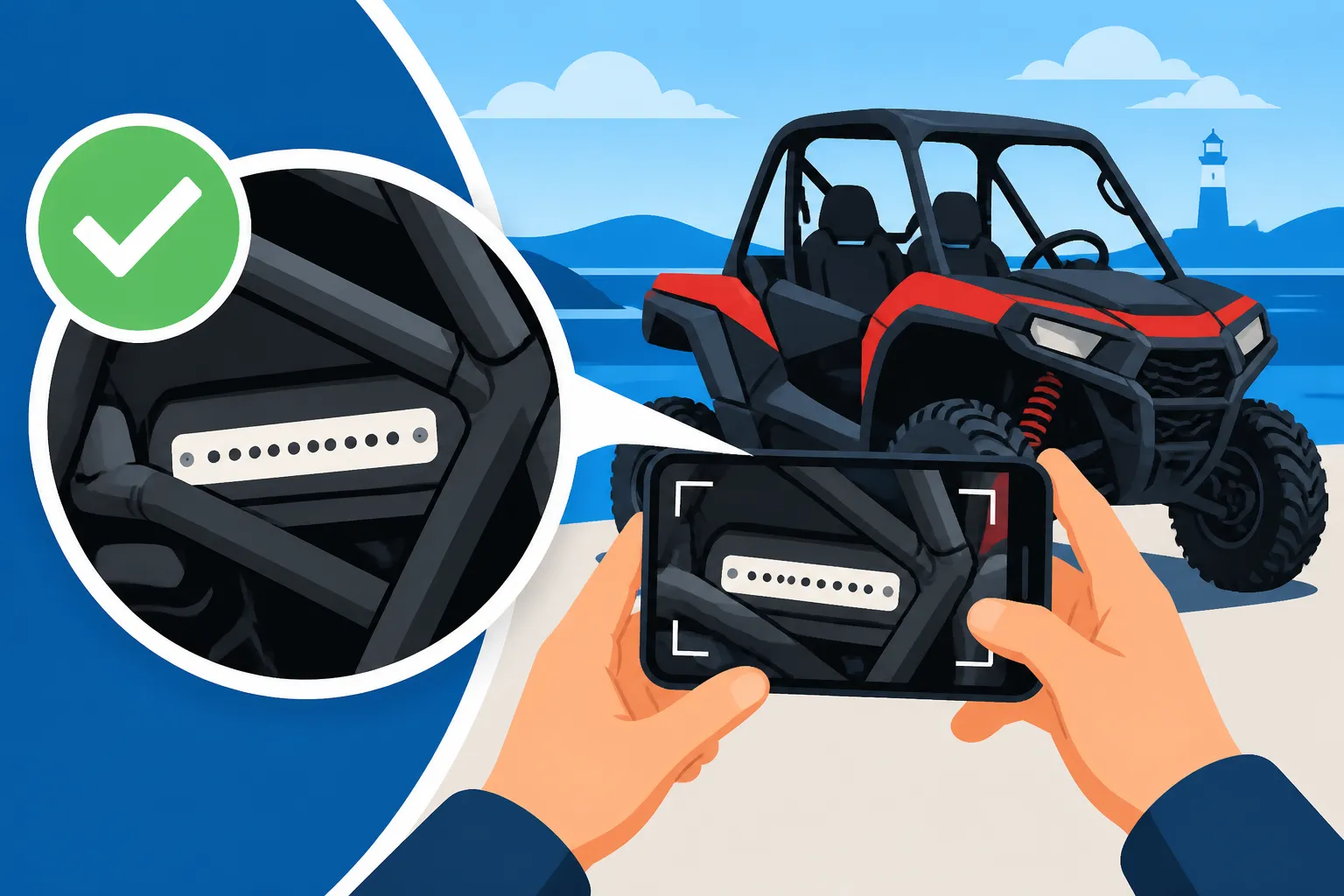
Photographing a VIN at the Sale
Buying a used ATV or UTV in Nova Scotia can be an exciting prospect, full of visions of hitting the trails, but it often comes with a hefty dose of anxiety. You're constantly wondering if you're getting a good deal, if the machine is legitimate, and if the paperwork will actually hold up at Access Nova Scotia. One of the most critical steps you can take to protect yourself is properly documenting the Vehicle Identification Number (VIN) right at the point of sale. This guide will walk you through exactly why photographing the VIN is non-negotiable and how to do it effectively to ensure a smooth, worry-free ownership transfer.
Why the VIN is Your Best Friend in a Private Sale
When you're looking at a used off-highway vehicle (OHV) in someone's yard, it's easy to get caught up in the excitement of shiny tires and roaring engines. But the real story of that machine isn't told by its aesthetics; it's etched into its VIN. This unique identifier is the single most important piece of information that links the machine to its history and, crucially, to its legal ownership. Overlooking this detail can lead to a world of frustration down the road.
More Than Just a Number: Unmasking the Machine's History
Think of the VIN as the social security number or passport for your ATV or UTV. It's a 17-character code that decodes a wealth of information about the vehicle. It tells you the manufacturer, the specific make and model, the year it was manufactured, and often even where it was assembled. This information is invaluable because it allows you to independently verify what the seller is telling you.
Imagine a scenario where a seller claims the machine is a 2018 model, but a quick check of the VIN reveals it was actually produced in late 2016. This immediate discrepancy is a major red flag that warrants further investigation or, perhaps, walking away from the deal. The VIN helps you confirm that you're not unknowingly buying an older machine than advertised, which could significantly impact its value and your expected lifespan of components. It's about ensuring transparency and honesty in a private transaction, where "buyer beware" is always the unspoken rule.
The Link to Registration and Ownership
In Nova Scotia, every off-highway vehicle needs to be registered with the province. This process, often handled at an Access Nova Scotia centre, is where the VIN becomes absolutely central. The machine's VIN is explicitly listed on its Nova Scotia Certificate of Registration and Vehicle Permit. When you go to register the machine in your name, these numbers must match perfectly. If they don't, you're going to face significant hurdles, potentially preventing the transfer of ownership altogether.
Beyond verifying the year and model, the VIN is your primary tool for ensuring the machine isn't stolen or doesn't have an undisclosed lien against it. A clear photograph of the VIN allows you to cross-reference it with the seller's registration papers before you even hand over any money. If you arrive at the registry counter with paperwork that doesn't match the physical machine, it can be an absolute nightmare, potentially leaving you with a machine you can't legally register or use on designated trails. [Nova Scotia Registration After a Private Sale] delves into this process in more detail, highlighting the importance of having all your ducks in a row, starting with that VIN.
How to Photograph the VIN Like a Pro
Now that we've established why the VIN is so crucial, let's talk about the practical side of getting that perfect shot. It’s not just about snapping a quick picture; it’s about capturing clear, legible proof that will stand up to scrutiny.
Locating the Elusive VIN
Finding the VIN on an ATV or UTV can sometimes feel like a treasure hunt, especially on older or well-used machines. Unlike cars, where the VIN is typically visible through the windshield, OHVs often have it stamped directly onto the frame. Common locations include:
- On the frame: Often near the front suspension, under the seat, or along the lower frame rail near the footpegs.
- On the engine block: Sometimes stamped directly into the metal.
- On a manufacturer's sticker: While stickers might be present, always prioritize finding the stamped VIN on the frame. Stickers can peel off, be damaged, or even tampered with, whereas a stamped number is far more reliable.
For machines that have seen many Nova Scotia seasons, the VIN area might be covered in mud, rust, or grease. Don't be shy about asking the seller for a rag and some cleaner, or even using a small wire brush (gently!) to clean the area. A flashlight can also be incredibly helpful to illuminate the stamped numbers, making them pop against the metal. It’s a small effort that can save you immense trouble later.
Capturing Clear, Usable Photos
Once you've located the VIN, it's time to become an amateur photographer. The goal isn't art; it's clarity and legibility.
- Lighting is key: Natural daylight is almost always your best friend. Try to position yourself so the light falls directly on the VIN, minimizing shadows. If it's a cloudy day or you're in a garage, use your phone's flashlight feature or an external light source to brighten the numbers.
- Multiple angles and close-ups: Take several photos. Get a tight close-up of the VIN itself, ensuring every character is crystal clear. Then, step back and take a wider shot that includes the VIN and some of the surrounding machine parts (like the frame, engine, or handlebars). This provides context, proving the VIN belongs to that specific machine and hasn't been photoshopped onto a picture.
- Check immediately: After each photo, zoom in on your phone's screen. Can you read every single character of the VIN without straining? Are there any blurry spots? If not, retake it. It's much easier to reshoot in the seller's presence than to realize later you have an unusable photo.
- What to do if illegible: If, despite your best efforts, the VIN is heavily corroded, scratched, or otherwise illegible, this is a significant red flag. It might not necessarily mean foul play, but it will almost certainly complicate registration. You should discuss this thoroughly with the seller and be prepared to potentially walk away or seek professional assistance to verify the machine's legitimacy. Remember, [Checking a Serial Number Before the Money Moves] is critical for any used machine purchase.
Leveraging Your VIN Photos for a Smooth Transaction
Taking the pictures is just the first step. The real value comes from how you use those photos to protect your interests and streamline the purchase process. This is where your due diligence truly pays off.
Cross-Referencing Before You Commit
Before you even think about exchanging money, you need to verify that the photographed VIN matches all the documentation the seller provides. This includes the [Nova Scotia's Certificate and Vehicle Permit]. The VIN on these documents must be identical to the one you've photographed on the machine. Any discrepancy, even a single character, is a serious issue that needs immediate clarification.
You can also use the VIN to perform basic background checks. While Nova Scotia doesn't have a public online database for OHV lien checks in the same way cars do, some manufacturers offer VIN decoders that can confirm the make, model, and year, adding another layer of verification. A well-crafted bill of sale, like those available from resources such as LawDepot, will also include the VIN, further solidifying the legal transfer of the machine. Ensuring the VIN on your bill of sale matches both the machine and the previous registration papers is a crucial step towards a legally sound transaction.
Protecting Yourself from Future Headaches
Your clear VIN photographs serve as invaluable evidence. If, for any reason, a dispute arises after the sale—perhaps regarding the machine's true age or if it's later discovered to have been stolen—your photographs provide concrete proof of the VIN at the time of purchase. This documentation can be critical in legal proceedings or insurance claims.
Furthermore, these photos are a major safeguard against potential issues at Access Nova Scotia. If the seller presents documents with an incorrect VIN, or if there's any question about the machine's identity, your clear photos of the physical VIN on the machine itself become your primary defence. Without this, trying to register a machine where the physical VIN doesn't match the paperwork can lead to endless delays, investigations, or even outright refusal to register. Dealing with [Nova Scotia Registration Without a Bill of Sale] is hard enough; trying to register with a problematic VIN is a whole other level of complexity. When it comes to insuring your new ride, your insurance provider will also require the VIN to set up your [Nova Scotia Insurance Requirements for Riders], ensuring your machine is properly covered for those exhilarating trail rides.
Beyond the Photo: What Else to Check
While the VIN photo is paramount, it's just one piece of the puzzle when buying a used ATV or UTV in Nova Scotia. A truly smooth and secure transaction requires a broader approach to due diligence.
The Nova Scotia Registration Paperwork Checklist
Beyond matching the VIN, you need to ensure the seller provides all the correct paperwork necessary for a legal transfer of ownership. In Nova Scotia, this primarily means the original [Nova Scotia's Certificate and Vehicle Permit] documents. These papers are essential because they prove the seller is the registered owner and has the legal right to sell the machine.
Here’s what you should be looking for:
- Original Certificate of Registration: This document, currently priced at [Nova Scotia Certificate of Registration at $39.80] when first issued, proves the machine's initial registration and permanent identification.
- Original Vehicle Permit: The annual permit, costing [Nova Scotia Vehicle Permit at $13.20] for renewal, shows that the machine's annual fees are up to date and that it's currently allowed to be on the books.
- Matching names: Ensure the name on the registration matches the seller's ID. If not, ask why. Are they selling on behalf of someone else? Is there a second owner?
- A Bill of Sale: Even if the seller has the registration, a bill of sale is crucial. It formalizes the transaction, specifies the purchase price (important for calculating HST), and acts as a receipt. You can easily find templates online or use a service like LawDepot to create a legally robust one. This document is crucial not only for your records but also when you declare the purchase price for tax purposes at Access Nova Scotia.
The official [Nova Scotia Registration Paperwork Checklist] provides a comprehensive list of what you need to bring to the registry, and having the seller's original, correctly filled-out documents is paramount.
Red Flags and Due Diligence
Even with a pristine VIN and perfect paperwork, certain situations should give you pause. Being aware of these red flags can save you from a costly mistake or even legal trouble.
- Hesitation with VIN or paperwork: If a seller is reluctant to let you inspect or photograph the VIN, or if they can't produce the original registration documents, consider this a major warning sign. Legitimate sellers have nothing to hide.
- "Too good to be true" prices: If the price seems significantly lower than market value for a similar machine, approach with extreme caution. This is often a tactic used to quickly offload stolen or severely damaged machines.
- Vague answers or evasiveness: Ask questions about the machine’s history, maintenance, and reason for selling. If the answers are vague, inconsistent, or the seller seems evasive, trust your gut.
- Signs of tampering: Visually inspect the VIN area for any signs of grinding, re-stamping, or alterations. Numbers that look uneven, scratched out, or don't align perfectly are serious red flags.
- Missing or suspicious service history: For higher-value machines, ask for maintenance records or receipts for major repairs. A responsible owner often keeps these, and their absence can indicate neglect or hidden issues.
- Lien checks: As mentioned, Nova Scotia doesn't have a public online OHV lien check like for cars. This means you must explicitly ask the seller if there are any outstanding liens on the machine. While a simple question might not always elicit an honest answer, having it in writing on the bill of sale can offer some protection. Remember that [Nova Scotia Registration and Lien Records] are generally maintained at the registry, and any outstanding financing could prevent you from registering the machine in your name.
By combining your diligent VIN photography with a thorough check of the paperwork and an awareness of potential red flags, you significantly increase your chances of a smooth, legitimate, and enjoyable ATV or UTV purchase in Nova Scotia.
| VIN & Paperwork Checklist for Private OHV Sale | Action | Why It's Important |
|---|---|---|
| Locate and Photograph VIN | Take multiple clear photos of the stamped VIN. | Verifies machine identity; crucial for registration & proof. |
| Inspect Physical VIN | Check for signs of tampering (grinding, re-stamping). | Avoids stolen machines or fraudulent sales. |
| Verify Seller's ID | Cross-reference seller's ID with registration papers. | Ensures you're dealing with the legal owner. |
| Obtain Original Certificate of Registration | Ensure all details match the machine and VIN. | Required for transfer of ownership. |
| Obtain Original Vehicle Permit | Ensure permit is current and details match. | Shows annual fees are paid, allows immediate use. |
| Cross-Reference VIN on All Documents | VIN must be identical on machine, certificate, and permit. | Prevents registration issues at Access Nova Scotia. |
| Draft/Sign a Comprehensive Bill of Sale | Include purchase price, VIN, seller/buyer details. | Legal record of transaction, confirms transfer, tax calculation. |
| Ask About Liens | Directly inquire if there are any outstanding loans. | Liens prevent legal transfer of ownership. |
Disclaimer
This article is for general informational purposes only and does not constitute professional advice. Laws, prices and regulations vary by location and change over time. Consult a qualified professional for guidance on your specific situation.