Nova Scotia Requires a Full Driver’s Licence
It can be incredibly frustrating to figure out exactly where and how you can ride your ATV or UTV in Nova Scotia, especially when it comes to those tantalizing stretches of road that seem like they'd connect your favourite trails. Many of us dream of smoothly transitioning from the woods to a short piece of pavement to get to the next adventure, but the reality is often much more complex and laden with specific rules. This guide is here to untangle the confusion surrounding Nova Scotia's off-highway vehicle (OHV) road trail regulations, focusing specifically on the critical requirement for a full driver's licence and what that truly means for your riding experience.
Understanding Nova Scotia's Road Trail System
Nova Scotia has made efforts to expand access for off-highway vehicles, but it's not a free-for-all. The province's approach to allowing ATVs and UTVs on certain public roads is very specific, creating a "road trail" system rather than making OHVs generally street legal. This distinction is crucial and often misunderstood. These designated road trails are not simply any road you feel like riding down; they are specific, marked sections where OHVs are permitted under strict conditions, and it's here that your driver's licence comes into sharp focus.
What Exactly Is a Road Trail?
Imagine you're out riding your quad, enjoying the natural beauty of Nova Scotia, and you hit a spot where the trail abruptly ends, only to pick up again a kilometer down a quiet country road. In many places, this would mean turning around or risking a hefty fine. However, Nova Scotia has identified and designated certain segments of public roads as "road trails" to bridge these gaps and enhance connectivity for riders. These are typically lower-speed, less-travelled municipal roads, not major highways or bustling urban streets. The idea is to allow riders to legally traverse these short sections, linking up otherwise disconnected trail systems, rather than opening up all roads to OHV traffic. It's about strategic connections, not universal street legality.
The [Nova Scotia Road Trails Act Explained] outlines the framework for these connections, but finding out which specific roads are designated can sometimes feel like a treasure hunt. Clubs and associations, like ATVANS, often have the most up-to-date information on approved road trails. These designated areas are usually clearly marked with specific signage, indicating where OHVs are permitted and the conditions that apply. It's not about intuition; it's about official designation.
The Purpose Behind Road Trails
The main goal of the road trail system is to improve the overall riding experience by increasing the interconnectedness of trails across the province. For years, riders faced the frustrating challenge of having fantastic trail networks that were fragmented by unavoidable road sections. This often led to either illegal road riding or lengthy, inconvenient detours. The road trail initiative aims to address this, providing legal and safe corridors for OHVs to move between trails, access services like fuel and food in nearby communities, or even reach trailheads more easily.
This system is a testament to the advocacy of riders and clubs who pushed for more accessible and cohesive trail networks. It recognizes the significant economic and recreational contributions of the OHV community to rural Nova Scotia. While it doesn't grant carte blanche for riding on all roads, it offers a pragmatic solution for enhancing the recreational value of our machines. Just remember, these are still roads, and the rules of the road, including holding a valid driver's licence, are paramount here.
The Full Driver's Licence Requirement Explained
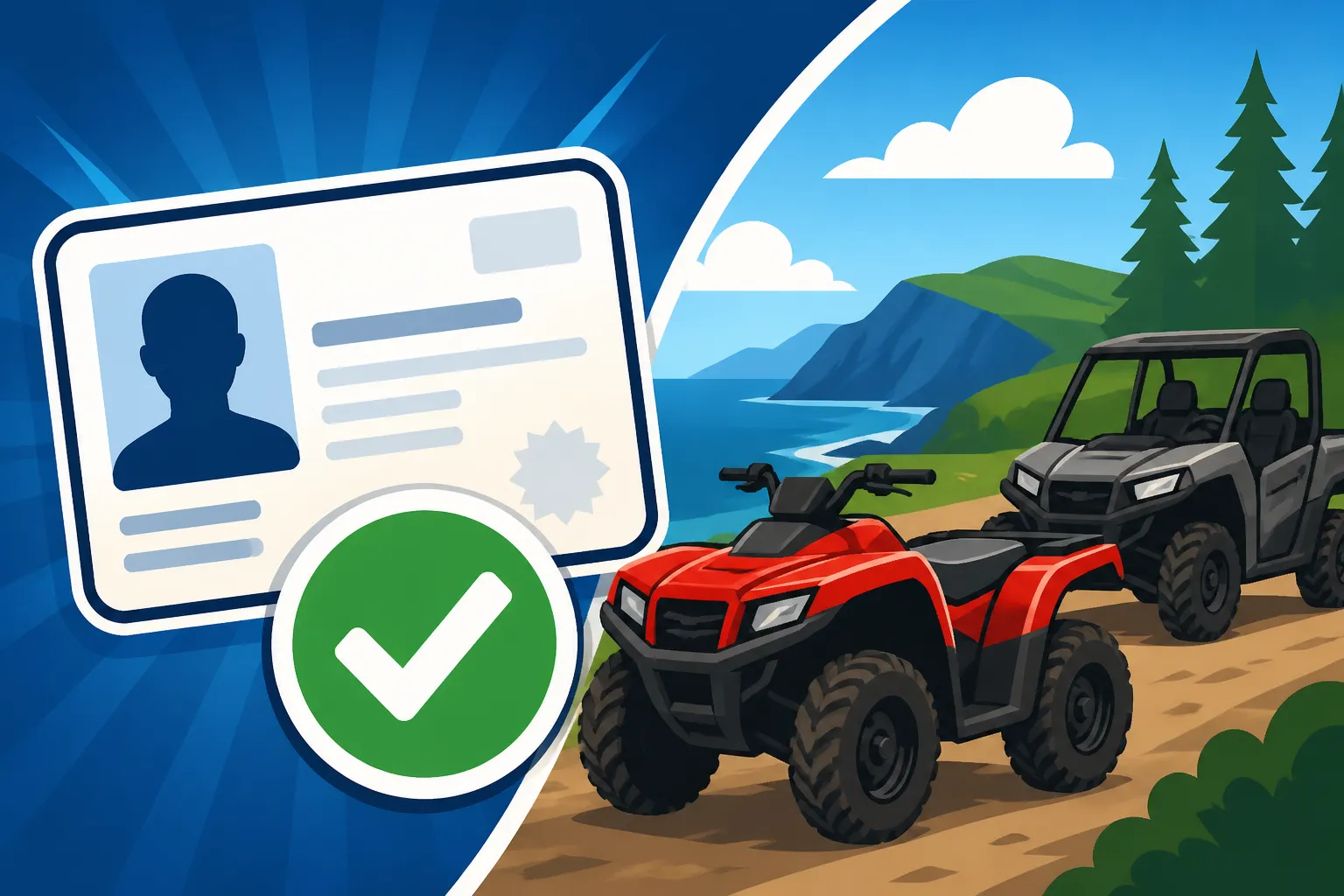
One of the most significant requirements for operating an OHV on any designated road trail in Nova Scotia is holding a valid, full driver's licence. This isn't just a suggestion; it's a mandatory rule that can lead to serious consequences if ignored. For many riders, especially those new to the sport or younger enthusiasts, this can come as a surprise, as off-highway riding often doesn't require a traditional vehicle licence.
Why a Full Licence Is Necessary
The reason behind requiring a full driver's licence for road trail use boils down to safety and responsibility. When you take your ATV or UTV onto a public road, even a designated road trail, you are entering an environment shared with other motorized vehicles and, potentially, pedestrians and cyclists. This demands a different level of awareness, understanding of traffic laws, and operational skill than riding solely on private land or dedicated off-road trails.
A full driver's licence signifies that you have successfully completed driver training, passed both written and practical tests, and demonstrated competence in operating a motor vehicle safely on public roadways. It indicates a fundamental understanding of road signs, right-of-way rules, and defensive driving techniques – all critical skills when sharing space with cars and trucks. The province wants to ensure that anyone operating an OHV on these shared-use sections has the foundational knowledge and experience to do so responsibly, minimizing risks to themselves and others. It's about integrating OHV use into the existing traffic flow as safely as possible. [Do You Need a Licence for an ATV in Nova Scotia?] explores this further.
Implications for Learner Drivers and Young Riders
This requirement has specific implications for learner drivers and young riders. If you only hold a learner's permit for a passenger vehicle, or if you are under the age typically required for a full driver's licence (which is usually 19 in Nova Scotia for OHV ownership, though 16 with parental consent for operation on private land), you are expressly prohibited from operating an OHV on a road trail. The rules are clear: [Nova Scotia Bans Learner Drivers on Road Trails].
This means a 16-year-old rider, even one with a [Nova Scotia Registration at 16 With Permission] and who is perfectly capable of handling their machine on a trail, cannot legally ride that machine on a designated road trail if they don't possess a full driver's licence. This can be a significant barrier for families where younger members participate in riding, as it restricts their ability to join in rides that utilize these connecting road sections. Parents and guardians must be acutely aware of this distinction to avoid fines and ensure their children are riding legally and safely.
Operational Requirements Beyond the Licence
While the full driver's licence is a cornerstone, operating an OHV on Nova Scotia's road trails involves a host of other critical requirements designed to ensure safety and compliance. It's not enough to just have your licence; your machine, your gear, and your behaviour all need to be in line with the regulations.
Registration and Insurance Are Paramount
Just as with any other vehicle on a public road, your ATV or UTV must be properly registered and insured to be ridden on a road trail. There's no getting around this. Your machine needs to have a current registration from Access Nova Scotia, indicating that it's on the books and you've paid the necessary fees, including the [Nova Scotia OHV Registration Cost] and the annual permit. This includes the yearly vehicle permit and the one-time certificate of registration.
Furthermore, you absolutely must carry valid liability insurance. [Nova Scotia Requires Registration and Insurance]. The province has a minimum liability coverage requirement of $500,000, and you should always have proof of this insurance – your "pink card" – with you while riding. An officer can and will ask to see it. Riding unregistered or uninsured on a road trail is a serious offence that can lead to significant fines and penalties, far beyond what you might expect for an off-road machine. These requirements protect not only you but also other road users in the event of an accident.
| Requirement | On Dedicated Off-Road Trails (Club, Crown, Private) | On Designated Nova Scotia Road Trails |
|---|---|---|
| Full Driver's Licence | Not required | MANDATORY |
| Registration | Generally required (with some exemptions like own property) | MANDATORY |
| Liability Insurance | Generally required | MANDATORY |
| Minimum Age (Driver) | 6 (with supervision/closed course rules) | 16 or 19 (depending on licence stage) |
| Helmet | MANDATORY | MANDATORY |
| Headlights & Taillights | Required for night riding | MANDATORY (during operating hours) |
| Speed Limit | Varies by trail/location | 25 km/h MAXIMUM |
| Single File | Recommended | MANDATORY |
Equipment Standards and Operational Rules
Beyond registration and insurance, your machine itself needs to meet certain standards. While you're not trying to make it truly "street legal" in the sense of a car, it needs functional headlights, taillights, and brake lights. [Nova Scotia Lighting Requirements]. Reflectors are also a good idea, especially if you anticipate riding near dusk or dawn. Noise limits are also in effect, so modified exhausts that are excessively loud can lead to tickets. Some riders might consider adding mirrors or turn signals for enhanced safety and visibility when using road trails, even if they aren't strictly mandated for every road trail in the same way they are for a conventional vehicle. Aftermarket accessories, perhaps from a brand like SuperATV, can provide these safety enhancements.
When riding on a road trail, you must also adhere to specific operational rules:
- Speed Limit: A strict speed limit of 25 km/h is enforced on road trails. This is significantly slower than typical road speeds and emphasizes caution.
- Single File: You must ride in single file. No side-by-side riding on these public road sections.
- Yielding: Always yield to other vehicles and pedestrians. Road trails are shared spaces, and OHV riders are the newcomers.
- Operating Hours: Road trails often have specific operating hours, typically from half an hour before sunrise to half an hour after sunset. Night riding on road trails is generally prohibited.
- No Passing: You cannot pass another vehicle on a road trail.
These rules are in place to manage the inherent risks of mixing OHVs with conventional traffic. Disregarding them not only puts you at risk but also jeopardizes the future of the road trail system itself. [Nova Scotia Road Trail Rules Explained] covers these in more detail.
The Broader Context of OHV Riding in Nova Scotia
Understanding the full driver's licence requirement and other road trail rules fits into a larger picture of responsible OHV ownership and operation in Nova Scotia. The province has worked to balance recreational access with safety and environmental protection, leading to a comprehensive set of regulations that all riders should be familiar with.
Safety Training and Age Restrictions
Beyond the driver's licence for road trails, general OHV safety training is a critical component of responsible riding. For riders aged 16 and up who obtained their machine after a certain date, a mandatory safety certificate is required. While there are some [Nova Scotia Grandfather Exemption] clauses for long-time owners, new riders must complete an approved safety course. This training covers essential skills like machine control, hazard awareness, and responsible riding practices.
For younger riders, strict [Nova Scotia Rules for Riders Under 16] apply, including minimum age requirements (6 years old with specific machine size and supervision rules), helmet laws, and limitations on where and how they can operate their machines. These rules are in place to protect the most vulnerable riders and prevent accidents. Even though a younger rider might operate their youth quad safely on private property, the full driver's licence requirement for road trails means they simply cannot access these connecting routes.
Penalties for Non-Compliance
The penalties for violating OHV regulations in Nova Scotia, particularly those related to road trails, can be substantial. Riding without proper registration or insurance can lead to fines starting at a few hundred dollars and potentially much higher, along with potential impoundment of your machine. Operating on a road trail without a full driver's licence would fall under similar serious infractions, as it indicates a failure to meet the fundamental requirement for being on a public road. [Nova Scotia Fines for an Unregistered Machine] can give you an idea of the minimum penalties involved for one type of infraction.
Furthermore, impaired riding on an OHV, whether on a trail or a road trail, carries the same severe consequences as impaired driving in a car, including licence suspension, hefty fines, and potentially jail time. These aren't minor infractions; they reflect the seriousness with which the province views responsible operation of these powerful machines. Ignorance of the law is never an excuse, and enforcement officers are equipped to verify compliance with all aspects of the Off-Highway Vehicles Act.
Respecting Land and Other Users
Finally, adhering to the full driver's licence requirement for road trails is part of a broader ethic of respecting the land and other users. The privilege of using these connecting routes, or any trails for that matter, comes with the responsibility to maintain access and foster positive relationships with communities and landowners. This means staying on marked trails, respecting private property boundaries, observing speed limits, minimizing noise, and packing out everything you pack in.
The OHV community in Nova Scotia, supported by organizations like ATVANS, relies on positive relationships to maintain and expand trail networks. Careless or illegal riding by a few individuals can quickly lead to trail closures and resentment from landowners and the general public, undermining years of hard work. Whether you're customizing your machine with accessories from SuperATV or just enjoying a quiet ride, remember that every interaction reflects on the entire riding community. By understanding and following all regulations, including the crucial full driver's licence requirement for road trails, we ensure that the joy of OHV riding can continue for generations to come.
Disclaimer
This article is for general informational purposes only and does not constitute professional advice. Laws, prices and regulations vary by location and change over time. Consult a qualified professional for guidance on your specific situation.