Loading Along a Highway
Stopping by the side of a highway to load or unload your ATV or UTV in Nova Scotia might seem like a quick, simple task, but it comes with a host of safety risks and legal considerations that many riders overlook, putting themselves and others in danger. This guide will walk you through the essential rules, best practices, and often-missed details to ensure you can safely and legally load or unload your off-highway vehicle along a Nova Scotia highway, helping you avoid fines and accidents.
Understanding the Legalities of Roadside Operations in Nova Scotia
It's easy to assume that because your ATV or UTV isn't designed for highway travel, the rules of the road don't quite apply when you're just pulling over for a moment. But that's a dangerous misconception. The moment your vehicle, your trailer, or even you step onto a provincial highway or its immediate shoulder, you're operating within the jurisdiction of the Nova Scotia Motor Vehicle Act, and its rules are pretty clear about what's allowed and what's not. This isn't just about avoiding a ticket; it's fundamentally about preventing collisions that could involve innocent motorists.
The Nova Scotia Motor Vehicle Act and OHVs
While the Off-highway Vehicles Act specifically governs the operation of ATVs and UTVs on trails and designated areas, the Nova Scotia Motor Vehicle Act is the overarching legislation for everything happening on public roads. This means that even if you're just pulling over to adjust your load or to help a buddy, you're expected to do so in a manner that doesn't impede traffic, create a hazard, or otherwise break the law. The Act contains provisions about stopping, parking, and obstructing traffic, which are all highly relevant to roadside loading. For instance, an officer might consider an improperly positioned trailer or a person struggling with ramps on a busy shoulder as creating an obstruction, regardless of your good intentions. Understanding [Nova Scotia's Road Trails Act Explained] can give you a broader context for OHV interactions with public infrastructure.
The general principle is that you should not stop on the travelled portion of a highway unless absolutely necessary, and if you do, it must be done with extreme caution and with proper signaling. This extends to the shoulder as well, particularly if it's narrow or poorly lit. The intent behind these rules is always safety; highways are designed for movement, and static objects, especially large ones like a truck and trailer, can become significant hazards, particularly at higher speeds or in adverse weather conditions like fog or heavy rain, which are not uncommon in coastal Nova Scotia. It’s crucial to remember that drivers often don't anticipate stationary obstacles on the shoulder, especially in rural areas, making your visibility and placement paramount.
Restrictions on Controlled Access Highways
Nova Scotia's 100-series highways are typically controlled access, meaning they have limited entry and exit points, are designed for high-speed travel, and have specific regulations regarding stopping. Pulling over on the shoulder of a controlled access highway for any non-emergency reason, including loading or unloading an OHV, is generally prohibited and extremely dangerous. The speed differentials between highway traffic and a stationary vehicle can be massive, creating a high risk of rear-end collisions. Even if you think you're "just quickly" securing something, the time it takes and the space you occupy can put you and others at severe risk.
On these types of highways, exits are designed to take you off the main thoroughfare into safer areas, such as gas stations, rest stops, or other designated pull-off zones, where you have ample space and are out of the direct flow of high-speed traffic. Never assume that a wide shoulder on a 100-series highway is a safe place to conduct operations that involve getting out of your vehicle, deploying ramps, or maneuvering an ATV. For specific rules on these high-speed corridors, refer to [Nova Scotia Controlled Access Highway Rules]. An emergency stop is one thing, but planning to stop and perform a task like loading or unloading your machine on such a road is an entirely different matter and typically illegal and unwise.
Identifying Safe and Legal Loading Zones
The temptation to just "pull over right here" can be strong, especially when you're eager to hit the trails or get home after a long day of riding. However, rushing this decision or choosing an inconvenient spot can have serious repercussions. Finding a safe, legal, and practical place to load or unload your ATV or UTV isn't just a recommendation; it's a critical safety measure and a legal obligation that demands careful consideration.
Designated Turn-offs and Service Areas
The absolute best places to load or unload your machine are designated turn-offs, official rest stops, truck pull-offs, or commercial service areas like gas stations with large parking lots. These locations are designed to accommodate large vehicles, offer ample space, and crucially, keep you and your operation far removed from the flow of highway traffic. Imagine pulling into a large, well-lit parking lot at a truck stop off Highway 104; you have room to maneuver your truck and trailer, deploy your ramps without encroaching on anyone's path, and secure your machine without the constant rush of traffic whizzing by just feet away.
These spots also tend to have better visibility for you and for other drivers. You're not relying on a narrow strip of asphalt on the shoulder, and you're not hidden by a bend in the road or a hill crest. They are also often patrolled or monitored, offering a layer of security. Taking an extra five or ten minutes to drive to a proper pull-off is a small investment for the peace of mind and safety it provides. Always prioritize these options, even if it means a slight detour from your immediate destination.
The Perils of Road Shoulders and Blind Spots
While a shoulder technically provides a space off the main travelled lane, it is rarely an ideal place for loading or unloading an OHV, and in many situations, it's outright dangerous and illegal. Narrow shoulders, especially on busy provincial roads, leave little to no buffer between you and passing vehicles. Picture yourself trying to guide a UTV up ramps on a shoulder, with a transport truck rumbling by at highway speed just a few feet away; the wind sheer alone can be disorienting and dangerous, let alone the lack of space to correct if something goes wrong.
Furthermore, stopping on a shoulder near a blind spot – such as a curve, the crest of a hill, or immediately after an exit ramp – exponentially increases the risk of a collision. Drivers simply won't see you or your stationary operation until it's too late. Even a seemingly wide shoulder can be deceptive; if it’s poorly maintained, gravelly, or uneven, it can create unstable footing for you and your ramps, making the loading process hazardous. When considering [Nova Scotia Rules for Riding a Shoulder], remember that these rules also extend to situations where your support vehicle is parked on one. Your safety and the safety of others on the road depend on making smarter choices than simply pulling over wherever seems convenient.
Essential Safety Practices for Loading and Unloading
Once you've found a safe and legal place to conduct your loading or unloading, the actual process itself still demands a high level of caution and adherence to best practices. This isn't just about preventing damage to your machine or trailer; it's about avoiding personal injury and ensuring a smooth, incident-free transition from road to trail, or vice-versa. Many mishaps occur during this critical phase due to haste or oversight.
Situational Awareness and Traffic Management
Before you even step out of your tow vehicle, take a moment to assess your surroundings. What's the traffic like? Are there blind spots for other drivers? Is the ground level and stable? Engage your hazard lights immediately upon pulling over to increase your visibility to other motorists. If you have reflective cones or triangles, now is the time to deploy them, especially if you're close to a busy area or if visibility is poor. Think of yourself as an impromptu traffic manager, making sure everyone knows you're there and what you're doing.
If you're with a riding buddy, have them act as a spotter. Their job is to keep an eye on traffic, provide guidance as you back up, or help stabilize ramps. Communication is key. Never rush the process; a few extra minutes of careful observation and preparation can prevent a lifetime of regret. Remember, even in a designated area, unforeseen circumstances can arise, so staying alert and aware of your surroundings is your first line of defense against accidents.
Proper Ramp and Winch Usage
Loading and unloading an ATV or UTV is often where things go wrong quickly. The key here is using the right tools and using them correctly. Invest in sturdy ramps that are specifically rated for the weight and width of your machine. Cheap, flimsy ramps are a false economy and a major safety hazard. When deploying ramps, ensure they are securely fastened to your trailer or truck bed. Many ramps come with safety straps or chains for this purpose; use them. A ramp sliding out from under your machine halfway up is a recipe for disaster.
If you're using a winch to pull your machine onto a trailer (common for heavier UTVs or machines that are disabled), ensure the winch is properly mounted and rated for the weight. Attach the winch cable securely to a designated recovery point on your OHV, not a flimsy suspension component. Operate the winch slowly and smoothly, keeping hands and feet clear of the cable and moving parts. Never try to "ride" the machine up a ramp with a winch assist, as it combines two distinct and potentially conflicting forces. Always consult your machine's manual for proper loading procedures. For those looking for robust solutions, brands like SuperATV offer a range of heavy-duty ramps and winch systems designed for off-road vehicles. Ensuring your vehicle is safely secured for the journey is crucial, which ties into [Nova Scotia Rules for Towing a Trailer].
Securing Your Machine for Transport
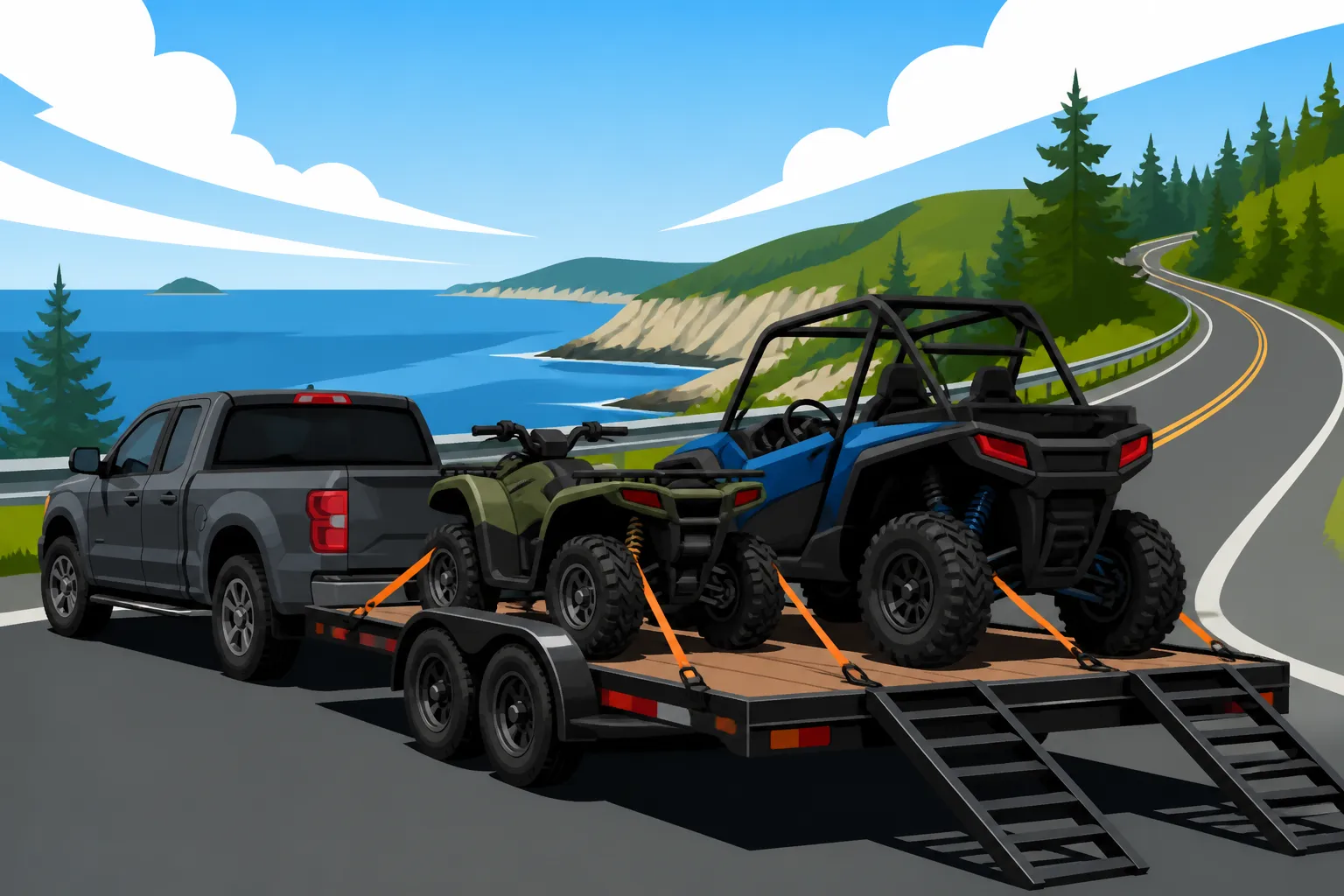
Once your ATV or UTV is on the trailer or in the truck bed, the job isn't done. Proper securement is paramount. An unsecured machine is not only a danger to itself (potentially falling off or shifting and causing damage) but also a massive hazard to other road users if it were to come loose. Use at least four quality tie-downs – one at each corner – securing the machine to anchor points on the trailer or truck bed. Ratchet straps are generally preferred over cam buckles for their superior holding power.
Make sure the straps are tight, but avoid over-tightening to the point of compressing the suspension too much, which can put unnecessary strain on components. Check the straps again after you've driven a short distance (e.g., 10-15 minutes) and periodically throughout your journey, especially on rough roads or after heavy braking. Vibrations and bumps can cause straps to loosen. Consider using wheel chocks for added security, particularly for UTVs, or specialized tire bonnets that strap over the tires themselves, like some systems offered by SuperATV. These small investments in good tie-downs and chocks will save you potential headaches and prevent costly damage, or worse.
Equipment, Preparation, and Common Mistakes
Successfully and safely loading and unloading your ATV or UTV on or near a highway isn't just about knowing the rules; it's also about having the right gear, preparing beforehand, and being acutely aware of the common pitfalls that can lead to problems. Many riders focus only on the machine itself, forgetting that the entire transport setup needs to be up to snuff.
The Right Tools for the Job
Your loading process is only as strong as its weakest link. A well-maintained trailer is non-negotiable. This means working lights (brake lights, turn signals), properly inflated tires (including the spare!), secure hitch connections, and chains. Your ramps, as discussed, must be rated for your machine's weight and width, and in good condition with no structural damage. Beyond the big items, consider the small but mighty safety accessories. Good quality tie-downs are a must – not frayed, worn-out straps found at the bottom of the toolbox. Wheel chocks can provide an extra layer of stability when loading, especially on slightly inclined surfaces.
Furthermore, a high-visibility vest for yourself and any helpers is a wise investment, especially when operating near traffic or in low light conditions. Keep a flashlight handy for night-time or early morning operations. Some riders even carry small orange traffic cones to set up a temporary safe zone around their loading area. Think about what professional tow truck operators use; many of their safety practices are directly applicable to you. You can find robust accessories like heavy-duty winches, specialized ramps, and secure attachment points from reputable brands like SuperATV, which are designed to withstand the rigours of off-road transport. For a broader look at what an officer might check, consider [Nova Scotia Equipment Checks by Officers].
Pre-Trip Planning and Contingencies
Good planning starts before you even leave your driveway. Scout out potential safe loading and unloading spots along your route beforehand. This could be checking Google Maps for large gas stations or public parking areas near trailheads, or simply noting designated rest stops. Don't leave it to chance. Knowing where you're going to stop significantly reduces the stress and guesswork, allowing you to focus on the task at hand.
Beyond location, think about contingencies. What if a strap breaks? Do you have spares? What if a ramp slips? Do you have a plan B? Having a roadside emergency kit in your tow vehicle is crucial: a first-aid kit, jumper cables, a basic tool kit, a tire repair kit for your trailer (and maybe even your OHV), and reflective warning triangles. If you must stop in a less-than-ideal spot due to an unforeseen issue, your emergency kit becomes your best friend. Get your hazard lights on, deploy your cones, and make yourself as visible as possible before attempting any work.
Mistakes That Lead to Tickets or Accidents
Ignoring small details can have big consequences when loading or unloading. One of the most common mistakes is underestimating the force and weight of an ATV or UTV, leading to insufficient securement. Leaving a machine unsecured, even for a short drive, is incredibly dangerous. Another common error is choosing a loading spot that compromises traffic flow or driver visibility. Blocking even a portion of a lane or creating a visually confusing scene can lead to immediate intervention from law enforcement and potential fines. For an idea of what that might cost, look at [Nova Scotia Ticket Costs for Riders].
Riding too fast onto or off ramps is another major mistake. Ramps are for slow, controlled movements. A sudden burst of throttle can cause the machine to lurch, tip, or even jump off the ramps. Additionally, neglecting trailer maintenance, such as faulty lights or expired registration, can compound issues if you're pulled over for an unsafe loading practice. Always ensure all your vehicle and trailer lighting is functional, especially if you're operating at dawn, dusk, or night. Remember, any action that creates a hazard on a Nova Scotia highway is likely to attract attention and potential penalties.
Penalties, Enforcement, and Getting Help
The rules around highway safety and OHV transport aren't just suggestions; they carry real consequences if disregarded. Law enforcement in Nova Scotia takes highway safety very seriously, and unsafe loading or unloading practices are no exception. Understanding the potential penalties and how officers might approach such situations can help you make better decisions and avoid costly mistakes.
Fines and Legal Consequences
Operating in an unsafe manner on a Nova Scotia highway, even while stationary for loading or unloading, can lead to significant fines. For example, offences related to improper stopping, obstructing traffic, or having an unsecured load can result in substantial monetary penalties. While specific figures can change, the shape of the cost is always significant enough to make you think twice. This isn't just a slap on the wrist; these fines are designed to deter risky behaviour and promote public safety. For context, an unregistered machine could lead to [Nova Scotia Minimum Fine of $250], and highway infractions can certainly be in that ballpark or higher.
Beyond financial penalties, serious infractions could potentially lead to demerit points on your driver's license, affecting your insurance rates, or in extreme cases, your vehicle or trailer could be impounded if deemed a severe hazard. An officer might also issue a "notice and order" to correct any deficiencies before you're allowed to proceed. The legal system in Nova Scotia prioritizes safety on its roads, so playing fast and loose with loading procedures simply isn't worth the risk.
What an Officer Looks For
When an officer observes a vehicle on the side of the road, especially one involved in a loading operation, they are primarily looking for safety violations and anything that could pose a risk to the public. Common triggers for intervention include:
- Obvious hazards: A trailer or machine encroaching on the travelled lane, or a setup that is clearly unstable.
- Poor visibility: Lack of hazard lights, no reflective gear, or being stopped in a blind spot.
- Unsecured cargo: Visible movement of the OHV on the trailer, or straps that appear loose or inadequate.
- Impeding traffic: Creating backups or causing other drivers to swerve or brake suddenly.
- Improper equipment: Ramps that are too short or too narrow, or a winch that's being used improperly.
If you are stopped, remain calm and cooperative. Have your driver's license, vehicle registration, and proof of insurance readily available. An officer may also ask to see specific documents related to your ATV or UTV. Knowing [What a Nova Scotia Officer Can Ask to See] can help you be prepared. Explain your situation clearly and respectfully, and be willing to correct any issues identified by the officer. Your attitude can often influence the outcome of the interaction.
Reporting Unsafe Practices and Seeking Guidance
If you witness someone else engaging in unsafe loading practices on a Nova Scotia highway, especially if it appears to be an immediate danger to traffic, it's appropriate to report it to local law enforcement (RCMP or municipal police, depending on the area) by calling their non-emergency line or 911 if it's an imminent threat. Providing the location, a description of the vehicles, and the nature of the unsafe act can help prevent an accident.
For any specific questions or clarifications regarding the rules for loading, towing, or operating off-highway vehicles in Nova Scotia, your best resource is Access Nova Scotia. They can provide accurate and up-to-date information on the Motor Vehicle Act and OHV regulations. You can also reach out through official government channels or even directly to the provincial OHV line for specialized assistance; if you need to, [Calling the OHV Line for Help] can often connect you with knowledgeable staff. It's always better to ask questions beforehand than to face penalties or, worse, an accident due to ignorance.
Safe Loading and Unloading Practices: A Comparison
Here’s a quick overview of safe versus unsafe practices when dealing with roadside loading and unloading of your ATV or UTV:
| Feature/Action | Safe Practice | Unsafe Practice |
|---|---|---|
| Location | Designated rest stops, large parking lots, official turn-offs with ample space. | Narrow highway shoulders, blind spots (curves/hills), active traffic lanes, exit ramps. |
| Visibility | Hazard lights ON, reflective vest worn, deploy cones/triangles if available. | No hazard lights, dark clothing, relying solely on daylight, unlit areas. |
| Ramps | Rated for weight, securely fastened to trailer/truck, stable and level. | Flimsy, too narrow, unsecured, placed on uneven/slippery ground. |
| Winch Usage | Slow, controlled, properly attached, hands/feet clear, rated for load. | Jerky operation, improper attachment, over-straining, riding machine while winching. |
| Securement | Minimum four quality tie-downs, ratchet straps, wheel chocks, periodically checked. | Few or worn straps, cam buckles, loose machine, no checks after departure. |
| Planning | Pre-scout locations, have emergency kit, know your route, communicate with spotter. | Impromptu stops, no emergency gear, rushing, no communication. |
| Maneuvering | Slow, controlled throttle, steady pace, clear path, attention to surroundings. | Fast, sudden movements, rushing, ignoring obstacles, lack of situational awareness. |
This article is for general informational purposes only and does not constitute professional advice. Laws, prices and regulations vary by location and change over time. Consult a qualified professional for guidance on your specific situation.