Why Crossing a Highway Needs a Driver’s Licence
It's a familiar scenario for many Nova Scotia ATV and UTV riders: you’re out on the trails, enjoying the stunning scenery, perhaps making your way between two segments of a popular route, and suddenly, you hit a paved road. It might be a quick jog across, or a short stretch to connect to the next section of dirt. This is where a lot of riders find themselves scratching their heads, or worse, making a mistake that could lead to fines or accidents. This guide is here to untangle the complexities of Nova Scotia's laws surrounding off-highway vehicle (OHV) highway crossings, specifically why you absolutely need a full driver's licence to do it, and how to navigate these situations safely and legally.
The Legal Framework: OHVs and Public Roads in Nova Scotia
Let's be honest, it can feel like the rulebook for off-highway vehicles in Nova Scotia is a dense forest itself, with different pathways and regulations depending on where you are and what you're doing. But when it comes to public roads, things get a little clearer, even if they sometimes feel restrictive. The core of the matter lies in understanding which set of laws governs your machine at any given moment.
The Off-Highway Vehicle Act vs. The Motor Vehicle Act
When you're tearing up a designated trail or cruising across your own property, your off-highway vehicle is primarily governed by the Off-Highway Vehicles Act. This Act lays out rules specific to ATVs, UTVs, dirt bikes, and snowmobiles, covering things like registration, age limits, and safety equipment for off-road use. It's designed to ensure safe and responsible operation in environments not meant for typical road vehicles.
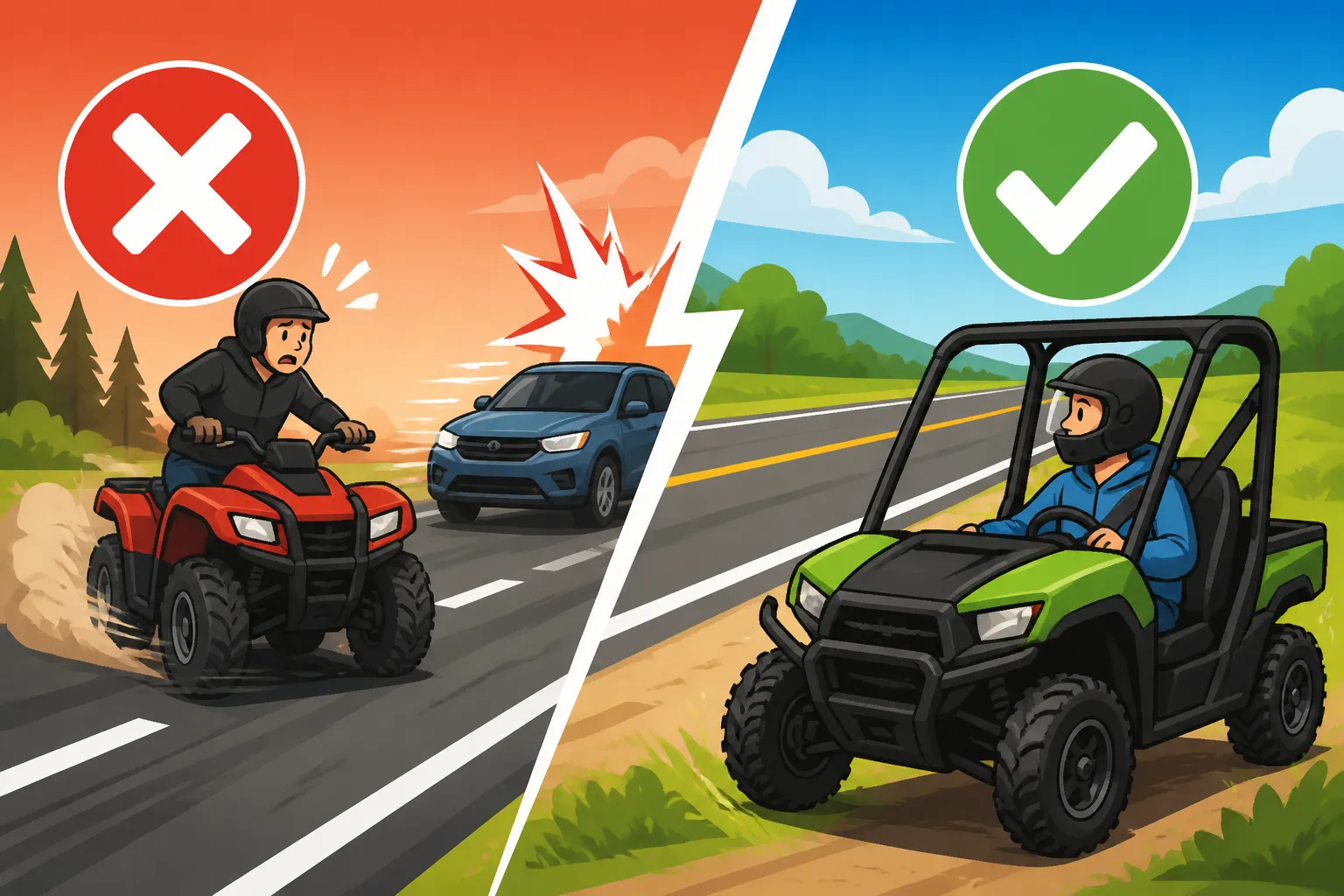
However, the moment your wheels touch a public highway, even just to cross it, a crucial shift occurs. You are no longer solely under the umbrella of the Off-Highway Vehicles Act. Instead, you are now subject to the Motor Vehicle Act – the same legislation that governs cars, trucks, and motorcycles. This transition is incredibly important because the Motor Vehicle Act comes with a whole new set of responsibilities and requirements, including the fundamental need for a valid driver's licence. The province sees a highway crossing, no matter how brief, as operating a vehicle on a public thoroughfare, and that demands a certain level of competency and legal standing. You can find more detail on this topic in [Nova Scotia Road Trails Act Explained].
The Rise of Road Trails and Connectivity
Over the years, Nova Scotia has made commendable strides in enhancing trail connectivity for OHV users. The province has expanded its network of designated "road trails" – specific sections of public roads where OHVs are permitted to operate under very strict conditions. These road trails are fantastic for linking up longer trail systems and opening new areas for exploration, but they come with their own set of rules.
It’s easy to get confused between a designated road trail and a simple highway crossing. Road trails are explicitly signed and mapped, and while they allow OHVs, they impose speed limits (often 25 km/h), require single-file riding, and demand that riders yield to all other traffic. These initiatives aim to balance recreational opportunities with public safety, providing regulated access to areas that might otherwise be inaccessible. However, even on these designated road trails, the underlying principle remains: you are on a public road, and thus, the Motor Vehicle Act — and its driver's licence requirement — still applies. [Nova Scotia Road Trails: Where You Can Ride] delves deeper into these specific areas.
Understanding Road Crossings and the Law
So, you're faced with a highway. It might be a bustling main artery or a quiet country road. The law makes a clear distinction between riding on a highway and merely crossing it. Even if your intent is just to get from one side to the other, the legal requirements kick in immediately.
Defined Crossings vs. Riding on Roads
A "crossing" typically refers to the shortest possible route across a public highway to access another section of an off-highway trail. The law understands that sometimes, trails can't be continuous without intersecting existing road networks. The intention here is not for OHVs to use highways as part of their journey, but rather as a necessary point of transit.
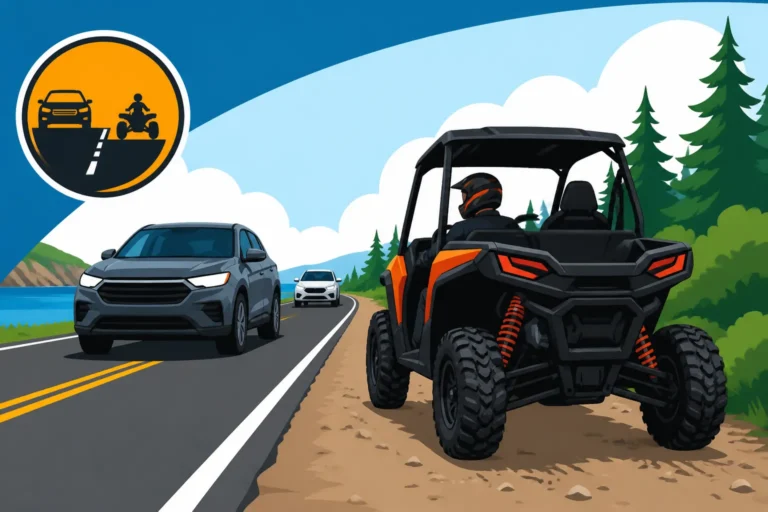
Riding on a road, even for a short distance, generally falls under the purview of road trails, as mentioned above. If you're using a designated road trail, you must adhere to its specific rules, which include displaying proper registration, having liability insurance, and yes, possessing a valid driver's licence. The key differentiator is the intent and distance. A quick perpendicular hop across is a crossing; travelling along the shoulder or a signed segment is riding on a road. Both require a licence.
Specific Conditions for Crossings
When performing a highway crossing, several conditions must be met, beyond just having your driver's licence. Firstly, you must yield to all traffic on the highway. This isn't a suggestion; it's a legal obligation. You must come to a complete stop and ensure the way is clear before proceeding. Think of it like a stop sign on a residential street – you wouldn't just blast through. The same caution applies here, amplified by the potential speed of highway traffic.
Secondly, the crossing must be as direct and perpendicular as possible. You can't meander down the road for 50 feet to find a "better" crossing point if a direct route is available. This minimizes the time your OHV is exposed to highway traffic and reduces the potential for conflict. Your machine must also be registered and insured, no matter how short the crossing. [Nova Scotia Requires Registration and Insurance] is a good resource for understanding these obligations. It’s also crucial that your OHV is equipped with proper lighting if visibility is low or if you’re crossing near dusk or dawn. While you might use a powerful light bar from a brand like SuperATV on the trails, ensuring your stock headlights and tail lights are fully functional and visible is paramount for highway safety.
The "Driver's Licence" Requirement: Why It Matters
This is often the sticking point for many riders, especially those who primarily operate their machines off-road and may not hold a full driver's licence. It's a question that comes up frequently at Access Nova Scotia counters: "Why do I need my car licence to cross a road on my quad?" The answer, as frustrating as it might seem, is rooted in fundamental principles of road safety and legal accountability.
What Constitutes a Driver's Licence
In Nova Scotia, when the law states "driver's licence" in the context of highway use, it means a full, valid Class 5 (or equivalent) licence. This is the standard licence that allows you to operate a passenger vehicle. This means that a learner's permit (Class 7) or a newly acquired probationary licence (Class 6 or 8 for motorcycles) typically won't cut it for operating an OHV on a public highway, even for a quick crossing. The reasoning is that these permits and licences are often accompanied by restrictions, such as needing a supervising driver or limitations on passengers or operating hours, which aren't practical or safe to apply to an OHV in a highway crossing scenario.
The province demands a full licence because it signifies that the operator has passed the necessary tests, demonstrated a certain level of driving proficiency, and understands the rules of the road. This isn't just about knowing how to steer; it's about understanding traffic flow, anticipating hazards, and making quick decisions in a dynamic environment – skills directly tested by a standard driver's licence. The legal expectation is that if you're on a public road, even briefly, you are a capable and licensed driver. [Nova Scotia Requires a Full Driver's Licence] expands on this vital requirement, and it’s important to note that [Nova Scotia Bans Learner Drivers on Road Trails] as well, reinforcing the need for a full licence.
Age and Licence Class Requirements
This requirement also directly impacts younger riders. While the Off-Highway Vehicles Act allows for riders as young as 16 to own and operate an OHV with parental consent (and appropriate safety training), this age threshold does not magically grant them the right to cross highways. If a 16-year-old rider, legally capable of operating an OHV on a trail, does not possess a full Class 5 driver's licence, they cannot legally cross a highway. This is a crucial distinction that often leads to misunderstandings and, unfortunately, penalties.
The law prioritizes the safety of all road users. An OHV, while fun and powerful, can be less visible and handle differently than a car on asphalt. Placing these machines, even for a moment, in the stream of highway traffic requires an operator with proven experience and a full understanding of the Motor Vehicle Act. It's not about discriminating against OHV riders; it's about applying universal safety standards to public road use. For anyone unsure about their licence status, it’s always best to check with Access Nova Scotia or consult the relevant sections of the Motor Vehicle Act.
Practical Steps for Safe and Legal Highway Crossings
Knowing the rules is one thing; putting them into practice safely and effectively is another. When you encounter a highway that needs crossing, preparation and careful execution are key to avoiding trouble.
Planning Your Crossing
Before you even get close to the pavement, take a moment to assess the situation. Is there a clear, direct path across? What's the visibility like? Are there any blind corners or crests that could obscure oncoming traffic? If possible, try to pick a crossing point that offers maximum visibility in both directions. Sometimes, it's worth taking an extra minute to scout ahead on foot if you're in an unfamiliar area.
Always signal your intention to cross, if your machine has turn signals. If not, a clear hand signal can alert any following riders or nearby vehicles. Approach the highway slowly, come to a complete stop, and look both ways multiple times. Just like you learned in driver's ed, "left, right, left" is a good mantra. Be patient – rushing a crossing is a recipe for disaster. If traffic is heavy, it’s better to wait for a substantial gap than to try to squeeze through. Remember, all traffic on the highway has the right of way.
Safety Gear and Machine Readiness
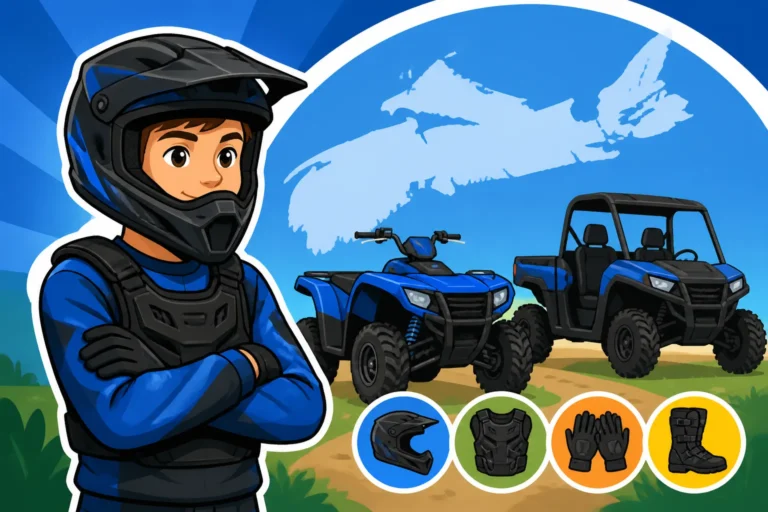
Your personal safety gear is non-negotiable, whether on the trail or crossing a highway. A properly fitted and approved helmet is mandatory. [Nova Scotia Helmet Law for Riders] clarifies these requirements. Beyond the helmet, consider wearing bright, reflective clothing, especially if there's any chance of crossing at dawn, dusk, or in foggy conditions common along Nova Scotia's coasts. Increased visibility for drivers is paramount.
Your machine itself needs to be ready. Ensure your headlights, tail lights, and brake lights are all in perfect working order. While a modified exhaust might sound cool on the trail, excessively loud machines can be distracting and less effective at conveying your presence safely to other drivers. Regularly checking your tires for appropriate pressure and tread is also important; while a knobby tire from SuperATV is great for mud, it might handle differently on pavement, so be aware of your machine’s capabilities. Always make sure your registration and insurance documents are readily accessible, as an officer may request them. [Nova Scotia Equipment Checks by Officers] explains what law enforcement looks for during a stop.
Comparing Road Interactions
To further clarify the differences between various types of interactions an OHV might have with public roads in Nova Scotia, here's a helpful table. This breaks down the common scenarios and the key requirements for each.
| Interaction Type | Description | Driver's Licence Required? | Registration Required? | Insurance Required? | Specific Rules/Conditions |
|---|---|---|---|---|---|
| Highway Crossing | Shortest, most direct path across a public highway to connect trail segments. | YES (Full Class 5) | YES | YES | Yield to all highway traffic, come to a complete stop, perpendicular crossing, minimal time on pavement. |
| Designated Road Trail | Sections of public road explicitly signed for OHV use, connecting trails or providing community access. | YES (Full Class 5) | YES | YES | Max 25 km/h, single file, yield to all vehicles, helmet required, specific operating hours, follow signage. [Nova Scotia's 25 km/h Road Trail Limit] details this. |
| Riding on Own Land | Operating an OHV exclusively on private property owned by the rider or with explicit permission. | NO (but recommended) | NO (exemption possible) | NO (but highly recommended) | No public road interaction. Still subject to OHV Act regarding age, helmet (under 16), and safety. |
| Emergency/Work Use | Limited use for specific purposes like farming, forestry, or emergencies, often with special exemptions. | YES (often) | YES (often) | YES (often) | Specific exemptions apply, requiring proof of work or emergency. Often still requires licence for road portions. |
This table highlights the consistent need for a driver's licence, registration, and insurance whenever an OHV is on a public road, even briefly.
Penalties for Non-Compliance
It's easy to dismiss a quick highway crossing as "no big deal," but ignoring the legal requirements can lead to serious consequences. Nova Scotia law enforcement takes OHV safety and compliance very seriously, and officers are trained to identify and address violations, especially when public roads are involved.
Fines for Unlicensed Operation
If you are caught operating an OHV on a public highway – whether crossing or on a designated road trail – without a valid, full driver's licence, you can expect a significant fine. This isn't just a slap on the wrist. The penalties for operating any motor vehicle (which your OHV becomes the moment it touches a public road) without a proper licence are substantial. It's not uncommon for these fines to start in the hundreds of dollars, and they can escalate depending on additional factors or repeat offenses.
Beyond the immediate financial hit, there can be other repercussions. Your OHV could be impounded, and repeated offenses could lead to more severe penalties, including potential impacts on your future driving privileges for a regular vehicle. The police officer has discretion, but the law is clear: Why Crossing a Highway Needs a Driver's Licence is not a suggestion, it’s a rule enforced with fines. Don't underestimate the province's commitment to ensuring only licensed drivers operate on its roads.
Fines for Unregistered and Uninsured Machines
The driver's licence is just one piece of the puzzle. As soon as your OHV touches a public road, it also needs to be properly registered with Access Nova Scotia and carry valid liability insurance. Operating an unregistered OHV on a public highway carries its own set of fines, which can start at a minimum of $250. [Nova Scotia Minimum Fine of $250] is an important read. This applies even if you've registered it for off-road use; the registration must be current and valid.
Even more critically, riding without the mandatory liability insurance is a grave offense. Nova Scotia requires a minimum of $500,000 in third-party liability coverage for OHVs operating on road trails or crossing highways. If you're involved in an accident without this insurance, you could be personally liable for damages that could easily reach hundreds of thousands of dollars, completely bankrupting you. The fines for being uninsured are also very high, again starting in the hundreds and potentially leading to impoundment. Don't risk it. [Nova Scotia Fines for an Unregistered Machine] and [Nova Scotia Fines for an Uninsured Machine] lay out the steep costs of non-compliance. Always have your "pink card" or proof of insurance readily available when riding.
Common Misconceptions and Clarifications
Despite the clear rules, many riders still hold onto assumptions that can get them into trouble. Let's clear up some of the most common myths surrounding OHVs and highway crossings.
"It's Just a Quick Hop Across!"
This is perhaps the most dangerous misconception. The distance you travel on a public highway makes absolutely no difference to the legal requirement for a driver's licence, registration, and insurance. Whether it's five feet or five hundred feet, the law views it as operating a motor vehicle on a public road. An officer isn't going to wave you through because you were "almost off" the pavement.
This thinking often stems from a feeling that the law is being overly bureaucratic for such a short distance. But consider the inherent risks: a moment of inattention, a patch of gravel, an unexpected brake, or a distracted car driver can turn a "quick hop" into a serious accident. The law doesn't differentiate between a fleeting moment of risk and sustained risk; all public road operation falls under the same standard. Equipping your machine with robust protective gear, maybe some heavy-duty bumpers or skid plates from SuperATV, might give you confidence on the trail, but it won’t exempt you from the law on public roads.
Youth Riders and Crossings
As touched upon earlier, this is a significant area of confusion. A 16-year-old rider who has completed their safety training and has parental permission might be fully compliant for trail riding. However, this does not give them an exemption for highway crossings. If they do not possess a full Nova Scotia driver's licence (Class 5 or higher), they cannot legally cross a highway on their OHV. Period.
Parents, this is particularly important for you to understand and enforce. Allowing a child who doesn't have a full driver's licence to cross a highway on their OHV puts them at severe legal risk and, more importantly, at physical risk. It’s crucial to plan routes that entirely avoid public road crossings for these riders, or to have a licensed adult transport the machines across the highway if absolutely necessary. Ensure your children understand these rules as well, as part of their comprehensive safety training. [Nova Scotia ATV Age Requirements] further explains the rules for young riders.
The Importance of Due Diligence
Ultimately, it falls on each rider to know and adhere to the laws. Ignorance of the law is not a valid defense. Before you head out on an unfamiliar trail, especially if you suspect it might involve road interactions, do your homework. Check maps, consult local ATV clubs, or even use tools like satellite imagery to visualize potential crossing points. ATVANS, Nova Scotia's provincial ATV association, is an excellent resource for information on trails and regulations.
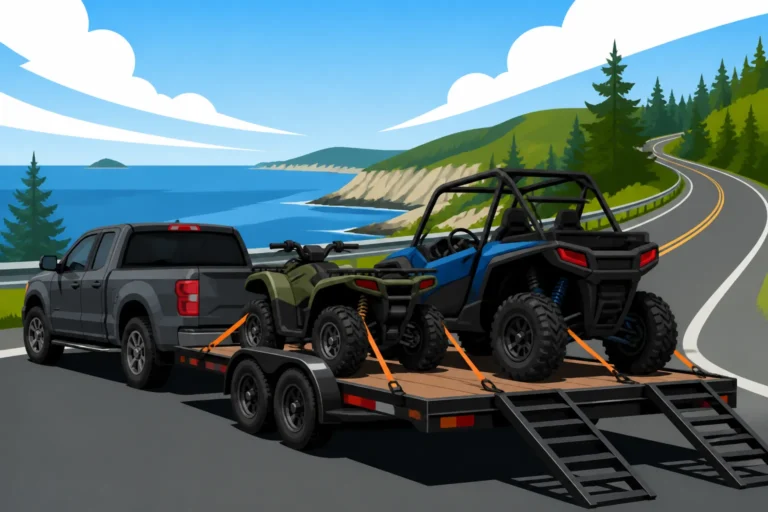
If you find yourself unexpectedly facing a highway crossing and you don't have a full driver's licence, or your machine isn't registered and insured, the safest and most legal option is to turn around, find an alternative route, or arrange for safe transport of your machine across the road. No trail ride is worth the financial and legal consequences, or the potential for a serious accident. Prioritize safety and legality above all else.
Disclaimer
This article is for general informational purposes only and does not constitute professional advice. Laws, prices and regulations vary by location and change over time. Consult a qualified professional for guidance on your specific situation.